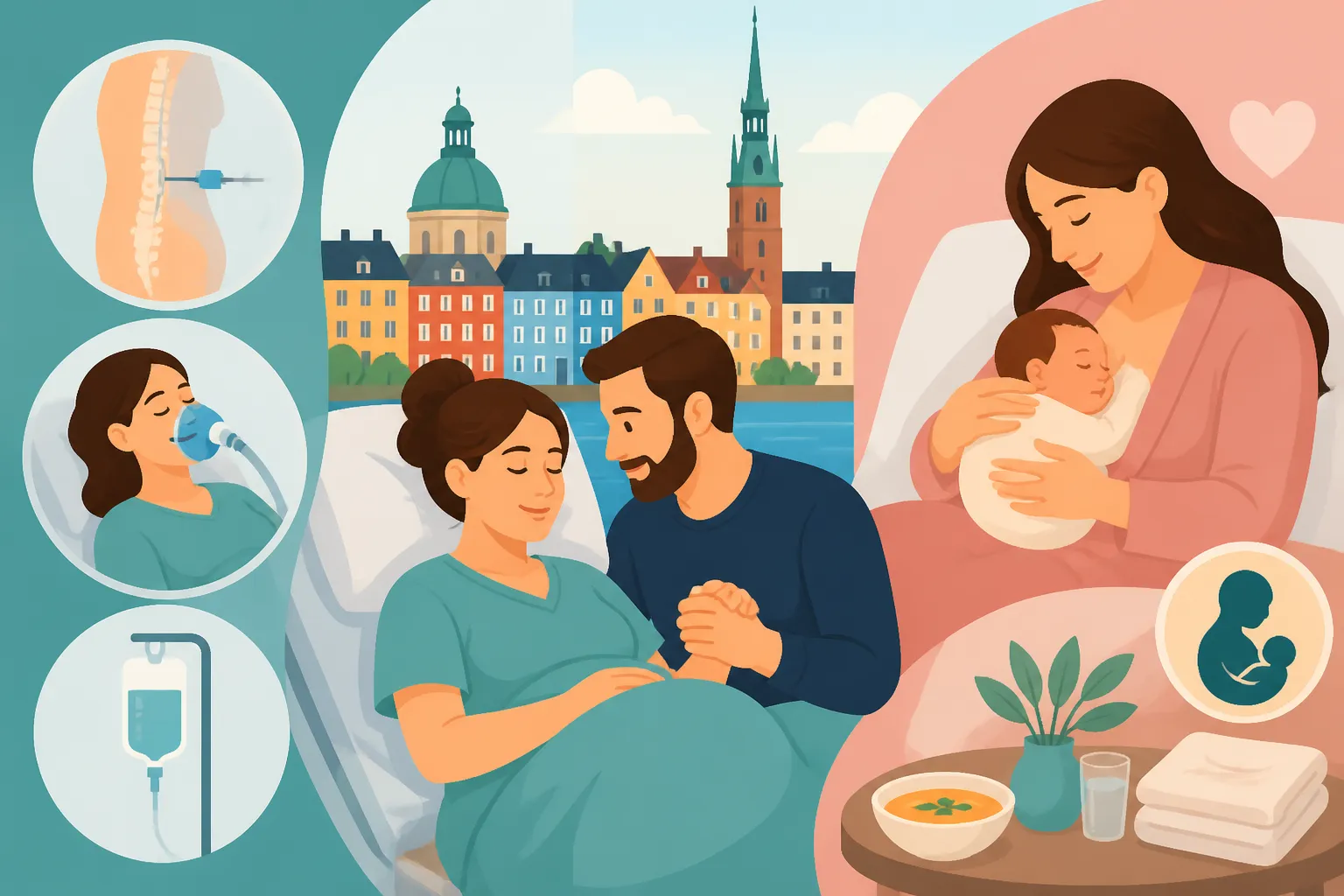
Giving Birth in Denmark: Pain Relief Options and Postpartum Care
Navigating the Danish healthcare system while expecting a child can feel like trying to solve a puzzle where the instructions are written in a language you only half-understand, both literally and culturally. I remember sitting in my first midwife appointment, clutching my notes and wondering if my request for an epidural would be met with a stern lecture on the beauty of "natural" birth. This guide is designed to strip away that anxiety by detailing exactly what pain relief options are available to you in Danish delivery rooms and how the postpartum period—known for its incredible support but also its "get-up-and-go" attitude—really works.
The Danish Philosophy of Childbirth: Natural vs. Medicalized
In Denmark, childbirth is viewed as a natural life event rather than a medical emergency. This philosophy permeates the entire system, from your first appointment to the moment you leave the hospital. While the technology is world-class, the default setting is often low-intervention. As an expat, this can be a culture shock, especially if you come from a country where scheduled C-sections or early epidurals are the norm. Understanding this mindset helps you navigate the Pregnancy in Denmark: Midwife Consultations, Scans, and Hospital Births process with realistic expectations.
The Midwife-Led System
The cornerstone of Danish maternity care is the midwife, or jordemoder (literally "earth mother"). Unless you have a high-risk pregnancy, you may not see an obstetrician at all. Your midwife is your primary point of contact, and they are highly autonomous. During labor, they are the ones who will be in the room, guiding you through the process. They are experts in physiological birth but are also trained to spot complications immediately.
If you are a newly arrived expat and haven't yet secured your CPR number, you might feel a bit lost in the system. While the public system eventually covers everything, many foreigners find that Expat Health Insurance: Coverage Before You Get Your CPR Number provides a necessary safety net. During this transitional phase, some expats also look into private options like Cigna Global to ensure they have access to private rooms or specific specialists if they feel the public system's "natural" approach isn't the right fit for their personal history or anxiety levels.
Choosing Your Birth Place: Home, Hospital, or Clinic
Denmark is a huge proponent of choice. You can choose to give birth at a large university hospital like Rigshospitalet in Copenhagen or Aarhus Universitetshospital, or you can opt for a smaller regional hospital. There is also a robust culture of home births, supported by the public system. If you choose a home birth, the hospital will send a midwife to your house when labor begins.
For those who want a middle ground, there are "fødeklinikker" (birth clinics), which offer a more domestic, cozy environment than a hospital ward but are still staffed by professionals. It is important to note that if you choose a home birth or a clinic without surgical facilities, and complications arise, you will be transferred to a hospital via ambulance. This is a seamless process in Denmark, but it is something to consider when Finding Medical Care in Denmark: GPs, Specialists, and Referrals for your prenatal journey.
Pain Relief Options During Labor in Denmark
One of the most common fears I hear from fellow expats is: "Will they let me have an epidural?" The short answer is yes, but the timing and the "menu" of options might be different than what you are used to. Danish midwives generally encourage you to start with non-medical methods and work your way up. However, they will not deny you medical relief if you request it and it is safe to administer. It is all about the dialogue between you and your midwife.
Non-Medical Pain Management
Water is the most popular non-medical tool in Denmark. Almost every delivery room is equipped with a large bathtub. The warmth of the water is used to relax muscles and naturally manage contractions. Many Danish women choose to stay in the water for the actual birth, which is perfectly acceptable and even encouraged in many hospitals.
Another unique Danish favorite is "sterile water injections" (sterilvandspapler). These are small injections of sterile water just under the skin in the lower back. They sting like a bee for about 30 seconds, but they are incredibly effective at blocking lower back pain for up to two hours. There is also the TENS machine, which uses mild electrical pulses to distract the brain from pain signals. While the hospital might have a few, many expats prefer to buy or rent their own to use at home during the early stages of labor.
Pharmacological Options
When the non-medical methods aren't enough, the "lattergas" (nitrous oxide/laughing gas) is the next step. This is a staple in Danish delivery rooms. You control the mask, breathing it in at the start of a contraction. It doesn't take the pain away completely, but it makes you care about it a lot less. It’s also great because it leaves your system almost immediately after you stop inhaling.
If you decide on an epidural, it will be administered by an anesthesiologist. In Denmark, the "walking epidural" is common, allowing you to retain some movement in your legs so you can change positions. However, keep in mind that once an epidural is placed, you will be more closely monitored, and your freedom to use the birthing pool may be restricted. Other options like the pudendal block (an injection near the vaginal wall for the final pushing stage) are also available but used less frequently than the epidural.
Acupuncture and Alternative Methods
Danish midwives are often trained in acupuncture. It is not uncommon to see a woman in labor with tiny needles in her ears or hands to help stimulate the natural progression of labor or provide relaxation. Reflexology and massage are also part of the toolkit. If you are someone who prefers a holistic approach, you will find the Danish system very accommodating.
For those who are concerned about the costs of these "extras" or who might want to supplement their care with private physical therapy later, Private Health Insurance (Sygeforsikring "danmark"): Is It Worth It? is a common question. While "danmark" doesn't cover the birth itself (as it's free), it can provide significant subsidies for the physical therapy or alternative treatments you might seek during recovery.
| Pain Relief Option | Description | Availability | Pros/Cons |
|---|---|---|---|
| Water / Bath | Immersion in warm water. | High (In most rooms) | Pros: Very relaxing. Cons: Can slow labor if used too early. |
| Nitrous Oxide | Inhaled gas (Lattergas). | High | Pros: User-controlled. Cons: Can cause nausea. |
| Epidural | Spinal block for lower body. | High (Hospital only) | Pros: Most effective. Cons: Limits mobility; requires IV. |
| Sterile Water Injections | Injections in the lower back. | High | Pros: No drugs involved. Cons: Intense temporary stinging. |
| Acupuncture | Traditional needle therapy. | Common | Pros: Holistic. Cons: Effectiveness varies by person. |
Postpartum Care in the Hospital (Barselsgang)
The period immediately following birth is called "barsel." In Denmark, the care you receive in the hospital depends heavily on whether it is your first child and whether the birth was "uncomplicated." The Danish system prides itself on efficiency, which sometimes means a very quick transition from the delivery room to your own front door. This can be jarring if you were expecting a five-day luxury stay.
The Short Stay vs. Overnight Stays
If you are a first-time mother and everything went smoothly, you will typically stay at the "barselshotel" (maternity hotel) or a dedicated maternity ward for 24 to 48 hours. These facilities are designed to give you a soft landing. You’ll have a private or semi-private room, and midwives or nurses are available 24/7 to help you with breastfeeding and baby care. Partners are usually allowed to stay, though there is often a small fee for their meals.
However, if it is your second or subsequent child and the birth was uncomplicated, the "ambulant fødsel" is common. This means you could be heading home as early as 4 to 6 hours after birth. I know—it sounds terrifying! But the philosophy is that you and the baby will rest better in your own environment. Before you go, the midwife will ensure the baby has latched (if breastfeeding) and that you are physically stable. If you are worried about this transition, check your Expat Health Insurance: Coverage Before You Get Your CPR Number or private plan like SafetyWing, as some international policies offer additional postpartum support or domestic help, though this is rare in the standard public model.
Support for Breastfeeding and Newborn Care
Denmark has high breastfeeding rates, and the support in the hospital is geared toward this. Nurses will visit your room frequently to check on your technique and offer "suttesbrikker" (nipple shields) or pumps if needed. They are very hands-on, which can be a bit overwhelming but is incredibly helpful for a sleep-deprived new parent.
During your stay, the baby will also undergo their first check-ups. This includes the Mandatory Heel Prick Test and Hearing Screenings for Newborns. These tests are vital and are handled with typical Danish precision. If you are an expat who doesn't speak Danish, don't worry—almost all medical staff speak excellent English. However, if you ever feel like you aren't being heard, you have a Translators in Danish Healthcare: Your Right to an Interpreter that you can exercise.
The "Sundhedsplejerske" (Health Visitor) System at Home
The true "magic" of the Danish system starts once you get home. You are not just left to figure it out on your own. Every family in Denmark is assigned a "sundhedsplejerske," a specialized nurse who focuses on child development and maternal health. This is a free service, and it is one of the best parts of Family Health In Denmark: Pregnancy, Maternity, and Pediatric Care.
The First Home Visit
Usually, within the first week of arriving home, your health visitor will call to schedule a visit. They come to your house, so you don't have to worry about packing up a newborn and navigating the bus. During the first visit, they will weigh the baby, check the umbilical cord, and—most importantly—check on you. They are trained to look for signs of postpartum depression and will ask honestly how you are coping with the transition.
They also provide a wealth of practical advice. From how to dress the baby for a nap in the pram outside (a very Danish tradition!) to managing sibling jealousy, they've seen it all. They are an amazing resource for expats who may not have their own parents or support networks nearby. They can also explain What Is The Danish Sundhedsplejerske (Health Visitor) System For Babies? in more detail if you have specific questions about their role versus your GP's role.
Ongoing Monitoring and Milestone Checks
The health visitor will visit your home several times during the first year. They follow a schedule of milestones, checking the baby's motor skills, social interaction, and growth. If they notice any delays, they can facilitate a Finding An English-Speaking Pediatrician For Your Child referral or connect you with municipal resources.
These visits are also where you get your "red book" (the child's health record) updated. In the digital age, much of this is also tracked via Sundhed.dk and MitID: Navigating Denmark’s Digital Health Portals, but having that physical record and the face-to-face time with a professional is invaluable. They also act as the gateway to the Vaccinations in Denmark: The Childhood Immunisation Programme, ensuring you know when to take the baby to your GP for their shots.
Administrative and Financial Considerations for Expats
While the medical side of giving birth in Denmark is largely "free" (paid for by your high taxes), the administrative side requires some legwork. For expats, there are additional layers related to visas, insurance gaps, and citizenship that can be stressful if not handled early.
Insurance Gaps and Coverage
If you are in Denmark on a work visa but your CPR number hasn't been issued yet, you are technically in a gray zone. Most hospitals will treat you, but you may receive a bill later if you can't prove residency. This is where Buying Insubuy Expat Health Insurance for the 90-Day Waiting Period or having a plan through SafetyWing or Cigna Global becomes critical. These companies specialize in covering that "in-between" time.
Cigna Global, for instance, is often favored by high-earning expats who want to ensure they have the option for private consultations or specific birthing plans that might fall outside the standard public offering. While the public system is excellent, having a private backup can provide peace of mind during a high-stakes life event like childbirth.
Registering the Birth and CPR Numbers
Once the baby is born, the hospital will automatically notify the authorities. However, if you are not married, you and the partner will need to fill out a "Declaration of Care and Responsibility" (Omsorgs- og ansvarserklæring) via Borger.dk to establish legal paternity. This is crucial for the baby's future rights and your partner's Maternity and Paternity Leave (Barsel) Entitlements in Denmark.
The baby will receive their own CPR number shortly after birth. This number is their "key" to everything—from daycare registration to their own The Yellow Health Card (Sundhedskort): Your Key to Danish Healthcare. If you are an expat, you also need to look into the baby's passport and residency status. Even if the baby is born in Denmark, they do not automatically become a Danish citizen unless one parent is Danish. You will need to apply for a residence permit for them through SIRI, usually under the "accompanying family" category.
Maternal Mental Health and Recovery
Postpartum recovery isn't just about the "six-week checkup" at your GP. Denmark recognizes that the transition to parenthood is a massive psychological shift. However, as an expat, the "loneliness of the long-distance parent" can hit hard.
Mødregrupper (Mothers' Groups)
One of the most effective tools the Danish system uses to prevent postpartum isolation is the "mødregruppe." Your health visitor will typically organize a group of 5-6 women who live in your neighborhood and have babies of a similar age. They try to match expats with other English speakers when possible.
These groups meet weekly, usually at each other's homes. It’s a space to drink coffee, complain about lack of sleep, and realize that everyone else’s baby is also crying for no reason. Many of these groups stay together for years. If your health visitor doesn't suggest one, don't be afraid to ask! If you are struggling more deeply, you may need to look into Accessing English-Speaking Therapists and Counselors in Copenhagen for professional support.
Pelvic Floor Recovery and Physiotherapy
The Danish system is very big on "knibeøvelser" (pelvic floor exercises). You will be given pamphlets, shown exercises in the hospital, and reminded by your health visitor. If you suffer from more severe issues like diastasis recti or pelvic organ prolapse, you can get a Physiotherapy in Denmark: Getting GP Referrals and Managing Costs referral from your GP.
While the public system covers some of this, wait times can be long. This is another area where having Private Health Insurance (Sygeforsikring "danmark"): Is It Worth It? pays off, as they provide reimbursements for private physiotherapy sessions, allowing you to start your physical recovery sooner.
Emergency vs. Out-of-Hours Care
Labor doesn't always happen during office hours. Knowing who to call when things start moving at 3:00 AM is vital for your peace of mind. In Denmark, you don't call your GP for labor; you call the delivery ward directly.
When to Call the Delivery Ward
During your midwife appointments, you will be told exactly which number to call when labor begins. Usually, they advise you to call when contractions are regular, about 4-5 minutes apart, or if your water breaks. The midwife on the phone will "screen" you, asking questions to determine if it's time to come in or if you should stay home and relax in the tub for a few more hours.
If you have a non-labor related emergency, such as decreased movement or sudden swelling, you also call this number. If it is a life-threatening emergency, the rule is always the same: Emergency Medical Care in Denmark: Calling 112, Lægevagten, and ERs. The dispatchers speak English and can get an ambulance to you quickly.
Post-Birth Emergencies
Once you are home, if the baby develops a fever or you have signs of an infection (like mastitis), you won't call the delivery ward. Instead, you call your GP during the day or Emergency vs. Out-of-Hours Care: When to Call Lægevagten (1813) in the evenings and on weekends. 1813 is the number for the Capital Region; other regions have their own "Lægevagt" numbers. Always have these programmed into your phone before the due date!
Giving birth in a foreign country is a monumental task, but the Danish system is designed to catch you. From the "lattergas" in the delivery room to the health visitor who walks into your kitchen a week later, there is a structured, empathetic path laid out for you. It might be different from back home, and it might involve more "natural" approaches than you expected, but the safety and well-being of you and your baby are always the top priority.
Disclaimer
This article is for informational purposes only and does not constitute medical or legal advice. Healthcare policies in Denmark, including insurance requirements and immigration rules (SIRI), are subject to change. Always consult with your General Practitioner (GP), midwife, or the Danish Patient Safety Authority for the most current information regarding your specific health situation. For visa and residency matters, refer to the official New to Denmark website.