Are Ambulances Free for Foreigners and Tourists in Denmark?
Seeing the neon blue lights of a Danish ambulance (Ambulance) reflecting off the rainy cobblestones of Copenhagen is enough to send a chill down any newcomer's spine. I remember my first winter here, staring at my phone during a health scare, terrified that a single call would result in a multi-thousand-krone bill I couldn't afford. This guide clarifies the costs of emergency transport in Denmark so you can navigate a crisis without financial panic.
Emergency Medical Care in Denmark: Calling 112, Lægevagten, and ERs
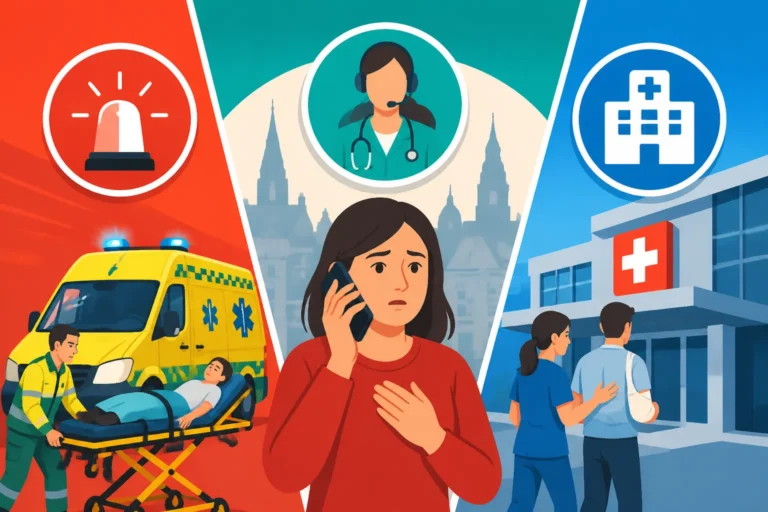
When you find yourself in a situation where every second counts, the Danish emergency system is remarkably efficient, but it operates on a strict hierarchy of "acuteness." If you are a tourist or a new expat, your first instinct might be to worry about your insurance card, but in a true life-or-death situation, the system prioritizes your pulse over your paperwork. The primary number for life-threatening emergencies is 112. When you dial this, you aren't just calling for a van; you are triggering a massive, coordinated response that includes a dispatcher who often speaks excellent English.
The dispatchers are trained to filter out non-emergencies. If you have a broken finger or a persistent fever, they will likely tell you to hang up and call the out-of-hours doctor, known as Lægevagten, or in the Capital Region, 1813. It is vital to understand Emergency Medical Care in Denmark: Calling 112, Lægevagten, and ERs because the ambulance is reserved for those who cannot physically get to the hospital themselves or whose condition is so unstable that they require medical intervention en route.
In Denmark, the "Emergency Room" (Akutmodtagelse) is not a place you just walk into off the street. You must be referred by a doctor or arrive via ambulance. If you show up unannounced with a non-life-threatening issue, you will be turned away or made to wait for hours while those with referrals are seen first. This system ensures that resources are kept free for those who truly need them.
How 112 Works for Foreigners
When you call 112, the operator will ask "Hvor er det?" (Where is it?) and "Hvad er der sket?" (What happened?). Do not panic if your Danish is non-existent. Most dispatchers can switch to English immediately. They will determine if an ambulance, a rapid-response car with a doctor (Lægebil), or even a helicopter is needed. For tourists, this can be overwhelming, but the goal is stabilization. Calling 112 in Denmark: English Support for Ambulance Dispatch is a standard feature of the Danish welfare state, and they will not ask for your credit card before sending help.
The dispatcher stays on the line with you until the crew arrives. They might ask you to perform CPR or keep the patient still. As an expat, you should always try to know your exact address or look for landmarks. Danish addresses can be tricky with floor levels (stuen, 1. sal, etc.), so being specific helps the crew find you in those winding apartment blocks.
The Criteria for Dispatch
An ambulance is only "free" in the sense that the state pays for it when it is deemed medically necessary. If you call an ambulance because you don't want to pay for a taxi to the hospital, you might find yourself in a complicated conversation with the authorities later, or simply denied the service. The paramedics have the final say on whether you need to be transported. If they arrive and find you are fit to travel by other means, they may provide on-site first aid and leave you to find your own way to the ER.
There are instances where expats felt slighted because they weren't "taken in" by the ambulance. It’s important to realize this isn’t a lack of care; it’s a high-efficiency resource management strategy. If you are breathing, conscious, and not in immediate danger of a cardiac event or major blood loss, the ambulance is often considered overkill.
Are Ambulances Free? The Breakdown by Resident Status
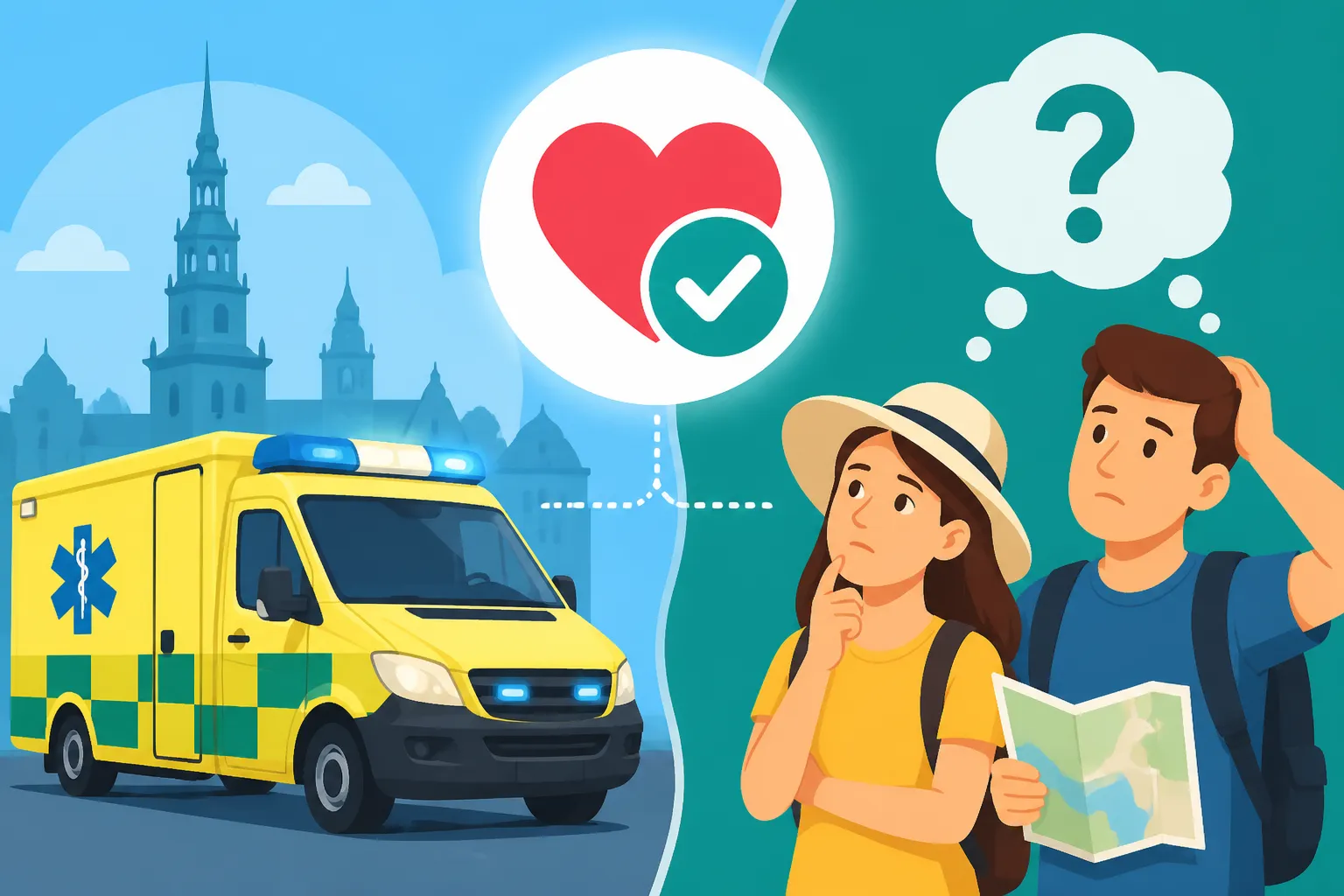
The short answer is yes: emergency ambulance transport is free for everyone physically present in Denmark—including tourists, expats, and undocumented individuals—provided the situation is acute and life-threatening. Denmark operates on a principle of universal emergency care. However, the definition of "free" starts to get blurry the moment you are stabilized and move from the ambulance into the hospital ward.
For those of us who have lived here long enough to have The Yellow Health Card (Sundhedskort): Your Key to Danish Healthcare, the process is seamless. The ambulance ride and the subsequent hospital stay are fully covered by the tax-funded system. But for a tourist, the ambulance ride to the hospital is free, but the three days you spend in a recovery ward might not be. This distinction is where many people get caught off guard.
For CPR Holders and Residents
If you have your CPR number and your "Yellow Card," you are fully integrated into the Healthcare in Denmark for Foreign Residents: Complete System Guide (2027). You don't pay for the ambulance, the paramedics, the emergency room doctors, or the surgery that might follow. The only things you really pay for are your prescriptions (which are subsidized) and dental care.
When you move here, there is often a lag between arriving and getting that card. During this period, you are in a bit of a "grey zone." If you have an emergency during your first week, you will still get the ambulance for free, but the hospital may bill you if you cannot prove you are a resident in the process of registering. This is why having Expat Health Insurance: Coverage Before You Get Your CPR Number is a non-negotiable for anyone moving to Denmark.
For EU/EEA Tourists and the Blue Card
If you are visiting from another EU country, you should always carry your European Health Insurance Card (EHIC). This card ensures that you are treated under the same conditions as a Danish citizen. Since ambulances are free for Danes, they are free for you too. The Healthcare for EU/EEA Citizens: Using the Blue EHIC Card in Denmark system covers "necessary" care, which includes emergency transport.
However, the EHIC does not cover everything. It will not pay for your flight back home if you are too injured to take your original flight (repatriation). It also won't cover private hospital costs if you choose to go that route. This is why even EU citizens often supplement their Blue Card with a private policy like SafetyWing to handle the logistical costs that the Danish state doesn't cover.
For Non-EU Tourists and Short-term Visitors
This is the group that needs to be the most careful. If you are visiting from the US, Canada, Australia, or any other non-EU country, the Danish state will still send an ambulance to save your life at no cost for the transport itself. They will not leave you on the sidewalk. However, once you are inside the hospital, you are legally responsible for the costs of your treatment.
Danish hospital bills for non-residents can reach tens of thousands of kroner very quickly. While the ambulance ride is a public service, the "acute" coverage ends once the immediate life-threatening crisis is managed. If you are a visitor, checking your coverage with a provider like SafetyWing before you land in Kastrup is the best way to ensure a medical emergency doesn't turn into a lifelong debt.
| Status | Ambulance Cost (Acute) | Hospital Stay Cost | Repatriation Cost |
|---|---|---|---|
| Danish Resident (CPR) | Free | Free | N/A (Live here) |
| EU/EEA Tourist (EHIC) | Free | Free (Public) | Not Covered |
| Non-EU Tourist | Free | Full Price | Not Covered |
| New Expat (No CPR) | Free | Potential Billing | Not Covered |
The Role of Private Health Insurance for Foreigners
Even though the public system is a powerhouse, private insurance plays a massive role for the international community. Many foreigners assume that because the ambulance is free, they don't need additional coverage. This is a dangerous misconception. Private insurance isn't just about the ride; it's about what happens during the weeks of recovery or the need for specialized specialists that the public system might have a long waiting list for.
For long-term expats, some choose to invest in Private Health Insurance (Sygeforsikring "danmark"): Is It Worth It? to help with dental and medication costs. Others, especially those with high-pressure jobs or those who travel frequently, look into Cigna Global to ensure they have access to private clinics and faster diagnostic tracks. In Denmark, The Role of the GP: Why You Cannot Go Directly to a Specialist can sometimes feel like a bottleneck, and private insurance helps bypass that if you're in a hurry.
Why Travel Insurance is Essential for Visitors
If you are a tourist, you should never rely solely on the "free ambulance" rule. SafetyWing is a popular choice for digital nomads and tourists because it covers the gaps that the Danish state doesn't. For instance, if you are involved in a bike accident in Aarhus and need surgery, the ambulance is free, but the surgery, the hospital bed, and the physical therapy are not.
Without a policy, the hospital will expect payment, and the Danish authorities are quite efficient at tracking these costs. I've known tourists who had to start GoFundMe pages because they thought "Denmark is a socialist paradise, everything is free." It is free for those who pay into the system via some of the highest taxes in the world, but it is a "pay-per-use" system for everyone else.
Coverage for Long-term Expats
For those of us living here permanently, we still face the "90-day gap." When you first arrive, you are often told you must wait for your residence permit, then your CPR, then your Yellow Card. During this First 90 Days: Health Insurance Requirements for Non-EU Expats period, you are essentially a tourist in the eyes of the healthcare billing department.
Using a provider like Cigna Global during this transition can provide peace of mind. It ensures that if you have a chronic condition that flares up, or an accident that requires more than just a "stabilize and release" approach, you aren't stuck with a bill that rivals a house deposit. Once your Yellow Card arrives, you are safe, but that 90-day window is a high-risk period that many people overlook.
Scenarios: When is an Ambulance Dispatched?
To truly understand how this works, we need to look at real-world scenarios. The Danish system is very pragmatic. They don't send an ambulance just because you're scared; they send it because you're in danger. Understanding the difference can save you a lot of stress (and potentially a stern lecture from a paramedic).
I remember a neighbor who called 112 for a severe panic attack. The paramedics arrived, performed an ECG, and determined it wasn't a heart attack. They spent 20 minutes calming her down but did not take her to the hospital. There was no charge for this "house call," but it serves as a reminder that the ambulance is a mobile treatment room, not just a shuttle.
Life-threatening Emergencies
If you witness a car accident, a drowning, or someone collapsing with chest pain, the response is immediate and free. In these cases, the ambulance arrives with highly trained "Redder" (paramedics) who have the authority to administer life-saving drugs and perform advanced procedures. For a foreigner, the focus here is 100% on medical outcomes. They won't ask for your passport while you're struggling to breathe.
If you are a tourist and you are unconscious, they will search your belongings for an EHIC card or insurance info, but this is for medical history and billing later—it won't stop them from treating you. This is the "Social Safety Net" at its best.
Non-emergency Transport vs. Emergency Dispatch
There is a separate type of transport in Denmark called "Sygetransport." This is for patients who need to go to the hospital but don't need emergency lights and sirens—for example, an elderly person going for dialysis. This is generally arranged through the municipality or the hospital.
If you are a tourist and you are discharged from the hospital but cannot walk, the hospital will not provide a free ambulance to take you back to your hotel. You will have to pay for a "Handicap Taxi" or a private transport service. This can be surprisingly expensive, often costing 1,000 DKK or more for a short trip. This is another area where having travel insurance like SafetyWing is a lifesaver, as they often cover "repatriation to local accommodation" costs.
Practical Tips for Calling for Help
If you find yourself needing to call for help, take a deep breath. The system is on your side. First, try to determine if it is "Life-threatening" (112) or "Urgent but not dying" (1813 in Copenhagen / Lægevagten elsewhere). If you call 112 for something minor, they will be annoyed, but they will redirect you.
Always try to have your location ready. If you are in a park, look for the small green "address signs" on lamp posts which have unique codes that tell the dispatcher exactly where you are. If you are an expat, keep your Yellow Card (or a photo of it) on you at all times. If you're a tourist, keep your EHIC or insurance details in your wallet. It makes the administrative part of the emergency much smoother for everyone involved.
Lastly, don't be afraid of the cost if it's a real emergency. No one in Denmark is ever denied life-saving care because of their bank account. The "bill" only becomes an issue once the "emergency" is over. Focus on getting help first, and then let your insurance (like Cigna Global or your travel policy) handle the paperwork later.
Healthcare in Denmark for Foreigners Disclaimer
The information provided in this guide is for informational purposes only and does not constitute legal or medical advice. Healthcare regulations in Denmark, including the costs for non-residents and the specific coverage of the EHIC or private insurance policies, are subject to change by the Danish Health Authority (Sundhedsstyrelsen) and the Ministry of Interior and Health. While emergency ambulance transport is generally free at the point of delivery for acute cases, subsequent hospital costs and non-emergency transport fees can be significant for tourists and non-residents. Always verify your specific insurance coverage and residency rights with the relevant Danish authorities or your insurance provider. In any life-threatening emergency, always dial 112 immediately.