Calling 112 in Denmark: English Support for Ambulance Dispatch
Staring at a phone screen during a medical crisis while your mind blanks on the Danish word for "chest pain" is a terrifying rite of passage for many expats. I remember the paralyzing fear when my neighbor collapsed, and I realized I didn't know if the emergency operator would understand my panicked English. This guide ensures you are prepared for that exact moment, providing a clear roadmap for accessing life-saving help without a language barrier.
Understanding the Emergency Response System in Denmark
Denmark’s emergency infrastructure is incredibly streamlined, but it relies on you knowing which door to knock on. The most important thing to realize is that the Danish system is divided into "acute life-threatening" and "urgent but not immediate." When you dial 112, you are reaching the national emergency call center, which handles police, fire, and ambulance services.
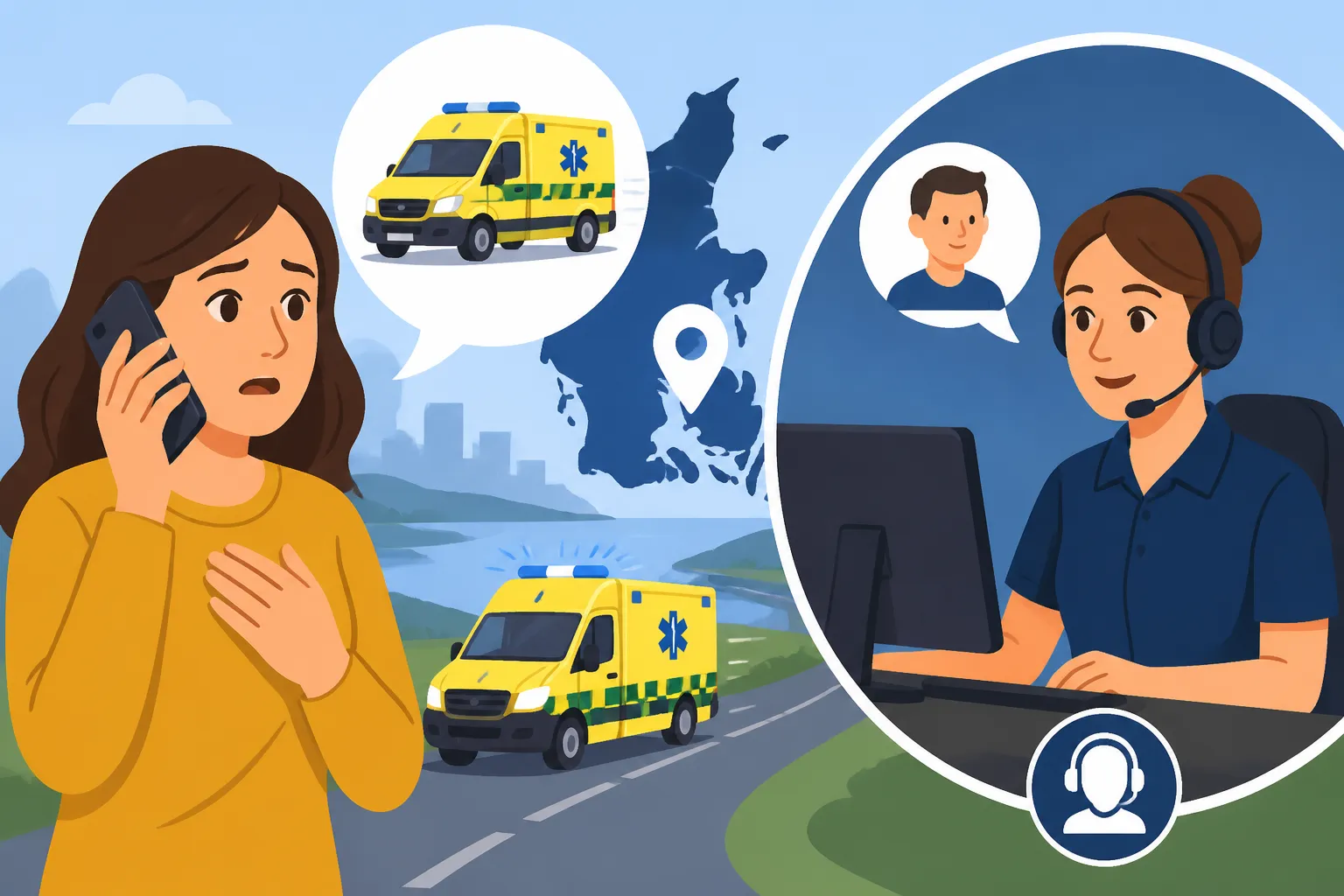
One of the biggest misconceptions I see among newcomers is the belief that they need to speak Danish to get help. In reality, Danish dispatchers are highly trained and, almost without exception, speak excellent English. They are used to dealing with the large international community in cities like Copenhagen, Aarhus, and Odense. However, the protocol they follow is strict. You won't find a casual conversation here; you will find a focused, triage-based interrogation designed to get the right resource to your GPS coordinates as fast as humanly possible.
It is also vital to distinguish 112 from the out-of-hours medical service. If your situation is not a life-and-death emergency, you should not call 112. Instead, you should be Emergency vs. Out-of-Hours Care: When to Call Lægevagten (1813) to speak with a nurse or doctor. Using 112 for a minor flu or a small cut can actually delay help for someone in cardiac arrest, and the dispatchers will politely but firmly redirect you to the appropriate line.
The Role of the Dispatcher and English Proficiency
When you dial 112, the first voice you hear will likely say "1-1-2 Akut." Even if they start in Danish, you can immediately respond in English. A simple "I speak English, this is an emergency" is enough to trigger a mental shift in the dispatcher. Because English is a mandatory part of the Danish education system and specialized training for emergency personnel, the language barrier is rarely the issue; the issue is usually the caller's level of panic.
The dispatchers are trained to keep you on the line until they have a firm grasp of the situation. They use a system called the Danish Index for Emergency Assistance. This is a standardized tool that helps them categorize the severity of the call. They aren't just being "nosy" with their questions; they are determining if you need a standard ambulance, a rapid response car with a doctor, or even the emergency helicopter.
Knowing Your Emergency Numbers
In the heat of the moment, it is easy to get numbers mixed up. Denmark uses three primary short-codes for different types of assistance. Understanding these can save you from unnecessary stress and ensure you are getting the specific type of help required for your situation.
| Number | Service Type | When to Use It |
|---|---|---|
| 112 | Emergency | Life-threatening illness, serious accidents, fires, or crimes in progress. |
| 114 | Police (Non-emergency) | Reporting a stolen bike, past crimes, or asking for police advice. |
| 1813 | Medical Helpline | Urgent illness or injury that cannot wait for your GP but isn't life-threatening. |
For those living in the capital region, 1813 is the standard. However, if you are elsewhere, the number for the out-of-hours doctor might change. You can find more detail on this in our guide on Emergency Medical Care in Denmark: Calling 112, Lægevagten, and ERs.
What to Say When Calling 112 in English
When you make the call, the dispatcher will follow a specific sequence of questions. Being prepared for this "interrogation" is the best way to ensure a fast response. In my experience, the more "boring" and factual you can be, the faster the ambulance arrives. They don't need a back-story; they need data points.
The first and most critical question they will ask is: "Where is the emergency?" In the age of smartphones, we often assume they can see exactly where we are. While the Danish 112 system does have Advanced Mobile Location (AML) technology that can pinpoint most modern smartphones, you should never rely on it 100%. You must be able to describe your location. If you are at home, have your address written down near the door. If you are in a park or on a bike path, look for the small green "kilometric" markers or nearby landmarks like a specific supermarket or a bridge.
The second question will be: "What has happened?" Here, you need to be very direct. Use "hero keywords" like unconscious, not breathing, chest pain, or heavy bleeding. If you are calling for someone else, try to determine if they have their The Yellow Health Card (Sundhedskort): Your Key to Danish Healthcare on them, as the CPR number can help the hospital pull up their medical records before they even arrive.
Specific Phrases to Use During the Call
If your English is also a second language, or if you are simply in shock, sticking to these phrases will help the dispatcher help you:
- "I am at [Address/Location]."
- "The person is unconscious and not breathing."
- "There is a severe allergic reaction."
- "I suspect a stroke; one side of their face is drooping."
- "The patient is [Age] years old."
If you are a driver, it is also helpful to mention if you have already used the supplies from your vehicle's kit, as discussed in Purchasing a First Aid Kit: Mandates for Drivers in Denmark.
Staying on the Line and Following Instructions
One of the hardest things to do is stay on the phone while you want to be helping the person in distress. However, the dispatcher may give you instructions for CPR or how to stop bleeding. In Denmark, many public areas are equipped with Automated External Defibrillators (AEDs). The dispatcher can see on their map where the nearest AED is located and might instruct you to send a bystander to go and grab it.
They will also ask for your phone number. This is crucial because if the call drops or the ambulance crew cannot find the entrance to your apartment building, they need to be able to call you back instantly. If you are an expat using a non-Danish SIM card, make sure to include your country code (e.g., +44 or +1) when giving your number, although the system usually logs the incoming number automatically.
Costs and Insurance for Emergency Services
A major point of anxiety for many foreigners is the fear of a massive bill. If you come from a country where an ambulance ride can cost thousands of dollars, the Danish system will be a relief. In general, emergency medical care in Denmark, including the ambulance and treatment at the hospital, is free at the point of use for anyone staying in the country, regardless of residency status.
However, "free" has nuances. While the immediate emergency care is covered, follow-up care, medications, or specialized rehabilitation might not be, depending on your insurance and residency status. If you are a resident with a CPR number, you are fully covered by the national health system. If you are a tourist or a new arrival waiting for your paperwork, the rules change slightly.
For those who have just moved and are still in the "waiting period" for their CPR number, having private coverage is essential. It is wise Expat Health Insurance: Coverage Before You Get Your CPR Number to bridge that gap. Services like SafetyWing or Cigna Global are popular choices for this transition. SafetyWing is often favored by digital nomads for its flexibility, while Cigna Global offers more comprehensive, long-term stability for families who want to go beyond what the public system provides.
Coverage for EU vs. Non-EU Citizens
If you are an EU citizen, your primary safeguard is the European Health Insurance Card (EHIC). This card ensures you are treated the same as a Danish citizen in an emergency. You can read more about Healthcare for EU/EEA Citizens: Using the Blue EHIC Card in Denmark to see what is and isn't included.
For non-EU tourists, you are still entitled to emergency care, but the state may eventually seek to bill your travel insurance. This is why having a policy from a provider like SafetyWing is a non-negotiable for visitors. They understand the Danish billing structures and can handle the administrative headache that often follows a hospital stay.
When Private Insurance (Cigna Global) Steps In
While the public ambulance and ER visit are free, some expats prefer private insurance for what comes after the emergency. If you need a private room, faster access to specialists for follow-up, or repatriation to your home country, a public system won't cover that. This is where Cigna Global becomes a "Hero" solution. They provide that extra layer of security that ensures your emergency doesn't turn into a financial crisis later on.
For instance, if an emergency requires Hospital Admissions in Denmark: What to Bring and What to Expect, a private policy might give you more options regarding where you receive your post-acute care.
Navigating the Aftermath of an Emergency Call
Once the ambulance arrives, the paramedics (Reddere) take over. In Denmark, paramedics are highly skilled and often begin treatment on-site. They will ask for identification, so if you can, grab the patient's passport or Yellow Card.
If the patient is taken to the hospital, they will be sent to the "Akutmodtagelse" (Emergency Department). You will not always be allowed to ride in the ambulance, especially if the patient requires intensive care en route. In this case, the paramedics will tell you which hospital they are going to. In larger cities, there may be several, so write the name down.
Communication at the Hospital
Once at the hospital, the language of communication will continue to be English if you require it. Danish hospitals are very accommodating to English speakers, and if the situation is complex, they can sometimes provide official translators, though this is more common for scheduled appointments than the chaotic first hour of an ER visit.
If the emergency was related to a mental health crisis rather than a physical injury, the process is slightly different. You may be referred to a psychiatric emergency room (Psykiatrisk Skadestue). For more immediate, non-ambulance needs in this area, check out Mental Health Hotlines in Denmark: English Services for Immediate Help.
Summary of Best Practices for Expats
To ensure you are never caught off guard, I recommend doing three things today:
- Save "112" and "1813" in your phone contacts with their specific names.
- Print your home address and your CPR number (if you have one) and stick it on the inside of your front door.
- Download the "112 App" (official Danish 112 app). When you call through this app, it automatically sends your GPS coordinates to the dispatcher.
Being an expat means learning to navigate a lot of new systems, but the emergency system is the one you hope to never use while needing to know it the best. By staying calm and speaking clearly in English, you are utilizing a system designed to protect you, regardless of where you were born.
Disclaimer
This guide is for informational purposes only and does not constitute legal or medical advice. In a true emergency, always dial 112 immediately. While every effort has been made to ensure the accuracy of this information for 2026, emergency protocols and phone numbers can change. Always consult official Danish authorities (such as borger.dk or the Danish Health Authority) for the most current regulations.