Purchasing a First Aid Kit: Mandates for Drivers in Denmark
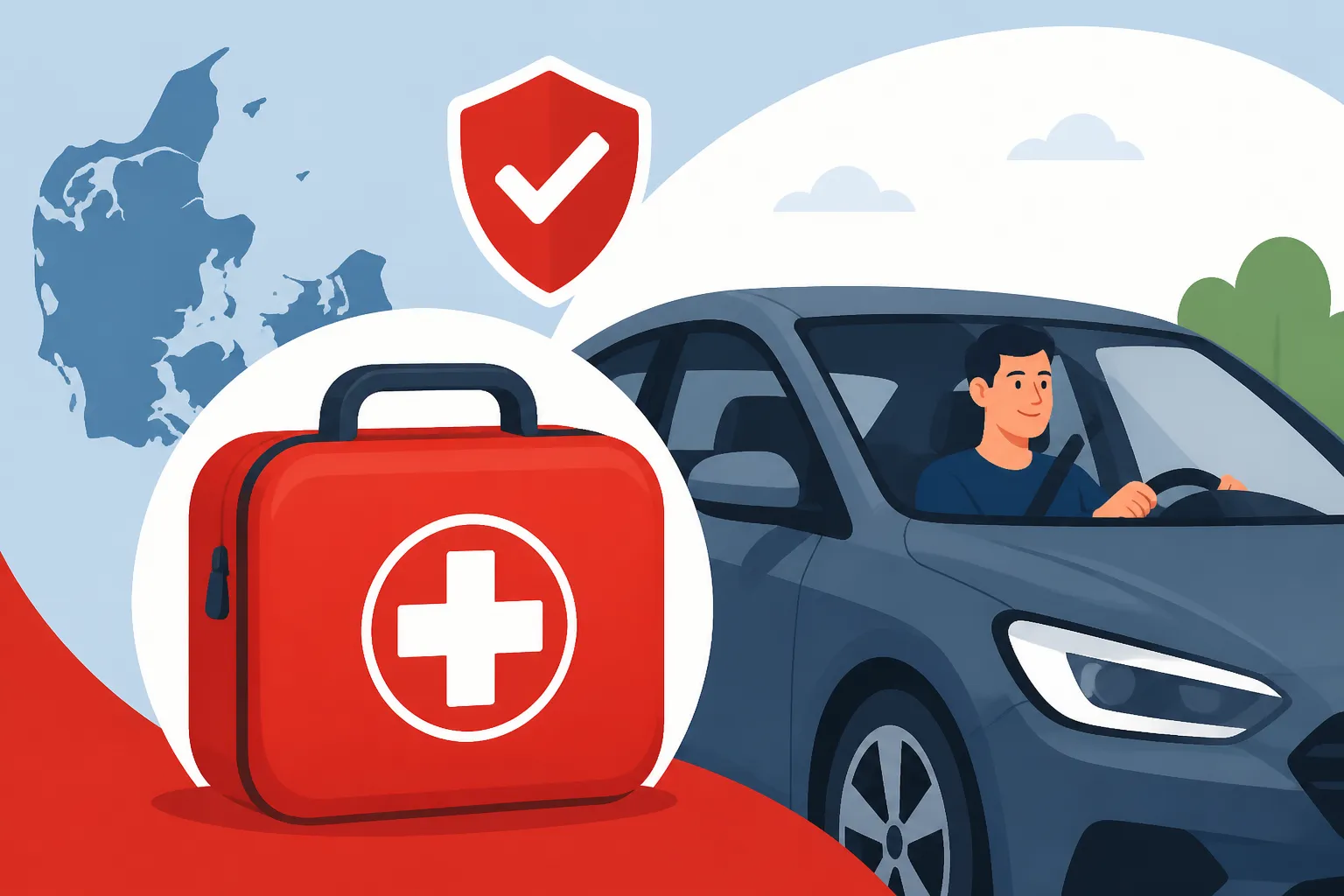
You are cruising along the E20, enjoying the rolling Danish countryside, when a minor roadside mishap strikes and you realize your trunk is completely devoid of medical supplies. I remember my first winter in Aarhus, fumbling in the dark for a simple bandage while the rain lashed down, feeling entirely unprepared for the local conditions. This guide solves the confusion around purchasing a first aid kit and clarifies the specific mandates for drivers in Denmark.
The Legal Reality of Carrying a First Aid Kit in Denmark
When you move to Denmark from countries like Germany or Austria, you might be accustomed to strict police checks for a standardized first aid kit (Verbandkasten). In Denmark, the law is surprisingly nuanced. For private passenger vehicles, carrying a first aid kit is actually highly recommended rather than strictly mandatory by the Danish Road Safety Act. However, this lack of a "fineable" mandate often leads expats into a false sense of security.
If you are operating a commercial vehicle, a taxi, or a bus, the rules shift dramatically, and specific safety equipment becomes a legal requirement. For the average expat driving a personal car, the expectation is more cultural and practical. Danes value "samfundssind" or social responsibility. If you are the first on the scene of an accident, you are expected to assist, and having the right tools is part of that unwritten social contract. Furthermore, if you plan on driving your Danish-registered car across the border into Germany or Poland, you must comply with their local laws, which do mandate a kit.
Beyond the kit itself, every driver should be aware of First 90 Days: Health Insurance Requirements for Non-EU Expats to ensure they are covered for any long-term recovery needs following a road incident. While the emergency response is world-class, your long-term peace of mind often depends on having a robust policy from a provider like Cigna Global, especially if you haven't yet fully integrated into the public system.
Essential Components of a Danish-Standard First Aid Kit
Even though the police might not peek into your trunk during a routine stop, you want a kit that meets the European DIN 13164 standard. This ensures you have the medical grade supplies necessary to handle everything from a scraped knuckle during a tire change to more significant trauma. In my experience, the standard kits sold at local retailers are sufficient, but they often lack a few "Danish-specific" items that make life easier.
A standard kit should include:
- Compresses and Bandages: Various sizes for different wound types.
- Adhesive Plasters: A large supply for minor cuts.
- Triangular Bandages: Crucial for stabilizing arm injuries.
- First Aid Scissors: These must be sharp enough to cut through seatbelts or heavy winter clothing.
- Disposable Gloves: Essential for hygiene and protection against bloodborne pathogens.
- Emergency Blanket: In Denmark, where temperatures plumet and "hygge" is hard to find on the hard shoulder, a foil blanket can prevent hypothermia.
It is wise to add a small bottle of hand sanitizer and a tick removal tool. If you are exploring the forests of Jutland, tick bites are a real concern during the summer months. Being prepared for these hyper-local issues is just as important as having sterile gauze. If a roadside injury does occur, knowing the protocol for Emergency Medical Care in Denmark: Calling 112, Lægevagten, and ERs is your next critical step.
Where to Buy Quality Roadside Medical Supplies in Denmark
Finding a first aid kit in Denmark is relatively straightforward once you know the local "big box" names. You won't usually find comprehensive kits in the small 7-Eleven shops at gas stations; those usually only carry a few overpriced Band-Aids. Instead, head to the following locations for a proper "Auto-Førstehjælpskasse."
Thansen and Biltema
These are the holy grails for Danish drivers. Thansen has locations in almost every medium-sized town, and their staff are generally very helpful, even if your Danish is still a work in progress. They sell kits specifically labeled for "bil" (car) that meet all EU recommendations. Biltema is another fantastic option, often located in industrial zones (like in Glostrup or Aarhus N). Their prices are competitive, and the kits are ruggedly packaged to withstand being tossed around in a trunk.
Supermarkets and Pharmacies
Larger supermarkets like Føtex, Bilka, and occasionally Kvickly stock first aid kits in their automotive or "home" sections. These are convenient because you can pick one up while doing your weekly grocery haul. If you prefer a more clinical selection, you can visit a local Apotek. While Pharmacies in Denmark: Apotek Rules, Prescriptions, and Subsidies focuses largely on medication, they also sell high-quality, hospital-grade first aid supplies. Just be prepared to pay a premium at the pharmacy compared to a discount retailer like Biltema.
Online Options
If you are still setting up your home and prefer delivery, many expats use Amazon.de (which ships to Denmark) or local sites like Boligportal and specialized safety shops. When ordering online, ensure the kit specifically mentions DIN 13164 compliance to avoid buying a "travel kit" that is too small for automotive use.
| Retailer Type | Brand/Store Name | Price Range | Best For |
|---|---|---|---|
| Automotive Specialty | Thansen | 150 – 300 DKK | Availability and specialized advice |
| Hypermarket | Bilka / Føtex | 100 – 250 DKK | Convenience during grocery shopping |
| Discount Hardware | Biltema | 80 – 200 DKK | Best value for money |
| Pharmacy | Apotek | 250 – 500 DKK | Highest quality sterile components |
Managing Roadside Emergencies and Medical Care
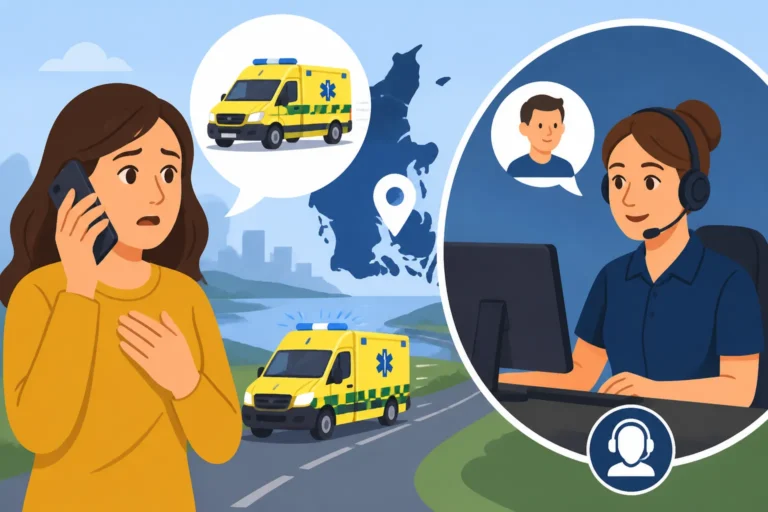
Possessing the kit is only half the battle; knowing how the Danish emergency system interacts with your status as a foreigner is the other half. If you are involved in a collision, the primary number is 112. The operators speak excellent English, but they will ask for your location, often requiring you to look for the small green kilometer markers on the highway. For more information on this, check out our guide on Calling 112 in Denmark: English Support for Ambulance Dispatch.
Once the immediate danger has passed, your "Yellow Card" (Sundhedskort) becomes the most important document in your wallet. It links you to the public system and ensures the hospital staff can access your records. If you are a new arrival and haven't received yours yet, it is vital to understand The Yellow Health Card (Sundhedskort): Your Key to Danish Healthcare.
For minor injuries that don't require an ambulance but still need professional attention, do not just drive to the ER (Skadestue). In Denmark, you must call ahead. During business hours, you call your GP. After hours, you call the "Lægevagten" or, in the Capital Region, 1813. This "gatekeeper" system can be frustrating for those used to walk-in clinics, but it is designed to keep the ERs clear for life-threatening cases. For those without a CPR number yet, having a policy from SafetyWing can be a lifesaver, as they understand the "waiting period" hurdles expats face.
Insurance Considerations and Liability
While the first aid kit handles the physical wound, your insurance handles the financial one. In Denmark, car insurance (ansvarsforsikring) is mandatory and covers damage you cause to others. However, it doesn't always cover your own medical costs if you are an expat with a complex residency status.
Newcomers are often advised that relying solely on the public system during your first few months is a gamble. If you are a high-earner or have specific health needs, looking into Private Health Insurance (Sygeforsikring "danmark"): Is It Worth It? is a wise move. While "danmark" is a supplemental insurance, it helps with the costs of medicine and dental work that the state doesn't fully cover.
For those who are in Denmark on a temporary basis or are still waiting for their CPR registration, comprehensive travel or expat insurance like SafetyWing or Cigna Global provides that necessary bridge. These providers are well-versed in the Danish system and can help coordinate with local private hospitals if you prefer to bypass the public waiting lists for non-emergency follow-ups. Understanding Waiting Times in Danish Public Hospitals and Patient Rights is essential if your roadside injury requires surgery or long-term physical therapy.
Practical Tips for the Danish Climate
The weather in Denmark is a significant factor in how you should maintain your first aid kit. The high humidity and cold winters can degrade certain medical supplies faster than in drier climates.
- Check the Expiry Dates: Sterile dressings and wipes have a shelf life. Check your kit every year, perhaps when you switch between summer and winter tires.
- Avoid Dampness: If your trunk has a leak—a common issue in older cars during the Danish autumn—your kit can become a breeding ground for mold. Store it in a waterproof bag or a plastic container.
- Reflective Vests: While not part of the medical kit, Danish law (and common sense) suggests having a reflective vest (advarselsvest) for every passenger in the car. In the winter, "daylight" can end at 3:30 PM, and standing on the side of a dark road without a vest is incredibly dangerous.
- The Warning Triangle: Ensure your warning triangle is accessible. You are legally required to place it 50 meters behind the car on standard roads and 100 meters on motorways if you break down.
If you find yourself needing to restock your kit after an incident, remember that Over-the-Counter (OTC) Medication: Supermarket vs. Apotek Regulations will dictate where you can find things like painkillers. Stronger ibuprofen is only available at the Apotek, while basic paracetamol can be found at the supermarket checkout.
Long-term Recovery and Follow-up Care
If a roadside emergency leads to a more serious condition, you'll need to navigate the Danish rehabilitation system. This often starts with your GP, who acts as the primary coordinator for all your health needs. Learning How to Choose and Change Your General Practitioner (GP) in Denmark is a task you should complete as soon as your CPR number arrives.
For many expats, the psychological impact of a car accident is often overlooked. The Danish system offers support, but there can be waiting lists for English-speaking specialists. In these cases, having a private policy from Cigna Global can expedite your access to Mental Health in Denmark: Accessing Psychologists and Therapy for Expats. They often provide coverage for private counseling that the public system might only partially subsidize after a long wait.
Furthermore, if you are an EU citizen, make sure you understand Healthcare for EU/EEA Citizens: Using the Blue EHIC Card in Denmark during your initial transition period. It provides a safety net, but it is not a replacement for a proper first aid kit and a long-term insurance plan.
Conclusion
Purchasing a first aid kit in Denmark is more than just a legal recommendation; it is a vital part of being a responsible resident in a country that prizes preparation and communal safety. By sourcing your kit from local experts like Thansen or Biltema and supplementing it with the right insurance coverage from providers like SafetyWing or Cigna Global, you ensure that a minor roadside incident doesn't turn into a major administrative and financial headache. Stay safe on the Danish roads, keep your "Yellow Card" handy, and always check your bandages before the winter frost sets in.
Disclaimer
This article is for informational purposes only and does not constitute legal or professional medical advice. While every effort has been made to ensure the accuracy of the information regarding Danish driving mandates and health systems as of 2026, laws and regulations can change. Always consult the official Danish Road Safety Council (Rådet for Sikker Trafik) or your legal counsel for specific compliance requirements. The mention of specific insurance providers does not constitute an endorsement; readers should evaluate policies based on their individual needs and residency status.