Hospital Admissions in Denmark: What to Bring and What to Expect
Navigating a medical emergency or a planned surgery in a foreign country is one of the most isolating experiences an expat can face. When I was first admitted to a hospital in Copenhagen, I spent more time worrying about the paperwork than my health, simply because I didn't know the "Danish way." This guide solves that uncertainty by walking you through every step of a Danish hospital admission.
Understanding the Danish Hospital System: Public vs. Private
The Danish healthcare system is built on a foundation of egalitarianism, meaning that whether you are a CEO or a student, you receive the same high standard of care in the public sector. For most residents, the public system is the first and only port of call. It is funded through taxes, which means that once you are in the system, you aren't reaching for your wallet at the registration desk. However, this system relies heavily on a structured hierarchy of referrals. You don't just "show up" at a major hospital like Rigshospitalet or Aarhus University Hospital (Skejby) unless it is a life-threatening emergency.
While the public system is excellent for acute care and major surgeries, some expats find the waiting times for elective procedures frustrating. This is where private hospitals come into play. Private facilities in Denmark are often smaller and feel more like hotels than clinical institutions. They focus on specific specialties like orthopedics or minor plastic surgeries. Most Danes and expats only use these if they have private insurance or if their public wait time exceeds the "extended choice of hospital" guarantee, which is a patient right in Denmark.
The experience of being "admitted" varies significantly between these two worlds. In a public hospital, the focus is on clinical efficiency and recovery, often involving shared rooms and a very "do-it-yourself" approach to personal care. In the private sector, you are paying for the speed and the single-room privacy. For those who are still in their first 90 days of residency, having Expat Health Insurance can bridge the gap before the public system fully recognizes your status.
The Public System and the Yellow Card
Your primary gateway to any hospital stay is The Yellow Health Card (Sundhedskort): Your Key to Danish Healthcare. This small plastic card is more than just an ID; it is your proof of insurance within the Danish state. When you arrive at a hospital for a planned admission, the first thing you will do is scan this card at a digital kiosk. This registers you in the system and notifies the ward that you have arrived. Without this card, or at least a temporary certificate, the administrative hurdle becomes significantly higher.
In the public system, you are assigned a "contact person"—usually a nurse or a doctor—who is responsible for your journey through the ward. It is important to realize that the Danish system is highly digitized. Your medical records, test results, and even your "discharge letter" will not be handed to you on a physical piece of paper. Instead, you will be directed to Sundhed.dk and MitID: Navigating Denmark’s Digital Health Portals. Being a patient in Denmark requires a level of digital literacy that can be daunting if you aren't prepared for the reliance on MitID for every interaction.
Private Hospitals and Insurance Options
For those who prefer a more personalized experience, or perhaps a faster route to surgery, private hospitals like Aleris or Mølholm offer an alternative. These facilities operate outside the standard municipal referral system, though they still require a medical basis for treatment. If you are covered by Cigna Global or another international provider, the admission process feels much more like the corporate medical systems found in the US or the UK. You will likely have a dedicated coordinator who handles the logistics.
The main advantage here is the "patient as a customer" model. While the public system treats you as a citizen with rights, the private system treats you as a client with preferences. This means more flexible visiting hours, private rooms as a standard, and often a higher quality of catering. If you are a freelancer or a high-earner, you might consider if Private Health Insurance (Sygeforsikring “danmark”): Is It Worth It? is worth it to gain access to these facilities without the standard public waiting times.
The Admission Process: From Referral to Ward
In Denmark, you cannot simply walk into a hospital and ask for a specialist. The gatekeeper is always the General Practitioner (GP). For a planned admission, your GP will have sent an electronic referral to the hospital department. You will then receive a "summoning letter" (indkaldelse) via your digital mailbox (e-Boks or Mit.dk). This letter is crucial; it contains the date, the time, the specific ward (afdeling), and instructions on whether you need to fast (faste) before arrival.
If you are facing an emergency, the route is different. You must first call the out-of-hours doctor or the emergency helpline. In the Capital Region, this is 1813. They will assess your condition over the phone and tell you which hospital to go to. Arriving at the ER without calling first is highly discouraged and can lead to significantly longer waits, as the system is designed to triage patients before they even set foot in the waiting room.
The transition from the waiting room to the ward can be slow. Danish hospitals are often operating at high capacity, and priority is always given to acute cases. Once you are admitted, you will be given a wristband with your CPR number and name. From this point on, you are part of the ward's daily rhythm, which usually begins very early in the morning with "stuegang"—the rounds where doctors and nurses visit each bed to discuss the day's plan.
Planned Admissions (Planlagt Indlæggelse)
For a planned stay, such as a scheduled gallbladder surgery or a hip replacement, the process is very orderly. You will usually arrive at a "Central Registration" or directly at the ward. One thing that surprises many expats is the "pre-admission talk" (forundersøgelse). This often happens a few days before the actual admission. During this meeting, you will meet an anesthesiologist and a nurse to discuss the procedure and any concerns you have.
This is the best time to ask about Translators in Danish Healthcare: Your Right to an Interpreter. If you are not fluent in Danish, you have a legal right to an interpreter in the public health system. Do not assume the staff will automatically provide one because they see a foreign name; you must often request this in advance during the planned admission process to ensure an interpreter is available via video link or in person.
Emergency Admissions (Akut Indlæggelse)
In an emergency, the atmosphere is naturally more chaotic, but the Danish "flexicurity" culture extends even here. The staff will focus entirely on stabilization. If you are admitted through the ER, you may spend the first few hours in a temporary observation ward before being moved to a specialized department.
Communication in these moments is vital. If you are alone, the hospital can help contact your next of kin, but it is wise to have your emergency contact information updated in the "Sundhedskort" app on your phone. Even in emergencies, the Danish system remains paperless. The doctors will be typing notes into a tablet at your bedside, and these notes are instantly available for you to read later on your own profile on Sundhed.dk.
What to Pack for Your Hospital Stay
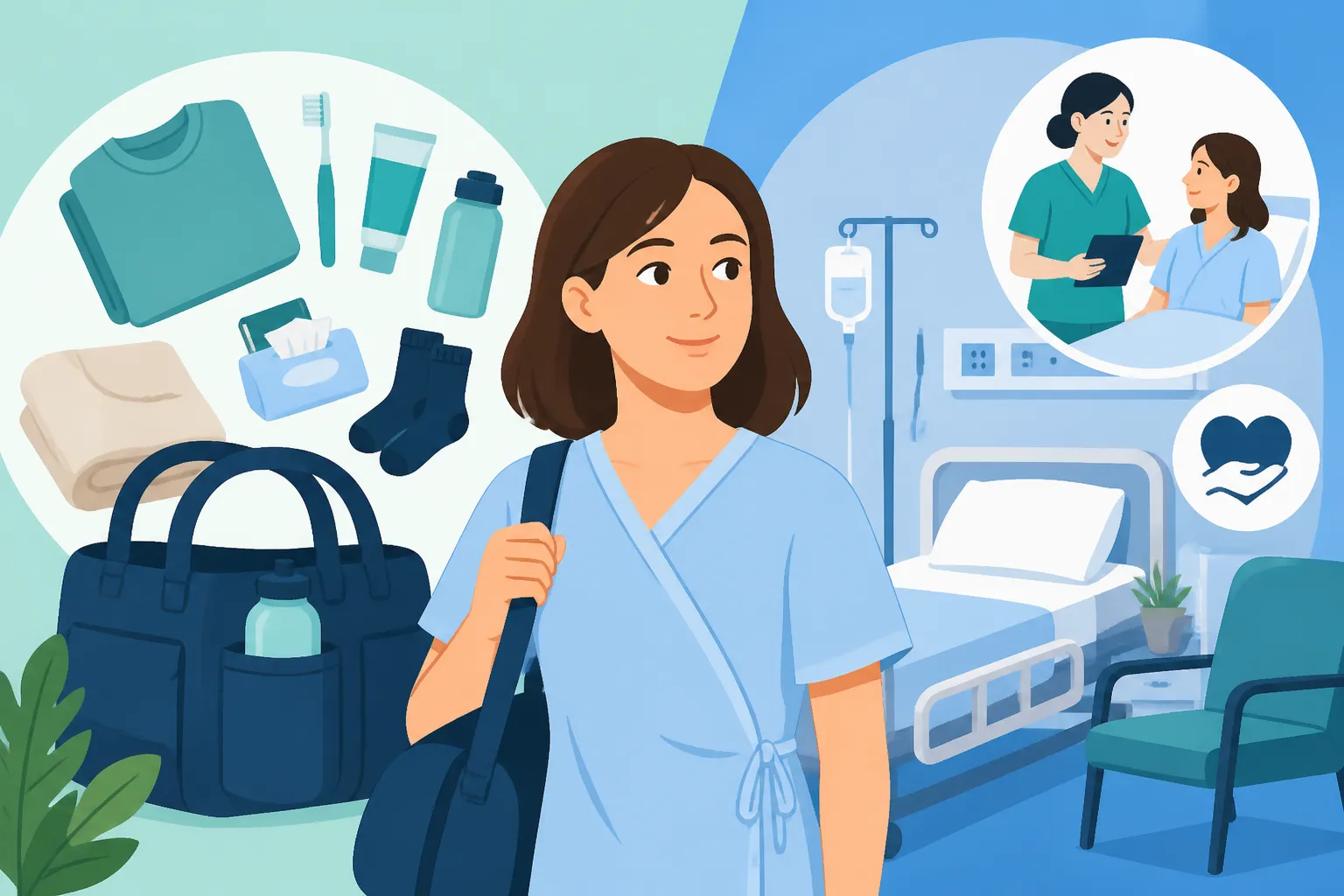
The "bring your own" culture in Danish hospitals is perhaps the biggest cultural shock for foreigners. Unlike hospitals in many other countries that provide a full kit of toiletries, slippers, and entertainment, Danish public hospitals expect you to be somewhat self-sufficient. They provide the medical necessities—the bed, the gown (if needed), and the medicine—but the rest is up to you. I remember my first night being very cold because I hadn't realized I should have brought my own thick socks and a comfortable sweater.
Danish wards are kept at a functional temperature, which can feel chilly if you are immobile. Furthermore, the hospital-issued gowns are often thin and open at the back. Most patients who are mobile enough to walk to the canteen prefer to wear their own "homewear" (hjemmetøj). Think soft leggings, sweatpants, and hoodies. This isn't just about comfort; it's a psychological tool used in Denmark to help patients feel less like "sick people" and more like individuals on the path to recovery.
Essential Documents and IDs
- Yellow Health Card: This is non-negotiable. If you have the app, that works too, but the physical card is a safe backup.
- MitID: You will need this to access the hospital's Wi-Fi and to check your medical records or digital mail during your stay.
- Medication List: While the hospital has access to your medicinkort, it is always safer to have a physical list of any supplements or foreign prescriptions that might not be registered in the Danish system.
- Passport/Residence Permit: Only necessary if there are questions about your residency, but generally, the Yellow Card is enough.
Personal Comfort and Practical Gear
Beyond the basics, you should bring your own toiletries: toothbrush, toothpaste, deodorant, and especially moisturizer, as hospital air is notoriously dry. Don't forget a long charging cable for your phone; outlets are often positioned behind the bed in awkward spots. If you are in a shared room, a pair of high-quality noise-canceling headphones is a lifesaver. Danish hospitals can be noisy environments with monitors beeping and staff moving about at all hours.
| Item Category | What to Bring | Why It Matters |
|---|---|---|
| Clothing | Sweatpants, hoodies, warm socks | Comfort and warmth in "stuffy" wards. |
| Footwear | Slip-on shoes or sturdy slippers | To avoid slipping on linoleum floors. |
| Toiletries | All basics including shampoo | Hospitals do not provide "hotel-style" kits. |
| Electronics | Extra-long charging cable, headphones | Outlets are far; rooms are often shared. |
| Snacks | Protein bars, dried fruit, juice | The kitchen closes early; canteens are pricey. |
Daily Life on the Ward: What to Expect
Life on a Danish hospital ward follows a very specific "rytme." It starts around 7:00 AM with the change of shifts and the first round of observations. Breakfast is typically served around 8:00 AM, often from a trolley in the hallway or in a communal dining area. In Denmark, there is a strong emphasis on "mobilization." Unless you are strictly ordered to stay in bed, the nurses will encourage you to get up, get dressed, and walk to the dining area for your meals.
The "stuegang" (ward round) usually happens between 9:00 AM and 12:00 PM. This is your primary time to talk to the doctor. Danish doctors are generally very direct and expect you to be an active participant in your treatment. They won't "coddle" you, but they will answer every technical question you have with transparency. This is a good time to discuss Sick Leave in Denmark: Medical Certificates (Lægeerklæring) and Boss Communication if you are worried about your recovery period.
Shared Rooms and Privacy
In the public system, unless you are very infectious or critically ill, you will likely be in a room with one to three other people. These rooms are separated by curtains, which provide visual privacy but zero acoustic privacy. You will hear every conversation your neighbor has with their doctor and their family. This can be jarring for expats from cultures where private rooms are the standard.
If privacy is a major concern for you, this is one of the few areas where the private sector provides a distinct advantage, as they almost exclusively offer single rooms. In a public ward, the staff tries their best to group patients by gender, but in emergency situations, mixed-gender rooms can occasionally occur. Being polite and keeping your volume low is the unspoken rule of the Danish hospital room.
Food, Canteens, and Nutrition
Hospital food in Denmark has improved significantly in recent years, with many hospitals focusing on organic (økologisk) and locally sourced ingredients. However, it is still "hospital food." Usually, you will have a choice of two or three dishes for lunch and dinner. If you have specific dietary requirements, such as halal, kosher, or vegan diets, you must inform the staff immediately upon admission.
Most large hospitals like Herlev or Aarhus have a "7-Eleven" or a "Lagkagehuset" (bakery) in the lobby, along with a larger canteen for visitors. If you find the ward food unappealing, you are usually allowed to have someone bring you food or even order delivery to the main entrance, provided it doesn't interfere with your medical diet. However, keep in mind the staff won't "serve" outside food to you; you'll need to be mobile enough to collect it.
Discharge and Post-Hospital Care
Discharge in Denmark is often faster than many expats expect. The philosophy is that once you are stable and the acute danger has passed, the best place for recovery is at home. This can feel like you are being "rushed out," but it is actually a sign that the medical team trusts the municipal support system to take over. Before you leave, you will have a "discharge talk" (udskrivelsessamtale) where a nurse or doctor will explain what happens next.
One of the most important things to secure before you leave is your "epikrise"—the summary of your stay. This is sent electronically to your GP so they know exactly what was done and what follow-up is needed. You should also ensure you understand Sickness Benefit (Sygedagpenge): Your Rights When Off Work Due to Illness so you can claim the necessary compensation if you are unable to return to work immediately.
The Discharge Plan (Udskrivelsesplan)
A proper discharge plan includes a list of any new medications and a schedule for follow-up appointments. In many cases, these appointments will not be at the hospital but at a local "sundhedscenter" (health center) run by the municipality. If you need help at home, such as a visiting nurse or "hjemmepleje" (home care), the hospital social worker (socialrådgiver) will coordinate this with your local "kommune."
If you live alone and are worried about how you will manage, you must speak up before you are discharged. The Danish system assumes a high level of independence, so if you cannot cook for yourself or climb the stairs to your apartment, the hospital needs to know so they can arrange for temporary "rehabilitering" (rehabilitation) in a municipal facility.
Medication and Follow-up
When you are discharged, the hospital will usually provide you with enough medication to last for the first 24 to 48 hours. After that, you are responsible for picking up your prescriptions at a local "apotek." These prescriptions are almost always digital. You just go to the pharmacy, show your Yellow Card, and they pull up your "medicinkort."
It is worth checking How Medication Subsidies (Tilskud) Are Calculated at the Apotek to see how your medication costs will be subsidized, as some post-hospital treatments can be expensive. If you are using international insurance like SafetyWing, make sure you keep all your receipts from the pharmacy, as the digital system in Denmark doesn't always talk to foreign insurance providers automatically.
Costs and Financial Considerations
For residents with a CPR number, the cost of a hospital stay in Denmark is 0 DKK. This includes the surgery, the bed, the food, and the medicine administered while you are an inpatient. This is the beauty of the Danish model. However, there are "hidden" costs that expats should be aware of. Parking at hospitals is notoriously expensive, and if you are there for a week, the parking fees can add up to thousands of kroner.
Additionally, the "free" aspect ends the moment you walk out the hospital doors. Any medication you take home, any crutches you need to rent, or any private physiotherapy you require post-discharge will likely have a cost attached. This is where Sygeforsikring “danmark”: Which Coverage Level Should Expats Choose? becomes very useful, as it can reimburse a significant portion of these "out-patient" costs that the state does not cover.
Is it Truly Free? Hidden Costs for Expats
While the medical care is free, the logistical costs are not. If you are an expat without a local support network, you might find yourself spending a lot on taxis to and from follow-up appointments. If you are not an EU citizen and do not yet have a CPR number, you could be billed at "tourist rates," which are astronomical. This is why Expat Health Insurance: Coverage Before You Get Your CPR Number is essential for those in the "waiting period" between arriving in Denmark and receiving their CPR number.
Using Expat Health Insurance
If you are using international insurance, the process involves a bit more paperwork. You will need to get a "Guarantee of Payment" from your provider to give to the hospital's billing department. Most major Danish hospitals are used to dealing with international providers like Cigna Global, but you should still be proactive in ensuring the communication is clear. Keep a digital folder of every document you receive, as foreign insurers will often ask for detailed medical reports that the Danish system assumes you will just "look up on Sundhed.dk."
Disclaimer
This guide is for informational purposes only and does not constitute professional medical or legal advice. Healthcare regulations and hospital policies in Denmark can change. Always consult with your General Practitioner (GP), the Danish Health Authority (Sundhedsstyrelsen), or your insurance provider for the most up-to-date and personalized information regarding your specific medical situation.