Finding an English-Speaking Doctor: Directories and Local Strategies
Staring at a feverish child while struggling to remember the specific Danish word for wheezing is a terrifying rite of passage for many expats. I remember my first winter in Aarhus, clutching my phone and praying the receptionist at the clinic spoke English because I was too sick to even think in Danish. This guide provides a comprehensive roadmap for finding English-speaking medical professionals and navigating the local strategies required to secure quality care in Denmark.
Understanding the Danish General Practitioner System
The foundation of your medical journey in Denmark is the General Practitioner, or GP, known locally as a Praktiserende Læge. In the Danish system, your GP acts as the gatekeeper to all other forms of healthcare. Unlike some countries where you might choose a specialist from a directory and book a direct appointment, here, everything begins with your primary doctor. You must understand The Role of the GP: Why You Cannot Go Directly to a Specialist because attempting to bypass this step will usually result in being turned away by specialists or hospitals for non-emergency issues.
When you first arrive and go through Understanding CPR Registration and Your Healthcare Entitlement, you will be asked to choose a doctor from a list of those currently accepting new patients within a certain radius of your home. This list is often presented to you at the International House or your local Borgerservice. It can be overwhelming to pick a name at random, especially when you are worried about language barriers. Most Danish doctors speak excellent English, as medical textbooks in Denmark are often in English, but the comfort level of the supporting staff can vary.
If you find that your assigned doctor isn't the right fit, or if their English isn't quite as fluent as you need for complex medical discussions, you are not stuck. You have the right to change your provider, although it usually comes with a small administrative fee of around 225 DKK. Learning How to Change Your Doctor Online via Borger.dk is a vital skill for any expat who wants to take control of their healthcare experience. I personally changed my doctor three times in my first two years until I found a clinic where I felt truly heard and understood.
Finding an English Speaking Doctor in Your Area
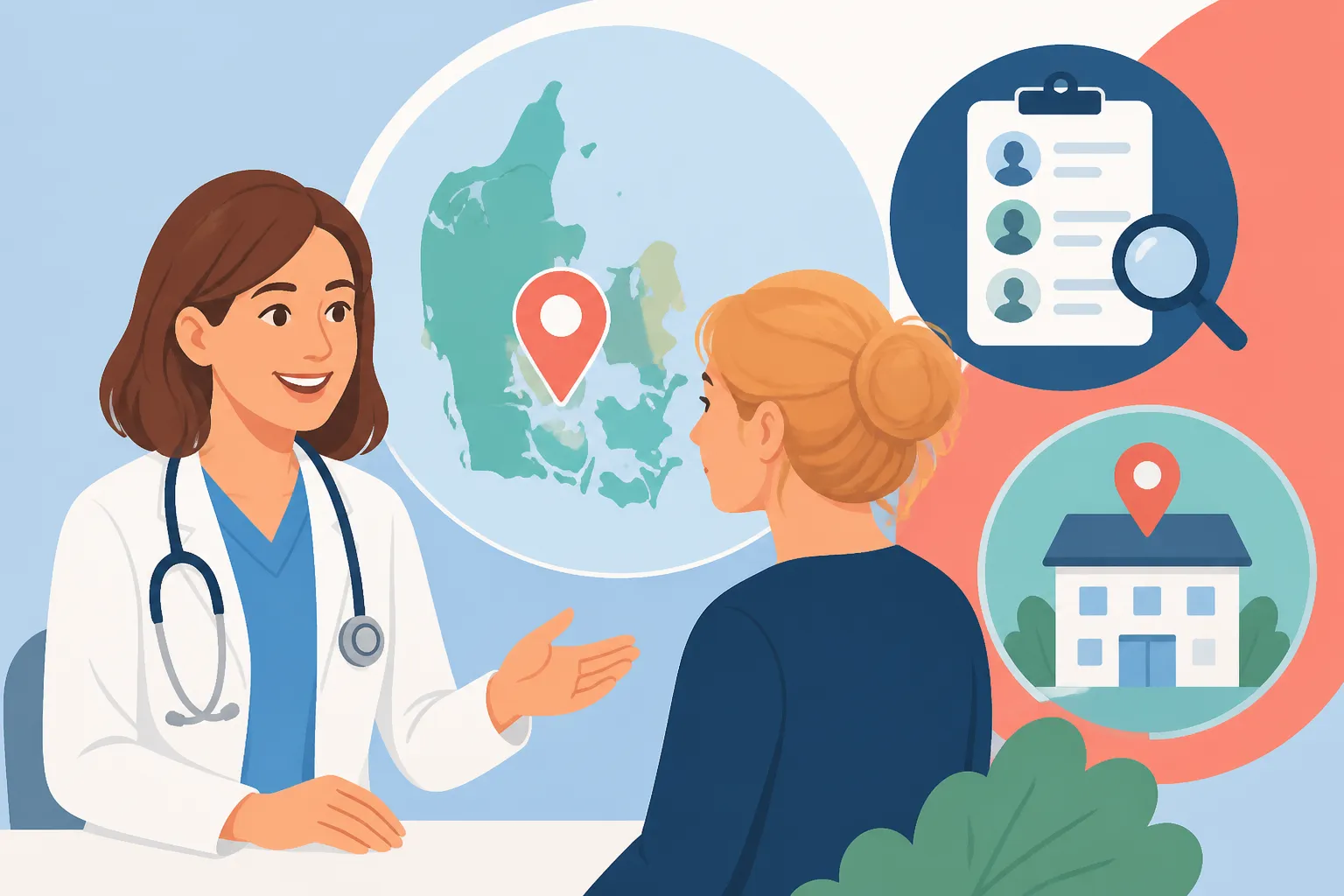
While nearly every doctor in Denmark has a high level of English proficiency, finding a clinic that feels "expat-friendly" requires a bit more legwork than just looking at a map. The official portal, Sundhed.dk, is your best friend here. It provides a searchable database of all clinics, but the interface is primarily in Danish. You can filter by postal code to see which doctors are "Open for Tilgang" (open for new patients). If a doctor is listed as closed, you generally cannot join their practice unless you are moving into the area and were already with them, or if a family member is already a patient.
For those living in the capital, How to Find a GP Accepting New Patients in Copenhagen can be particularly competitive. Many of the most popular English-speaking clinics in Vesterbro or Østerbro fill up within hours of opening their lists. A pro-tip from a veteran: check the Sundhed.dk portal on the first day of the month. This is often when lists are updated, and spots might open up. Don't be afraid to call a clinic directly and ask, "Do you have any doctors who are particularly comfortable conducting consultations in English?" even if the portal says they are closed; sometimes they can offer advice on nearby alternatives.
If you are a parent, the stakes feel even higher. You want someone who can explain pediatric milestones and childhood illnesses without anything being lost in translation. I highly recommend Finding an English-Speaking Pediatrician for Your Child by looking for GPs who specialize in family medicine. In Denmark, "pediatricians" are usually hospital-based specialists, so your GP will handle 95% of your child’s needs. Look for clinics with multiple doctors, as they often have a more diverse range of language skills and specializations among their staff.
| Feature | Public GP (Yellow Card) | Private Clinics (Self-Pay) |
|---|---|---|
| Cost | Free at point of use | 1,000 – 2,500 DKK per visit |
| Referral Required? | Yes, for all specialists | No, usually direct access |
| Language | English widely spoken | English guaranteed |
| Wait Times | 1-2 weeks for non-urgent | Same day or next day |
| Digital Access | Full (MinLæge/Sundhed.dk) | Limited to clinic's own portal |
Navigating the Digital Health Landscape
Denmark is one of the most digitized societies on earth, and your healthcare is no exception. Once you have your MitID, a whole world of medical transparency opens up to you. You should spend some time Sundhed.dk and MitID: Navigating Denmark’s Digital Health Portals to familiarize yourself with where your data lives. On this portal, you can see every note a doctor has ever written about you, every prescription you’ve been issued, and every lab result from the last decade. It is an incredibly empowering tool for an expat because you can copy-paste notes into a translator if a specific Danish medical term confuses you.
The mobile experience is just as important. New arrivals should prioritize How to Download the Sundhedskort App on Your Phone. This app serves as a digital version of your physical yellow card. In most waiting rooms, you will find a scanner; you simply swipe your phone or physical card to notify the doctor that you have arrived. If you forget to do this, the doctor won't know you’re there, and you might sit for an hour wondering why you haven't been called.
When it comes to the day-to-day management of your health, Booking a Doctor's Appointment in Denmark: MinLæge App Guide is essential reading. The MinLæge app allows you to book appointments, start video consultations, and send short text messages to your GP. For those who are nervous about speaking English over the phone, the text-based "E-consultation" feature is a godsend. You can carefully draft your symptoms in English, and the doctor will reply within a few business days. This is perfect for non-urgent questions or prescription renewals.
Specialized Care and Language Rights
There are times when a GP isn't enough, and you need a specialist. Under the Danish public system, your GP must write a "henvisning" (referral) which then sits in a central cloud. You then find a specialist who has a contract with the public system and book the appointment yourself. If you are struggling with mental health, for instance, finding Accessing English-Speaking Therapists and Counselors in Copenhagen involves getting that referral first to unlock subsidized rates. Be aware that waiting times for specialists can be long, sometimes several months.
During these long waits, many expats look toward private options. If you are moving to Denmark and haven't received your CPR number yet, you are in a vulnerable gap where you aren't covered by the public system. This is when Expat Health Insurance: Coverage Before You Get Your CPR Number becomes critical. Using a provider like SafetyWing can bridge this gap, offering you peace of mind while the Danish bureaucracy processes your residency. SafetyWing is particularly popular with digital nomads and those on shorter contracts who might not qualify for the full yellow card system immediately.
For those who want to skip the referral system entirely or want access to private hospitals with zero wait times, international plans from Cigna Global are a common choice. Cigna Global provides a level of coverage that allows you to see specialists like dermatologists or physiotherapists without waiting for a GP's permission. This is especially helpful if you have a chronic condition and need to maintain a relationship with a specific English-speaking specialist who may not be part of the public "Group 1" insurance pool.
Emergency Situations and After-Hours Care
One of the most confusing aspects of the Danish system is what to do when your GP’s office is closed. If you have a sudden illness at 8:00 PM on a Tuesday, you cannot just walk into an Emergency Room. You must understand the distinction in Emergency vs. Out-of-Hours Care: When to Call Lægevagten (1813). In the Capital Region, the number is 1813; in other regions, it varies. These lines are staffed by nurses and doctors who speak English. They will triage you over the phone and decide if you need to stay home, see an out-of-hours doctor, or head to the "Akutmodtagelse" (ER).
In a true life-threatening emergency, the rules change. You should never hesitate in Calling 112 in Denmark: English Support for Ambulance Dispatch. The dispatchers are trained to handle calls in English and will stay on the line with you until help arrives. I’ve had to call them once for a neighbor, and the transition to English was seamless and professional. They will ask for your location and the nature of the emergency, and an ambulance will be dispatched regardless of your insurance status or CPR registration.
For those who are in Denmark temporarily or haven't settled into the system yet, SafetyWing can be a lifesaver in emergency scenarios. It covers unexpected medical costs and evacuations, which the Danish public system might not cover if you are still in the "visitor" phase of your move. Similarly, Cigna Global offers high-limit emergency coverage that ensures you can be treated in the best private facilities if the public hospitals are experiencing heavy loads. Having this secondary layer of protection is often what allows expats to sleep soundly during their first few months in the Nordics.
Local Strategies for Better Communication
Beyond the apps and the portals, there is a cultural element to navigating Danish healthcare. Danes value directness and brevity. When you meet your English-speaking doctor, it is helpful to have a bulleted list of your symptoms and concerns ready. This ensures that even if there is a minor language nuance, the core facts of your health are communicated. Don't be surprised if the doctor seems very "minimalist" in their approach; Danes generally avoid over-prescribing antibiotics or ordering unnecessary tests, which can be a culture shock if you come from a more interventionist medical culture.
Another strategy is to check the clinic's website for "English" sections. Many modern clinics in the larger cities now have dedicated pages explaining their procedures in English. This is a good indicator that the staff is accustomed to international patients. If you ever feel that your language needs are not being met during a serious hospital stay, remember that you have Translators in Danish Healthcare: Your Right to an Interpreter. For certain medical procedures and consultations, the region is obligated to provide an interpreter if you do not speak Danish well enough to understand your treatment, though this is usually reserved for complex cases rather than routine GP visits.
Finally, utilize your network. Joining local expat groups on social media can provide real-time feedback on which clinics currently have the best English-speaking staff. People are often very happy to share their experiences—both good and bad—which can save you the 225 DKK fee for changing a doctor that turns out to be a poor fit. Denmark's healthcare system is excellent, but like any system, it requires a bit of "insider knowledge" to make it work perfectly for your specific needs as a foreigner.
Disclaimer
The information provided in this guide is for informational purposes only and does not constitute professional medical or legal advice. Healthcare regulations and digital portal interfaces in Denmark are subject to change. Always consult the official Danish health authorities at Sundhed.dk or your local municipality for the most current requirements and procedures. If you are experiencing a medical emergency, dial 112 immediately.