Child Sickness Days (Barns Første Sygedag): Your Rights as a Parent
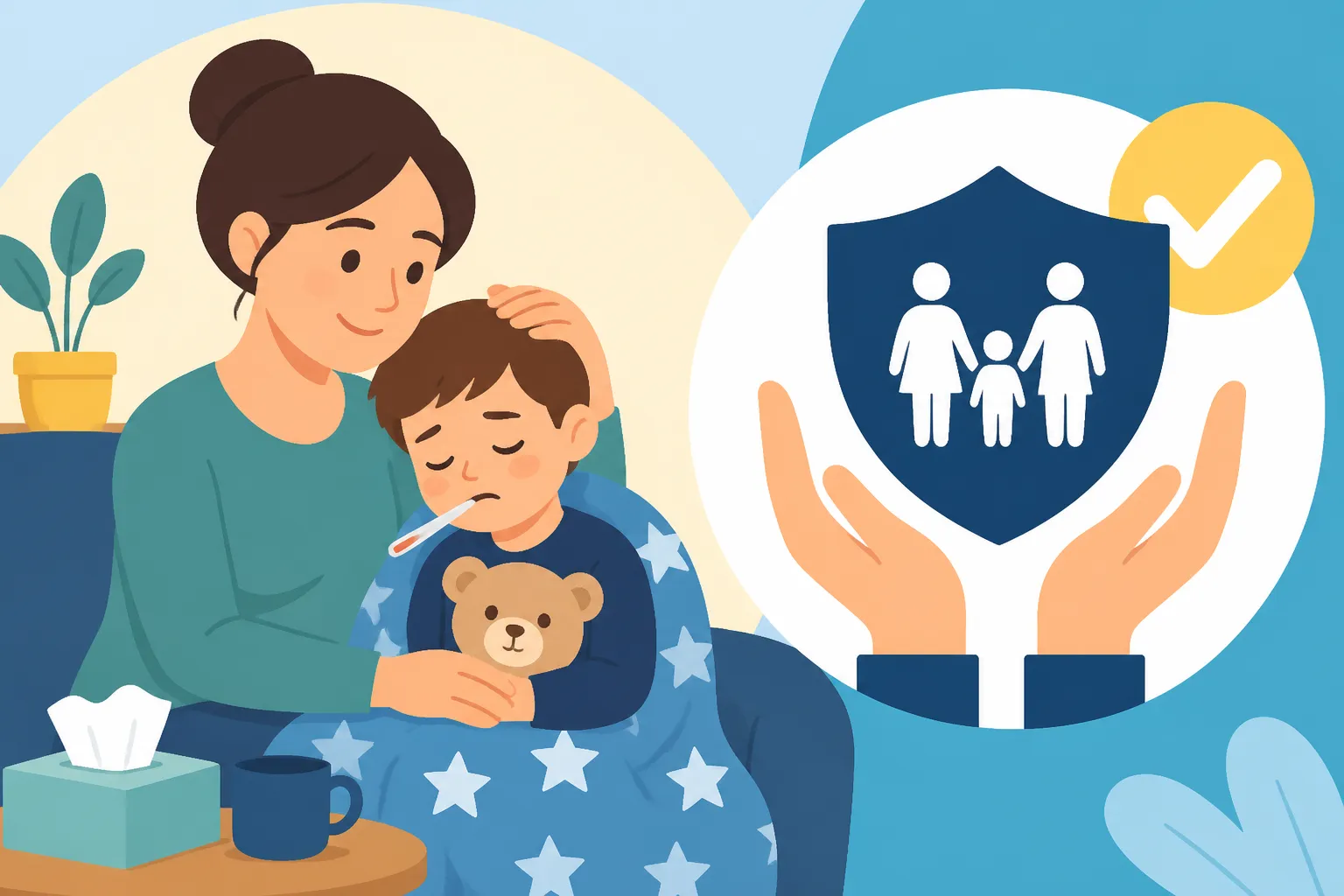
Waking up to the heat of a feverish toddler at 3:00 AM is stressful enough, but in a foreign country, that stress is compounded by the fear of calling your boss to say you can't come in. I’ve been there—pacing my kitchen in Aarhus, wondering if I’d lose my job for staying home with a sick child. This guide breaks down exactly how "Barns første sygedag" works so you can focus on your family without administrative panic.
The Cultural Reality of Barns Første Sygedag
In Denmark, the concept of a "child’s first sick day" is deeply woven into the social fabric. It is not just a policy; it is a cultural acknowledgement that children get sick, and parents are the best people to care for them. However, for many of us coming from cultures where you might be expected to find a babysitter or "work through it" while your child rests on a sofa in the office, the Danish approach can feel almost too good to be true.
The primary purpose of this right is to allow you to stay home on the very first day your child is ill. This gives you the breathing room to provide immediate care, take them to the doctor if necessary, and—most importantly—arrange for alternative childcare for the following days if the illness persists. It is essentially a "buffer day" provided by your employer.
It is important to realize that this is based on a high-trust model. In my years here, I have found that Danish managers rarely question you when you call in for a child's sick day. They expect you to be honest, and in return, they provide the flexibility. However, understanding the legal nuances of Employment Rights: Contracts, Holiday Law, and Maternity Leave is vital because the rules can vary significantly depending on whether you work in the public or private sector.
Is Child Sickness Leave a Legal Right for Everyone
One of the biggest misconceptions among new arrivals is that "Barns første sygedag" is a universal law that applies to every single worker in Denmark. Unfortunately, it is not. Unlike your own sick leave, which is protected by the Sickness Benefit Act, the right to a child's sick day is governed by collective agreements (overenskomster) or your individual employment contract.
If you are employed in the public sector—working for a municipality (kommune), a region, or the state—you almost certainly have the right to the first (and often the second) sick day with full pay. If you are in the private sector, your rights depend entirely on whether your company follows a collective agreement or if they have written this benefit into your specific contract.
Before you find yourself in an emergency, I highly recommend checking your contract for the phrase "Barns 1. sygedag." If it isn't there, you might be required to use a vacation day or take unpaid leave. This is where being a member of a union becomes incredibly helpful. Understanding Trade Unions and A-Kasse: Why Every Expat Must Understand Them can help you navigate these contractual gaps, as unions are the ones who negotiate these rights into the collective agreements that cover large portions of the Danish workforce.
Managing the Logistics of the First Day
When that fever hits, the first step is communication. In Denmark, the hierarchy is flat, and the tone is direct. You should notify your employer as early as possible—usually via a phone call or a text message, depending on your office culture. A simple "My child is sick, so I am taking 'barns første sygedag' today" is usually all that is required.
During this day, your priority is likely getting medical advice. If your child is newly arrived and you are still waiting for your paperwork, you might be looking at Expat Health Insurance: Coverage Before You Get Your CPR Number to handle initial costs. For those already in the system, you will use The Yellow Health Card (Sundhedskort): Your Key to Danish Healthcare to access your GP.
If the illness is urgent and happens outside of normal business hours, you should know about the out-of-hours service. In the Capital Region, this is 1813. Knowing the difference between Emergency vs. Out-of-Hours Care: When to Call Lægevagten (1813) is crucial for getting the right help without sitting in an ER for hours. For expats who prefer a specific type of coverage or want access to private pediatric specialists without the standard wait times, brands like Cigna Global can offer supplemental peace of mind alongside the public system.
Comparison of Public vs Private Sector Rights
To help you understand where you might stand, the following table outlines the typical differences in how child sickness days are handled across different types of employment in Denmark.
| Feature | Public Sector (State/Municipality) | Private Sector (with Agreement) | Private Sector (No Agreement) |
|---|---|---|---|
| First Day Paid? | Yes, full salary. | Usually yes, if specified. | Often no; must use vacation. |
| Second Day Paid? | Yes, usually (Barns 2. sygedag). | Sometimes, becoming more common. | Very rare. |
| Age Limit | Typically until the child is 18. | Usually until the child is 14. | Depends on the contract. |
| Proof Required? | Rarely for a single day. | Rarely. | Employer may request a note. |
| Both Parents? | Only one parent at a time. | Only one parent at a time. | Only one parent at a time. |
What Happens on the Second Day and Beyond
If your child is still sick when the sun comes up on day two, you enter a bit of a grey zone. In the public sector, many employees are entitled to "Barns anden sygedag" (the child’s second sick day). This is an extension of the same principle: more time to care for the child or find a solution.
However, if you do not have a "second day" right, or if the child is still ill on day three, you cannot continue to claim child sickness days. At this point, most Danish parents will:
- Swap with the other parent: If the father took day one, the mother takes day two. This is very common and respected in Danish work culture.
- Use "Feriefridage": These are the extra 6th-week vacation days many employees have.
- Use standard vacation days: You can request to use your earned holiday time.
- Work from home: If your job allows it and your child is old enough to rest quietly, many employers are flexible about "omsorgsdage" (care days) or working remotely.
For those managing more complex situations, such as Managing Chronic Conditions (Diabetes, Asthma) in the Danish System, there are different rules under the Social Services Act (Serviceloven) that might allow for more extended paid leave to care for a chronically ill child. If you are in the middle of a relocation and your child falls ill, having a flexible plan like SafetyWing can be helpful for the transition period before your Danish social security fully kicks in.
Navigating Doctor Appointments and Documentation
A common question from expats is: "Do I need a doctor's note for my child's sick day?" In the vast majority of cases, the answer is no. Denmark operates on a high level of social trust. Your employer takes your word for it.
However, if your child is ill for an extended period and you are seeking Sickness Benefit (Sygedagpenge): Your Rights When Off Work Due to Illness for yourself because the stress has made you unwell, or if you are applying for special municipal support for a child's long-term illness, documentation will be required.
When you do need to see a doctor, remember that your GP is the gatekeeper. You cannot simply show up at a hospital for a cough. You must call your GP first. If you are still trying to find a permanent doctor, you might look into Finding an English-Speaking Pediatrician for Your Child or use the "Min Læge" app to communicate with your assigned clinic. It is also helpful to understand The Role of the GP: Why You Cannot Go Directly to a Specialist so you don't waste time trying to book a pediatrician directly.
Specific Scenarios and FAQ
What if the child gets sick during the workday?
If you are at work and the school or "vuggestue" (nursery) calls to say your child has a fever, you are generally allowed to leave immediately. This usually counts as your "Barns første sygedag," even if it starts at noon.
Can both parents stay home?
No. The right to a child's sick day is intended for one parent to provide care. If both parents stay home, the employer is only obligated to pay the one who is actually designated as the caregiver for that day.
What if I am a freelancer or self-employed?
If you are self-employed, you do not have an employer to pay for your day off. You are effectively "on your own" unless you have private loss-of-income insurance. Many expats who freelance find that having a robust private insurance policy from Cigna Global or a similar provider helps cover broader medical needs, but the "daily wage" for a sick day is something you have to budget for yourself.
Does this apply to step-children?
Usually, yes, provided the child lives with you or you have a documented parental role. Most collective agreements define "child" as anyone under the age of 14 (sometimes 18) who resides in your household.
Final Advice for Expats
Navigating "Barns første sygedag" is one of the first true tests of "becoming Danish" in your professional life. It requires you to shed the guilt often associated with taking time off in other countries. Remember that your Danish colleagues are doing the exact same thing. By taking the day off to care for your child, you are actually participating in the "Flexicurity" model that makes the Danish labor market so resilient.
Keep a copy of your employment contract saved digitally so you can reference the specific wording on child sickness. If you are ever in doubt, reach out to your HR department or your union representative. They are accustomed to these questions and are there to ensure the rules are followed correctly. Most importantly, use the time to help your little one get better. The Danish system is designed to support the family unit, and once you get past the initial administrative confusion, it is one of the greatest perks of living in this country.
Disclaimer
This article is intended for informational purposes only and does not constitute legal or professional labor advice. Employment rights regarding child sickness days in Denmark are subject to individual contracts and collective agreements, which can change. Always consult your specific employment contract, your trade union, or a legal professional to verify your rights. Medical advice should always be sought from qualified healthcare providers or through the official Danish emergency channels.