Free Abortion in Denmark: Legal Time Limits and the Procedure
Navigating a sensitive health crisis in a foreign country is terrifying, especially when you are unsure of the legalities or how to speak the local medical jargon. I still remember the paralyzing anxiety of my first major medical hurdle here, feeling like a ghost in a system I didn't yet understand. This guide clarifies the legal time limits, step-by-step procedures, and your rights to free abortion care as an expat in Denmark.
Your Legal Rights to Abortion in the Danish Healthcare System
In Denmark, the law regarding pregnancy termination is progressive and centers on the autonomy of the individual. Since 1973, Denmark has allowed "selvbestemt abort," which translates to self-determined abortion. This means that any woman living in Denmark has the right to an abortion without having to provide a specific reason or justification, provided they are within the legal timeframe. This right is a cornerstone of the Healthcare in Denmark for Foreign Residents: Complete System Guide (2027) and applies to both Danish citizens and registered foreign residents.
The primary legal boundary you need to be aware of is the 12-week limit. You are entitled to a free abortion up until the end of the 12th week of pregnancy (11 weeks and 6 days). The weeks are calculated from the first day of your last menstrual period. If you are unsure of your dates, the system will confirm the gestational age via an ultrasound, which is a standard part of the preliminary consultation.
If you are a minor under the age of 18, the law generally requires parental consent or the consent of a legal guardian. However, there are exceptions. If there are compelling reasons why your parents should not be involved, you can apply for an exemption through the Abortion Council (Abortsamrådet). Your GP is legally obligated to help you navigate this sensitively and discreetly.
The 12 Week Limit and What It Means for You
The 12-week limit is strictly observed in the public system. If you discover you are pregnant and are considering a termination, it is vital to act quickly. The Danish system is efficient, but the "referral" culture means you cannot simply walk into a hospital. Everything starts with your General Practitioner. Understanding the nuances of the 12-week rule is critical because once you pass this threshold, the process changes from an autonomous decision to one that requires committee approval.
For those who are just arriving and haven't yet secured their residency, you might be worried about where you stand. If you are in your First 90 Days: Health Insurance Requirements for Non-EU Expats, you may not have your CPR number yet. While the procedure is "free" for residents, those without a CPR number may be billed. This is where having a plan with SafetyWing or Cigna Global can be a lifesaver, as they can sometimes help cover emergency medical expenses or provide guidance on private options while your public coverage is in limbo.
Accessing Care Without a CPR Number
If you find yourself in the "limbo" period—meaning you have arrived in Denmark but are still waiting for your residence permit or your yellow card—you are still entitled to medical care, but the "free" aspect becomes complicated. Hospitals will generally perform the procedure if it is deemed necessary or if you are within the legal limit, but they will send a bill to your registered address later.
In these instances, expats often rely on international providers like SafetyWing to cover the gap. However, it is important to check if your specific policy covers elective procedures. If you are here on a high-end corporate relocation, a plan from Cigna Global might offer more comprehensive maternity and reproductive health coverage that bridges the gap until your public Understanding CPR Registration and Your Healthcare Entitlement is fully active.
The Step by Step Process for Requesting an Abortion
The journey begins at your doctor's office. In Denmark, your GP is the gatekeeper to all specialized medical services. You must book an appointment for a "consulation om svangerskabsafbrydelse" (consultation for pregnancy termination). This is not an appointment where you will be judged; the Danish medical culture is very matter-of-fact and professional regarding reproductive rights.
During this first visit, your doctor will perform a physical exam and likely a pregnancy test to confirm the status. They are required by law to inform you about the procedure, the potential risks, and the alternatives available (such as keeping the child or adoption). You will also be asked if you would like a "støttesamtale" (support conversation) before and after the procedure. This is entirely optional but highly recommended if you are feeling overwhelmed by the move and the situation.
The Referral to the Hospital
Once the GP has confirmed the pregnancy and your desire to terminate, they will send an electronic referral to the gynecology department of the nearest hospital. Because of The Role of the GP: Why You Cannot Go Directly to a Specialist, you cannot bypass this step. The hospital will then contact you—usually via Digital Post (e-Boks or Mit.dk)—with an appointment for a preliminary examination.
At the hospital, you will have an ultrasound to determine exactly how many weeks pregnant you are. This is crucial because it determines whether you can have a medical abortion or a surgical one. At this stage, you should also mention if you need language support. You have a right to an interpreter if you do not speak Danish well enough to understand the medical risks, as detailed in Translators in Danish Healthcare: Your Right to an Interpreter.
Choosing Between Medical and Surgical Abortion
The Danish system offers two main types of procedures, and the choice often depends on how far along the pregnancy is. The medical staff will guide you, but here is a general comparison of what to expect:
| Feature | Medical Abortion (Abortpille) | Surgical Abortion (Indgreb) |
|---|---|---|
| Typical Timing | Up to week 9 (sometimes up to 12) | Weeks 6 to 12 |
| Procedure | Medication taken in two stages | Minor surgery under anesthesia |
| Location | Often completed at home (after first pill) | Performed at the hospital |
| Pain Level | Similar to a heavy, painful period | Cramping after the procedure |
| Recovery | 1-2 days of heavy bleeding/rest | 1 day of rest, light bleeding |
Most abortions in Denmark are now performed medically because it is less invasive. You take the first pill (Mifepristone) at the hospital to stop the pregnancy hormones, and then 24-48 hours later, you take the second set of pills (Misoprostol) at home to empty the uterus. If you are over 9 weeks, the hospital may require you to stay on-site for the second stage.
Costs, Paperwork, and the Yellow Card
For anyone registered with a CPR number, the entire procedure, including consultations, the ultrasound, the medication, or the surgery, is 100% free. You simply need to bring The Yellow Health Card (Sundhedskort): Your Key to Danish Healthcare and scan it at the arrival kiosk in the hospital. The system tracks everything digitally, and you won't see a bill.
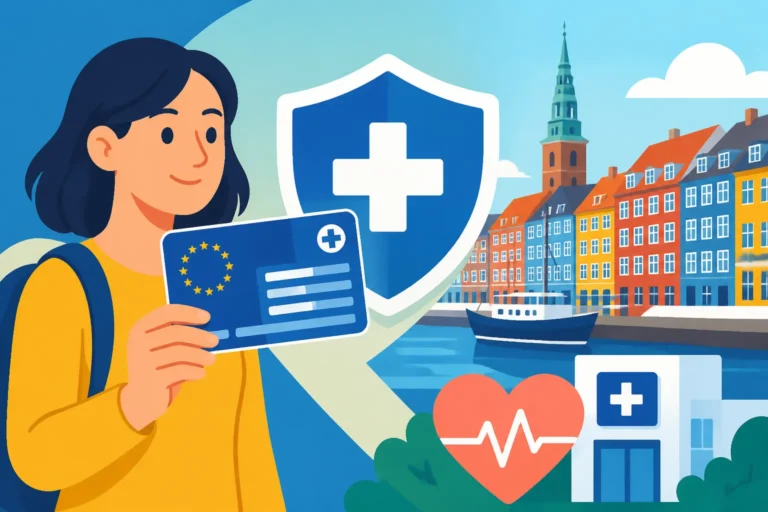
If you are a student or a worker from the EU, you can also use your Blue European Health Insurance Card (EHIC) to access these services under the same conditions as a Danish citizen. If you are a non-EU expat waiting for your card, be prepared for a bill that can range from 5,000 to 10,000 DKK, depending on the complexity of the hospital stay. Again, checking your SafetyWing or Cigna Global policy for "emergency gynecological care" is a smart move if you are caught in that waiting period.
Managing Your Records Digitally
Everything in Denmark is digital. After your referral, you can track your appointments and eventually see your procedure notes online. Familiarizing yourself with Sundhed.dk and MitID: Navigating Denmark’s Digital Health Portals is essential. While the notes are in Danish, you can use translation tools to understand the follow-up care instructions.
You should also download the "Min Læge" app. This allows you to communicate directly with your GP if you experience unusual pain or heavy bleeding after the procedure. It is much faster than calling and trying to navigate a phone menu in Danish.
Privacy and Confidentiality for Expats
A common concern for foreigners is whether their employer or family back home will find out. In Denmark, patient confidentiality is extremely strict. Your employer has no right to know why you are taking sick leave; they only need a "mulighedserklæring" (fit-for-work note) if you are out for an extended period, which does not state the specific diagnosis or procedure.
Furthermore, if you are concerned about your medical history being visible to others in your household who might have access to your MitID, you can rest assured that medical records on Sundhed.dk are private to the individual. Even if you are on a joint insurance plan through a provider like Cigna Global, the specifics of a termination are protected by strict GDPR and Danish health privacy laws.
What Happens if You Are Past 12 Weeks?
If you discover you are pregnant after the 12th week, you no longer have the automatic right to an abortion. However, this does not mean it is impossible. You must apply for a special permit through the regional Abortion Council (Samrådet).
The Council consists of three people: a lawyer/social worker and two doctors. They evaluate applications based on specific criteria:
- Health Risks: If the pregnancy poses a danger to the life or physical/mental health of the mother.
- Fetal Abnormalities: If there is a significant risk that the child will suffer from a serious physical or mental disorder.
- Social/Personal Circumstances: If the woman is too young or incapable of caring for a child, or if the pregnancy resulted from a criminal act (like rape).
Your GP will help you fill out the application and send it to the Council. The process is remarkably fast, usually taking only a few days to a week. If the Council denies your request, you can appeal the decision to the National Board of Appeals (Abortankenævnet). This is a complex emotional time, and I strongly recommend seeking support from Mental Health in Denmark: Accessing Psychologists and Therapy for Expats during this process.
Support and Counseling Resources
You are not alone in this. Denmark provides several avenues for emotional and psychological support. The organization "Mødrehjælpen" (Mothers' Aid) is an incredible NGO that offers free, impartial counseling for anyone facing an unplanned pregnancy. They have English-speaking counselors and can help you weigh your options without any pressure.
Additionally, if you find that the experience has triggered a deeper emotional response, you should look into Accessing English-Speaking Therapists and Counselors in Copenhagen or other major cities. Many private health insurance plans, including those from Cigna Global, provide coverage for psychological sessions, which can be invaluable for processing the experience in your native language.
Practical Advice for the Day of the Procedure
If you are having a medical abortion at home, make sure you have a support person with you. You will experience significant cramping and bleeding. It is also wise to stock up on heavy-duty sanitary pads (not tampons) and over-the-counter pain relief. While the hospital will give you some medication, you may need more. Note that Why You Cannot Buy Ibuprofen 400mg Without a Prescription is a common hurdle here; you can only get 200mg tablets over the counter at supermarkets or pharmacies (Apotek).
If you are having a surgical abortion, you will be at the hospital for several hours. You will need someone to pick you up because you cannot drive after general anesthesia. Refer to Hospital Admissions in Denmark: What to Bring and What to Expect for a list of essentials like comfortable clothes and your yellow card.
Follow-Up Care and Contraception
After an abortion, the hospital or your GP will strongly encourage a follow-up talk about future contraception. This is part of the holistic approach to Women’s Health: Routine Screenings, Gynecology, and Contraception. Whether you are looking for the pill, an IUD (Spiral), or an implant, this is the best time to set that up.
Most contraception is not free in Denmark, though it is often subsidized. If you have private insurance through a company like Cigna Global, check if they reimburse the cost of IUD insertions or prescription birth control. If you are a student or on a budget, your GP can help you find the most cost-effective brand.
Emergency Contacts and Complications
While complications are rare, you must know who to call if something feels wrong (e.g., fever, extremely heavy bleeding, or foul-smelling discharge).
- During Office Hours: Call your GP immediately.
- After Hours (16:00 – 08:00) and Weekends: Call the Out-of-Hours Medical Service (Lægevagten). In the Capital Region, the number is 1813.
- Life-Threatening Emergencies: Call 112.
The Danish system is designed to catch you if things go wrong, but you have to be the one to make the call. Don't worry about your Danish skills in an emergency; the dispatchers and the Lægevagten doctors almost always speak excellent English.
Disclaimer
The information provided in this guide is for educational and informational purposes only and does not constitute legal or medical advice. Healthcare laws and procedures in Denmark can change, and you should always consult with a qualified medical professional or the Danish Health Authority (Sundhedsstyrelsen) for the most current information regarding your specific situation. The mentions of private insurance providers like SafetyWing and Cigna Global are based on common expat experiences and do not guarantee coverage for any specific procedure.