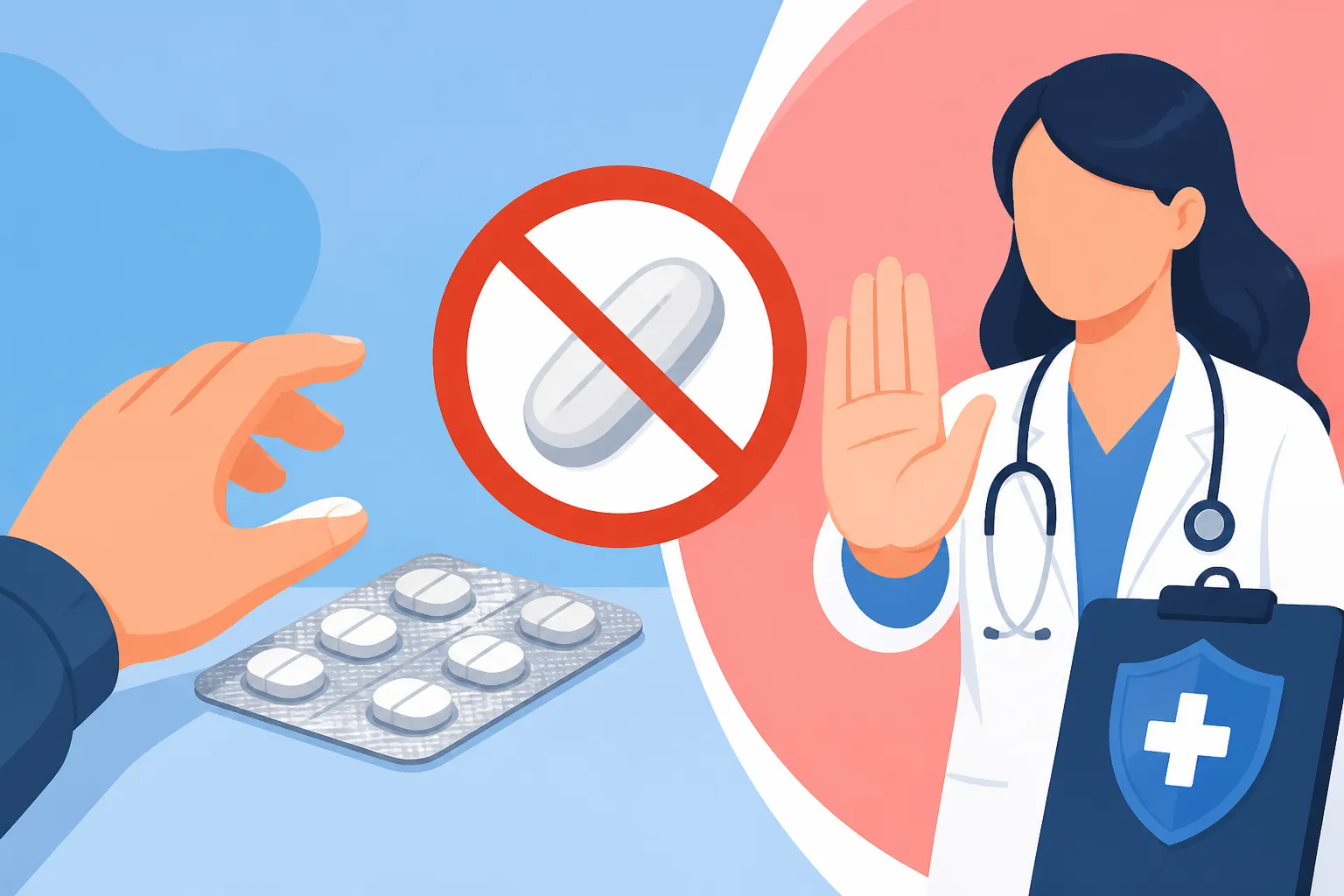
Why You Cannot Buy Ibuprofen 400mg Without a Prescription
If you have ever walked into a Danish supermarket with a pounding migraine, expecting to grab a bottle of 500mg Ibuprofen like you would back home, you have likely experienced the "Danish Pharmacy Culture Shock." I remember my first month in Copenhagen, standing at the Netto checkout with two boxes of 200mg tablets, only to be told by a teenager behind the counter that I was legally only allowed to buy one. This guide solves the mystery of why Denmark restricts Ibuprofen dosages and teaches you how to navigate the system without the headache.
The Strict Reality of Over-the-Counter Pain Relief in Denmark
Coming from the US, the UK, or even many parts of Southern Europe, the way Denmark handles basic painkillers feels incredibly restrictive—almost like being treated like a child. In most countries, you can buy a bottle of 100 high-dosage Ibuprofen capsules at a gas station. In Denmark, however, the "supermarket selection" is a tiny, locked cabinet behind the cashier containing only 200mg tablets in packs of 20.
The first thing you need to understand is the legal divide between the supermarket and the Apotek (the pharmacy). Supermarkets are only licensed to sell "handkøbsmedicin" (over-the-counter medicine) in the lowest possible dosages and in very small quantities. If you want anything stronger or in a larger quantity, the supermarket cannot help you. Even at a dedicated Pharmacies in Denmark: Apotek Rules, Prescriptions, and Subsidies, the 400mg Ibuprofen tablets are kept strictly behind the counter, requiring a digital prescription from your GP.
This system can be incredibly frustrating during your First 90 Days: Health Insurance Requirements for Non-EU Expats, especially if you haven't received your CPR number yet. Many expats tend to try to argue with the pharmacist, explaining that they’ve taken 400mg or 600mg tablets for years without issue. It doesn't matter. In Denmark, the rules are set by the Danish Medicines Agency (Lægemiddelstyrelsen), and they don't leave much room for negotiation at the till.
| Feature | Supermarket (Netto, Coop, etc.) | Apotek (Pharmacy) – OTC | Apotek – Prescription |
|---|---|---|---|
| Ibuprofen Dosage | 200mg Only | 200mg Only | 400mg, 600mg, etc. |
| Pack Size | Max 20 tablets | Max 20 tablets | Bulk sizes (100+) |
| Quantity Limit | 1 pack per person (over 18) | Varies, usually 1-2 packs | No limit (as prescribed) |
| Identification | Photo ID required (18+) | Photo ID required (18+) | The Yellow Health Card (Sundhedskort): Your Key to Danish Healthcare |
Why 400mg Ibuprofen is Prescription-Only: Safety and Philosophy
You might wonder why a country that ranks so high in personal freedom is so "nanny-state" about a common anti-inflammatory. The reasoning is two-fold: medical safety and the core philosophy of the Danish healthcare system. Danish health authorities are hyper-aware of the risks of gastric bleeding and kidney stress associated with long-term NSAID (Non-Steroidal Anti-Inflammatory Drug) use. By keeping the dosage at 200mg for OTC sales, they effectively force a "safety pause." If 200mg isn't enough, you are encouraged to see a doctor rather than self-medicating with higher doses.
The Danish medical philosophy is generally one of "less is more." If you visit your doctor for a minor injury, they are more likely to suggest rest and "Danish math" (combining 500mg Paracetamol with 200mg Ibuprofen) than to jump straight to heavy prescriptions. Understanding The Role of the GP: Why You Cannot Go Directly to a Specialist is crucial here because your GP acts as the gatekeeper for all medications. They want to ensure that if you are regularly taking 400mg of Ibuprofen, they have checked your blood pressure and kidney function.
For those of us used to more aggressive medical intervention, this feels like a hurdle. However, once you are in the system, it is quite efficient. If you have a chronic condition, your doctor will put a "reit" (repeat) prescription on your profile. This allows you to manage everything through Using the Medicinkortet App: Managing Your Prescriptions Digitally, where you can see how many refills you have left without needing to call the clinic every time you run out.
How to Get Higher Dosage Painkillers: The Process
If 200mg just isn't cutting it for your specific health needs, you have to follow the official Danish path. You cannot simply walk into an Apotek and ask for 400mg because you have a backache. You must first have a consultation with your General Practitioner. If you are new to the country and don't have a GP yet, you might consider Expat Health Insurance: Coverage Before You Get Your CPR Number to cover private consultations, but once you have your "Yellow Card," the process is standardized.
First, you need to book an appointment. I highly recommend Booking a Doctor's Appointment in Denmark: MinLæge App Guide for this, as it allows you to skip the morning phone queues. During the consultation, explain your history with the medication. If the doctor agrees that 400mg is appropriate, they won't give you a piece of paper. Instead, they "send" the prescription to a central server. You can then walk into any Apotek in Denmark, hand over your Sundhedskort, and they will see the prescription in their system.
Another benefit of getting a prescription for higher dosages is the cost. While OTC Ibuprofen is relatively cheap, if you are prescribed large quantities, you enter the "Tilskud" system. This means the state starts subsidizing your medicine costs once you spend over a certain amount per year. You can learn more about this in our guide on How Medication Subsidies (Tilskud) Are Calculated at the Apotek. If you are using comprehensive private insurance like Cigna Global, they may also cover the remaining co-pay, depending on your specific plan.
Navigating the Apotek as an Expat
The Danish pharmacy experience is very different from the "convenience store" vibe of a CVS or a Boots. Most Apoteks are calm, clinical environments where you take a number and wait your turn. When you get to the counter, the pharmacist is legally obligated to ask if you know how to use the medication. Don't take this personally; they ask everyone, even if you’re just buying a pack of 200mg pills.
One major pain point for expats is the opening hours. Most pharmacies close by 5:30 PM or 6:00 PM, and many are closed on Sundays. If you find yourself in desperate need of 400mg Ibuprofen (and you have a prescription) in the middle of the night, you’ll need to find a "Døgnapotek" (24-hour pharmacy). These are usually located only in major cities like Copenhagen, Aarhus, or Odense, and they charge an "out-of-hours" fee for service.
If you are a frequent traveler or a digital nomad using SafetyWing, you might be used to buying medication in bulk in other countries to keep in your travel kit. Be aware that bringing large quantities of 400mg Ibuprofen into Denmark from outside the Schengen area can sometimes cause issues at customs if it looks like you are importing it for more than personal use. It is always safer to have a copy of your home-country prescription or a doctor's note just in case.
Alternatives and Strategies for Managing Pain
So, what do you do if you have a prescription-level pain but no prescription? The most common advice you will get from a Danish pharmacist is to combine medications. The "Danish Cocktail" for moderate pain is often 1000mg of Paracetamol (two 500mg tablets) plus 200mg or 400mg of Ibuprofen. Because they work on different pathways in the body, this is often more effective than a single high dose of Ibuprofen alone.
If your pain is musculoskeletal, the Danish system is very big on Physiotherapy in Denmark: Getting GP Referrals and Managing Costs. Instead of just handing out 400mg Ibuprofen to mask the pain of a bad back, your GP will likely refer you to a "fysioterapeut" to solve the underlying issue. This is part of the long-term health strategy in Denmark, focusing on rehabilitation over-medication.
For those who find the public system's approach too slow or conservative, private health insurance can be a lifesaver. Brands like Cigna Global offer more extensive coverage that can include private consultations, which might be faster than waiting for a standard GP slot during flu season. However, even private doctors in Denmark generally adhere to the national guidelines regarding Ibuprofen dosages, so don't expect a private "fast track" to 800mg pills unless there is a severe clinical need.
Practical Tips for the "Painkiller Transition"
To make your life easier in Denmark, I recommend a few practical steps. First, always keep a small stash of the 200mg tablets in your house. Since you can only buy one pack at a time at the supermarket, get into the habit of picking one up during your weekly shop even if you don't need it right then. This saves you from having to run to a late-night pharmacy when a fever hits.
Second, download the "Medicinkortet" app immediately after getting your MitID. Being able to see your prescriptions and renew them with a single tap is one of the best parts of the Danish digital health system. If you are struggling with the language, don't worry—almost all pharmacists and doctors in Denmark speak excellent English and will be happy to explain the dosage rules to you.
Finally, if you are moving to Denmark from a country where 400mg is the standard, talk to your GP about it during your very first "check-in" appointment. Don't wait until you are in pain to start the conversation. If you can show a history of needing that specific dosage for a chronic issue, they are much more likely to add it to your digital record from day one, making your transition into the Danish healthcare system much smoother.
Disclaimer
The information provided in this article is for educational and informational purposes only and does not constitute professional medical advice, diagnosis, or treatment. Always seek the advice of your physician or other qualified health provider with any questions you may have regarding a medical condition or medication. Never disregard professional medical advice or delay in seeking it because of something you have read on this website. The Danish healthcare system and pharmaceutical regulations are subject to change, and you should always verify current laws via official government sources like Sundhed.dk or the Danish Medicines Agency.