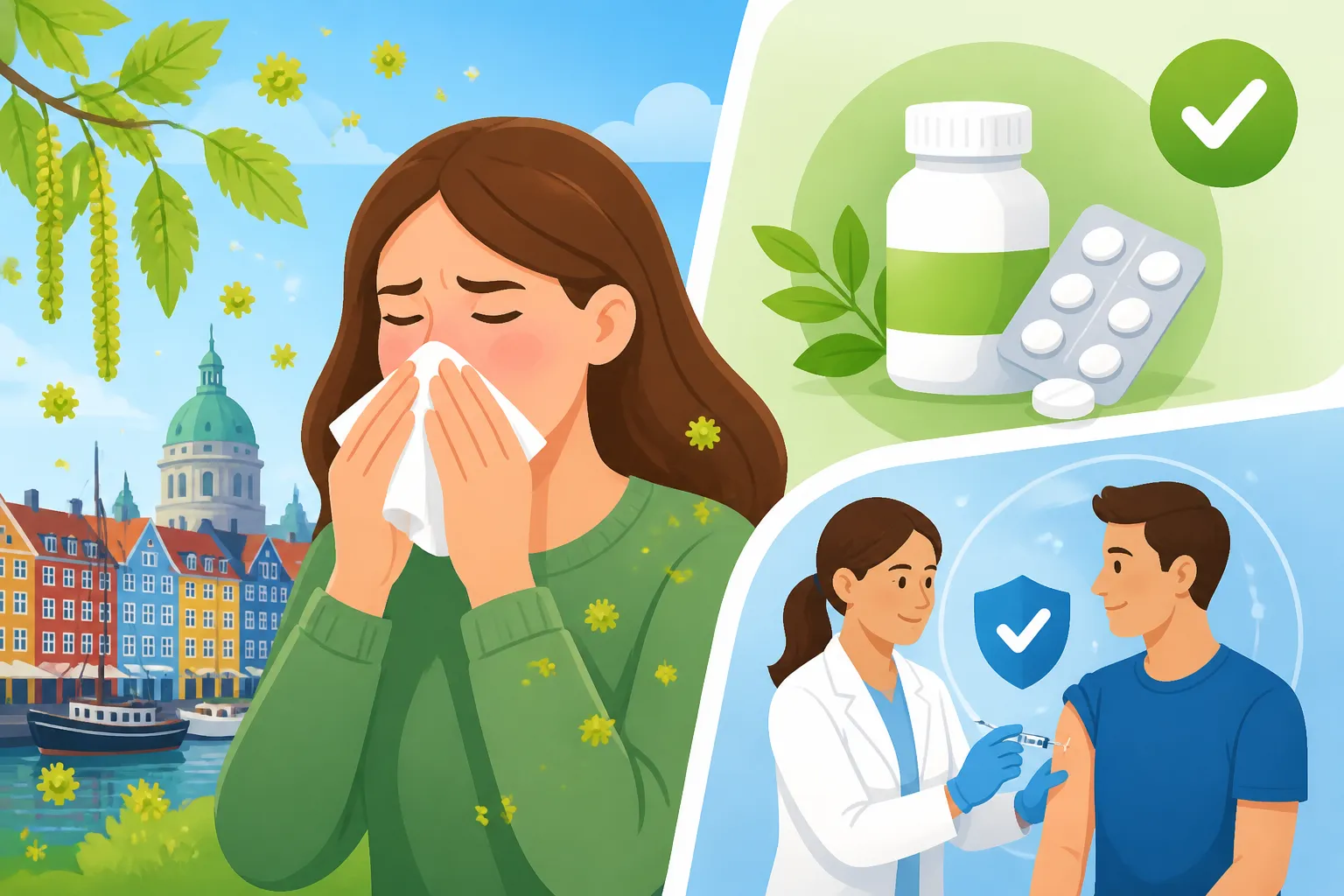
Allergy Season in Denmark: Antihistamines and GP Immunotherapy
The Danish spring is visually stunning, but for many expats, it's a nightmare of itchy eyes and endless sneezing that the local pharmacies don't always explain well. I remember my first April in Copenhagen, thinking I’d caught a legendary "Viking flu" until a colleague pointed at the blossoming birch trees and handed me a tissue. This guide solves the confusion around navigating Danish allergy treatments, from supermarket antihistamines to the long-term commitment of GP-led immunotherapy.
Understanding the Danish Pollen Calendar
If you come from a different climate, the "pollen shock" in Denmark can be genuinely debilitating. The country’s landscape is dominated by specific flora that release massive amounts of allergens into the air during very predictable windows. Unlike some countries where "allergy season" is a vague concept, in Denmark, it is a precisely timed event that the national weather service tracks with the same intensity as a winter storm.
The Birch and Grass Peaks
The most significant culprit for most foreigners is birch (birk). In Denmark, birch trees are everywhere, and their pollen is incredibly aggressive. Typically, the birch season kicks off in mid-April and peaks in early May. During a "high" birch day, you will see a yellow-green dusting on cars and windowsills. If you find yourself suddenly fatigued, with swollen eyelids and a scratchy throat during this window, you are likely reacting to birch.
Following close on the heels of birch is the grass (græs) season, which is much longer. Grass pollen begins to ramp up in late May and can persist all the way through August. Because Denmark has so many parks and green belts, avoiding grass pollen is nearly impossible unless you stay indoors with the windows shut. There is also a secondary season for mugwort (bynke) in late summer, which affects a smaller but still significant portion of the population.
Tracking Pollen Levels with DMI and Astma-Allergi Danmark
One of the first things you should do as a resident is download the "Dagens Pollental" app or check the daily counts on the Astma-Allergi Danmark website. They provide real-time data and forecasts for various regions. It is also helpful to keep an eye on the weather via DMI (Danmarks Meteorologiske Institut), as a rainy day in Denmark is actually an allergy sufferer's best friend.
Understanding these cycles is the first step toward reclaiming your life. If you know that birch is your trigger, you can start your medication two weeks before the season officially begins. This proactive approach is something Danish doctors heavily emphasize, as it prevents the "inflammation cascade" from getting out of control.
Navigating the Danish Apotek for Antihistamines
In Denmark, the way you access medication is quite structured. You won't find the massive "drugstore" aisles typical of the US or UK. Instead, your options are split between the local supermarket (like Netto or Rema 1000) and the specialized Apotek (pharmacy). Knowing where to go can save you a lot of money and frustration.
Over-the-Counter vs. Prescription Strength
For mild symptoms, you can pick up basic antihistamines at most supermarkets. However, these are usually limited to small packs (usually 10 or 30 tablets) of Cetirizine or Loratadine. If you need anything stronger or in a larger quantity, you must visit an Apotek.
At the Apotek, you will find a wider range of Over-the-Counter (OTC) Medication: Supermarket vs. Apotek Regulations that include nasal sprays (like Flonase/Flixonase) and eye drops. If your symptoms are persistent, I highly recommend talking to the pharmacist. Danish pharmacists (farmaceuter) are highly trained and can often suggest combinations of eye drops and sprays that provide better relief than tablets alone.
For those who have just moved and are still waiting for their CPR number, you might find that the cost of daily allergy medication adds up quickly. During this transition, having Expat Health Insurance: Coverage Before You Get Your CPR Number like SafetyWing can be a lifesaver, as they often help cover medical expenses while you are in that "administrative limbo." SafetyWing is particularly popular for the first 90 days because it bridges the gap until the public system kicks in.
The Cost Factor and Subsidies
Denmark has a unique "staircase" subsidy system for medication. This means the more you spend on prescriptions in a year, the higher the percentage the state covers. While most OTC antihistamines aren't subsidized, if your GP writes you a prescription for a large box (e.g., 100 tablets), those costs start counting toward your annual total.
| Medication Type | Availability | Typical Cost (Est.) |
|---|---|---|
| Cetirizine (10 pack) | Supermarket | 25 – 40 DKK |
| Loratadine (100 pack) | Apotek (Prescription) | 120 – 180 DKK |
| Steroid Nasal Spray | Apotek (OTC/Script) | 80 – 150 DKK |
| Antihistamine Eye Drops | Apotek (OTC) | 60 – 100 DKK |
| Immunotherapy Tablets | Prescription Only | 800 – 1,200 DKK / month |
It is worth noting that How Medication Subsidies (Tilskud) Are Calculated at the Apotek can be confusing at first. Your "CTR" (Central Tilskudsregister) balance is tracked automatically via your The Yellow Health Card (Sundhedskort): Your Key to Danish Healthcare. Once you pass a certain spending threshold, the price at the register drops automatically.
Stepping Up Treatment: The Role of Your GP
If tablets and sprays aren't cutting it, you need to engage with the Danish healthcare system more deeply. This starts with your General Practitioner (GP). In Denmark, your GP is the gatekeeper to all specialist care. You cannot simply book an appointment with an allergist (allergilæge) on your own.
Getting a Referral for Allergy Testing
When you visit your GP, be prepared to provide a detailed "allergy diary." Tell them exactly when your symptoms start, what you’ve tried, and how it impacts your work or sleep. If the GP agrees that your symptoms are severe, they will issue a referral (henvisning).
Once you have a referral, you can look for an allergy specialist or an Ear, Nose, and Throat (ENT) doctor. It is vital to understand The Role of the GP: Why You Cannot Go Directly to a Specialist because trying to bypass this step will result in you paying full private prices out of pocket. For expats who prefer faster access or want to see a specific private specialist without the wait, Private Health Insurance (Sygeforsikring "danmark"): Is It Worth It? or a global policy like Cigna Global can be beneficial. Cigna Global often allows for more direct access to specialists and private clinics, which can be a relief if the public waiting list for an allergy test is several months long.
Immunotherapy (Allergivaccination) Options in Denmark
Denmark is a world leader in allergy immunotherapy, thanks in part to Danish pharmaceutical companies like ALK-Abelló. If your tests confirm a significant allergy, your doctor might suggest "desensitization" or immunotherapy. This is the only way to actually "cure" the allergy rather than just masking the symptoms.
There are two main types of immunotherapy available in the Danish system:
- Injections (SCIT): You visit a clinic once a week for several months to receive an injection of the allergen, gradually increasing the dose. Once you reach the "maintenance" phase, you only go every 6 to 8 weeks. This process typically lasts three to five years.
- Sublingual Tablets (SLIT): These are daily tablets that you dissolve under your tongue at home. In Denmark, common brands are Grazax (for grass) and Itulazax (for birch). This is often the preferred method for expats because it involves fewer clinic visits, though the tablets can be expensive before subsidies kick in.
If you choose the tablet route, you can manage your refills Using the Medicinkortet App: Managing Your Prescriptions Digitally. This app shows you exactly how many refills you have left and allows you to request new ones from your GP with a single tap.
Practical Tips for Surviving the Season as an Expat
Living through a Danish allergy season requires more than just medicine; it requires a bit of a lifestyle overhaul during those peak months. I’ve found that the "Danish way" of living—lots of fresh air and cycling—can actually work against you if you aren't careful.
Home and Lifestyle Adjustments
One of the hardest habits to break is airing out your apartment. Danes love to keep windows open for "frisk luft," but during birch season, this is essentially inviting the enemy into your bedroom. Keep your windows closed during the day. If you must air out the room, do it late at night or right after a heavy rain when the pollen count is lowest.
If you are a regular commuter, you might want to read up on Danish Cycling Culture: Rules, Buying a Bike, and Safety. While biking is great, you are essentially a pollen magnet while riding. Wear wraparound sunglasses to protect your eyes and consider showering and changing your clothes as soon as you get home. This prevents you from spreading pollen onto your sofa and bed.
Managing Allergies Before Your CPR Number Arrives
The "waiting period" for your CPR number can be a stressful time, especially if you arrive right as the trees start blooming. Without that yellow card, you don't have a GP, and you don't have access to subsidized prescriptions.
During this time, new arrivals should consider going Finding Medical Care in Denmark: GPs, Specialists, and Referrals as a "private patient." You can still see a doctor, but you will have to pay the full consultation fee (usually 500-800 DKK). If you have Cigna Global or SafetyWing, you can often claim these costs back. Cigna Global is particularly robust for long-term expats who want premium coverage that mimics the private care they might be used to in their home country, covering everything from initial consults to the expensive immunotherapy tablets.
Don't suffer in silence while waiting for the bureaucracy to finish. If your eyes are swollen shut, visit a private clinic or a "Lægevagten" if it’s outside of business hours, though be aware that the out-of-hours service is for emergencies. For most allergy issues, a private GP or a well-stocked Apotek is your best bet for immediate relief.
Accessing English-Speaking Support and Specialists
One common fear for expats is the language barrier when explaining nuanced symptoms like "itchy roof of the mouth" or "sinus pressure." Fortunately, the Danish medical community is highly proficient in English. When you are looking for a doctor, you can use the health portals to How to Choose and Change Your General Practitioner (GP) in Denmark and often find reviews or notes about their language skills.
Most allergy specialists in major cities like Copenhagen, Aarhus, and Odense will conduct your entire consultation in English. They are very used to the international community and understand that different countries have different approaches to allergy management. For example, if you were used to getting certain "allergy shots" back home, bring your medical records. The Danish system might use different concentrations, and Translating Foreign Vaccination Records into the Danish System can take a little bit of time but is essential for continuity of care.
If you find that the seasonal allergies are affecting your mental well-being—which is common given the sleep deprivation and constant irritation—don't hesitate to look into Mental Health in Denmark: Accessing Psychologists and Therapy for Expats. Chronic allergies are physically draining, and having a support system in place is part of a holistic approach to surviving the Danish spring.
Disclaimer
This article is for informational purposes only and does not constitute medical advice. The Danish healthcare system and pharmaceutical regulations are subject to change. Always consult with a qualified medical professional or your Danish GP before starting any new medication or treatment plan. If you experience a severe allergic reaction or difficulty breathing, call 112 immediately.