Finding Medical Care in Denmark: GPs, Specialists, and Referrals
One of the most disorienting experiences for a new arrival in Denmark is realizing you cannot simply pick up the phone and book an appointment with a dermatologist or a cardiologist whenever you feel like it. I remember sitting in my first apartment in Aarhus, frustrated that I had to wait for a "gatekeeper" to approve my request for a simple skin check. This guide solves that confusion by explaining exactly how to navigate the Danish GP system, secure specialist referrals, and manage your health digitally.
The Gateway to Health: Understanding the General Practitioner System
In Denmark, your General Practitioner (GP), known locally as your Egen Læge, is the sun around which your entire medical world orbits. Unlike systems in the US or some parts of Southern Europe where you might have separate doctors for various ailments, the Danish system is strictly hierarchical. Your GP is a highly trained generalist who handles about 90% of all medical inquiries. They are your first point of contact for everything from a persistent cough to mental health struggles.
When you first receive your CPR number, you are asked to choose a doctor from a list of clinics within a certain radius of your home (usually 15 kilometers). This doctor’s name and address are printed directly on your The Yellow Health Card (Sundhedskort): Your Key to Danish Healthcare. This card is your passport to free treatment. Without it, the system remains largely closed to you unless you are seeking emergency care. The relationship you build with your GP is vital because they hold your entire medical history in their local database.
Choosing and Registering with your GP
The process of choosing a doctor is often the first hurdle. When you register your address at the International House or your local Borgerservice, you will be presented with a list of available doctors. A common mistake expats make is picking the one closest to their front door without checking reviews or if the clinic has several doctors. It is wise to look for a "Lægehus" (a house of doctors) rather than a solo practitioner. Large clinics often have more flexible hours and a broader range of expertise among the staff.
If you find that your doctor isn't a good fit—perhaps because of a language barrier or a difference in bedside manner—you are not stuck with them forever. You can change your doctor online through Borger.dk for a small fee (around 225 DKK in 2026). However, the new doctor must be open to new patients. In popular areas like Nørrebro in Copenhagen or the center of Odense, many of the best-rated doctors have closed lists. You can learn more about the specifics of How to Choose and Change Your General Practitioner (GP) in Denmark to ensure you end up with a provider who understands your specific needs.
The Gatekeeper Role and Consultation Culture
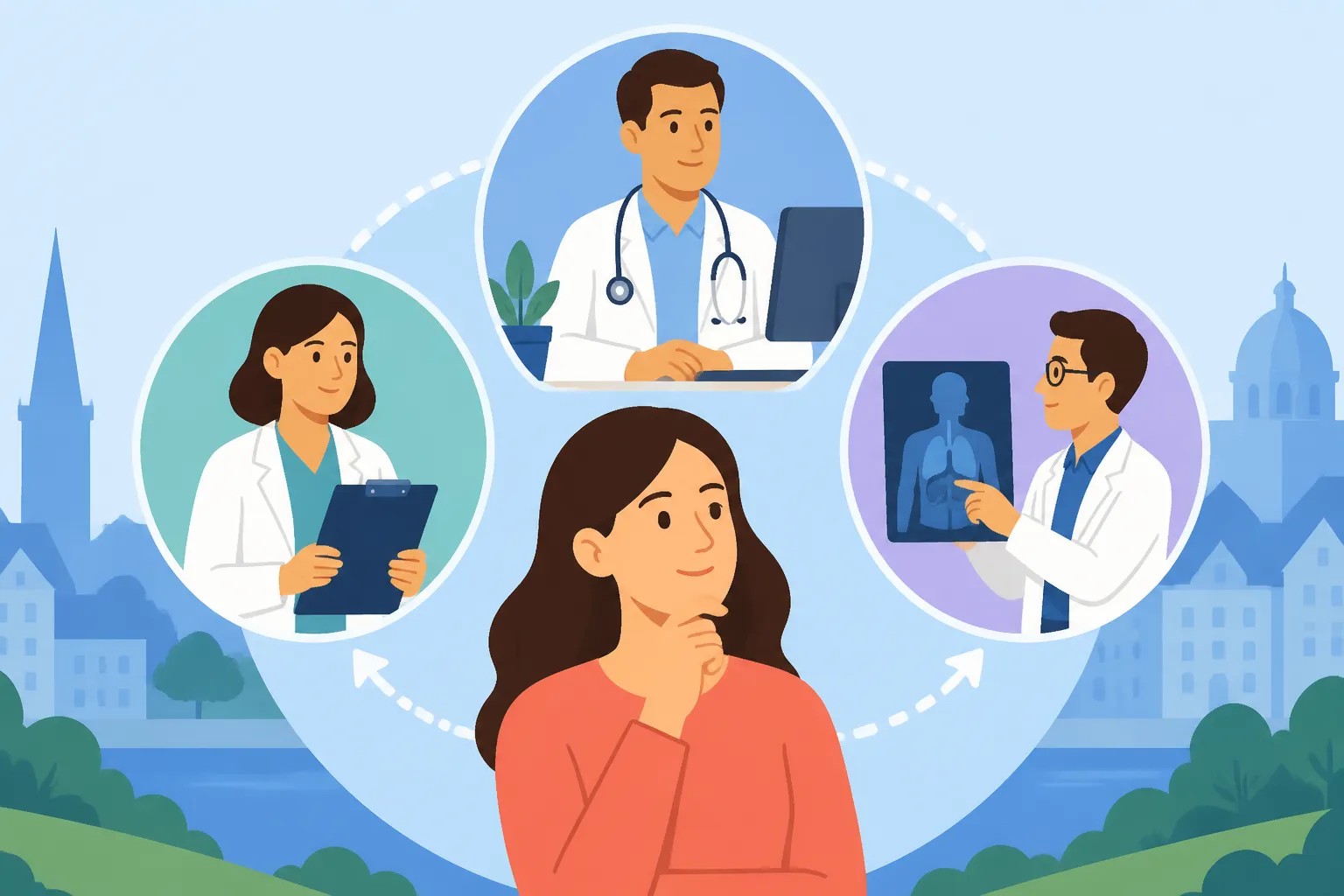
It is important to understand that the GP acts as a gatekeeper to the rest of the system. This isn't designed to block you from care, but to ensure that specialized resources are used efficiently. In a typical consultation, which usually lasts exactly 10 to 15 minutes, the doctor will assess whether they can treat you themselves or if you require a specialist. This can be jarring for those used to longer appointments. You need to be concise. I learned early on to write down my three main symptoms before entering the room because the clock is always ticking.
Danish medical culture also leans toward "watchful waiting." If you go in with a viral infection, don't expect an immediate prescription for antibiotics. The Danish health authorities are very strict about over-medication. Your GP will likely tell you to go home, drink tea, and call back in three days if things haven't improved. This can feel dismissive to newcomers, but it is actually a sign of a system focused on long-term health outcomes. If you are struggling with the transition, The Role of the GP: Why You Cannot Go Directly to a Specialist offers a deeper look into the philosophy behind this gatekeeping.
Booking Appointments and the Min Læge App
The days of calling a clinic at 8:00 AM and waiting on hold for twenty minutes are slowly fading, thanks to digitalization. Most clinics now prefer that you book through the Min Læge app or their own web portal. Through these platforms, you can book physical appointments, request video consultations, and even send short text messages to your doctor for non-urgent questions. This digital access is a lifesaver for busy professionals and parents.
For those who are just arriving and haven't yet secured their CPR number, the public system can be difficult to access for routine issues. If you are in this "waiting period," you might need to look into Expat Health Insurance: Coverage Before You Get Your CPR Number to bridge the gap. During this time, services like SafetyWing can provide essential coverage for unexpected illnesses before you are officially folded into the Danish public system. Once you have your MitID and CPR, you will find that Booking a Doctor's Appointment in Denmark: MinLæge App Guide becomes your most-used tool for health management.
Navigating Specialized Care: The Referral Process
Once your GP agrees that your condition requires more expert eyes, they will issue a henvisning (referral). This is not a physical piece of paper that you carry around. In Denmark’s paperless system, the referral is uploaded to a central server known as the "referral hotel." Once it is there, you are free to contact any specialist within that field who accepts public patients. This gives you a significant amount of freedom, though it also puts the burden of booking on you.
The referral is usually valid for six months, but it is best to act quickly. When you call a specialist, they will pull your referral from the system using your CPR number. Be prepared for waiting times. For non-urgent issues like a routine dermatology check or a non-critical orthopedic consultation, wait times can stretch from several weeks to several months. This is one of the most significant frustrations for expats used to faster private systems.
Choosing Your Specialist via Sundhed.dk
When you have your referral, you don't have to go to the specialist your GP suggests. You can go to any specialist in the country. To find the one with the shortest waiting list, you should use the portal Sundhed.dk. There is a specific tool called "Find Behandler" where you can filter by specialty and see the current estimated wait times for clinics in your region. This is incredibly useful if you are willing to travel from, say, Aarhus to Silkeborg to see a specialist a month earlier.
It is also worth noting that for certain specialists, you do not need a referral at all. This is a common point of confusion. You can book directly with an ear, nose, and throat (ENT) doctor or an eye doctor (ophthalmologist) without speaking to your GP first. This is a massive shortcut if you have a specific issue like a persistent ear infection or need a specialized eye exam. For more details on these exceptions, you can read Accessing an ENT (Ear, Nose, Throat) Specialist Without a Referral to save yourself an unnecessary trip to the GP.
Understanding the Referral Hotel
The digital "referral hotel" is a marvel of Danish efficiency, but it can be invisible to the patient. When your GP says, "I've sent the referral," it means the data is now live on the national health network. You won't get a confirmation email or a text. You simply wait about an hour and then start calling specialists. If you are unsure if a referral has been made, you can log into the Sundhed.dk portal or the Min Læge app to see your active referrals.
If you are dealing with mental health, the referral process is slightly different and often more complex. Waiting times for psychologists can be particularly long, sometimes exceeding six months for those seeking subsidized care. In these instances, many expats choose to look for private options or use Mental Health in Denmark: Accessing Psychologists and Therapy for Expats to find English-speaking practitioners who may have more immediate availability outside the public subsidy system.
Private Specialists and Insurance Shortcuts
If the public waiting times are simply too long for your comfort, you have the option to "go private." Private specialists in Denmark operate outside the "Yellow Card" system, meaning you must pay the full price of the consultation and treatment out of pocket. However, if you have private health insurance—either through your employer or a personal policy like Cigna Global—you can often bypass the months of waiting and see a specialist within days.
Many large Danish companies provide "Sundhedsforsikring" (health insurance) as a perk of employment. If you have this, you should call your insurance provider before booking a private specialist. They often have their own network of private hospitals, such as Aleris-Hamlet, and they will handle the payment directly. If you are considering an upgrade to your coverage, it is worth looking into Private Health Insurance (Sygeforsikring "danmark"): Is It Worth It? to see how a supplemental policy can help cover the costs that the public system does not, such as dental work and physiotherapy.
Digital Health Portals: Your Online Medical Office
Denmark is one of the most digitally integrated societies in the world, and healthcare is no exception. Almost every interaction you have with the health system will be recorded and accessible to you online. This transparency is wonderful once you get the hang of it, as it allows you to see exactly what your doctor wrote about your visit, view your blood test results, and manage your prescriptions without ever picking up the phone.
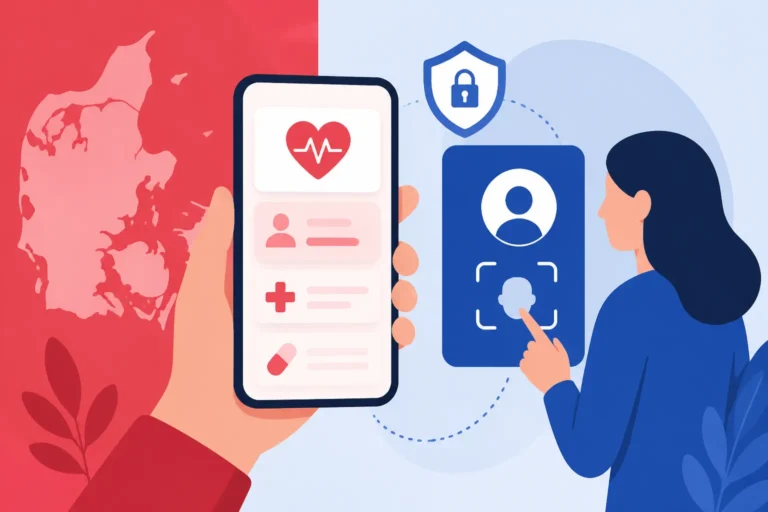
The backbone of this digital infrastructure is Sundhed.dk, the national health portal. To access it, you will need a MitID, which is the secure digital signature used for everything from banking to reading mail from the government. Once logged in, you have a complete overview of your health data. If you’ve ever wondered what a specialist concluded after your visit, you can read their notes in your "E-journal."
Sundhed.dk and the E-Journal
The E-journal is a powerful tool for self-advocacy. In many countries, medical records are "owned" by the hospital or the doctor, making it difficult for patients to see their own data. In Denmark, you own your data. After any hospital visit or specialist consultation, a summary is uploaded to your E-journal. This is particularly helpful if you are moving between different specialists and want to ensure everyone has the same information.
Beyond just reading notes, you can also see your lab results. If you’ve had blood drawn at your GP, the results usually appear on Sundhed.dk within 24 to 48 hours. The system even provides the "reference range" so you can see if your levels are within the normal bounds. For a full walkthrough of how to use these features, check out How to View Your Medical Records and Lab Results on Sundhed.dk. It can save you a lot of anxiety to see a "normal" result on your screen on a Friday evening rather than waiting for a call from the doctor on Monday.
Managing Prescriptions via Medicinkortet
The way prescriptions work in Denmark is also entirely digital. When a doctor prescribes medication, they don't give you a slip of paper. They "open" a prescription on the national Medicinkortet (The Medicine Card). This means you can walk into any pharmacy (Apotek) in Denmark, hand over your Yellow Health Card, and they will see your active prescriptions in their system.
To manage this yourself, there is an app called Medicinkortet. It shows you how many refills you have left, the dosage instructions, and even allows you to request a renewal from your GP with a single tap. This is incredibly efficient, especially for chronic conditions. If you are managing multiple medications, Using the Medicinkortet App: Managing Your Prescriptions Digitally is a must-read to understand how to keep your medicine cabinet stocked without constant trips to the clinic.
Video Consultations and Min Læge App
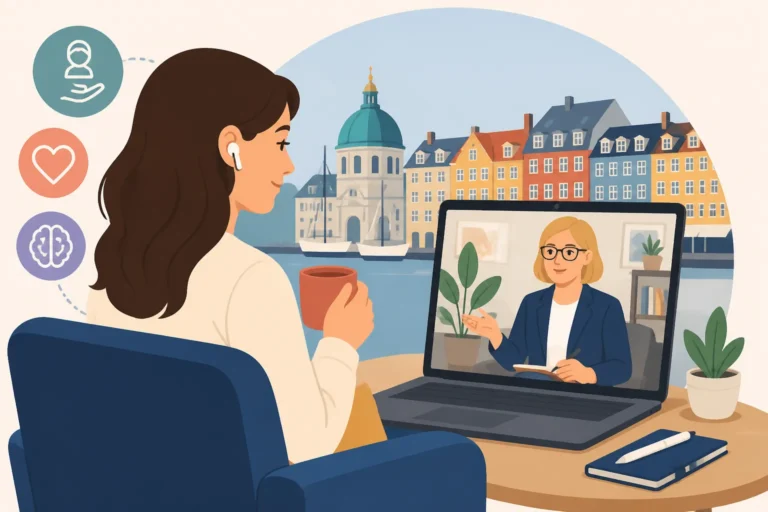
Since 2020, video consultations have become a standard part of Danish primary care. The Min Læge app has a built-in "waiting room" feature. You "check in" at your appointed time, and when the doctor is ready, the video call starts. This is perfect for follow-up appointments, discussing test results, or seeking advice on a skin rash that can be easily seen on camera.
The app also serves as a communication hub. You can send short, text-based questions to your GP. For example, if you need to know if a certain over-the-counter medicine is safe to take with your prescription, you can message them. They usually respond within 2-3 business days. For more complex needs, or if you are looking for a new provider, Sundhed.dk and MitID: Navigating Denmark’s Digital Health Portals provides the comprehensive overview you need to master these tools.
Emergency and Out-of-Hours Logistics
One of the biggest mistakes expats make in Denmark is showing up at an Emergency Room (Akutmodtagelse) without calling ahead. In many countries, the ER is a walk-in service. In Denmark, if you show up unannounced for a non-life-threatening issue, you will likely be told to go home and call the appropriate number first. The system is designed to triage patients over the phone to keep hospital bays clear for true emergencies.
There are three main "levels" of emergency care in Denmark. The first is 112, which is only for life-threatening emergencies where an ambulance is required. The second is the out-of-hours doctor service, known as Lægevagten. The third is the emergency room itself, which you should only visit after being directed there by a doctor or the out-of-hours service.
When to Call 112 vs. 1813
If you are in Copenhagen or the surrounding region (Region Hovedstaden), the number for non-life-threatening but urgent issues is 1813. This is staffed by nurses and doctors who will assess your situation. They can give you medical advice, tell you to wait until your GP opens, or give you an appointment at an urgent care clinic or ER. In other regions, like Midtjylland or Syddanmark, the number for Lægevagten is different, and you should save it in your phone immediately.
When you call, you must have your CPR number ready. The person on the line will ask a series of questions to determine the urgency. If they decide you need to be seen, they will give you a specific time and location. This significantly reduces waiting times at the hospital. If you are unsure of what to say or how the triage works, What to Say When Calling Lægevagten (Out-of-Hours Doctor) is an excellent resource to help you prepare for that call under pressure.
Emergency Medical Care Locations
Every major Danish city has an Akutmodtagelse (Emergency Room). In Copenhagen, major sites include Bispebjerg Hospital and Hvidovre Hospital. In Aarhus, it is the Aarhus University Hospital in Skejby. These facilities are world-class, but again, they are "locked" behind the phone triage system. If you have a dental emergency on a weekend, the process is similar; you must call the Tandlægevagten (Emergency Dentist) rather than a standard ER.
For those traveling or visiting, it is important to know that emergency care is generally free for everyone in Denmark, regardless of residency status, if the situation is an acute emergency. However, follow-up care and non-emergency treatment will require insurance or payment. For more details on how this works for non-residents, see Emergency Medical Care in Denmark: Calling 112, Lægevagten, and ERs.
| Service | When to Use | How to Access |
|---|---|---|
| Emergency (112) | Life-threatening (heart attack, major accident) | Call 112 immediately |
| Lægevagten / 1813 | Urgent but not life-threatening, outside GP hours | Call 1813 (Copenhagen) or regional number |
| GP (Egen Læge) | Routine issues, prescriptions, chronic care | Book via Min Læge or call during hours |
| Apotek (Pharmacy) | Medication, minor ailments, health advice | Walk-in during business hours |
Understanding the 1813 Triage System
The 1813 system in the capital region is often criticized by locals for long hold times, but for an expat, it can be a godsend because the staff almost always speak excellent English. When you call, be very clear about your symptoms. If you are calling for a child, they tend to prioritize the call. If the nurse determines that you need to be seen, they will look at the waiting times for all hospitals in the region and send you to the one where you will be treated the fastest.
It is also important to know that 1813 is not just for physical injuries. If you are experiencing a mental health crisis, they can also direct you to the Psykiatrisk Akutmodtagelse (Psychiatric Emergency Room). These are specialized units designed to handle acute psychological distress. You can find more targeted information on this in Emergency vs. Out-of-Hours Care: When to Call Lægevagten (1813).
Costs, Subsidies, and the Yellow Card
The Danish healthcare system is funded through taxes, which means that most services are "free" at the point of use. However, "free" doesn't cover everything. While your GP visits, hospital stays, and specialist consultations are covered by your Yellow Card, there are significant out-of-pocket costs for things like dental care, physical therapy, and prescription medications.
Understanding how these costs are calculated is essential for budgeting your life in Denmark. The system uses a sliding scale for many costs, meaning the more you spend on medicine in a year, the higher the percentage the government will cover. This is handled automatically at the pharmacy when they scan your health card.
Group 1 vs. Group 2 Insurance
When you register for your Yellow Card, you are by default placed in "Group 1." In Group 1, you are registered with a specific GP, and all consultations with them and any specialists they refer you to are free. This is what 99% of people in Denmark choose. However, there is also "Group 2."
In Group 2, you do not have a specific GP. You can visit any doctor or specialist you want without a referral. The catch? You have to pay a portion of the fee yourself. The government pays a subsidized amount directly to the doctor, and you pay the "top-up." For most expats, Group 1 is the better and more cost-effective choice. If you want a deep dive into the nuances, read What Does 'Group 1' vs 'Group 2' Health Insurance Mean?.
Medicine Subsidies (Tilskud)
When you buy prescription medication at an Apotek, you will often notice that the price changes throughout the year. This is because of the Tilskud system. Every resident has a personal "medicine account" linked to their CPR number. Once you spend over a certain threshold in a calendar year (approx. 1,075 DKK in 2026), the government starts paying 50% of your costs. If your spending continues to rise, the subsidy increases to 75% and eventually 85%.
This system ensures that those with chronic illnesses are not financially ruined by their medication costs. However, it only applies to medications that the Danish Medicines Agency has approved for a subsidy. Many lifestyle drugs or very new medications may not be covered. You can learn how to track your spending and see upcoming discounts by reading How Medication Subsidies (Tilskud) Are Calculated at the Apotek.
Dental Care: The Great Exception
The biggest shock to the system for many expats is dental care. Unlike the rest of the healthcare system, dental care for adults (18+) is largely private. While the government provides a small subsidy for routine check-ups, you will be responsible for the majority of the bill. A simple cleaning and check-up can easily cost 500-800 DKK, and major work like crowns or root canals can run into the thousands.
Because of these high costs, many residents join Sygeforsikring "danmark", a private, member-owned insurance group that provides "cash-back" on dental work, glasses, and physiotherapy. It is a unique Danish institution. If you are planning on staying in Denmark long-term, joining this "club" early—ideally while you are healthy—is one of the best financial moves you can make. See Dental Care in Denmark: Costs, Subsidies, and Private Insurance Options for a full breakdown of what to expect at the dentist.
Language and Communication in the Clinic
A major fear for many expats is the language barrier. While Denmark has one of the highest levels of English proficiency in the world among non-native speakers, discussing medical issues in a foreign language can be daunting. You want to be sure you are understood and that you fully understand the treatment plan being proposed.
The good news is that almost all doctors in Denmark speak excellent English. Medical textbooks in Danish universities are often in English, and many doctors have practiced abroad. However, the administrative staff or the nurses might have varying levels of comfort with the language, especially in more rural areas outside of Copenhagen and Aarhus.
Finding an English-Speaking Doctor
While most doctors speak English, some are more comfortable with it than others. If you are in the process of choosing a GP, you can often find information on the clinic’s website about the languages spoken by the staff. In larger cities, it is very common for clinics to list English (and often German or French) as languages they can accommodate.
If you have already been assigned a doctor and feel that communication is a struggle, you have the right to request an interpreter if the doctor deems it necessary for your treatment. For the first few years of residency, this service is often free, but after a certain period (usually 3 years), the government may charge a fee for providing a translator. You can find more about your rights and how to navigate these conversations in Translators in Danish Healthcare: Your Right to an Interpreter.
Cultural Differences in Communication
Danish doctors tend to be very direct. This is a reflection of the broader Danish culture. They will tell you exactly what they think, without much "sugar-coating." This can sometimes come across as blunt or even cold to those from more emotive cultures. It is not meant to be rude; it is simply considered the most efficient way to communicate medical facts.
Another cultural quirk is the "flat hierarchy." You are encouraged to ask questions and even challenge the doctor's suggestions if you feel they haven't understood your concern. It is a partnership rather than a top-down relationship. For a better understanding of how to find the right "vibe" in a clinic, check out Finding an English-Speaking Doctor: Directories and Local Strategies.
Using Translation Apps and Preparation
In the early days, before you feel confident in your "medical Danish," it doesn't hurt to use technology. Using a translation app to look up specific medical terms in Danish before your appointment can be very helpful. Even better, bring a list of your symptoms and any questions written down. This ensures that even if you get flustered, the doctor can see exactly what you are worried about.
If you are dealing with more sensitive areas of health, such as gynecology or mental health, you may feel more comfortable with a doctor who shares your gender or has a specific cultural understanding. You can often request this when booking your appointment. For more specific local advice, such as Finding an English-Speaking Gynecologist in Aarhus or Odense, there are many expat-focused resources and directories that can point you in the right direction.
Private Health Alternatives and International Insurance
While the public system is excellent, it is not always the fastest or most convenient. For those who want more control over their healthcare, or for those who are not yet eligible for the Yellow Card, the private sector in Denmark is a growing and viable alternative. Private hospitals like Aleris-Hamlet and Capio offer everything from elective surgeries to specialist consultations with zero waiting times.
However, these services come at a price. A single consultation with a private specialist can cost between 1,500 and 3,000 DKK. This is where international health insurance or employer-provided schemes become invaluable. If you are moving to Denmark on a high-level corporate contract, it is almost certain that you will have some form of private insurance included.
SafetyWing for the Transition Period
When you first arrive in Denmark, there is a "dead zone" where you have moved your life, but you haven't yet received your CPR number or your Yellow Card. This process can take anywhere from two weeks to two months depending on the municipality's workload. During this time, you are only covered for acute emergencies.
SafetyWing is a popular choice for expats during this transition. It provides a "safety net" that covers you globally, including in Denmark, while you wait for the bureaucracy to catch up. It is specifically designed for nomads and expats, making it easy to start and stop as your residency status changes. It’s an affordable way to ensure a simple ear infection doesn't cost you a fortune in private fees before your public coverage kicks in.
Cigna Global for Long-Term Peace of Mind
For those who want a "gold-plated" experience, Cigna Global offers comprehensive international health insurance that allows you to access private care in Denmark and abroad. This is particularly popular among high-net-worth expats or those with complex medical needs who want to ensure they can see a specific specialist of their choice without waiting for a GP referral.
Having a policy like Cigna Global means you can essentially bypass the "gatekeeper" system. You can book directly with private specialists and have the costs covered according to your plan. This is also useful if you travel frequently and want a single policy that covers you in Denmark, your home country, and everywhere in between. You can weigh the pros and cons of these options by reading Does Denmark Have Private Hospitals? Costs and Access.
Employer-Provided Insurance (Sundhedsforsikring)
If you are working for a medium-to-large Danish company, you likely already have private health insurance. Many Danes don't even realize they have it until they need it. This insurance is a "taxable benefit," meaning you pay a small amount of tax on the premium, but in exchange, you get fast-track access to private specialists and even physical therapy or chiropractic care.
If your GP gives you a referral and the waiting time in the public system is more than 30 days, your employer's insurance will often kick in and pay for you to go to a private hospital instead. Always check your employment contract or ask your HR department about your Sundhedsforsikring. It is one of the most underutilized tools in the expat toolkit. For more on how to maximize these benefits, see Sickness Benefit (Sygedagpenge): Your Rights When Off Work Due to Illness.
Healthcare for Foreign Residents: Complete System Guide
This article is part of our comprehensive pillar on healthcare in Denmark. For a more expansive look at every aspect of the system, please refer to our main guide: Healthcare in Denmark for Foreign Residents: Complete System Guide (2027). Whether you are here for a year or a lifetime, understanding these systems is the first step to feeling truly at home in the North.
Disclaimer
The information provided in this article is for informational purposes only and does not constitute professional medical or legal advice. While we strive to keep the details accurate and up-to-date, healthcare regulations and digital portals in Denmark are subject to change. Always consult with a qualified medical professional or the relevant Danish authorities (such as Sundhedsstyrelsen or SIRI) regarding your specific health situation or residency requirements.