Requesting Cross-Border Healthcare Treatment within the EU
Getting stuck in a medical waiting list while your health hangs in the balance is one of the most isolating experiences you can have as a foreigner in Denmark. I remember the sheer anxiety of being told a necessary procedure would take eight months, feeling like a tiny cog in a massive, slow-moving machine. This guide solves that frustration by explaining exactly how to leverage EU law to access healthcare in other member states when the Danish system can't meet your needs.
The Legal Framework: Directive 2011/24/EU and Your Rights
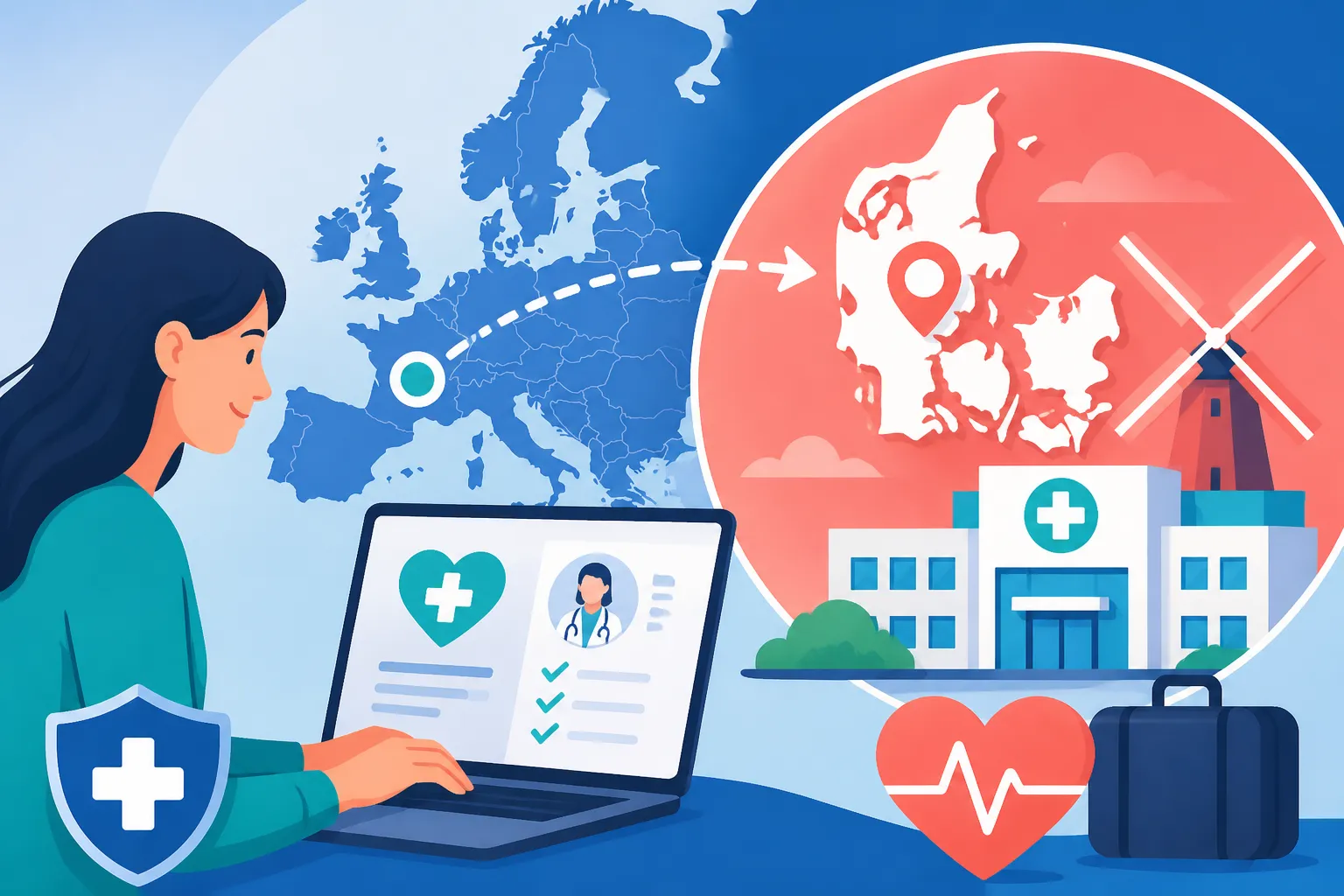
When you live in Denmark, you are part of a universal healthcare system that is, for the most part, exceptionally high quality. However, the system is centralized and can be rigid. If you are an EU/EEA citizen or a non-EU citizen with a valid residence permit, you are not strictly "tethered" to Danish soil for medical care. Under EU law, specifically Directive 2011/24/EU on patients' rights in cross-border healthcare, you have the right to seek medical treatment in another EU or EEA country and have at least some of those costs covered by the Danish state.
The core principle is that you should be able to access healthcare elsewhere if the treatment you need is something the Danish system would have provided for you anyway. This isn't a "get out of jail free" card to go on a medical shopping spree, but it is a vital safety valve for when local waiting times become unbearable or when a specific expertise is more readily available in your home country or a neighboring state. Navigating this requires a deep understanding of Healthcare in Denmark for Foreign Residents: Complete System Guide (2027) to know what is standard here before you look elsewhere.
Why This Matters for Expats in Denmark
For many of us, the Danish "wait and see" approach to medicine can be a cultural shock. Many expats report feeling their concerns were being dismissed by their GP, only to find that in their home country, the same symptoms would trigger immediate specialist intervention. Knowing you can request cross-border treatment provides a level of agency that the local system sometimes lacks. However, you must first understand The Role of the GP: Why You Cannot Go Directly to a Specialist, because your GP remains the gatekeeper to the documentation you will need to prove that the treatment is medically necessary.
Emergency vs. Planned Care: The EHIC Distinction
It is crucial to distinguish between emergency care and planned cross-border care. If you are traveling and break your leg, you use your Blue Card. We cover this extensively in our guide on Healthcare for EU/EEA Citizens: Using the Blue EHIC Card in Denmark. However, cross-border healthcare treatment refers to planned procedures—surgeries, consultations, or therapies that you intentionally travel abroad to receive.
While the public system covers a lot, it doesn't cover everything. I’ve found that having a private backup like Cigna Global can be a lifesaver here. Public cross-border rights often only reimburse up to the "Danish price" for a procedure. If you choose a private clinic in Germany or France that charges more, you are on the hook for the difference unless you have a robust private policy.
The Two Main Pathways: S2 Form vs. The EU Directive
In the world of EU bureaucracy, there are two distinct ways to get your treatment paid for, and choosing the wrong one can lead to a financial nightmare. One is based on old social security regulations (the S2 route), and the other is based on the newer EU Directive (the reimbursement route).
The S2 Route: Pre-authorized and Pre-paid
The S2 route is generally the "gold standard" because it means the Danish state agrees to pay for your treatment directly. You apply for an S2 form (formerly the E112) through the Danish Patient Safety Authority (Styrelsen for Patientsikkerhed). If granted, you are treated in another EU country under the same conditions and costs as a local resident of that country.
The catch? Denmark will only grant an S2 if they cannot provide you with the necessary treatment within a "medically justifiable" timeframe. If the Danish hospital says they can see you in six months, and the authorities deem that "justifiable" for your condition, they will likely deny the S2. In these cases, many expats look into Getting a Second Opinion in the Danish Public Health System to build a stronger case for why a six-month wait is actually dangerous.
The EU Directive Route: Reimbursement
The EU Directive route is much more flexible but carries a higher financial risk. Under this pathway, you generally don't need prior authorization for outpatient care (like seeing a specialist or getting a scan). You go abroad, pay the bill out of your own pocket, and then submit the receipt to the Danish authorities for reimbursement.
However, you will only be reimbursed for the amount that the same treatment would have cost the Danish healthcare system. If a specialist consultation in Copenhagen costs the state 800 DKK, but you paid 200 EUR (approx. 1,500 DKK) in Munich, you will only get 800 DKK back. This is where a plan from SafetyWing or Cigna Global can be helpful, especially if you are transitioning between systems or need coverage for complications that the Danish state might balk at.
| Feature | S2 Route (Regulation 883/2004) | EU Directive Route (Directive 2011/24) |
|---|---|---|
| Payment | Generally handled between states | You pay upfront and claim later |
| Prior Approval | Always mandatory | Required for "heavy" hospital care only |
| Reimbursement Level | Based on the country of treatment's rates | Based on Danish "equivalent cost" rates |
| Scope | Only public healthcare providers | Can often include private providers |
| Best For | Major surgeries with long waiting lists | Specialist consultations and diagnostic tests |
Navigating the Danish Application Process
If you’ve decided that seeking treatment outside Denmark is your best option, you need to prepare for a significant amount of paperwork. The Danish system is highly digitized, so your first stop will almost always be How to View Your Medical Records and Lab Results on Sundhed.dk. You need to ensure that your Danish medical history is accurately reflected online so you can present it to the foreign provider.
Starting with Your GP and Specialists
You cannot simply wake up and decide to go to a clinic in Sweden. To get reimbursed, you must have a referral that would have been valid in the Danish system. This means your GP must have issued a referral for that specific type of specialist or treatment. If you haven't secured The Yellow Health Card (Sundhedskort): Your Key to Danish Healthcare yet, you are generally ineligible for this process until your CPR registration is complete.
Once you have the referral, you should contact the Styrelsen for Patientsikkerhed. They are the central authority for cross-border care. You will need to provide them with the details of the foreign provider and the estimated costs. Even if prior authorization isn't strictly mandatory for your procedure, it is wise to get a "pre-assessment" from the Danish authorities to confirm they will actually reimburse you.
Applying to Styrelsen for Patientsikkerhed
The application is usually done through a digital form on Borger.dk. You will need to upload your referrals, any relevant scans, and a justification for why you are seeking care abroad. If you are citing long waiting times, you should also include evidence from Waiting Times in Danish Public Hospitals and Patient Rights or screenshots from the Venteinfo portal showing that the Danish wait exceeds the legal guarantees.
During this waiting period, which can take several weeks, many expats find that the uncertainty is the hardest part. If you are a digital nomad or an expat on a short-term contract, using a flexible insurance provider like SafetyWing can provide a safety net if your Danish residency status changes during the application process.
Financial Realities and the Reimbursement Cap
Let's talk about the money, because this is where people get burned. Denmark’s reimbursement is based on the "DRG" (Diagnosis Related Group) rates. These are the internal prices the Danish regions pay the hospitals. They are often lower than the retail price of a private clinic in Spain or France.
Furthermore, Denmark will not reimburse your travel costs, your hotel, or the meals for your "companion" unless very specific (and rare) criteria are met. You are essentially paying for the "logistics of being a patient" yourself. Expats can spend 20,000 DKK on travel and accommodation for a surgery that was technically "free," only to find the Danish state only reimbursed 12,000 DKK of the 15,000 DKK surgical bill because of the price cap. If you have Private Health Insurance (Sygeforsikring "danmark"): Is It Worth It?, check their rules, as they sometimes offer small supplementary grants for certain procedures abroad.
Practical Challenges and Realistic Expectations
The theory of cross-border healthcare is beautiful; the reality is often messy. The first hurdle is the language. Even if the doctor in Poland speaks English, your Danish medical records are in Danish. You may need to pay for certified translations of your records from Sundhed.dk, which is another out-of-pocket expense the state won't cover.
The Reimbursement Trap
I’ve had friends who went to their home country for what they thought was a routine procedure, only for the foreign doctor to find a secondary issue. If you get treatment for that secondary issue without a prior Danish referral, the Styrelsen for Patientsikkerhed will almost certainly refuse to pay for that portion of the bill. It can feel incredibly bureaucratic, but the Danish state is very strict: they only pay for what they authorized or what the GP referred you for.
This is why some expats prefer to maintain a high-end private policy with Cigna Global. With private insurance, you often bypass this state-to-state bickering. You choose the doctor, the insurance approves the plan, and the billing is handled directly, allowing you to focus on recovery rather than whether a Polish invoice for "supplementary lab work" will be rejected by a clerk in Copenhagen.
Follow-up Care Back in Denmark
One of the most overlooked aspects of seeking treatment abroad is what happens when you come back. Danish doctors are not legally required to take over the follow-up care for a treatment performed abroad if they weren't involved in the planning.
If you get a knee replacement in Germany and it gets infected once you’re back in Aarhus, the Danish ER will, of course, treat the emergency. However, the long-term rehabilitation and specialized follow-up might be difficult to coordinate. The Danish physiotherapist will want the surgical notes, and if those notes aren't in a language they understand, your recovery could be delayed. Always ensure you receive a "Discharge Summary" in English and, ideally, have it uploaded or sent to your Danish GP immediately.
Disclaimer
The information provided in this guide is for informational purposes only and does not constitute legal or medical advice. Healthcare regulations in Denmark and the EU are subject to change, and individual eligibility can vary based on residency status and specific medical conditions. Always consult with the Danish Patient Safety Authority (Styrelsen for Patientsikkerhed) or a qualified legal professional before making financial commitments for medical treatment abroad.