Navigating Healthcare Needs as an Au Pair in Denmark
You are in a new country, living in a stranger's house, and suddenly you wake up with a crushing migraine or a persistent cough. I remember the paralyzing fear of not knowing if I was even allowed to see a doctor or if a single visit would cost me my entire monthly pocket money. This guide walks you through every step of navigating Danish healthcare specifically as an au pair, ensuring you never have to suffer in silence while you are here.
Understanding Your Legal Rights and Insurance Coverage
When you arrive in Denmark on an au pair permit, you are entering a highly regulated system designed to protect you, even if it feels overwhelming at first. Unlike a standard work visa, the au pair scheme has specific requirements regarding insurance that your host family must fulfill. It is vital to understand that your host family is legally obligated to pay for three types of insurance for you: industrial injury insurance, insurance covering non-industrial accidents, and insurance covering "critical illness."
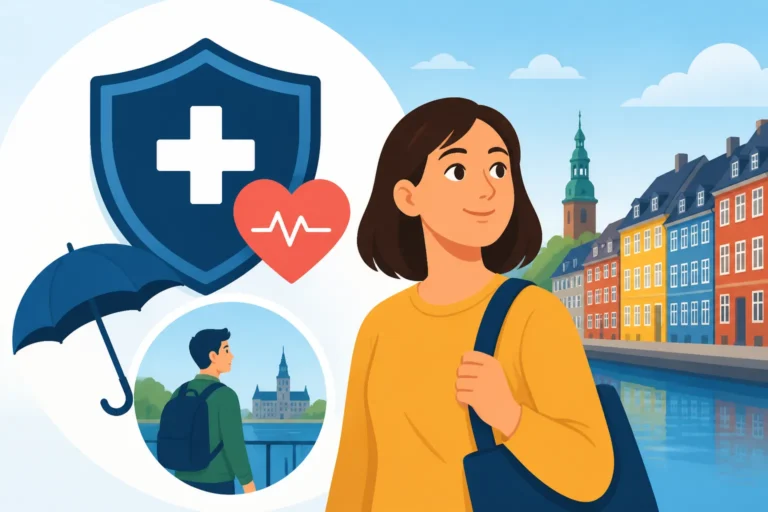
However, these mandatory insurances are often misunderstood. They are not a substitute for the general health insurance that every resident in Denmark receives. Instead, they are supplementary. For the first few weeks before your paperwork is finalized, you are in a bit of a "grey zone." I remember the anxiety of those first fourteen days, waiting for my CPR number to be processed while feeling a flu coming on. During this bridge period, the public system doesn't fully "see" you yet. This is why many au pairs and host families look into Expat Health Insurance: Coverage Before You Get Your CPR Number to ensure there is no gap in care.
A solution like SafetyWing is often a lifesaver here, providing travel-grade medical coverage that can handle emergencies before your official Danish "Yellow Card" arrives. It gives both you and your host family peace of mind that an unexpected trip to the emergency room won't result in a four-figure bill. Once you are registered in the system, you transition to the public healthcare model, but having that initial safety net is a standard best practice for anyone moving to the Nordics.
The Host Family’s Financial Responsibility
Your host family must cover the costs of the insurances mentioned in your contract. If they haven't provided you with policy details, you should ask for them politely. It isn't just a "nice to have"; it is a condition of your residence permit. These policies usually cover significant events—think major surgeries or accidents—but they won't help you with a routine prescription for an ear infection. For the day-to-day stuff, you will rely on the Danish National Health Service.
The Gap Before Registration
The "gap" is the time between your arrival at Copenhagen Airport and the moment you receive your CPR number. During this time, you are technically covered for "acute" emergency care by the state, but "acute" is a very narrow definition in Denmark. If you have a pre-existing condition or need a non-emergency consultation, you might be asked to pay upfront as a "tourist." To avoid this, using a provider like SafetyWing during your first month is a smart move. It covers those "not-quite-an-emergency-but-I-need-a-doctor" moments that the public system might charge you for before your registration is complete.
The Yellow Health Card (Sundhedskort) for Au Pairs
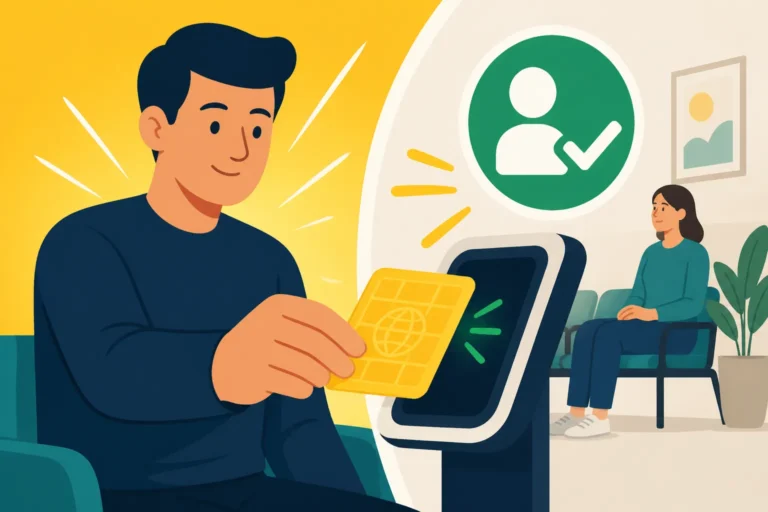
The most important piece of plastic you will own in Denmark is your Yellow Health Card, or Sundhedskort. This card is your passport to free healthcare. It contains your name, address, and most importantly, your CPR number (civil registration number) and the name and address of your assigned General Practitioner (GP).
The process of Understanding CPR Registration and Your Healthcare Entitlement is the first hurdle every au pair faces. You must go to the International House or your local Borgerservice to register your address. Once this is done, your card will be sent to your host family's mailbox. You might be wondering, How Long Does It Take to Receive the Yellow Card in the Mail? Usually, it arrives within two to three weeks, but in busy periods like August or January, it can take longer.
Why the Card is Mandatory
Every time you visit a doctor, a dentist (for registration), or a hospital, you must "swipe" this card. In Denmark, we don't use paper files much; everything is digital. When you swipe the card at the doctor's office, it checks you into their system and notifies the doctor that you have arrived. Even if you haven't received the physical card yet, once your CPR is issued, you can often use the digital version on your phone.
Choosing Your Doctor
When you fill out your CPR registration, you will often be given a list of doctors near your host family's home. It is common for au pairs to simply pick the same doctor as their host family for convenience, but you aren't required to. If you prefer a doctor of a specific gender or one closer to the city center where you spend your days off, you have that right. If you find your assigned doctor isn't a good fit, you can learn How to Choose and Change Your General Practitioner (GP) in Denmark via the Borger.dk portal, though there is usually a small fee (around 225 DKK) if it isn't related to a move.
Accessing Primary Care: Your GP (Egen Læge)
In Denmark, your GP is the "gatekeeper." This was a huge cultural shift for me. You cannot simply call up a dermatologist or a gynecologist and book an appointment. You must see your GP first, and they will decide if you need a referral to a specialist.
Booking Appointments
The most efficient way to manage your health is through the digital system. I highly recommend downloading the "Min Læge" app as soon as you have your MitID. This MinLæge App Guide will show you how to book appointments, see your test results, and even have video consultations. For an au pair with a busy schedule of school runs and light housework, a video call during your break can be a lifesaver.
What to Expect During a Visit
Danish doctors tend to be very direct. Don't be surprised if they don't prescribe antibiotics for a cold; the Danish philosophy is very much "wait and see" for minor viral infections. However, they are excellent at preventative care. If you are feeling overwhelmed by the transition or the workload, your GP is also the person you should talk to about your mental wellbeing. They can provide referrals for counseling if you are struggling with the isolation that sometimes comes with being an au pair.
Specialist Referrals
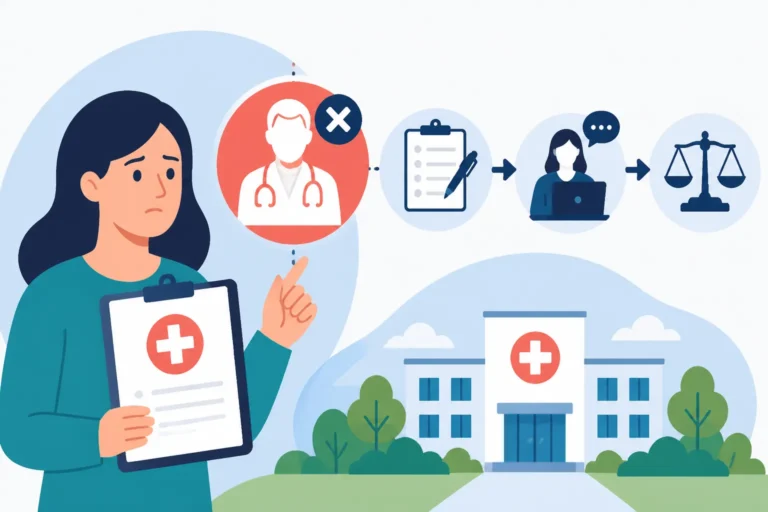
If your GP determines that your issue requires more expertise, they will issue an electronic referral. You won't get a piece of paper; the referral is "put in the cloud." You then call the specialist of your choice and give them your CPR number. It is important to understand The Role of the GP: Why You Cannot Go Directly to a Specialist because trying to bypass this system will lead to you being charged private rates, which can be hundreds of euros.
For au pairs who want to skip the queues or have direct access to specialists without the gatekeeper, private insurance like Cigna Global can be an option. While most au pairs find the public system sufficient, Cigna Global offers a level of premium access and private hospital options that the standard Yellow Card doesn't cover. This is particularly useful if you have a specific ongoing health concern that you want managed by a private specialist.
Dental, Vision, and Specialized Care Costs
This is where many au pairs get a shock. While "healthcare" in Denmark is free (paid via taxes), dental care and vision care are largely private for adults over the age of 22. If you are an au pair under 22, you might still be eligible for free or subsidized dental care, but for most, a trip to the dentist comes out of your own pocket.
Navigating the Dentist
A routine checkup and cleaning will typically cost between 500 and 1,000 DKK. If you need a filling or a root canal, those prices can skyrocket into the thousands. Because your au pair lommepenge (pocket money) is limited, a dental emergency can be a financial disaster. You should read up on Dental Care in Denmark: Costs, Subsidies, and Private Insurance Options to see if joining a private supplement like Sygeforsikring "danmark" makes sense for you.
| Service Type | Public System (Yellow Card) | Private Insurance (e.g., Cigna Global) | Out-of-Pocket Cost (Estimated) |
|---|---|---|---|
| GP Consultation | Free | Covered | 0 DKK |
| Emergency Room | Free | Covered | 0 DKK |
| Specialist (with referral) | Free (Wait times apply) | Covered (Faster access) | 0 DKK |
| Routine Dental Checkup | Not Covered | Covered (Plan dependent) | 500 – 1,000 DKK |
| Prescription Drugs | Partially Subsidized | Covered (Plan dependent) | Varies |
| Physiotherapy | Partially Subsidized | Covered | 300 – 500 DKK per session |
Opticians and Glasses
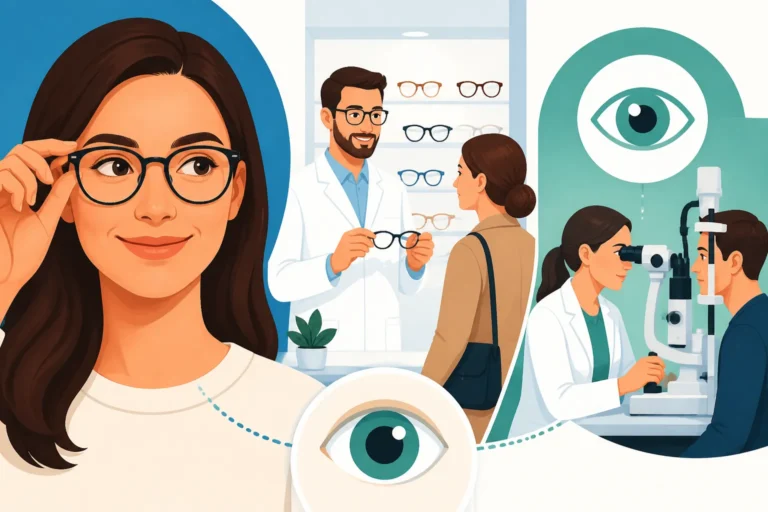
If you break your glasses or need a new contact lens prescription, you will go to a private optician (like Louis Nielsen or Synoptik). These are not covered by the public health system. Most opticians offer free eye tests if you buy glasses from them, but the hardware itself is expensive in Denmark. If you have vision issues, ensure your private expat insurance covers "vision" or "optical" care.
Emergency Situations and After-Hours Care
One of the most confusing things for new arrivals is knowing who to call when the doctor's office is closed. In many countries, you just go to the ER. In Denmark, if you show up at an ER (Akutmodtagelse) without calling first, they might actually turn you away if it isn't life-threatening.
Calling 112 vs. 1813
If it is a life-threatening emergency (heart attack, major accident, unconsciousness), call 112. This is the universal emergency number. They speak English and will dispatch an ambulance if needed.
For everything else that is urgent but not life-threatening (a high fever at night, a deep cut that might need stitches, a suspected broken bone), you must call the "After-Hours Doctor" or Lægevagten. In the Copenhagen area, this number is 1813. In other regions, the number varies. Understanding the difference between Emergency vs. Out-of-Hours Care: When to Call Lægevagten (1813) is crucial. They will triage you over the phone and tell you which hospital to go to and at what time.
Pharmacies (Apotek)
If you need medicine after hours, only specific "24-hour pharmacies" are open, and they often charge an extra fee for service at night. Also, be aware of Over-the-Counter (OTC) Medication: Supermarket vs. Apotek Regulations. You can buy basic painkillers like Panodil (Paracetamol) in a supermarket, but only one pack at a time, and you must be over 18. Anything stronger or more specific requires a trip to the Apotek.
Mental Health and the Au Pair Experience
Being an au pair is rewarding, but it can also be incredibly isolating. You are living in a domestic workspace, often far from your family and friends. It is not uncommon to experience "winter blues" or homesickness.
Accessing Support
The Danish public system does offer mental health support, but wait times for a psychologist can be long—sometimes several months. You can get a referral from your GP to reduce the cost, but even with a referral, you usually have to pay a portion of the fee yourself. For more immediate or English-speaking support, check out Mental Health in Denmark: Accessing Psychologists and Therapy for Expats.
If you find the public wait times too long, this is another area where Cigna Global or specialized expat policies can be beneficial. They often include "Telemental health" or shorter wait times for private therapy, which can be a game-changer if you are struggling with the transition to Danish life.
SafetyWing for Travelers
If you plan on traveling to other European countries during your holidays—which many au pairs do—remember that your Danish Yellow Card primarily covers you within Denmark (and provides some basic coverage in the EU via the Blue Card). However, for true travel peace of mind, especially regarding trip cancellations or emergency medical evacuation, keeping a policy like SafetyWing active during your travels is highly recommended. It is affordable and designed specifically for people who are "between" homes.
Practical Steps When You Feel Sick
- Inform Your Host Family: You are a part of their household. If you are too sick to help with the children, let them know as early as possible. Most Danish families are very understanding and prefer you rest so you don't pass the illness to the kids.
- Check Your Temperature: Danish doctors will always ask if you have a fever.
- Use the App: Check the "Min Læge" app for open slots.
- Bring Your Card: Never leave home without your Yellow Health Card.
- Check Your Insurance: If it’s your first month, have your SafetyWing policy details ready. If you have a chronic condition, check your Cigna Global coverage for specialist options.
Navigating the Danish system takes a bit of patience, but once you are in, it is one of the best in the world. Don't be afraid to advocate for yourself. You are here to experience a new culture, but you can't do that if you aren't feeling your best.
Disclaimer
The information provided in this guide is for informational purposes only and does not constitute legal or medical advice. Healthcare regulations and insurance requirements in Denmark can change. Always consult the official Danish Immigration Service (SIRI) or the Danish Health Authority (Sundhedsstyrelsen) for the most current rules. While we discuss specific insurance brands like SafetyWing and Cigna Global as options for expats, you should review their policy terms carefully to ensure they meet your individual needs.