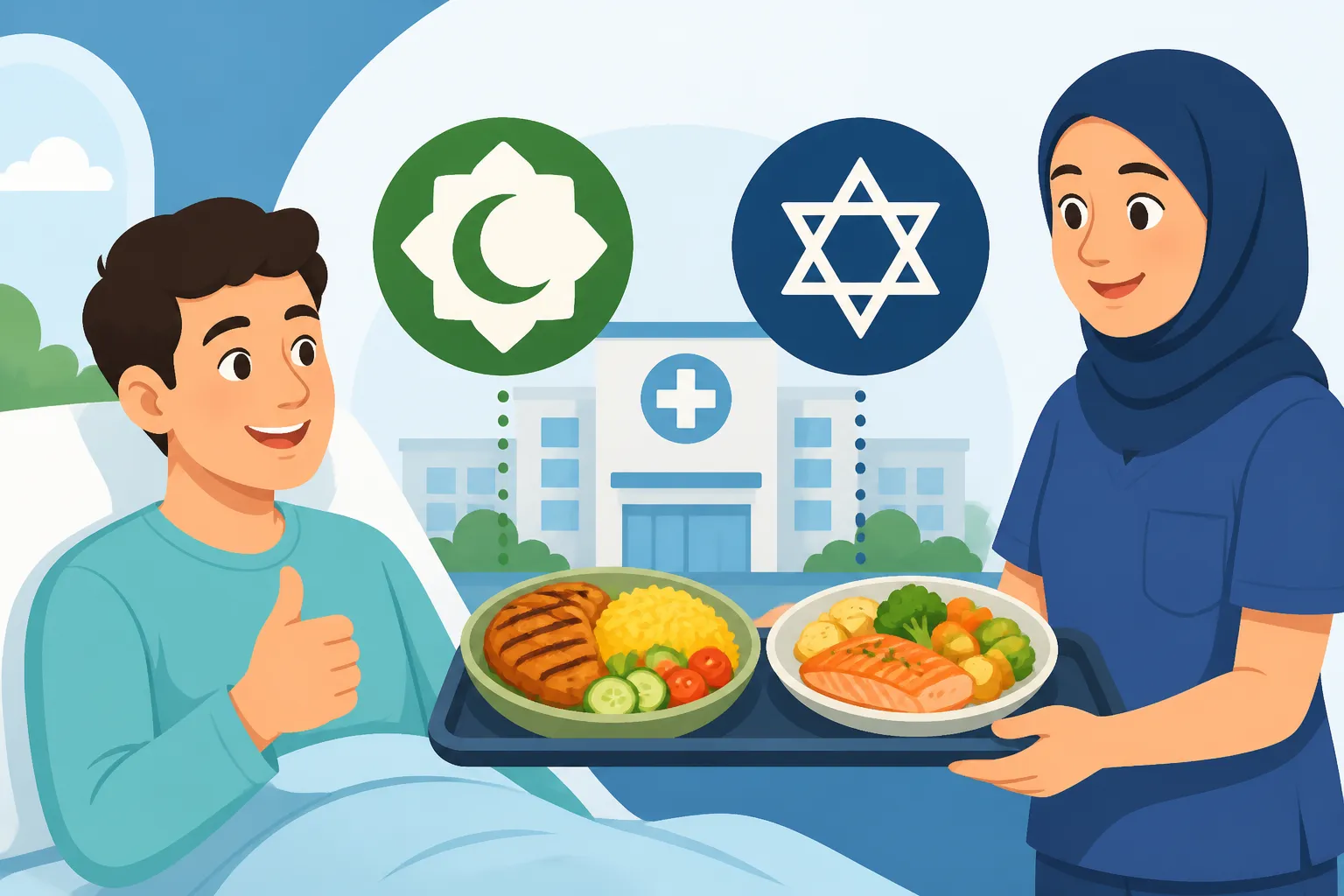
Finding Halal and Kosher Food Options in Danish Hospitals
Navigating a hospital stay is overwhelming, especially when your religious dietary requirements aren't the local norm. I remember sitting in a recovery ward in Aarhus, staring at a plate of leverpostej and realized I had no idea how to ask for an alternative without feeling like a burden. This guide explains exactly how to secure Halal or Kosher meals in Danish hospitals, your rights as a patient, and the logistics of managing specialized nutrition during your recovery.
Navigating Dietary Preferences in the Danish Public Health System
The Danish healthcare system is world-class, but its culinary traditions are deeply rooted in pork and dairy. For many expats, the first hurdle isn't the medical procedure itself, but the tray that arrives at your bedside afterward. If you follow Halal or Kosher laws, you might worry that you will be left with nothing but a side of boiled potatoes. However, Danish law and the "Patient's Rights" framework ensure that your religious and personal beliefs are respected, including what you eat.
When you are admitted, the staff will generally ask if you have any allergies. This is your immediate opening. Do not wait for them to ask specifically about religious requirements. In the Danish system, the squeaky wheel gets the oil—or in this case, the certified Halal chicken. You should clearly state your needs during the intake interview. If there is a language barrier, you can always rely on Translators in Danish Healthcare: Your Right to an Interpreter to ensure your dietary restrictions are noted correctly in your electronic file.
It is important to understand that while Halal options are becoming standard in larger cities like Copenhagen, Aarhus, and Odense, they might not be the "default" option. You are entitled to a "Specialdiæt" (Special Diet). This is a broad category that covers everything from gluten-free needs to religious requirements. The hospital kitchens are managed at a regional level, meaning a stay at Rigshospitalet might offer a different menu than a smaller facility in Jutland. Regardless of the location, the staff is trained to accommodate these requests, provided they are notified early.
For those who are in Denmark on a temporary basis or are still waiting for their residency to clear, having robust coverage is essential. If you are a traveler or a new arrival, SafetyWing can provide the necessary peace of mind while navigating these public facilities. They understand the nuances of international living, which is helpful when you are stuck in a ward trying to explain why you need a specific meal certification.
The Logistics of Ordering Halal and Kosher Meals
In recent years, Danish hospitals have moved toward a more digital and patient-centric food service. Many wards now use a system where patients order their own meals through a tablet or a smartphone app, such as the "Min Mad" app used in several regions. Within these apps, you can often filter by "Svinekødsfri" (pork-free) or "Halal."
Availability of Halal Food
Because Denmark has a significant Muslim population, Halal-certified meat is relatively accessible in the public hospital system. Most central kitchens (Centralkøkkener) source Halal-certified poultry and beef to simplify their logistics. However, "Halal" in a Danish hospital context usually means the meat itself is slaughtered according to Islamic rites, but the kitchen may not be a dedicated Halal space. If you require a higher level of certification where the entire preparation area is strictly separated, you must specify this to the clinical dietician.
The Challenge of Kosher Meals
Securing a Kosher meal is, admittedly, more complex in the Danish system. The Jewish community in Denmark is smaller, and the strict requirements for a Kosher kitchen (separation of meat and dairy, specific supervision) are difficult for a standard public hospital to maintain. In most cases, if you request a Kosher meal, the hospital will provide a pre-packaged, frozen meal that has been certified by a rabbinical authority. These are heated in their original packaging to prevent cross-contamination.
While the system is designed to be inclusive, there can be delays. It is highly recommended to read about Hospital Admissions in Denmark: What to Bring and What to Expect to prepare for the first 24 hours of your stay, which is when the most "hiccups" in meal delivery occur.
| Dietary Requirement | Availability Level | Typical Preparation Style | How to Request |
|---|---|---|---|
| Halal | High (Standard in cities) | Freshly prepared using certified meat | Order via "Min Mad" app or inform the nurse |
| Kosher | Moderate (Pre-packaged) | Frozen certified meals heated in-house | Must be requested 24-48 hours in advance |
| Pork-Free | Very High | Standard vegetarian or non-pork options | Available on all standard menus |
| Vegetarian/Vegan | Very High | Plant-based fresh meals | Standard option in all regions |
Managing Your Own Food: Delivery and External Options
There are times when the hospital’s "Specialdiæt" may not meet your personal standards or taste preferences. Recovery requires proper nutrition, and if you aren't eating because the food doesn't feel "right," your healing may be slowed. Fortunately, Danish hospitals are generally quite relaxed about patients receiving food from outside, provided it doesn't interfere with specific medical dietary restrictions (like a low-sodium or liquid diet).
If you find the hospital's Halal or Kosher offerings lacking, you can use apps like Wolt or Foodora to have meals delivered directly to the hospital entrance. In Copenhagen, there is an abundance of Halal-certified Middle Eastern and South Asian restaurants that deliver to the major hospitals. When using these services, it is helpful to have your MobilePay and Cashless Denmark: Surviving Without Physical Cash setup ready, as delivery drivers in Denmark rarely carry change.
Another excellent strategy for longer stays is using grocery delivery. You can order specific certified products through Using the Nemlig.com Grocery Delivery Service in Denmark and have them sent to the hospital. Most wards have a small communal refrigerator for patients where you can store labeled items like yogurt, certified cold cuts, or specific snacks. Just be sure to write your name and room number clearly on everything.
If you are a high-net-worth expat or someone with a comprehensive international policy, you might consider how private options handle these requests. Cigna Global often provides access to private facilities or higher-tier support services that can make these logistical hurdles much easier to manage. While the public system is the backbone of Healthcare in Denmark for Foreign Residents: Complete System Guide (2027), private insurance can sometimes offer more bespoke "patient-hotel" experiences where dietary customization is the gold standard.
Communication Strategies for Patients and Families
The Danish culture prizes directness, but it also values not making a "scene." This can be a confusing balance for expats. If your meal arrives and it isn't what you requested, or if you are unsure if the chicken on your plate is actually Halal, you must speak up. A simple, "Jeg har brug for at bekræfte, om dette er Halal-kød" (I need to confirm if this is Halal meat) is perfectly acceptable.
It is also worth noting that Danish hospitals employ clinical dieticians (Kliniske Diætister). If you are facing a long-term stay—perhaps for Family Health in Denmark: Pregnancy, Maternity, and Pediatric Care or a chronic condition—you can ask for a consultation with a dietician. They can help create a long-term meal plan that respects your religious boundaries while ensuring you get the protein and calories needed for recovery.
For those who are concerned about the costs associated with extended stays or specialized needs, it is wise to understand Expat Health Insurance: Coverage Before You Get Your CPR Number. While the "Yellow Card" covers the hospital stay itself, having supplemental insurance like Cigna Global or Private Health Insurance (Sygeforsikring "danmark"): Is It Worth It? can provide additional layers of comfort and choice.
Finally, remember that the nursing staff is there to help, but they are often stretched thin. If a family member can act as an advocate, it makes the process smoother. Families are encouraged to bring in food, and most wards have a "dagligstue" (common room) with a microwave where family-brought Halal or Kosher meals can be heated. This communal approach to eating is a big part of the "hygge" even in a clinical setting, and it ensures that you don't have to compromise your faith for your health.
Understanding Your Rights and Potential Limitations
While the Danish system strives for equality, it is important to manage expectations. In a small regional hospital in the middle of Zealand, the staff might be less familiar with the strictness of Kosher laws compared to a major university hospital. In these cases, you may be offered vegetarian or vegan meals as the "safest" alternative.
Under the Danish Health Act, you have the right to be treated with respect for your integrity and your religious beliefs. If you feel that your requests are being ignored or that you are being pressured to eat food that violates your conscience, you have the right to complain. You can contact the "Patientkontoret" (Patient Office) in your region for guidance.
For many, the transition into the Danish system involves a steep learning curve regarding how much you need to advocate for yourself. Whether you are navigating Emergency Medical Care in Denmark: Calling 112, Lægevagten, and ERs or a planned surgery, being proactive about your dietary needs is just as important as knowing your medical history. By combining the hospital's resources with external delivery services and clear communication, you can maintain your religious dietary standards throughout your recovery.
Important Disclaimer
The information provided in this guide is for informational purposes only and does not constitute legal or medical advice. Hospital policies in Denmark can change, and dietary availability may vary significantly between regions and specific facilities. Always consult with hospital staff and your medical team regarding your specific dietary needs and any restrictions related to your treatment. SafetyWing and Cigna Global are private entities, and coverage terms should be verified directly with the providers.