How to Report Medical Malpractice in the Danish Healthcare System
Realizing that a medical procedure went wrong or that your doctor missed a critical diagnosis is a deeply isolating experience, especially when you are navigating a foreign system in a language that isn't your own. I remember the paralyzing feeling of sitting in a sterile waiting room, knowing something was off but not having the vocabulary to challenge a specialist’s decision. This guide breaks down exactly how to navigate the Danish reporting system, from filing a formal complaint to seeking financial compensation.
Understanding the Two Paths for Medical Malpractice in Denmark
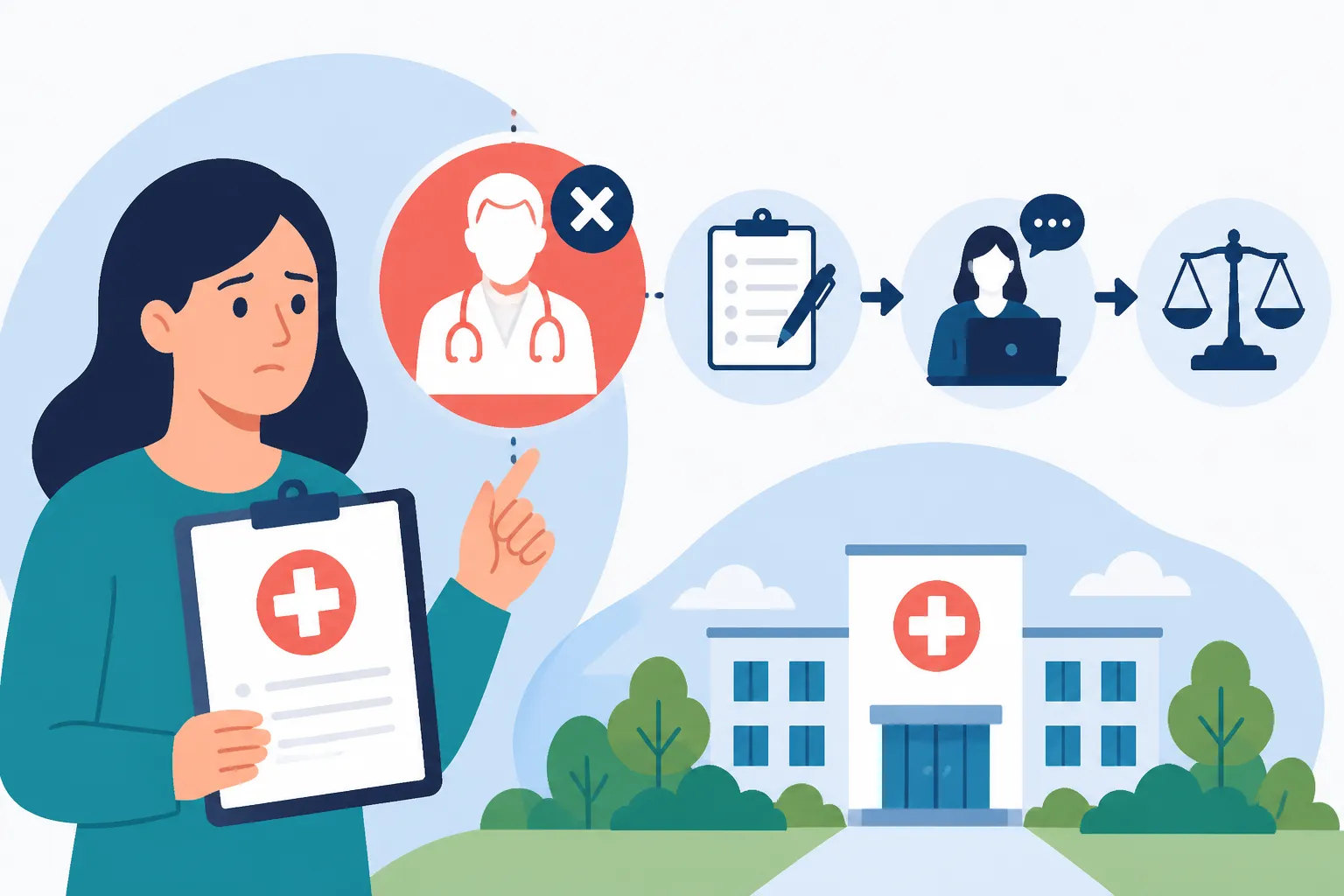
When you feel that the Danish healthcare system has failed you, it is important to understand that Denmark separates "complaints" from "compensation." This is a fundamental distinction that often confuses expats. You might want a doctor to be reprimanded for their behavior or a clinical error, or you might be seeking financial help because an injury has left you unable to work. These are handled by two different authorities, though you can pursue both at the same time.
The first path is the Styrelsen for Patientklager (Danish Patient Complaints Agency). This is where you go if you want a formal evaluation of the professional conduct of a healthcare worker or the standard of care provided by a specific facility. Their focus is on accountability and learning. They don't award money; they issue "criticism" or "no criticism" based on whether the treatment met the expected professional standards. For many of us, this is about closure and ensuring that the same mistake doesn't happen to another person in our community.
The second path is Patienterstatningen (The Patient Compensation Association). This body deals exclusively with financial claims. In Denmark, we have a "no-fault" compensation system. This means you do not necessarily have to prove that a doctor was "guilty" or "negligent" in a legal sense. Instead, you must prove that an injury occurred and that it could likely have been avoided with better treatment or that it was a rare and severe complication that exceeds what a patient should have to endure. This is often the more critical path if you are facing mounting bills or lost wages.
Even if you have comprehensive international coverage through providers like Cigna Global, you are still entitled to use the public compensation system if the treatment occurred within Denmark. In fact, many private insurers will require you to exhaust the public options first. If you are a newcomer still waiting for your CPR number, navigating these waters is even trickier, which is why having supplemental coverage from a provider like SafetyWing can be a lifesaver for bridging the gap during the administrative waiting period.
Filing a Formal Complaint with Styrelsen for Patientklager
If your goal is to hold a practitioner accountable, you will be dealing with the Styrelsen for Patientklager. The process is almost entirely digital, which is very "Danish," but can feel impersonal when you are dealing with physical or emotional trauma. You have two years from the moment you became aware of the issue to file a complaint, and a maximum of five years from the date the incident actually happened.
When you start the process, you will need to log in to the national portal using your MitID. This is where Sundhed.dk and MitID: Navigating Denmark’s Digital Health Portals becomes your most important tool. Once logged in, you will fill out a digital form detailing what happened. My advice is to be as clinical and chronological as possible. Use dates, names of the medication prescribed, and specific symptoms that were ignored. If you have already read our guide on How to View Your Medical Records and Lab Results on Sundhed.dk, you should pull your records first so your complaint matches the "official" timeline recorded by the hospital.
After you submit, the agency will request a statement from the healthcare professional or the hospital involved. You will eventually get to see this statement and offer your comments on it. This "back and forth" can take many months. The Danish system is thorough, but it is not fast. During this time, the agency may consult with independent medical experts to determine if the "standard of care" was met. This is not about whether you were cured, but whether the doctor did what a reasonable doctor in Denmark would do under the same circumstances.
It is worth noting that you can complain about more than just the medical treatment. You can also complain about a breach of patient rights, such as a lack of informed consent or a violation of Waiting Times in Danish Public Hospitals and Patient Rights. If a doctor performed a procedure you didn't fully agree to, or if they didn't explain the risks in English despite you asking, that is a valid ground for a formal complaint.
Seeking Financial Compensation via Patienterstatningen
If you have suffered a physical or psychological injury that has had a real impact on your life, you should apply for compensation through Patienterstatningen. The beauty of the Danish system—if we can call it that—is that it is designed to be accessible without needing a lawyer. You simply fill out the claim form online. They will then take over the heavy lifting of gathering your journals from the GP and the specialists.
To be eligible for a payout, the injury usually must meet one of several criteria. The "Specialist Rule" is the most common: would an experienced specialist have done something differently that would have avoided the injury? Another is the "Equipment Rule," which covers injuries caused by malfunctioning medical tech. There is also a rule for "Fairness," which covers very rare and serious complications that are way out of proportion to the illness being treated. If you’re unsure where your case fits, it’s worth looking into Understanding Patient Compensation (Patienterstatningen) in Denmark for a deeper dive into these legal nuances.
The financial threshold is also important. In most cases, the compensation must be valued at more than 10,000 DKK for a claim to be processed. This compensation can cover "pain and suffering" (a fixed daily rate), "permanent injury" (a lump sum based on a percentage of disability), and "loss of earning capacity." If you are an expat on a high-salary visa like the Pay Limit Scheme, the loss of earning capacity can be a complex calculation, and this is where the system’s "no-fault" nature is a massive relief compared to the litigious systems in many other countries.
During the months (or years) it takes for a claim to be settled, managing your ongoing health is a priority. If you feel the public system is moving too slowly for your recovery, you might consider using private options. If you have Private Health Insurance (Sygeforsikring "danmark"): Is It Worth It?, you might get subsidies for the physiotherapy or psychological help you need while waiting for your compensation payout.
Comparison of Reporting Pathways
| Feature | Styrelsen for Patientklager | Patienterstatningen |
|---|---|---|
| Primary Goal | Accountability & Professional Sanctions | Financial Compensation for Injury |
| Time Limit | 2 years from discovery / 5 years total | 3 years from discovery / 10 years total |
| Outcome | Criticism or No Criticism | Cash Payout |
| Cost | Free | Free |
| Legal Representation | Not required | Not required |
| Digital Access | MitID via stpk.dk | MitID via pebl.dk |
The Role of the Patientvejleder (Patient Advisor)
One of the best-kept secrets for foreigners in Denmark is the Patientvejleder. Every region in Denmark (like Region Hovedstaden or Region Midtjylland) is legally required to provide "Patient Advisors" who are independent of the doctors and hospitals. Their entire job is to help you understand your rights and help you write your complaints. If you are struggling with the Danish forms or the medical jargon, these are the people you need to call.
When I first learned about this service, I was shocked it was free. You can literally book a meeting with them, and they will sit down with you to review your case. They won't "take a side," but they will tell you if your complaint is likely to be successful and which forms you need to fill out. This is particularly helpful when you are trying to coordinate care between Finding Medical Care in Denmark: GPs, Specialists, and Referrals and a hospital where a mistake occurred.
Using a Patient Advisor can also help you manage the emotional weight of a malpractice claim. The Danish system can feel very bureaucratic and "cold" to those of us from more expressive cultures. Having a local guide who knows the system and can speak the language fluently ensures that your voice isn't lost in the digital shuffle. They can also help you understand if your issue is better handled locally at the hospital's own "Patient Office" before escalating it to the national level.
Language Barriers and Translation Rights
A major concern for many expats is whether they can file a complaint in English. Technically, the official language of the Danish administration is Danish. However, the Patient Complaints Agency and Patienterstatningen are accustomed to dealing with international residents. While the online forms are primarily in Danish, you can often submit your personal statement in English.
If the case goes to a formal hearing or requires an interview, you have specific rights regarding interpretation. In the Danish healthcare system, if a doctor or an official deems it necessary, an interpreter will be provided. However, for administrative complaints, you may need to rely on your own network or a Patient Advisor to ensure your English statements are being interpreted correctly. It’s a good idea to cross-reference your experience with Healthcare in Denmark for Foreign Residents: Complete System Guide (2027) to see where language service gaps usually occur.
If you are feeling overwhelmed, remember that you don't have to do this the day the error happens. You have time. Focus on your immediate health first. If you are a student or a temporary worker, make sure you know The Yellow Health Card (Sundhedskort): Your Key to Danish Healthcare rules, as having an active CPR registration is vital for accessing the digital portals needed to file these claims.
Managing Your Health After a Medical Error
The psychological impact of a medical mistake is often more lasting than the physical injury. It can lead to a total loss of trust in the "Yellow Card" system. If you find yourself avoiding the doctor because of a past trauma, it is essential to seek help. Denmark has a strong network of specialists, and sometimes a second opinion is all you need to regain your confidence. If your trust in the public system is shaken, providers like Cigna Global can offer access to private specialists who might provide a more tailored, communicative experience.
For many of us, Mental Health in Denmark: Accessing Psychologists and Therapy for Expats is the next logical step after a malpractice event. You can often get a referral from your GP for subsidized therapy if the medical error has caused significant distress or PTSD. Even if the error was the GP's fault, you have the right to change your doctor at any time to find someone you trust.
Lastly, keep a physical folder of everything. Every letter from the hospital, every printout from Sundhed.dk and MitID: Navigating Denmark’s Digital Health Portals, and every receipt for medication or travel to the hospital. In Denmark, the more documentation you have, the smoother the process will be. While the system is digital, "paper trails" (even digital ones) are the currency of a successful malpractice claim.
Disclaimer
This article is for informational purposes only and does not constitute legal or professional medical advice. The Danish healthcare system and its administrative procedures are subject to change. Always consult with a qualified legal professional or a regional Patient Advisor (Patientvejleder) regarding your specific case. If you are in an emergency situation, please call 112 immediately.