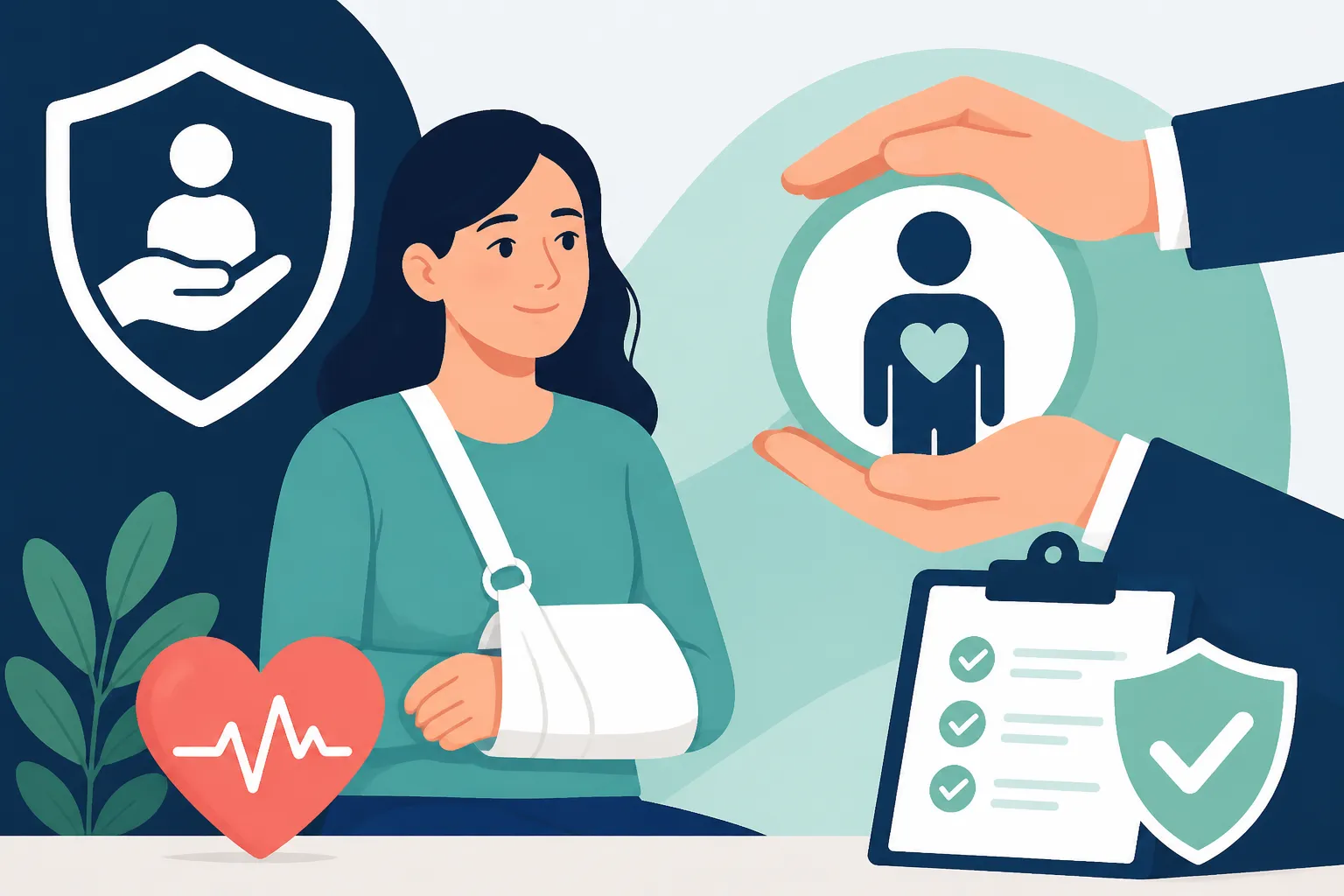
Understanding Patient Compensation (Patienterstatningen) in Denmark
Navigating a medical error is an isolating experience, especially when you are thousands of miles from home and struggling with a language barrier. I still remember the sinking feeling of realizing a procedure hadn't gone as planned and wondering if I had to "just deal with it" as a guest in this country. This guide explains how Patienterstatningen (the Danish Patient Compensation Association) works to protect you when Danish healthcare fails to meet its own high standards.
The Fundamental Philosophy of Danish Patient Compensation
In many countries, if a doctor makes a mistake, the only path to justice is a long, aggressive, and expensive lawsuit against the individual practitioner or the hospital. Denmark operates on a completely different frequency. Here, the system is designed to be "no-fault." This means the focus isn't on punishing a specific nurse or surgeon, but rather on ensuring that you, the patient, are compensated for the injury you suffered. It is a social safety net meant to bridge the gap between a medical mishap and your recovery.
Moving Beyond a Culture of Blame
The Danish approach assumes that medical professionals are doing their best but acknowledges that human error and system failures are inevitable. When you file a claim with Patienterstatningen, you aren't "suing" your GP. In fact, your doctor might even help you file the paperwork. This collaborative spirit can be jarring if you come from a more litigious background, but it is a cornerstone of Healthcare in Denmark for Foreign Residents: Complete System Guide (2027). The goal is to determine if the injury could have been avoided under optimal circumstances, not to strip a doctor of their license.
Because the system is administrative rather than judicial, you don't need a high-priced lawyer to get started. The process is free for the patient, and the burden of investigation lies with the state. They will collect your records, consult independent medical experts, and decide based on the law. For many expats, this removes the financial "gatekeeper" that often prevents people from seeking justice in their home countries.
The Legal Scope of the Patient Compensation Act
The Patienterstatningen covers almost all medical interactions within the Danish borders. This includes treatment at public hospitals, private clinics, and even your local GP's office. It also extends to coverage for injuries caused by medications, which is a significant relief if you’ve had an adverse reaction to a prescribed drug. Even if you are an expat still waiting for your full registration, as long as the treatment happened in Denmark, the Act likely applies to you.
It is important to note that this system covers physical and recognized psychological injuries. It does not cover "hurt feelings" or general dissatisfaction with a doctor’s bedside manner. There must be a tangible injury that has resulted in a loss—be it financial, physical, or a loss of "life enjoyment" as defined by Danish law. If you are still in your first few months in the country and haven't fully integrated, having Expat Health Insurance: Coverage Before You Get Your CPR Number can provide an extra layer of security, but the right to compensation via Patienterstatningen remains a legal constant for all patients treated here.
The Three Golden Rules for a Successful Claim
Not every bad outcome is a compensable injury. If you have a terminal illness and the treatment fails, that is a tragic but expected outcome. To receive a payout, your case must usually fall into one of several specific legal "baskets." Understanding these rules is vital because they dictate how you should describe your experience when filling out the application.
The Experienced Specialist Standard
This is the most common path to compensation. The system asks: "Could an experienced specialist in this field have performed this treatment better, thereby avoiding the injury?" If the answer is yes, you are entitled to compensation. It doesn't matter if your specific doctor was tired or if the hospital was busy; the benchmark is an idealized "best-case" specialist.
For example, if a surgeon accidentally nicks a nerve during a routine gallbladder removal, the investigators will look at whether the "best" surgeon would have likely avoided that nerve. If the injury is deemed an avoidable mistake by that high standard, you win your claim. This is a very patient-friendly rule because it doesn't require you to prove the doctor was "negligent" or "bad"—only that the outcome wasn't as good as it could have been.
Equipment Failures and Technical Errors
Sometimes the doctor does everything right, but the technology fails. If a dialysis machine malfunctions or a faulty implant causes an infection, you are covered. Denmark holds the healthcare system strictly liable for the tools they use. This also applies to the use of The Yellow Health Card (Sundhedskort): Your Key to Danish Healthcare during the diagnostic phase; if a system error leads to a missed scan or a lost blood sample that results in a delayed diagnosis and subsequent injury, that counts.
The documentation for these errors is usually found deep within your digital records. As an expat, you should become very comfortable with Sundhed.dk and MitID: Navigating Denmark’s Digital Health Portals, as this is where the "evidence" of technical failures often hides. Being able to point to a specific date where a lab result was logged but not acted upon can make or break your case.
The Comparison Rule for Rare Complications
Even if the treatment was performed perfectly and no equipment failed, you might still get compensated if the complication you suffered was "excessively rare and serious." Denmark has a rule that says a patient shouldn't have to bear the full burden of a freak medical accident that is far more severe than the original condition being treated.
If you go in for a minor toe surgery and end up with a full-leg amputation due to an incredibly rare infection, the system may compensate you even if no one did anything "wrong." The logic is that the "price" you paid for the treatment was disproportionately high. However, this is a high bar to clear. The complication must usually occur in less than 1-2% of cases and be much more severe than the illness that prompted the surgery.
Navigating the Practicalities of the Claim Process
Once you've realized you might have a claim, the administrative "Danish-ness" of the process begins. Everything is digital, and while the system is efficient, it requires a level of patience that can be hard to muster when you're in pain or recovering.
Using Digital Portals and MitID
To file a claim, you generally head to the Patienterstatningen website and log in using your MitID. The application is available in English, which is a massive help for the international community. You will be asked to describe the treatment, where it happened, and the specific injury you sustained.
The investigators will then use your CPR number to pull all relevant data. It is highly recommended that you first go into your own records to see what the doctors have written. You can learn How to View Your Medical Records and Lab Results on Sundhed.dk to ensure that the narrative in your file matches your memory of events. If there are discrepancies, you should note them clearly in your application.
Understanding the Statutory Limitations and Deadlines
In Denmark, time is of the essence. Generally, you must file a claim within three years of the moment you became aware (or should have become aware) of the injury. There is also an absolute "cutoff" of ten years from the date the injury actually occurred, regardless of when you found out.
For many expats, a complication might not seem like a "claim" until they talk to someone back home who points out that the treatment seemed off. Don't wait. Even if you aren't sure, filing the initial claim preserves your rights. If you are using a global provider like Cigna Global for supplemental care, you should also check their policy on medical errors, though they will often wait for the Danish state's decision before finalizing their own supplemental payouts.
Gathering Evidence from Your Medical History
While the Patienterstatningen does the heavy lifting, your "patient story" is the heart of the claim. Describe the impact on your daily life. Did you lose your job because you couldn't stand for eight hours? Can you no longer pick up your children? These human details provide the context that data cannot.
| Type of Injury | Key Evidence Needed | Potential Compensation |
|---|---|---|
| Surgical Error | Operative notes, follow-up scans | Pain/suffering, permanent injury grade |
| Misdiagnosis | Lab results, referral timelines | Loss of earning capacity |
| Medication Error | Prescription history, pharmacy logs | Medical expenses, acute sickness allowance |
| Dental Injury | X-rays before/after treatment | Cost of corrective dental work |
If the error happened at a pharmacy, ensure you have the original packaging or a receipt. The rules regarding Pharmacies in Denmark: Apotek Rules, Prescriptions, and Subsidies are strict, and a paper trail from the Apotek can be the smoking gun in a medication error claim.
Compensation Types and Financial Expectations
If your claim is approved, the next step is calculating the "how much." Denmark uses standardized rates for compensation, which helps keep the system predictable but can feel low if you are used to the multi-million dollar settlements seen in the United States.
Calculating Pain and Suffering vs. Permanent Injury
There are two main "pots" of money for physical damage. The first is a daily allowance for "pain and suffering" while you are acutely ill. This is a fixed amount for every day you are sick, up to a certain limit. The second is a lump sum for "permanent injury." This is calculated based on a percentage. If the medical board decides you are "10% disabled," you receive a specific amount tied to that percentage and your age.
It is a clinical process. They use a "Table of Permanent Injury" that assigns percentages to everything from a lost finger to chronic back pain. For issues involving teeth, the compensation often covers the actual cost of repair. If you've had a bad experience at the dentist, you'll find that Dental Care in Denmark: Costs, Subsidies, and Private Insurance Options works in tandem with the compensation board to ensure you aren't out of pocket for corrective work.
Handling Loss of Earning Capacity
This is often the largest part of a payout. If a medical error means you can no longer work in your profession, the system must compensate you for that future lost income. This is complex and involves looking at your salary before the injury and your expected "earning potential" now.
For expats on high-salary visas, this can be a stressful calculation. If you are worried about your financial stability during the long investigation period (which can take 6-12 months), having a private policy from SafetyWing or a similar provider might offer some "incapacity" or "disability" coverage that keeps you afloat. However, the state compensation for lost earnings is specifically designed to ensure you don't fall into poverty due to a hospital's mistake.
The Role of Private Secondary Insurance
While the public compensation system is robust, it doesn't cover everything. It won't pay for a first-class flight back to your home country for "emotional recovery," nor will it pay for private luxury suites during your corrective surgery. This is where Private Health Insurance (Sygeforsikring "danmark"): Is It Worth It? or international plans from Cigna Global come into play.
These private entities often provide "gap" coverage. For instance, if Patienterstatningen covers the cost of a basic prosthetic, your private insurance might pay the difference for a high-performance athletic model. Always notify your private insurer if you have filed a claim with the state; they will often have their own legal teams who can offer guidance on the Danish process. If you feel the need to take things further than just financial compensation, you may also want to look into How to Report Medical Malpractice in the Danish Healthcare System to trigger a professional conduct review.
Disclaimer
This guide is provided for informational purposes only and does not constitute legal or professional medical advice. While every effort has been made to ensure the accuracy of the information regarding Danish law and Patienterstatningen as of 2026, regulations can change. Always consult with a qualified legal professional or the official Patienterstatningen office before making decisions regarding your specific case. Private insurance terms for SafetyWing and Cigna Global vary by individual policy.