Can I Bring My Foreign Therapy Dog into Danish Hospitals?
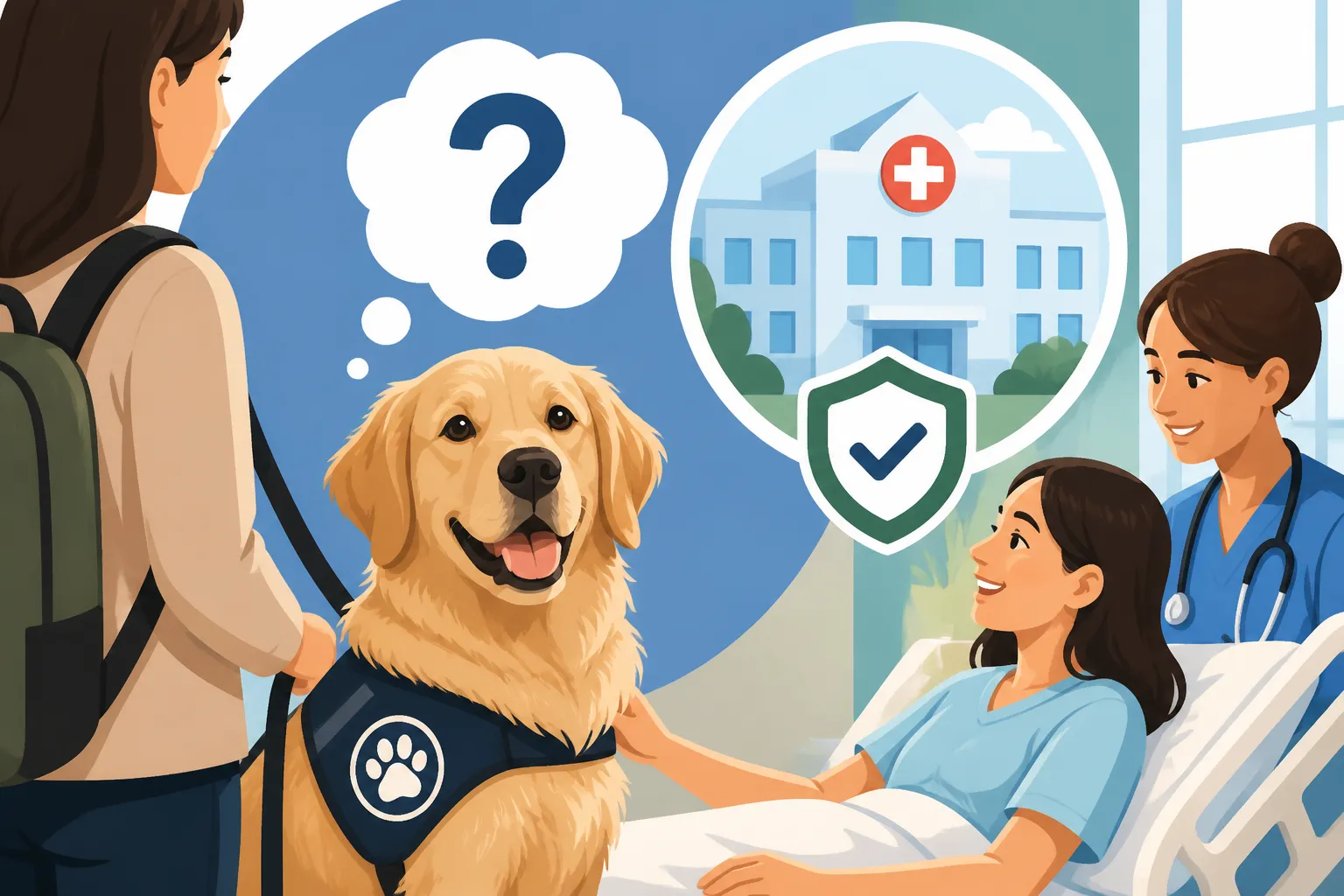
Navigating the Danish healthcare system is daunting enough, but trying to bring your foreign therapy dog into a hospital adds a layer of administrative "hygge-less" stress that many of us weren't prepared for. I remember the panic of trying to explain my dog's certification to a nurse who only saw a "pet" and not a medical aid. This guide solves exactly how Danish hospitals view therapy dogs and what you need to do to gain access.
Understanding the Distinction Between Therapy and Assistance Dogs
One of the first things you realize after moving to Denmark is that the Danish language and legal system are very precise about animal roles. In many countries, the terms "therapy dog," "emotional support animal," and "service dog" are used interchangeably in casual conversation. However, in a Danish clinical setting, these distinctions are the difference between being welcomed at the door and being asked to leave your furry friend in the parking lot.
Assistance dogs, or servicehunde, are legally protected. These are dogs trained to perform specific tasks for individuals with physical or mental disabilities, such as guide dogs for the blind or hearing dogs for the deaf. These animals have a high level of access under Danish law because they are considered essential medical equipment. If you are still in the early stages of your move, you might be looking at Expat Health Insurance: Coverage Before You Get Your CPR Number to ensure your own health needs are met while you figure out these pet-related logistics.
Therapy dogs, on the other hand, are generally viewed as animals that provide comfort in a more general sense. While they are incredibly valuable for mental health, they do not always carry the same legal weight as a certified assistance dog. When you are Finding Medical Care in Denmark: GPs, Specialists, and Referrals, you will find that most primary care clinics are more flexible than hospitals. Hospitals, particularly large institutions like Rigshospitalet in Copenhagen or Aarhus University Hospital, prioritize hygiene and patient safety above almost everything else.
The "Emotional Support Animal" (ESA) category, which is popular in North America, essentially does not exist in the Danish legal framework. If your dog is a foreign emotional support animal, the hospital will likely view it as a standard pet. This can be heartbreaking when you’re dealing with a long-term illness, but understanding this baseline helps you prepare a better case for entry or find alternative support.
General Hospital Policies and the Hygiene Barrier
Danish hospitals are famous for their cleanliness and "no-nonsense" approach to infection control. The primary reason you will face resistance when bringing a foreign therapy dog into a ward is the infektionshygiejniske retningslinjer (infection hygiene guidelines). These rules are set by the Statens Serum Institut (SSI) and are strictly enforced by hospital management.
Most hospitals maintain a general ban on animals in clinical areas. This includes waiting rooms, wards, and treatment rooms. The fear is not just about the dog being "dirty," but about allergens and the risk of zoonotic diseases in a space where patients have compromised immune systems. If you find yourself in a situation where you need Emergency Medical Care in Denmark: Calling 112, Lægevagten, and ERs, it is almost certain that your therapy dog will not be allowed to accompany you in the ambulance or the emergency room unless it is a certified service dog.
However, there are exceptions for long-term patients or those in palliative care. Some hospitals have specific "visiting zones" or outdoor gardens where patients can meet their pets. If your therapy dog is foreign, you must be prepared to show that the dog is healthy and up-to-date on all vaccinations. Before you even arrive, ensure you have your own coverage sorted; companies like SafetyWing offer flexible options for expats who are still navigating the local system. Having SafetyWing can take the edge off the financial stress while you focus on the administrative battle of pet access.
It is also worth noting that the "culture" of the hospital matters. A small regional hospital in Jutland might be slightly more relaxed than a high-intensity trauma center in the capital. Regardless of the location, the head of the specific department (afdelingsledelsen) has the final say. If the head nurse or the attending physician says no, there is very little legal recourse for a therapy dog compared to a service dog.
Bringing a Foreign Dog into Denmark: The Administrative Hurdle
Before your therapy dog can even get near a Danish hospital, it has to legally enter the country. If you are coming from outside the EU, this is a significant task. Denmark follows strict EU pet movement rules, which require a microchip, a valid rabies vaccination, and often a health certificate endorsed by an official veterinarian in your home country.
For those moving from within the EU, the process is simpler with an EU Pet Passport. However, a "therapy dog" certification from a foreign organization (like the Alliance of Therapy Dogs in the US) is not automatically recognized by Danish authorities or hospitals. You will often need to have these documents translated into Danish or English and, in some cases, have the dog’s temperament and training assessed by a Danish organization like TrygFonden, which runs the most prominent therapy dog program in the country.
If you are currently managing this transition, you should check Bringing Pets to Denmark: Import Rules, Chips, and Passports to ensure you haven't missed any recent changes in the law. While you are sorting out the dog's paperwork, don't forget your own; long-term expats often choose Cigna Global to ensure they have comprehensive medical access that covers private facilities where pet policies might be slightly more negotiable. Cigna Global is particularly useful if you prefer to see specialists who may have more time to discuss individual care plans involving your therapy animal.
The table below summarizes the general access levels you can expect for different types of dogs in Danish medical facilities:
| Dog Category | General Hospital Access | Documentation Required | Legal Protection |
|---|---|---|---|
| Certified Service Dog | High (Most Areas) | EU Pet Passport + Service ID | Strong (Disability Law) |
| Certified Therapy Dog | Low (Case-by-Case) | Training Cert + Health Records | Minimal (Discretionary) |
| Emotional Support Dog | Very Low (Rarely) | Usually Not Recognized | None |
| Standard Pet | None (Gardens Only) | EU Pet Passport | None |
Practical Steps for Gaining Access
If you believe your foreign therapy dog is essential for your recovery or the recovery of a loved one, you cannot simply show up at the hospital. You need a strategy. The first step is to contact the hospital's Patient Ambassador (Patientvejleder). This person’s job is to help you navigate the system and understand your rights.
You should prepare a "dossier" for your dog. This should include their foreign certification, a letter from your doctor (preferably a Danish GP) explaining why the dog's presence is medically necessary, and a recent clean bill of health from a Danish vet. If you are struggling with the language barrier during this process, remember that you have Translators in Danish Healthcare: Your Right to an Interpreter. Use this resource to ensure your request is clearly understood by the hospital board.
Another tip from a veteran expat: focus on the "hygiene" argument before they bring it up. Mention that the dog is professionally groomed, has no history of aggression, and that you have a plan for waste management and hair control. Suggesting a "trial visit" in a non-clinical area like a cafeteria or a courtyard can often soften the stance of a skeptical department head.
While you are negotiating these visits, ensure your own health insurance is robust. Using a provider like SafetyWing is a great way to bridge the gap if you are still waiting for your yellow card. SafetyWing is designed for people living between borders, which often describes the "foreign therapy dog" owner perfectly. For those who want more permanent, high-limit coverage, Cigna Global provides the kind of stability that helps when dealing with chronic conditions that require frequent hospital stays.
Alternatives and Local Therapy Dog Programs
If the hospital remains firm in its "no foreign therapy dogs" policy, don't lose heart. Denmark has its own very successful therapy dog programs. The most famous is TrygFondens Besøgshunde. These are "visiting dogs" that are vetted, trained, and insured to visit hospitals, nursing homes, and hospices across the country.
If your own dog cannot enter, you can request a visit from a local Danish therapy dog. This doesn't replace the bond you have with your own animal, but it can provide the therapeutic benefits you need while you are stuck in a ward. You can ask your nurse or the Hospital Admissions in Denmark: What to Bring and What to Expect coordinator if the hospital has a regular schedule for besøgshunde.
For those dealing with mental health challenges, you might find that Mental Health in Denmark: Accessing Psychologists and Therapy for Expats offers other avenues for support that don't involve the strict environment of a hospital ward. Sometimes, getting a referral for an English-speaking therapist who allows your dog in their private practice is a much easier path than fighting a major hospital's administrative board.
Lastly, consider the financial implications of your dog's health while in Denmark. Just as you might use Cigna Global for your own peace of mind, make sure your dog has local pet insurance. If your dog were to get injured or fall ill while visiting a hospital (perhaps from a floor cleaner or an accidental fall), you want to ensure they are covered without it draining your savings.
Summary of Access Strategies for Expats
Navigating this requires patience and a lot of paperwork. Here is a quick checklist for the "veteran expat" approach:
- Get your dog's foreign training documents translated.
- Visit a Danish vet immediately to get a local health certificate.
- Contact the Patientvejleder at the specific hospital.
- If denied, request a meeting in the hospital garden or a "visiting zone."
- Have your insurance—like SafetyWing or Cigna Global—ready so you aren't fighting two battles at once.
If you are still waiting for your paperwork to clear, you might be wondering, How Long Does It Take to Receive the Yellow Card in the Mail? Knowing this timeline is crucial because, without that card, you are essentially a tourist in the eyes of the hospital, making pet access even harder to negotiate.
Don't forget to keep your digital life organized as well. Much of the communication with hospitals and SIRI happens through Sundhed.dk and MitID: Navigating Denmark’s Digital Health Portals. Being able to show your own records and potentially upload your dog's health clearances to a secure platform (if requested) is all part of the modern Danish administrative dance.
Disclaimer
The information provided in this guide is for educational and informational purposes only. While every effort has been made to ensure the accuracy of the details regarding Danish hospital policies and pet import laws, regulations in Denmark are subject to frequent changes. This guide does not constitute legal or medical advice. Always consult with the specific hospital administration, the Danish Veterinary and Food Administration (Fødevarestyrelsen), or a legal professional regarding your specific situation before attempting to bring an animal into a medical facility.