How to Choose and Change Your General Practitioner (GP) in Denmark
Landing in Denmark feels like a massive victory until you realize your entire health security depends on a small yellow plastic card that hasn't arrived in your mailbox yet. I remember the anxiety of my first month in Copenhagen, wondering what on earth I would do if I woke up with a fever before my CPR registration was finalized. This guide solves the mystery of the Danish GP system, showing you exactly how to choose, change, and communicate with your doctor so you never feel stranded in the system.
Understanding the Role of the GP in the Danish Healthcare System
In Denmark, your General Practitioner (GP), known locally as a praktiserende læge, is much more than just a doctor you visit when you have the flu. They are the central pillar of the entire medical infrastructure. Denmark operates on a "gatekeeper" model, which can be quite a shock if you come from a country where you can simply book an appointment with a cardiologist or a dermatologist whenever you feel like it. Here, the GP is the person who decides if your condition warrants specialized care.
This system is designed to ensure that specialists and hospitals are not overwhelmed with cases that could be handled at the primary care level. While this is efficient for the state, it requires you to build a functional relationship with your GP. They are the only ones who can issue a referral to a specialist, and without that referral, you will find it nearly impossible (and incredibly expensive) to access higher-level care. Understanding The Role of the GP: Why You Cannot Go Directly to a Specialist is the first step in managing your expectations and navigating your way through any health issues that arise.
The Gatekeeper Model: Why Your GP is Your Best Friend
Your GP manages your digital health record, handles your prescriptions, and coordinates your long-term care. If you need blood work, a routine check-up, or even mental health support, the GP is your starting point. I’ve found that being proactive and clear about your symptoms is vital because the system leans toward "watchful waiting." This means a Danish doctor might suggest rest and tea for symptoms that a doctor in the US or UAE might treat with immediate medication.
Because the GP acts as the filter for the rest of the system, they are also your advocate. If you have a chronic condition, your GP is the one who will ensure you get your regular screenings and that your medication is adjusted correctly. They are also the ones who can help you navigate Sundhed.dk and MitID: Navigating Denmark’s Digital Health Portals, which is where all your lab results and medical history are stored. Without a GP you trust, the system can feel bureaucratic and cold; with a good one, it feels supportive and highly organized.
Group 1 vs. Group 2 Coverage: Making the Choice
When you register for your CPR number, you have to choose between Group 1 and Group 2 insurance. The vast majority of people in Denmark—around 98%—choose Group 1. In Group 1, all your visits to the GP and any referred specialists are completely free of charge. You are "locked in" to the GP whose name is printed on your yellow card. If you want to see a specialist, you must go through your GP first to get that referral.
Group 2, on the other hand, offers more freedom but comes with a literal price tag. If you are in Group 2, you can visit any GP and any specialist without a referral. However, the region only pays a portion of the bill, meaning you will have to pay a significant co-pay for every single visit. For most expats, Group 1 is the logical choice, as the public system is generally excellent. You can find more details on this choice in the guide regarding What Does 'Group 1' vs 'Group 2' Health Insurance Mean?.
Finding Medical Care in Denmark: GPs, Specialists, and Referrals
Once you have your GP, the process of getting further care becomes a sequence of steps. First, you book an appointment with your GP. If they agree that you need specialized help, they will create an electronic referral in the system. You don't usually get a physical piece of paper; the referral is uploaded to a central server that specialists can see.
From there, you are actually free to choose which specialist you want to see, provided they have an agreement with the public health service. This is where Finding Medical Care in Denmark: GPs, Specialists, and Referrals becomes crucial knowledge. You can check waiting times for different specialists on the website sundhed.dk and choose a clinic that has a shorter queue, even if it’s a few train stops away. This flexibility is one of the hidden perks of the Danish system, but it all starts with that initial conversation with your GP.
How Your First GP is Assigned and Why You Might Hate It
When you first move to Denmark and complete your Understanding CPR Registration and Your Healthcare Entitlement, the municipality (kommune) will often assign you a GP automatically based on your home address. This is usually the clinic closest to your apartment that is currently accepting new patients. For many, this works out fine. But for others, it can lead to a clinic that is difficult to reach or one where the "vibe" just isn't right.
I remember my first assigned GP was in a basement clinic that felt like it hadn't been updated since 1974. The doctor was perfectly competent, but the communication was a bit clipped. As a foreigner, you often want a doctor who is not just English-speaking (which almost all Danish doctors are) but also "expat-friendly"—meaning they understand that you might not know the local norms regarding things like sick notes or childhood vaccinations.
The CPR Registration Connection
Your GP is inextricably linked to your CPR number and your residential address. Every time you move to a new municipality, you are generally required to choose a new GP or have one assigned. This is because the funding for your healthcare is managed at the regional level. When you receive The Yellow Health Card (Sundhedskort): Your Key to Danish Healthcare, your doctor's name, address, and phone number will be printed right on the front.
It is important to note that you cannot officially "have" a GP until your CPR registration is processed. This can take anywhere from two weeks to two months depending on the time of year and the municipality. During this waiting period, you are technically in a healthcare limbo. This is exactly why many veterans recommend Expat Health Insurance: Coverage Before You Get Your CPR Number or a plan from SafetyWing to cover any emergencies during those first few weeks. SafetyWing is particularly useful for nomads and those moving before their official paperwork is "in the system," as it provides a safety net while you wait for that yellow card to arrive.
Navigating the 5km Rule for Doctor Selection
Denmark has a specific rule regarding the distance between your home and your GP. Generally, you must choose a doctor who is located within 5 kilometers of your residence (this distance is 15 km in certain parts of Jutland). The reason for this is practical: if you are too sick to leave your house, your GP is technically required to be able to visit you at home.
If you find a doctor you absolutely love who is 6 km away, you can sometimes choose them, but you have to sign a waiver stating that you forfeit your right to a home visit. In Copenhagen, where everyone is on a bike, 5 km covers a lot of ground, but in more rural areas, this rule can limit your options significantly. If you are struggling with the initial setup, looking into The Catch-22: Getting a CPR Number Without a Permanent Address might help clarify why your address is the anchor for your entire healthcare experience.
Understanding CPR Registration and Your Healthcare Entitlement
Your entitlement to healthcare begins the moment you are registered as a resident. However, the system is digital. If your name isn't in the personregister, you don't exist to the GP's booking system. This is why you must bring your residence permit and passport to the International House or your local Borgerservice as soon as possible.
Once registered, you are entitled to the same care as any Danish citizen. There are no "foreigner tiers" in the public system. If you require urgent care before your card arrives, you can sometimes use your temporary "receipt" from Borgerservice, but it’s often a headache. For peace of mind, having a private backup like Cigna Global can be a game-changer. Cigna Global offers more comprehensive international coverage that can bypass some of the local waiting times and provide access to private clinics that don't require the yellow card for entry.
Step-by-Step: How to Change Your Doctor Online
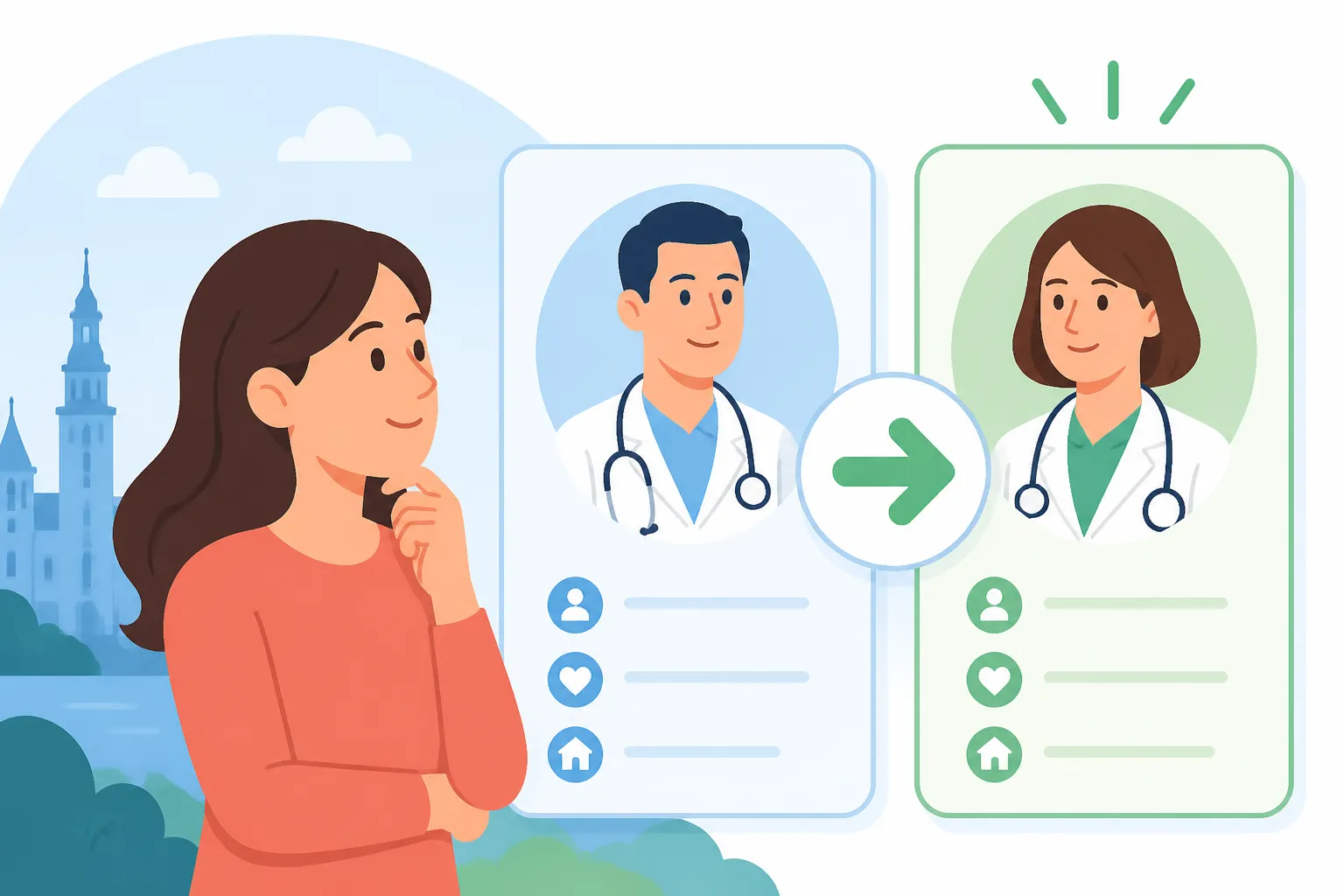
If you aren't happy with your assigned doctor, or if you move to a new neighborhood, you aren't stuck. Changing your GP is a relatively straightforward digital process, provided you have your MitID ready. You don't need to call your old doctor to "break up" with them; the system handles the transfer of your basic records automatically.
There is a catch, though. If you are changing your doctor because you moved house, the change is free. If you are changing your doctor simply because you don't like your current one or you found a "better" one elsewhere, you will have to pay a fee (currently around DKK 225). It’s a small price to pay for your health and comfort, but it’s something to keep in mind so you don't get surprised by a charge on your bank statement.
Using Borger.dk and MitID for a Seamless Switch
To start the change, you need to log in to borger.dk. This is the national portal for all things administrative in Denmark. Once you're logged in with your MitID, search for "Skift læge" (Change doctor). The system will then show you a list of doctors near your home address.
Crucially, the list will indicate which doctors are "Open" (Åben) and which are "Closed" (Lukket) for new patients. Many of the most popular English-speaking doctors in the city centers are often closed because they have reached their maximum patient capacity. If the doctor you want is closed, you simply cannot choose them at that time. You have to pick from the available list. This digital interface is part of Sundhed.dk and MitID: Navigating Denmark’s Digital Health Portals, and getting familiar with it will save you hours of phone calls.
How to Change Your Doctor Online via Borger.dk
When you use the How to Change Your Doctor Online via Borger.dk service, you will be prompted to pay the fee via credit card or MobilePay if applicable. After you confirm the selection, the change is registered almost instantly in the national system. You will receive a confirmation in your digital mail (e-Boks or Mit.dk).
One thing to remember is that your old doctor is technically allowed to keep your records for a short period, but eventually, your "journal" will be available to your new GP. It’s always a good idea to mention any ongoing treatments or prescriptions during your first visit to the new clinic, just to make sure nothing was lost in the digital handoff.
When the Change Becomes Effective and the New Yellow Card
The change is usually effective from the moment you complete the process online, but you won't get your new yellow card immediately. It typically takes about two weeks to arrive in your physical mailbox. During this interval, you can use the Sundhedskort app on your smartphone, which updates almost instantly to show your new GP’s details.
If you need to see a doctor in those two weeks before the card arrives, just show them the app or the digital confirmation from borger.dk. They can look you up in the system using your CPR number. For more on the timeline, check out How Long Does It Take to Receive the Yellow Card in the Mail? to manage your expectations.
| Scenario | Cost | Method | Timeline |
|---|---|---|---|
| Moving to a new address | Free | Online via Borger.dk | Instant (New card in 2 weeks) |
| Changing due to preference | DKK 225 | Online via Borger.dk | Instant (New card in 2 weeks) |
| Reaching age 15 | Free | Online via Borger.dk | Immediate transition |
| Doctor closes their practice | Free | Assigned or Choice | Immediate |
What to Look for When Choosing a New GP
Don't just pick the first name on the list. Take some time to do a little "medical matchmaking." Since you might be with this GP for years, it's worth a 20-minute research session. In Denmark, many GPs work in "Group Practices" (Kompagniskabspraksis), where several doctors share a building, staff, and a phone system. This is often better than a solo practitioner because if your specific doctor is on vacation, someone else in the building can see you and access your records.
Also, look at the clinic's website. Most Danish clinics have very functional websites where you can book appointments, renew prescriptions, and write short emails to the doctor. If the website looks like it was built in 1998 and doesn't offer online booking, you might want to keep looking. In a digital-first country, an analog doctor can be a major bottleneck in your life.
Searching for English-Speaking Doctors and Reviews
While almost all Danish doctors speak excellent English, there is a difference between "speaking English" and "conducting a complex medical consultation in English." You can find reviews on Google or in expat Facebook groups like "Expats in Copenhagen." People are very vocal about which doctors take the time to listen and which ones try to usher you out the door in five minutes.
Searching for Finding an English-Speaking Doctor: Directories and Local Strategies can provide you with specific names that have been "vetted" by the community. I personally looked for a doctor who had studied or worked abroad, as they tend to have a better grasp of the cultural differences in healthcare expectations.
How to Find a GP Accepting New Patients in Copenhagen
If you live in the capital, you will quickly find that the "best" doctors are always closed to new patients. It's a bit like trying to get a table at a Michelin-starred restaurant. You have to be strategic. Check the list on borger.dk early in the month, as sometimes spots open up when people move away.
For those in specific neighborhoods, reading How to Find a GP Accepting New Patients in Copenhagen or How to Find a GP Accepting New Patients in Aarhus will give you a better idea of the local landscape. Sometimes, choosing a doctor a few Metro stops away in a less "trendy" neighborhood like Valby or Vanløse will give you access to a much better clinic than the overcrowded ones in Vesterbro.
Accessibility and Clinic Facilities
Consider the logistics. Is the clinic on the 4th floor of an old building without an elevator? That might not matter now, but if you twist your ankle or have a baby in a stroller, it becomes a nightmare. Check if they have an on-site laboratory for blood tests. Some small clinics require you to go to a separate hospital or laboratory for blood work, which adds an extra trip to your day.
If you have a family, you might also want to look for a clinic that specializes in pediatric care. While all GPs are trained to see children, some clinics have a much more kid-friendly atmosphere. You can find more advice on this in Family Health In Denmark: Pregnancy, Maternity, and Pediatric Care.
Practical Realities: Visiting Your GP for the First Time
Once you’ve chosen your doctor and have your card, it's time for the first visit. The Danish medical culture is very different from many others. It is informal yet highly efficient. You will likely call your doctor by their first name, and they will expect you to be very direct about why you are there.
One thing that surprises many expats is the "one problem per consultation" rule. If you show up with a list of five different ailments, the doctor will likely ask you which one is the most urgent and tell you to book another appointment for the others. This isn't them being rude; it’s how they manage their 15-minute time slots to keep the system running on time.
Why You Must Scan Your Yellow Card in the Waiting Room
When you enter a Danish clinic, you usually won't find a receptionist waiting to greet you. Instead, there is a small terminal near the door. You must Why You Must Scan Your Yellow Card in the Waiting Room as soon as you arrive. This registers you in the system and lets the doctor know you are in the building.
If you forget to scan your card, the doctor will think you’re a no-show, and you’ll be sitting there forever while other people are called in. It is the single most important piece of "clinic etiquette" to learn. This scan also ensures that the clinic gets paid by the region for your visit, so they are quite strict about it.
Booking Appointments: Using the MinLæge App
While you can call the clinic during their phone hours (usually between 8:00 and 12:00), the easiest way to manage your healthcare is through the "Min Læge" app. This app is a lifesaver. You can see your GP's available time slots, book appointments, and even have video consultations for things that don't require a physical exam.
I use the app to write quick messages to my doctor if I just need a quick answer about a medication or a test result. It’s much faster than waiting on hold on the phone. For a full walkthrough on setting this up, see Booking a Doctor's Appointment in Denmark: MinLæge App Guide. It’s also where you can see your Using the Medicinkortet App: Managing Your Prescriptions Digitally.
Booking a Doctor's Appointment in Denmark: MinLæge App Guide
The app also allows you to see the results of any blood tests or swabs taken during your visit. Usually, these appear within 24 to 48 hours. The notes are often in Danish, but with a bit of Google Translate, you can get the gist before your follow-up.
If you find the public system's pace or the "one problem" rule too restrictive, this is where having a secondary private plan from Cigna Global comes in handy. Private insurance can sometimes grant you access to "private GPs" or "concierge doctors" who offer longer consultation times and more personalized service, though these are entirely outside the yellow card system.
Costs, Fees, and Insurance Considerations
While the visits to the GP are free under Group 1, not everything in the Danish health world is without cost. You still have to pay for your own prescriptions (though they are subsidized), and dental care is entirely private for adults. Understanding where the public system ends and your wallet begins is essential for budgeting.
If you are a traveler or a new arrival, you might wonder Are Ambulances Free for Foreigners and Tourists in Denmark? or what happens if you need care at 2:00 AM. For those "out-of-hours" moments, the GP isn't available, and you have to use a different service entirely.
When Changing Doctors is Free (and When it Costs DKK 225)
As mentioned earlier, moving house makes the change free. But there are other "free" scenarios. If your doctor retires or closes their practice, you will receive a letter in your e-Boks asking you to choose a new one for free. Also, when a child turns 15, they get their own yellow card and have the opportunity to choose their own doctor (distinct from their parents) for free.
If you’re just unhappy with the service, pay the DKK 225. It’s a small investment in your sanity. I’ve changed doctors twice—once because of a move and once because I wanted a clinic with better digital services—and the DKK 225 was the best money I spent that year.
Supplementing Public Care with Private Insurance
Many expats choose to join Sygeforsikring "danmark", which is a unique Danish private insurance "club." It doesn't replace the public system but rather gives you "cash back" on things the state doesn't cover, like dental work, physiotherapy, and prescription co-pays. You can read more about it in Private Health Insurance (Sygeforsikring "danmark"): Is It Worth It?.
Beyond that, international plans like SafetyWing or Cigna Global offer a different level of security. SafetyWing is fantastic for the nomadic phase where you might be bouncing between Airbnbs and don't have a fixed address for your CPR registration yet. Cigna Global is better suited for those who want to ensure they have the option for private hospital rooms or specialized treatments abroad that might have long waiting lists in the Danish public system.
Expat Health Insurance: Coverage Before You Get Your CPR Number
Don't gamble with your health in the first 60 days. The "90-day waiting period" for some non-EU expats can be a stressful time. Even if you are an EU citizen, the gap between arriving and getting your residence certificate can be tricky. Expat Health Insurance: Coverage Before You Get Your CPR Number is a vital read for anyone currently packing their bags.
Using SafetyWing during this gap provides a "bridge" of coverage. Once your yellow card arrives, you can either keep the private insurance for the extra perks (like private hospital access) or rely solely on the Danish state. Most long-term expats eventually rely on the state for major issues but keep a private plan for the "comfort" and "speed" factors that the public system sometimes lacks.
Disclaimer
The information provided in this guide is for informational purposes only and does not constitute legal or medical advice. Healthcare regulations in Denmark, including fees and visa-related requirements, are subject to change by the Danish Health Authority (Sundhedsstyrelsen) and the Ministry of Interior and Health. Always verify current procedures on official government portals such as borger.dk or sundhed.dk. The author is a lifestyle blogger, not a medical professional or government official. Private insurance products mentioned are suggestions based on expat popularity and should be researched individually to ensure they meet your specific needs.