Physiotherapy in Denmark: Getting GP Referrals and Managing Costs
Trying to navigate a sudden sports injury or chronic back pain while living in Denmark can feel like solving a puzzle with missing pieces. I remember the first time my shoulder seized up after a particularly windy bike ride to work; I had no idea if I should call a clinic directly or wait for my doctor. This guide clarifies the referral process and provides a roadmap for managing costs effectively.
Navigating the Referral System: The Gateway to Subsidized Care
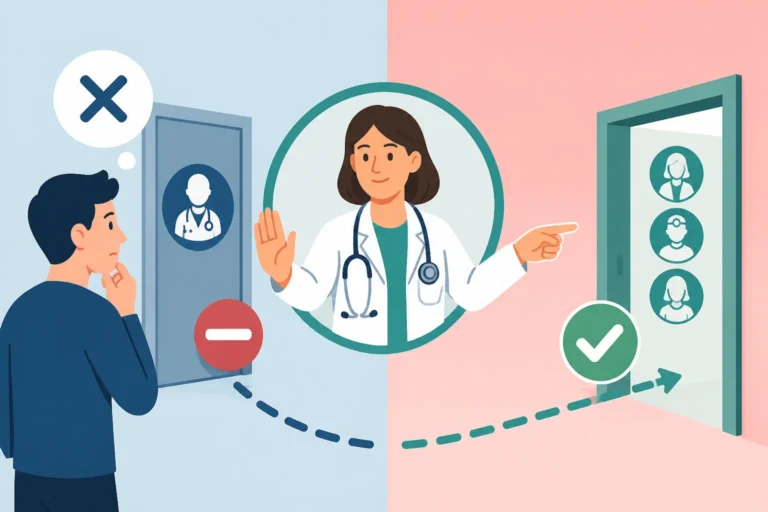
In Denmark, the healthcare system is designed with the General Practitioner (GP) as the "gatekeeper" to more specialized treatments, including physical therapy. This can be a bit of a shock if you come from a country where you can simply book a specialist at your own whim. Understanding this hierarchy is the first step to ensuring you don't end up paying full price for a service that the state could be subsidizing.
The Role of the GP and the Henvisning
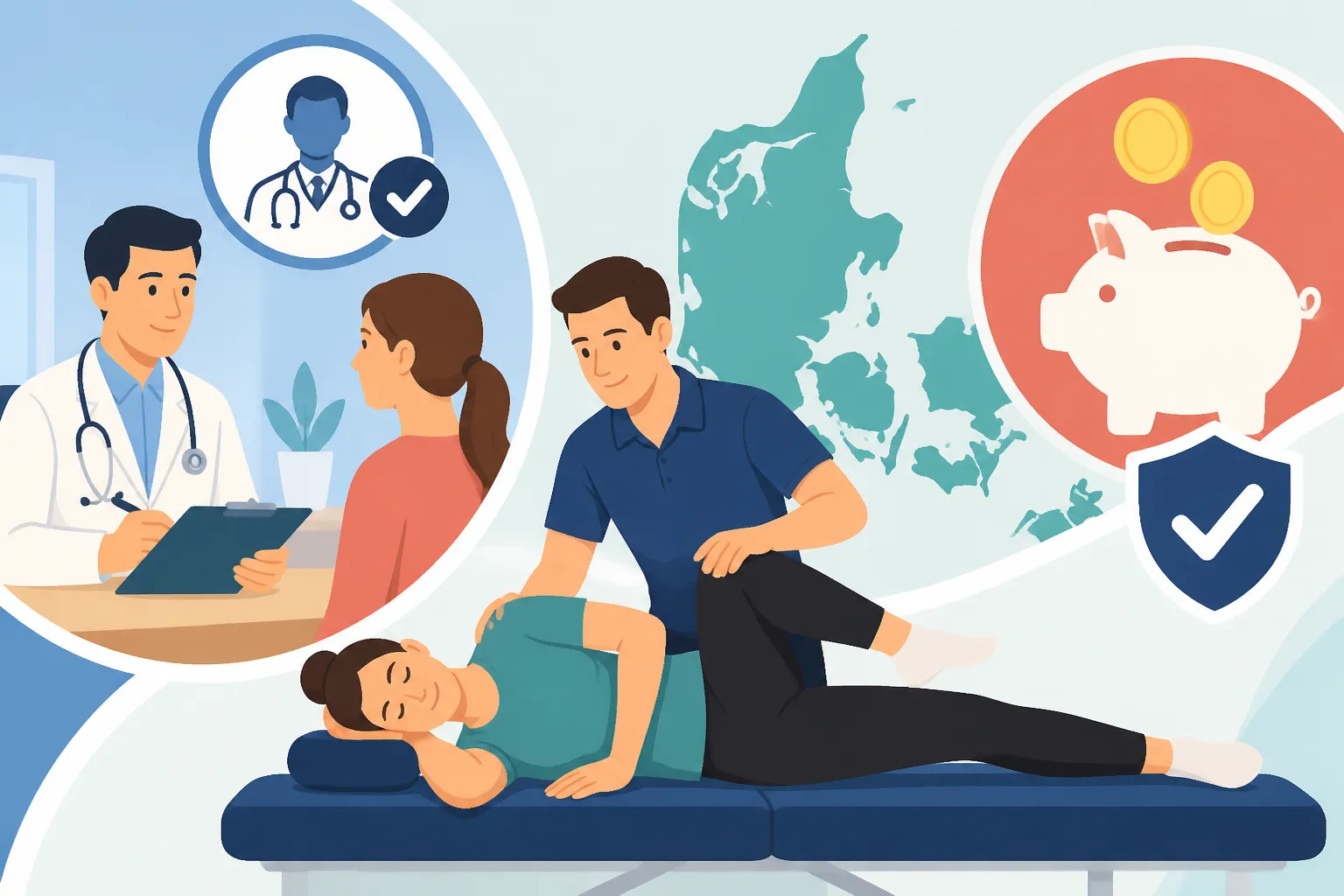
Your journey usually begins with a visit to your egen læge. During this consultation, the doctor will assess whether your condition requires professional physical intervention. If they agree, they will issue an electronic referral, known in Danish as a henvisning. It’s important to realize that this isn't a physical piece of paper you carry around; it is uploaded to a central database that all authorized clinics can see. For a deeper look at this process, you might want to read about Finding Medical Care in Denmark: GPs, Specialists, and Referrals.
When you speak to your GP, be as specific as possible about how your pain affects your daily life—whether it’s your commute, your ability to work, or your sleep. The system is designed to prioritize those with functional limitations. Once the referral is in the system, it is generally valid for a specific number of sessions (usually 12) and must be used within a certain timeframe, typically three months from the date of issue. If you are still in the process of getting set up, you should understand The Yellow Health Card (Sundhedskort): Your Key to Danish Healthcare as this card is essential for the clinic to access your referral.
When You Can Skip the Referral
You are not strictly required to have a referral to see a physiotherapist in Denmark. You can walk into any private clinic and ask for an appointment. However, the financial implications are significant. Without a referral, you will be responsible for 100% of the costs. This might be a viable option for those who are still waiting for their CPR number or for expats who have comprehensive coverage through Expat Health Insurance: Coverage Before You Get Your CPR Number.
Some expats choose to go the "self-pay" route if they have urgent needs and cannot wait for a GP appointment. In these cases, it is often helpful to have private insurance like SafetyWing or Cigna Global, which may cover these costs depending on your specific policy. However, for the majority of long-term residents, the referral is the only way to tap into the public subsidy, which covers approximately 40% of the fee. To understand why this gatekeeper system exists, check out The Role of the GP: Why You Cannot Go Directly to a Specialist.
The Electronic Health Record and Your Rights
Every time a physiotherapist treats you under a referral, they log their notes and progress into your digital health record. You can actually view these notes yourself by Using the Medicinkortet App: Managing Your Prescriptions Digitally or by logging into Sundhed.dk with your MitID. This transparency is a hallmark of the Danish system, allowing for better coordination between your therapist and your GP.
You also have the right to choose any clinic you want once you have a referral. You are not "locked in" to a specific neighborhood or the clinic closest to your GP. This is particularly useful if you live in a smaller town but work in a city like Copenhagen or Aarhus where there might be more English-speaking options. If you are new to the country, you can find more about How to Choose and Change Your General Practitioner (GP) in Denmark to ensure you have a doctor who understands your history before you need that first referral.
Managing the Costs: Public Subsidies vs. Out-of-Pocket Expenses
The cost of physiotherapy in Denmark is regulated by a collective agreement between the Danish Regions and the Physiotherapists' Union. This means that if a clinic has a "provider number" (ydernummer), they must adhere to fixed prices for patients with a referral. If you visit a clinic without this agreement, they can charge whatever they like, and the public subsidy will not apply.
How Public Subsidies Work for Group 1 Patients
If you are a "Group 1" patient—which most residents are by default—the state pays about 40% of the cost of your physiotherapy directly to the clinic. You only pay the remaining balance. As of 2026, the first consultation under a referral typically costs the patient around 300 to 400 DKK, while subsequent treatments are cheaper, usually between 200 and 280 DKK. These prices are adjusted annually.
It is vital to check if the clinic you choose accepts the public referral. Many high-end clinics in central Copenhagen operate entirely privately and do not accept the "Yellow Card" subsidy. To avoid a surprise bill, always ask: "Tager I imod henvisning fra lægen?" (Do you accept referrals from the doctor?). If you are unsure about your status, you can learn more about Understanding CPR Registration and Your Healthcare Entitlement.
Free Physiotherapy: Who Qualifies for Vederlagsfri Fysioterapi?
Denmark offers a program called "vederlagsfri fysioterapi," which translates to free physiotherapy. This is not available for standard back pain or sports injuries. It is specifically reserved for people with certain chronic conditions or permanent disabilities, such as Multiple Sclerosis, Parkinson’s, or severe physical handicaps. To qualify, your condition must meet very strict criteria set by the National Board of Health.
For those who do qualify, the state covers 100% of the costs. This is often an ongoing referral that allows for regular maintenance therapy to prevent the condition from worsening. If you think you might fall into this category, you should read our specialized guide on Free Physiotherapy in Denmark: Who Qualifies for Vederlagsfri Fysioterapi? to understand the medical documentation required. For everyone else, managing these costs often involves looking into private supplements.
Comparative Cost Table (Estimated 2026 Rates)
| Service Type | With Referral (Public Subsidy) | Without Referral (Private/Self-Pay) |
|---|---|---|
| First Consultation | 315 DKK – 350 DKK | 600 DKK – 900 DKK |
| Standard Follow-up | 210 DKK – 240 DKK | 450 DKK – 700 DKK |
| Specialized (e.g., Pelvic) | 250 DKK – 300 DKK | 700 DKK – 1,000 DKK |
| Home Visit Surcharge | + 150 DKK | + 300 DKK |
Private Insurance and Top-Up Options: Maximizing Your Coverage
Even with the 40% public subsidy, a long course of treatment can become expensive. This is why many Danes and expats alike opt for additional coverage. In Denmark, the private insurance market is divided into "member-owned" health funds and corporate "health insurances."
Sygeforsikring "danmark": The National Favorite
Almost every Dane I know is a member of Sygeforsikring "danmark." This is a private, member-owned insurance company that provides "top-up" reimbursements for things the public system doesn't cover fully, like dental work, glasses, and physiotherapy. If you are in Group 1 or 2 of "danmark," you can get back approximately 50-130 DKK per physiotherapy session.
The trick with "danmark" is that you must join while you are healthy. If you already have a chronic back problem, they may exclude that specific condition from your coverage. However, for new injuries, it is a lifesaver. It works seamlessly with the public system; when you scan your Yellow Card at the clinic, the reimbursement request is often sent to "danmark" automatically. For a deeper dive into whether this is right for you, see Private Health Insurance (Sygeforsikring "danmark"): Is It Worth It? and learn how Sygeforsikring "danmark": Which Coverage Level Should Expats Choose? can impact your wallet.
International and Corporate Insurance: SafetyWing and Cigna Global
For many expats, especially those working for international companies, a corporate health insurance (sundhedssikring) is included in their contract. These plans, often provided by companies like Mølholm or Danica, frequently cover 100% of physiotherapy costs for a set number of sessions, often without requiring a GP referral. Always check your employee handbook before paying out of pocket.
If you are a freelancer, digital nomad, or recently arrived and not yet covered by a Danish employer, companies like SafetyWing and Cigna Global offer international health plans that can be tailored to include outpatient treatments like physiotherapy. These are particularly useful during the "waiting period" for a CPR number. If you are navigating this transition, you might find Expat Health Insurance: Coverage Before You Get Your CPR Number to be a critical resource. Using SafetyWing can provide peace of mind while you wait for your first Yellow Health Card (Sundhedskort): Your Key to Danish Healthcare to arrive in the mail.
Managing Expectations with Private Policies
It is important to remember that most private policies, including those from Cigna Global, require you to "pre-authorize" treatment if the cost exceeds a certain amount. Always send a copy of your GP's referral or a brief description of the injury to your insurance provider before you start.
Additionally, some private insurances have a list of "preferred providers." If you go to a clinic outside of their network, they might only reimburse you up to a certain percentage of the fee. This is why it is wise to check if your clinic is familiar with international insurance. Most clinics in major cities are used to dealing with expat claims and can provide the necessary English-language invoices.
Finding the Right Clinic: Language, Specialty, and Logistics
Once you have your referral and your insurance sorted, the next hurdle is finding a therapist who speaks your language and understands your specific needs. While most Danish physiotherapists speak excellent English, there are nuances in clinical communication that make finding a dedicated "English-friendly" clinic worthwhile.
Using Sundhed.dk to Search for Providers
The best tool for finding a clinic is the official portal, Sundhed.dk. You can search by postal code and filter for "Fysioterapi." The portal will show you which clinics accept referrals and, crucially, what their current waiting times are. In high-demand areas like Frederiksberg or Aarhus C, the wait for a subsidized appointment can be several weeks. To help you navigate these portals, check out Sundhed.dk and MitID: Navigating Denmark’s Digital Health Portals.
When you call a clinic, don't be afraid to ask about their specialties. Some clinics focus almost exclusively on "Idrætsfysioterapi" (sports physiotherapy), while others might specialize in "Gigt" (arthritis) or "Bækkenbund" (pelvic floor) issues. If you have a specific goal, like returning to marathon training or managing Tick Bites and Lyme Disease (Borrelia): Summer Health in Danish Forests, finding a specialist is worth the extra research.
Scanning Your Yellow Card: A Non-Negotiable Ritual
The first thing you will see when you walk into a Danish clinic is a card reader. It is a strict requirement that you scan your physical Yellow Card (or the digital version on your phone) at every single visit. This is how the clinic proves to the region that you were actually there, which triggers the public subsidy payment. If you forget your card, the clinic may charge you the full private rate for that session.
If you haven't set up the digital version yet, it’s a good idea to learn How to Download the Sundhedskort App on Your Phone. This app is a lifesaver for those of us who constantly leave our wallets in our other bike pannier. Also, be aware that if you lose your card, you need to know What to Do If You Lose Your Yellow Health Card in Denmark quickly, as getting a replacement can take a week or two.
Specialized Care and English-Speaking Strategies
If you are looking for highly specialized care, such as neurological rehabilitation or pediatric physiotherapy, you might need to look beyond your local neighborhood. In Copenhagen, clinics like FysioDanmark or specialized centers in the various "Sundhedshuse" (Health Houses) offer a wide range of experts. For parents, understanding Family Health in Denmark: Pregnancy, Maternity, and Pediatric Care is essential, as children are often treated under different subsidy rules.
When calling for the first time, I recommend asking: "Do you have a therapist who is comfortable conducting the entire clinical assessment in English?" While most can, some younger therapists or those in international hubs are more accustomed to using the English medical terminology you might be familiar with. This ensures nothing is lost in translation when discussing complex biomechanics or pain scales.
Practical Tips for Your First Appointment
The Danish approach to physical therapy might be more "hands-off" than you are used to. There is a heavy emphasis on "active recovery" and "self-help." Don't be surprised if your therapist spends more time teaching you exercises than actually massaging the affected area.
What to Bring and What to Expect
Danish clinics are generally quite casual, but they are sticklers for hygiene. You should bring a large towel to cover the treatment table. Some clinics provide them for a small fee, but most expect you to bring your own. Also, bring comfortable clothing that allows the therapist to easily access the area being treated—shorts for knee issues, or a tank top for shoulder problems.
The first session is usually a "større undersøgelse" (major examination), where the therapist will take a full history and perform various physical tests. They will then create a "behandlingsplan" (treatment plan) which outlines how many sessions they think you need and what the goals are. If you are also dealing with other health issues, it's a good idea to know How to View Your Medical Records and Lab Results on Sundhed.dk so you can share relevant data with them.
The 24-Hour Cancellation Rule
Danish clinics are very strict about their cancellation policies. If you need to cancel or move an appointment, you must usually do so at least 24 hours in advance. If you miss this window—even if you are sick—you will likely be charged a "udebeblivelsesgebyr" (no-show fee), which is usually around 300 DKK. This fee is not covered by the public subsidy or most private insurances.
This rule applies even if you have a valid reason, like a sudden work conflict or a flat bike tire. It’s a cultural norm here to respect the therapist's time, as their schedule is often packed. If you are managing a busy life as an expat, I highly recommend using the Booking a Doctor's Appointment in Denmark: MinLæge App Guide to see if your clinic uses a similar digital booking system that sends reminders.
Alternative Care: Chiropractors and Osteopaths
Sometimes, physiotherapy isn't the only answer. In Denmark, chiropractors (kiropraktorer) are also part of the primary healthcare system and receive a public subsidy, although a referral is not required to get it. Osteopaths, however, are generally private and not covered by the public "Yellow Card" system.
If you are considering these options, it is worth comparing the costs and philosophies. Physiotherapists focus on movement and exercise, while chiropractors often focus on joint manipulation. For a full breakdown of how the state views these different practices, see Alternative Medicine in Denmark: Chiropractic, Acupuncture, and Subsidies. Knowing your options helps you tailor your recovery to what actually works for your body, rather than just what is most convenient.
Healthcare Services Disclaimer
The information provided in this article is for educational and informational purposes only and is not intended as medical advice. Healthcare regulations, subsidies, and costs in Denmark are subject to change. While we strive to provide the most current information, you should always consult with your General Practitioner (GP) or a qualified healthcare professional regarding any medical conditions or treatments. Always verify coverage details with your insurance provider and the specific clinic before beginning any course of treatment.