Emergency vs. Out-of-Hours Care: When to Call Lægevagten (1813)
One of the most terrifying moments for any expat is facing a medical crisis in the middle of the night without knowing which number to dial. I remember standing in my dark kitchen in Østerbro at 2 AM, holding a toddler with a barking cough, paralyzed by the fear that I might accidentally clog up an emergency line or, worse, sit in a waiting room for hours because I picked the wrong service. This guide is designed to dismantle that confusion, providing you with a clear, stress-free roadmap for navigating emergency and out-of-hours care in Denmark.
Understanding the Danish Emergency Landscape
The Danish healthcare system is built on a very specific logic of "the right treatment at the right level." Unlike many other countries where the emergency room (Akutmodtagelse) is the first port of call for anything from a broken toe to a high fever, Denmark utilizes a strictly triaged system. This ensures that the most critical cases receive immediate attention while less urgent matters are handled by general practitioners or specialized out-of-hours services. Understanding this hierarchy is the first step toward integrated living in Denmark.
The Philosophy of the Gatekeeper System
The Danish system relies heavily on the "gatekeeper" model. During standard business hours, your primary point of contact is always your General Practitioner (GP). You can learn more about this in our guide on The Role of the GP: Why You Cannot Go Directly to a Specialist. This system is designed to prevent hospital overcrowding and ensures that specialists are only seeing patients who truly need their expertise. When the clock strikes 4:00 PM, the responsibility shifts from your GP to the regional out-of-hours services.
In my first year here, I found this frustrating. I wanted to choose my own specialist or walk into a clinic whenever I felt like it. However, once you understand that this gatekeeper system is why the Healthcare in Denmark for Foreign Residents: Complete System Guide (2027) remains so efficient and high-quality, you begin to appreciate the order. The system isn't trying to keep you away from care; it's trying to ensure you get the appropriate care without unnecessary delays or administrative hurdles.
Why You Can't Just Walk Into an ER
In Denmark, you generally cannot "walk in" to an emergency department. If you show up at an Akutmodtagelse without a referral from a doctor or an out-of-hours operator, you will likely be redirected to call the appropriate number first. This might seem cold or bureaucratic when you are in pain, but it is a safety mechanism. By calling first, a trained nurse or doctor can assess your symptoms over the phone and tell you exactly where to go. They might send you to a local "Akutklinik" (minor injury clinic) instead of a major hospital, saving you hours of waiting behind ambulance arrivals.
This "call first" rule applies to everyone, including those who have recently arrived. If you are a newcomer or a tourist, you should consider looking into Expat Health Insurance: Coverage Before You Get Your CPR Number to ensure you have guidance during this transition. Companies like SafetyWing offer great options for those who haven't yet entered the public system, providing a safety net while you navigate these specific Danish protocols.
Triage and Waiting Times
When you do call the out-of-hours service or arrive at a hospital after a referral, you will be triaged. This means you are categorized based on the severity of your condition, not the order in which you called. A person with chest pain will always be seen before someone with a suspected wrist fracture. It is a common expat grievance to wait several hours in the Akutmodtagelse, but it’s helpful to remember that a long wait often means your condition is not life-threatening, which is actually good news.
If you are curious about your rights during these periods, you can read more about Waiting Times in Danish Public Hospitals and Patient Rights. The system is transparent, but it requires patience. I’ve spent many a night in the waiting area of Rigshospitalet, and while the coffee is rarely good, the medical care, once you reach the front of the queue, is world-class.
When to Call 112: The Absolute Emergencies
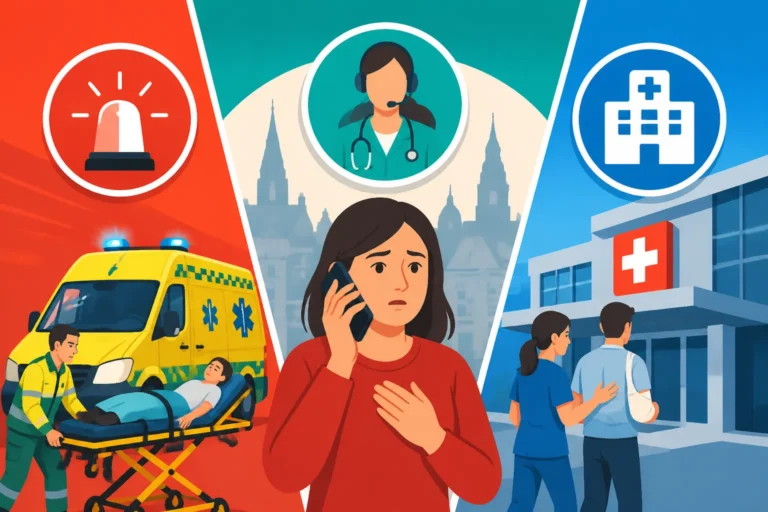
The number 112 is reserved for life-threatening emergencies where every second counts. This is the universal emergency number in Denmark for police, fire, and ambulance services. Knowing when to escalate to 112 versus calling the out-of-hours doctor is perhaps the most critical distinction you will ever make as a resident here.
Identifying Life-Threatening Situations
You should call 112 immediately if you or someone around you experiences symptoms of a heart attack (sudden chest pain or pressure), signs of a stroke (facial drooping, arm weakness, speech difficulty), severe breathing difficulties, unconsciousness, or heavy, uncontrollable bleeding. Major accidents, such as serious car crashes or falls from significant heights, also warrant an immediate 112 call.
In these moments, the panic can be overwhelming. The instinct to freeze is real, but the 112 operators are exceptionally well-trained to talk you through the situation. If you are unsure if it’s a "true" emergency, the general rule in Denmark is: if you think a life is at risk, call 112. They would rather tell you to call the out-of-hours doctor than have you delay life-saving intervention. You can find more details in our article on Emergency Medical Care in Denmark: Calling 112, Lægevagten, and ERs.
What to Say to the 112 Dispatcher
When you dial 112, you will first be asked "What has happened?" and "Where are you?" It is vital to stay as calm as possible. The dispatchers almost always speak excellent English, but they will appreciate clear, concise information. Tell them the exact address or look for landmarks if you are outside. If you are using a smartphone, they can often see your GPS coordinates, but you should still try to describe your location.
The dispatcher will then ask a series of questions to determine which services to send. Do not hang up until they tell you to. They might give you instructions on how to perform CPR or how to stop bleeding while the ambulance is en route. For more specific advice on this interaction, check out Calling 112 in Denmark: English Support for Ambulance Dispatch. Having this knowledge tucked away in your mind can significantly reduce your anxiety during a real crisis.
Are Ambulances Free for Foreigners?
A common fear among tourists and new expats is the cost of emergency transport. In Denmark, emergency ambulance services called via 112 are free of charge for anyone currently in the country, regardless of their residency status or insurance coverage. This is part of the Danish commitment to public safety. Whether you are a permanent resident with a Yellow Health Card (Sundhedskort): Your Key to Danish Healthcare or a visitor on a weekend trip, you will not receive a bill for a life-saving ambulance ride.
However, "free" only covers the immediate emergency transport and stabilization. Subsequent hospital stays or treatments may be billed if you are not covered by the Danish public health system or the EHIC (for EU citizens). This is why having comprehensive coverage through a provider like Cigna Global is so important for long-term expats who want to ensure every possible medical cost is covered. For a deep dive into this topic, see Are Ambulances Free for Foreigners and Tourists in Denmark?.
Lægevagten (1813): The Out-of-Hours Lifeline
If your situation is urgent but not life-threatening, and your own doctor’s office is closed, you call Lægevagten. In the Capital Region (Copenhagen and surrounding areas), this service is famously known as 1813. In other regions of Denmark, the phone numbers differ, but the function remains the same.
What is Lægevagten and How Does It Work?
Lægevagten is staffed by nurses and doctors who specialize in triaging urgent care over the phone. When you call, you will explain your symptoms, and the practitioner will decide on the next step. This could be a consultation over the phone, a referral to an evening clinic (konsultation), a referral to the emergency room (akutmodtagelse), or, in rare cases, a home visit by a doctor.
The beauty of 1813 is that they have a live overview of waiting times at all hospitals in the region. If you have a deep cut that needs stitches, they might tell you to bypass the closest hospital because it’s backed up and instead drive 15 minutes further to a different facility where you can be seen immediately. This centralized coordination is something I wish every country adopted. It takes the guesswork out of where to go.
Regional Differences in Numbers
It is a common mistake for expats to move from Copenhagen to Aarhus and try to dial 1813, only to find it doesn't work. While 1813 covers the Capital Region, other regions use different contact numbers. It is vital to save the number for your specific region in your phone the moment you move.
| Region | Phone Number | Coverage Area |
|---|---|---|
| Capital Region (Hovedstaden) | 1813 | Copenhagen, Frederiksberg, Bornholm, North Zealand |
| Region Zealand (Sjælland) | 1818 | Roskilde, Køge, Næstved, Slagelse |
| Central Jutland (Midtjylland) | 70 11 31 31 | Aarhus, Randers, Horsens, Herning |
| North Jutland (Nordjylland) | 70 150 300 | Aalborg, Hjørring, Thisted |
| Southern Denmark (Syddanmark) | 70 11 07 07 | Odense, Esbjerg, Vejle, Kolding |
Always double-check these numbers on your local municipality website, as they can occasionally be updated. Knowing How to Choose and Change Your General Practitioner (GP) in Denmark is also helpful, as your GP's voicemail will usually state the correct out-of-hours number for your area.
Preparing for Your Call to 1813
When you call 1813 or your regional Lægevagten, have your CPR number ready. If you are calling for your child, have theirs. The nurse will ask for this immediately to access your medical history. Be ready to describe symptoms clearly: "My child has a temperature of 39.5, they are lethargic, and they have a red rash on their torso." Avoid vague statements like "They just don't feel well."
If you don't have a CPR number yet, don't worry—you can still call. You will just need to provide your date of birth and name. If you are a tourist, mention that you have travel insurance, such as SafetyWing, as they may ask about your status in the country to ensure they provide the right administrative guidance. For more on the paperwork side of things, see Understanding CPR Registration and Your Healthcare Entitlement.
Making the Choice: Emergency vs. Urgent Care
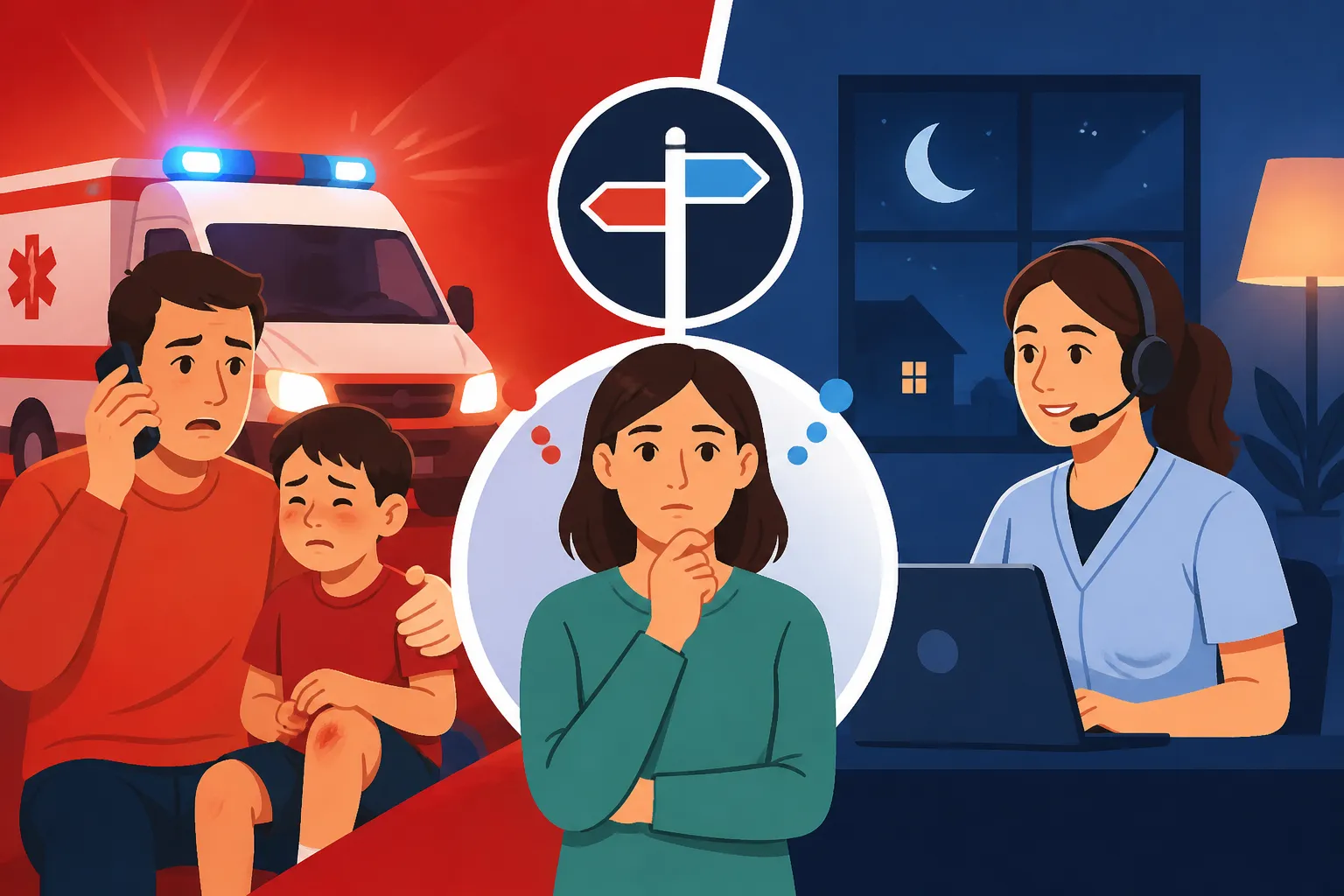
Deciding whether to call 112 or 1813 can be a split-second decision. While the descriptions above help, real-life situations are often messy. Let's break down some common scenarios to help you visualize the correct path.
Common Scenarios: Fever, Stitches, and Broken Bones
High Fever: If you or your child has a high fever but is otherwise alert and breathing normally, call 1813. They will likely advise on paracetamol dosages or ask you to come in for a quick check. If the fever is accompanied by a stiff neck, a purple rash that doesn't fade under a glass, or extreme difficulty waking up, call 112.
Cuts and Stitches: A kitchen knife slip that results in a deep but contained cut is an 1813 call. They will tell you which Akutklinik has the shortest wait for stitches. If the cut is spurting blood or you've lost a significant amount of blood and feel faint, call 112.
Broken Bones: A suspected broken finger or a twisted ankle where you can't bear weight is an 1813 matter. They will refer you to an X-ray department. If a bone is visibly protruding or the limb is cold and blue, that is a 112 emergency. You can read more about managing these injuries in Getting Treatment for Sports Injuries: Physio vs. Hospital.
Navigating Mental Health Crises After Hours
Mental health emergencies are treated with the same seriousness as physical ones in Denmark. If you or someone you know is in immediate danger of self-harm or is experiencing a severe psychotic break, call 112. For urgent but non-life-threatening mental health support after hours, you can call 1813 (in the Capital Region) or the specific psychiatric emergency rooms (Psykiatrisk Akutmodtagelse) located in major cities.
The system for mental health can be complex for newcomers. I highly recommend reading Mental Health in Denmark: Accessing Psychologists and Therapy for Expats to understand how the system works during the day, which makes navigating the night-time emergencies much easier. There are also specific Mental Health Hotlines in Denmark: English Services for Immediate Help available if you just need someone to talk to during a crisis.
Dental Emergencies on Weekends
Nothing ruins a weekend like a throbbing toothache or a knocked-out tooth. Lægevagten typically does not handle dental issues. Instead, each region has a Tandlægevagten (Emergency Dentist). These clinics are usually open on weekends and public holidays. Be aware that emergency dental care often requires an upfront payment, even for residents.
For a breakdown of what to expect in terms of fees and locations, refer to Dental Emergency in Denmark: Finding Tandlægevagten on Weekends. It’s also worth checking if your private insurance, like a plan from Cigna Global, covers emergency dental work, as it can be quite expensive in Denmark. You can also find more on general costs in How Much Does a Routine Dental Checkup Cost in Denmark?.
Practical Tips for Navigating the System
Beyond knowing the numbers, there are several "pro-tips" that only come from years of living here. These little details can make the difference between a stressful night and a manageable one.
The Importance of the Yellow Health Card
Your Yellow Health Card (Sundhedskort): Your Key to Danish Healthcare is your golden ticket. It contains your CPR number and the name of your GP. In an emergency, if you are conscious, hospital staff will ask for it immediately. You should always carry it in your wallet, or better yet, download the digital version. See our guide on How to Download the Sundhedskort App on Your Phone for a step-by-step tutorial.
When you arrive at an emergency room or a clinic, you will find a card reader at the entrance. You must scan your card. This registers your arrival in the system and notifies the staff that you are there. If you forget this step, they might not even know you’ve arrived. To understand why this is so critical, read Why You Must Scan Your Yellow Card in the Waiting Room.
What to Do If You Don't Have a CPR Number Yet
If you are a new expat still waiting for your paperwork, or a tourist, you are still entitled to emergency care. Denmark has a "humanitarian obligation" to treat anyone in urgent need. You will not be turned away from an ER because you lack a yellow card. However, the billing process will be different.
If you find yourself in this situation, this is where having Expat Health Insurance: Coverage Before You Get Your CPR Number becomes vital. Having a policy with SafetyWing or Cigna Global means you can focus on recovery while the insurance companies handle the potentially high costs of non-resident hospital care. For more details on this "limbo" period, check out Can You Go to the Doctor in Denmark Without a CPR Number?.
Communication and Language Barriers
While almost all medical professionals in Denmark speak English, a crisis can make communication difficult. If you feel you aren't being understood or you don't understand the instructions being given, you have the right to ask for an interpreter. In emergency situations, this is usually done over the phone or via video link.
Don't be afraid to advocate for yourself. If you are confused about why you are being sent home or what the next steps are, ask: "Can you explain that again in simpler English?" Most Danish doctors are very direct and appreciate patients who take an active interest in their care. You can learn more about your rights in Translators in Danish Healthcare: Your Right to an Interpreter.
Costs and Insurance Considerations
One of the best things about living in Denmark is the peace of mind that comes with a tax-funded healthcare system. However, the system isn't 100% "free" in the way many imagine, and there are gaps that expats should be aware of.
Public Healthcare Coverage for Expats
For residents with a CPR number, almost all emergency and hospital care is free at the point of use. This includes surgeries, hospital stays, and diagnostic tests. However, medication is not free. You will receive a prescription which you then take to an Apotek. To understand how these costs are calculated, see Pharmacies in Denmark: Apotek Rules, Prescriptions, and Subsidies.
There are also nuances to what the public system covers. For example, while the emergency room visit is free, the specialized physiotherapy you might need afterward to recover from a broken leg might only be partially subsidized. You can read more about this in Physiotherapy in Denmark: Getting GP Referrals and Managing Costs.
The Role of Private Insurance (SafetyWing/Cigna Global)
Many expats choose to supplement the public system with private insurance. This can be especially useful for gaining quicker access to specialists or for covering the "gap" costs like dental work or private physical therapy. Cigna Global is a popular choice for long-term expats who want a "gold-standard" level of coverage that travels with them if they leave Denmark.
For digital nomads or those in their first 90 days, SafetyWing provides an excellent, affordable bridge. It covers those unexpected emergencies that happen before your Understanding CPR Registration and Your Healthcare Entitlement is fully processed. For a comparison of your options, take a look at Private Health Insurance (Sygeforsikring "danmark"): Is It Worth It?.
Summary Table: Who to Call and When
| Situation | Action | Phone Number |
|---|---|---|
| Life-threatening (Heart attack, stroke, major accident) | Call Emergency Services | 112 |
| Urgent but not life-threatening (evening/weekend) | Call Out-of-Hours Doctor | 1813 (CPH) or Regional Number |
| Non-urgent (Cold, prescription renewal, general pain) | Call your own GP | See your Yellow Card |
| Severe toothache or broken tooth (weekend) | Call Emergency Dentist | Varies by Region (Tandlægevagten) |
| Mental Health Crisis (Immediate danger) | Call Emergency Services | 112 |
Disclaimer
The information provided in this guide is for informational purposes only and does not constitute professional medical advice, diagnosis, or treatment. Always seek the advice of your physician or other qualified health provider with any questions you may have regarding a medical condition. If you think you may have a medical emergency, call 112 or your local emergency number immediately. The author is an expat sharing personal experiences and researched facts, not a medical professional. While every effort is made to keep information up to date, Danish healthcare protocols and phone numbers may change. Always verify emergency contact details with official Danish government sources such as Borger.dk or Sundhed.dk.