Managing Migraines: Specialist Referrals and Botox Subsidies
Waking up with a throbbing migraine in a foreign apartment is a special kind of isolation, especially when you are staring at a screen trying to decipher Danish medical portals. I remember my first month in Copenhagen, blinded by auras and wondering if my Yellow Card even covered specialized care or if I was stuck with ibuprofen. This guide explains exactly how to navigate the referral process for neurologists and access the significant Botox subsidies available in Denmark.
The Danish Gateway to Migraine Relief: The GP Referral
The first thing any expat needs to understand is that the Danish healthcare system is built on the "gatekeeper" model. You cannot simply call a neurologist (neurolog) and book an appointment because you have a headache. Everything starts with your General Practitioner (GP), known as your egen læge. This doctor is your primary point of contact and the person who determines if your condition requires the expertise of a specialist.
When you first arrive, your priority should be Understanding CPR Registration and Your Healthcare Entitlement to ensure you are properly registered in the system. Without this registration, you are effectively invisible to the public specialist network. Once you have your CPR number and your physical card, you can book a consultation. During this first meeting, be prepared to be very specific. Danish GPs are excellent, but they are also trained to be efficient. I found that bringing a written history of my migraine attacks—frequency, duration, and previous medications—helped move the conversation from "try some rest" to "let's get you a referral."
Documenting Your History for the GP Consultation
In Denmark, documentation is king. Before your appointment, download a migraine diary app or keep a paper log for at least a month. The GP needs to see that you have tried standard over-the-counter treatments and that your quality of life is being significantly impacted. If you have moved from another country, try to have your previous medical records translated or at least summarized in English.
When discussing your condition, mention specific terms like "chronic migraine" if you have more than 15 headache days a month. This is the magic number in the Danish system that opens the door to more advanced treatments. If you are still waiting for your registration to clear, you might find it useful to look into Expat Health Insurance: Coverage Before You Get Your CPR Number to cover the gap, as private clinics will often see you without a formal referral if you are paying out of pocket or through international insurance.
The Role of the Specialist Referral (Henvisning)
Once the GP agrees that you need a neurologist, they will issue an electronic henvisning (referral). You won't get a paper slip; instead, the referral is uploaded to a central database. From that moment, you can contact any neurologist who has an agreement with the public health insurance system. This is where the veteran expat advice comes in: do not wait for them to call you. You need to be proactive.
You can use the portal at Sundhed.dk to see which neurologists have the shortest waiting lists. This digital transparency is one of the best features of the Danish system, but it requires you to have your MitID ready. Be warned that in major cities like Copenhagen or Aarhus, the wait for a non-urgent neurologist appointment can sometimes stretch to six months.
Navigating Neurologist Wait Times and Patient Rights
The long wait times for specialists can be one of the most frustrating aspects of living in Denmark. If you are in the middle of a chronic migraine cycle, waiting half a year for a consultation feels impossible. However, as a resident, you have specific rights designed to protect you from excessive delays.
If the public system cannot offer you an appointment within 30 days at a public hospital, you may be entitled to "Extended Free Choice of Hospital" (Udvidet frit sygehusvalg). This allows you to be treated at a private clinic at the state's expense. However, this usually applies to hospital departments rather than private practicing neurologists, so the distinction is important.
Using Private Options to Speed Up the Process
If the public wait is too long, many expats turn to private healthcare. This is where brands like Cigna Global become invaluable. Having a premium international policy often allows you to bypass the public referral system entirely and see a private neurologist within days. Many of these private specialists are the same doctors who work in the public system but dedicate certain hours to private patients.
If you don't have a high-end international policy, you should check if you have an employer-provided insurance policy, often through providers like PFA or Danica. These policies frequently cover "quick-track" specialist access. If you are paying for your own coverage, it is worth investigating Private Health Insurance (Sygeforsikring “danmark”): Is It Worth It? to see if their supplemental coverage for medication and specialist co-pays makes sense for your budget.
What to Expect at Your First Neurologist Appointment
When you finally get into the neurologist’s office, the consultation will be thorough. They will likely perform a neurological exam and discuss your "migraine career." In Denmark, neurologists follow strict national guidelines. They will usually want to see that you have tried and failed at least two different types of preventative medications (like beta-blockers, topiramate, or tricyclics) before they move on to more expensive treatments like Botox or CGRP inhibitors.
Botox for Chronic Migraine: The Subsidy System
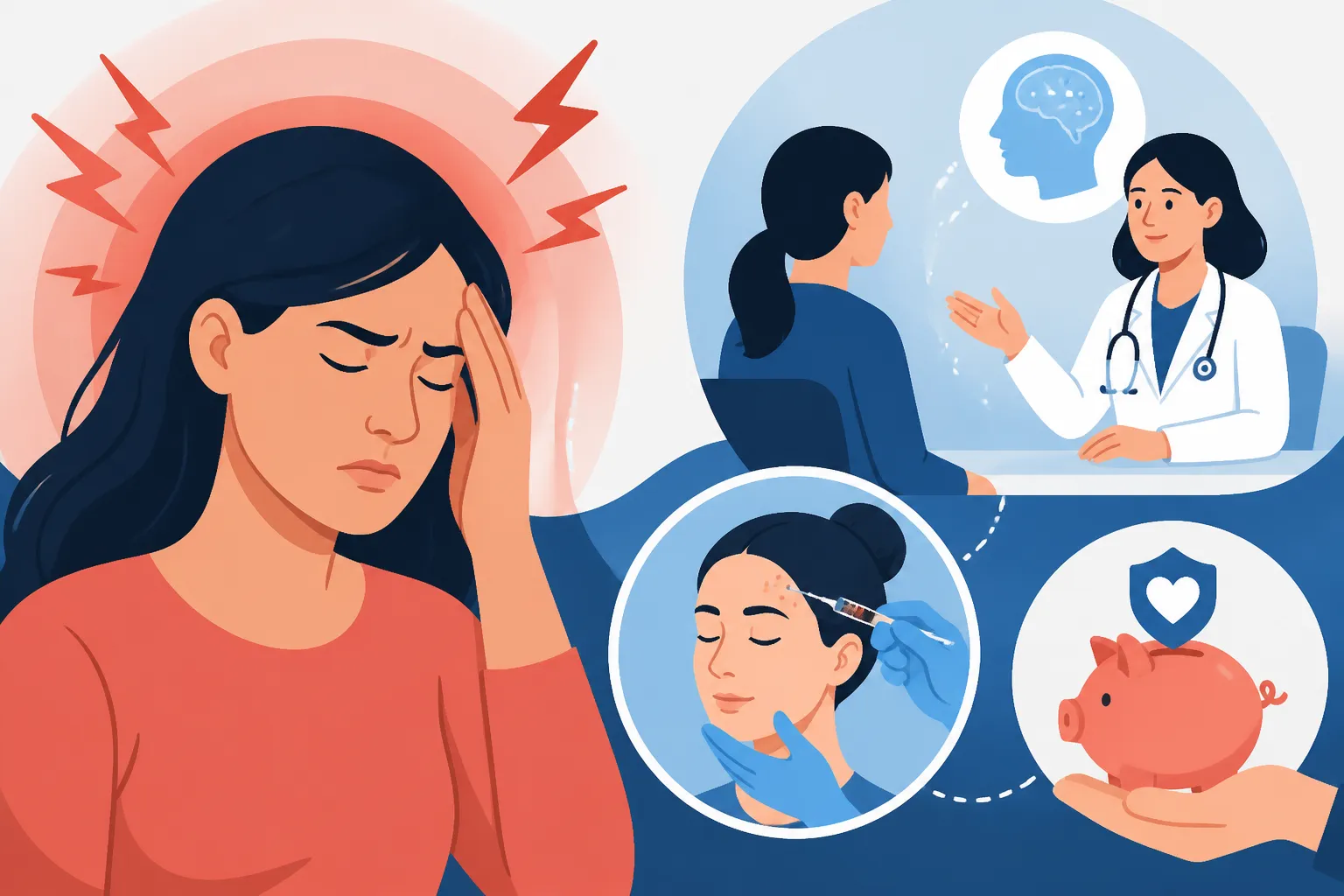
Botox (Botulinum toxin) has become a standard treatment for chronic migraine in Denmark, but it is strictly regulated. To qualify for Botox treatment subsidized by the state, you must meet the international criteria for chronic migraine: at least 15 headache days per month, of which at least 8 are migraines, for a period of at least three months.
The beauty of the Danish system is that once you are approved, the cost of the treatment is heavily subsidized. However, the path to approval requires patience and a clear demonstration that other, cheaper preventatives have not worked.
Eligibility and the Approval Process
Your neurologist is the only person who can authorize subsidized Botox for migraines. They will submit an application to the regional medicines committee. If you have been treated with Botox in your home country, bring those records! It can significantly shorten the "trial and error" phase that Danish doctors are otherwise required to follow.
Once approved, the Botox is usually administered every 12 weeks. In the public system, the procedure is often done at a hospital’s headache clinic, such as the famous Dansk Hovedpinecenter in Glostrup. If you are being treated by a private practicing neurologist, you might have to buy the Botox at the pharmacy yourself and bring it to the clinic.
How Medication Subsidies (Tilskud) Work
Denmark uses a sliding scale for medication subsidies known as the "reimbursement clock." The more you spend on prescription medicine in a year, the higher the percentage the state covers. Since Botox is expensive, you will hit the high-subsidy thresholds very quickly.
| Annual Spending (DKK) | Reimbursement Percentage | Out-of-Pocket Cost |
|---|---|---|
| 0 – 1,075 | 0% | Full Price |
| 1,075 – 1,745 | 50% | Half Price |
| 1,745 – 3,780 | 75% | 25% Price |
| Over 3,780 | 85% – 100% | Minimal to Zero |
For a deep dive into these calculations, you should read about How Medication Subsidies (Tilskud) Are Calculated at the Apotek to understand how your "CTR" (Central Tilskud Registrering) balance resets every year. For chronic migraineurs, this system is a lifesaver, ensuring that your total annual medication costs are capped at a manageable level.
Specialist Centers and Advanced Treatments
If your migraines are particularly "refractory" (meaning they don't respond to standard treatments), your neurologist might refer you to a specialized headache center. The Dansk Hovedpinecenter at Rigshospitalet Glostrup is world-renowned. They offer a multidisciplinary approach, including specialized nurses, physiotherapists, and psychologists who specialize in pain management.
Accessing CGRP Inhibitors (Aimovig, Ajovy, Emgality)
In recent years, CGRP inhibitors have revolutionized migraine treatment. In Denmark, these are also available but are subject to even stricter "prioritization" than Botox. Generally, the Medicinrådet (The Danish Medicines Council) requires that you have failed Botox treatment before they will subsidize CGRP inhibitors in the public system.
If you find that Botox doesn't work for you, the transition to CGRP treatments is handled by the hospital-based headache clinics. These medications are dispensed directly by the hospital pharmacy at no cost to the patient, bypassing the standard apotek subsidy system entirely. This makes them incredibly accessible once you clear the high clinical bar for a prescription.
Integrating Complementary Care
While Botox and medication are central to the Danish approach, there is an increasing focus on Physiotherapy in Denmark: Getting GP Referrals and Managing Costs as part of a holistic treatment plan. Many migraineurs find that neck tension is a major trigger. Your GP can provide a referral for physiotherapy, which reduces the cost per session. While the public system doesn't "subsidize" Botox at a physiotherapist, having a specialist who understands the mechanical triggers of your migraines can make your Botox treatments more effective.
Practical Advice for Expats Dealing with Migraines
Living in Denmark with a chronic illness requires becoming an expert in the digital infrastructure. You will spend a lot of time on Sundhed.dk. This is where you can see your doctor’s notes, check your lab results, and see your active referrals. Understanding Sundhed.dk and MitID: Navigating Denmark’s Digital Health Portals is essential because it is the only way to log in to these services.
If you are a frequent traveler, remember that Botox is a medical procedure. If you are covered by an international plan like SafetyWing, check if they cover complications or follow-up visits while you are outside of Denmark. For those living here long-term, Cigna Global provides a level of continuity that the public system sometimes lacks, especially if you move between different regions in Denmark and don't want to wait for a new local referral.
Tips for the "Wait Time" Survival
- Check for Cancellations: Once you have a referral, call the neurologist's office directly. Sometimes they have last-minute cancellations that don't show up on the online portals.
- Expand Your Search: Don't just look for a doctor in your immediate neighborhood. If you live in Copenhagen, check for specialists in Roskilde or Køge. The train ride is worth saving three months of waiting.
- Use the MinLæge App: This app allows you to have video consultations with your GP, which is much easier when you have a migraine than traveling to a clinic.
Finally, don't forget to look into Child Sickness Days (Barns Første Sygedag): Your Rights as a Parent if you are a parent. Migraines don't just affect you; they affect your ability to care for your family, and the Danish system has social supports in place for families dealing with chronic health issues.
Disclaimer
This article is for informational purposes only and does not constitute professional medical advice, diagnosis, or treatment. Always seek the advice of your physician or another qualified health provider with any questions you may have regarding a medical condition. The Danish healthcare system rules and subsidy thresholds are subject to change annually; always verify current rates with your GP or the Danish Health Authority (Sundhedsstyrelsen).