Costs of Børnehave: Sibling Discounts and Municipal Subsidies
Oh, the joy (and sometimes the absolute head-scratching frustration) of navigating the Danish childcare system! I remember it well – that initial sticker shock when you first see the numbers, followed by the slow realization that there are indeed systems in place to make it manageable. For many expat families, the cost of børnehave (kindergarten) is one of the biggest budget lines, right up there with rent. But before you panic and start thinking you'll need to sell a kidney, let's break down exactly how these costs work, especially concerning those crucial sibling discounts and the ever-present municipal subsidies that make it all, well, Danish. This guide is here to shed some light on the reality, cutting through the jargon and giving you the straight talk you need to budget effectively for your little ones' care.
Understanding the Danish Childcare System and Why It's Pricier Than You Think
When you first land in Denmark with kids, one of the immediate cultural shifts you'll notice is the emphasis on high-quality, government-regulated childcare. Unlike some countries where childcare can feel like a casual arrangement, Denmark views it as an integral part of a child's development and a vital support system for working parents. This is where børnehave comes in. Typically, it’s for children aged roughly 3 years old until they start school (around age 6-7). Before that, you’d be looking at vuggestue (crèche) for infants and toddlers, or dagpleje (municipal home-based care).
The sticker shock is real, folks. This is common among new arrivals. You look at the monthly fees, and your jaw might hit the floor. This isn't because Danes are trying to make a quick buck; it's because the system prioritizes low staff-to-child ratios, highly educated pedagogues, and excellent facilities – all of which cost money. These aren't just babysitting services; they're places where your child will learn through play, develop social skills, and engage with the Danish language and culture in a structured, nurturing environment. While the cost is high, the quality is generally exceptional, which is a massive comfort when you're entrusting your precious little ones to a new system. It’s part of the extensive public welfare system that aims to support families, ensuring access to quality care regardless of income, through various subsidies we'll dive into. If you're looking for a broader overview, take a look at our guide on Childcare in Denmark: Vuggestue (Crèche) and Børnehave (Kindergarten).
The Quality vs. Cost Conundrum
Many expats arrive from countries where childcare is significantly cheaper, or where private, unregulated options are abundant. In Denmark, the vast majority of børnehave spots are municipal, meaning they're run by the local kommune (municipality). This provides a baseline of quality and regulation that is often envied abroad. Your child will likely spend their days engaged in outdoor play, creative activities, and building social competencies, often with a focus on free play and pedagogical principles.
This high standard, however, means that the actual cost per child is incredibly high. What you pay is only a fraction of this true cost, with the rest being heavily subsidized by the municipality and, ultimately, by Danish taxpayers. So, while it feels expensive, remember that you're benefiting from a system designed to provide top-tier care. It’s a collective investment in the next generation, and as foreign residents, once you're integrated into the system with your CPR number, you reap the benefits just like any Dane.
Decoding the Costs of Børnehave: What You'll Actually Pay
Let's get down to brass tacks: what kind of numbers are we talking about? The cost of a børnehave spot in Denmark isn't fixed across the country; it varies significantly from one municipality to another. This is a common theme in Danish life – local councils have a lot of autonomy over local services and their pricing. You might pay more in Copenhagen or Aarhus than you would in a smaller town further away from the major cities.
Generally, for a full-time municipal børnehave spot for one child, you can expect to pay anywhere from DKK 1,800 to DKK 2,800 per month. This might include a small fee for lunch, but often lunch is an additional cost or packed from home. These figures are, crucially, after the basic municipal subsidy has already been applied. You typically don't apply for a separate subsidy; the price you're quoted is the subsidized price.
How Municipalities Influence Pricing
The financial differences between municipalities can be quite stark. A kommune with higher average incomes and property values might choose to invest more in childcare, potentially offering slightly lower fees or more services, or conversely, charge a bit more because residents can afford it. Conversely, a municipality with a tighter budget might charge towards the higher end of the spectrum. This is definitely something to research if you're deciding Where to Live in Denmark: Copenhagen, Aarhus, Odense, and Aalborg with your family.
Here's a simplified example of how costs might vary, just to give you a feel. Please note these are illustrative figures for a single child, full-time, without any additional discounts or specific meal plans, and reflect a rough average as of late 2024/early 2025:
| Municipality | Approximate Monthly Cost (DKK) | Notes |
|---|---|---|
| Copenhagen | 2,000 – 2,800 | Higher end, high demand |
| Aarhus | 1,900 – 2,600 | Similar to Copenhagen, slightly less |
| Odense | 1,800 – 2,400 | Generally a bit lower than major cities |
| Aalborg | 1,800 – 2,400 | Similar to Odense |
| Smaller Town | 1,700 – 2,200 | Potentially lowest end |
Keep in mind that these numbers change annually, so always check your specific municipality's website (look for "dagtilbud" or "børnehave takster"). When planning your overall finances, remember childcare is a significant chunk of your monthly outgoings, as detailed in our guide on the Cost of Living in Denmark 2026: Budgets for Singles and Families. It's a fundamental part of the Danish lifestyle where parents are largely expected to work, and children are offered high-quality care during the day.
The Lifesavers: Sibling Discounts and Municipal Subsidies
Now, let's talk about the real game-changers for families with multiple children, and how the Danish system actually makes it manageable: sibling discounts and deeper municipal subsidies. These provisions are designed to ease the financial burden on larger families, making it possible for parents to maintain their careers.
Sibling Discounts (Søskenderabat)
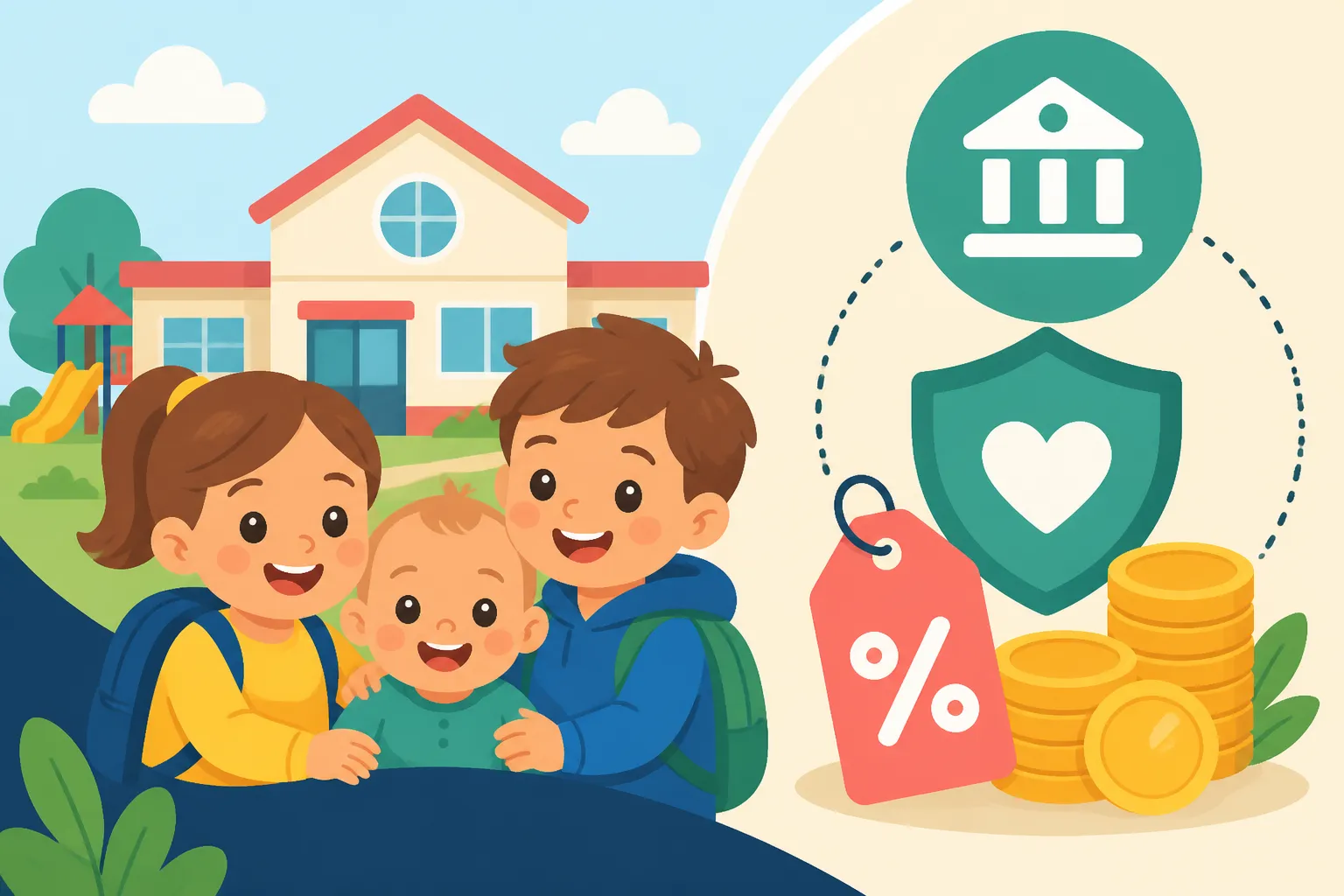
This is where Denmark truly shines for families with more than one child in public childcare. The concept of søskenderabat (sibling discount) is a widely applied principle. The general rule is that you pay full price for the most expensive childcare spot (which is usually vuggestue, as it has a higher staff-to-child ratio), and then you receive a substantial discount for subsequent children in public childcare institutions.
For børnehave, this typically means:
- First child: Pays full price (the subsidized rate mentioned above).
- Second child: Receives a 50% discount on their monthly fee.
- Third child and onwards: Often, these children attend for free! Yes, you read that right. In many municipalities, the third and any subsequent children in municipal childcare will not incur any monthly fees.
Imagine you have three children: one in vuggestue, two in børnehave. Your vuggestue child would pay the highest full rate. Your first børnehave child would get a 50% discount. Your second børnehave child would likely be free. This can save families thousands of kroner every month, making it significantly more affordable to raise a larger family here. The discount is automatically applied by your municipality once all your children are registered in the system. You don't need to apply for it separately.
Municipal Subsidies (Kommunale Tilskud)
It's important to understand that the monthly fees you see for børnehave are already subsidized. The municipality covers a significant portion of the actual operating costs, typically around 75%. This is the kommunale tilskud (municipal subsidy) in action. So, when you pay DKK 2,000 for a børnehave spot, the actual cost might be DKK 8,000, with the municipality covering DKK 6,000. You don't receive this subsidy directly; it's paid straight to the childcare institution. This is a fundamental difference from systems where parents pay full price and then apply for reimbursement.
This direct subsidy model is a testament to the Danish welfare state's commitment to universal access. It ensures that quality childcare is within reach for almost everyone, making the system more equitable. When you're making arrangements to settle in, even before your CPR is fully sorted, you might use services like Spotahome to find a place to live, or Airalo for data connectivity to navigate the municipal websites; these are the first steps to accessing these local benefits. Once your family's address is registered and your children are signed up, these subsidies kick in automatically.
Free Places for Low-Income and Specific Circumstances (Fribørn)
Beyond the general municipal subsidies and sibling discounts, there are also provisions for fribørn (free children) or heavily reduced fees based on your household income and specific social circumstances. If your family income falls below a certain threshold, or if you are a student receiving SU (State Educational Grant), or receiving certain social benefits, you might qualify for a full or partial exemption from childcare fees.
The income thresholds are set nationally but can have slight municipal variations. This is designed as a safety net to ensure that no child is excluded from quality care due to their family's financial situation. You do need to apply for this specific type of subsidy through your local municipality, often through Pladsanvisningen (the municipal placement office for childcare). They will assess your income and circumstances and determine your eligibility. This is a vital support mechanism for many expat families who might be in a transitional phase, perhaps between jobs or studying, and finding the Child and Youth Benefit (Børne- og ungeydelse): Does SKAT Pay Expats? alongside these childcare benefits crucial for making ends meet.
Understanding these layers of support is key to moving to Denmark with your family. It's not just about the upfront cost; it's about the safety nets and assistance that are woven into the fabric of the system, making it far more supportive than it initially appears.
Navigating the Application Process and Practicalities
So, you understand the costs and the subsidies. Now, how do you actually get your child a spot in børnehave? This process, while digital, can sometimes feel a bit opaque for newcomers, especially if you're used to a different administrative style.
How to Apply: The Municipal Portal (Pladsanvisningen)
The application for a børnehave spot is almost exclusively done through your local municipality's website. You'll typically be looking for a section called "Dagtilbud," "Børn og Unge," or specifically "Pladsanvisningen" (child placement). This is the department responsible for allocating childcare spots.
You'll need your NemKonto and MitID: The Core of Danish Digital Finance (2027) to log in and submit the application. The system will ask for your child's CPR number, your preferred start date, and a list of preferred institutions. You can usually list several børnehave options in order of preference.
The Reality of Waiting Lists
Here's a dose of realism: waiting lists are a common part of the Danish childcare landscape, particularly in popular urban areas like Copenhagen and Aarhus. While the municipalities strive to offer a spot to every child, you might not get your first choice right away, and sometimes you might have to wait a few months for a spot to open up. It's highly recommended to apply as soon as possible, ideally shortly after your child is born, even if they won't need a børnehave spot for a couple of years. The earlier you're on the list, the better your chances of getting a spot when you need it.
Don't be surprised if the municipality offers you a spot in an institution that wasn't on your top-three list. You can usually accept it temporarily while remaining on the waiting list for your preferred options. It's always better to have a spot than no spot at all, especially when you're trying to coordinate work and family life.
Communicating with the Kommune
Most municipal websites will have information available in English, at least for key sections. However, correspondence from the kommune itself will almost always be in Danish. This is where a little resourcefulness comes in handy. Google Translate is your friend, but for crucial documents, it's worth asking a Danish colleague, friend, or a language professional to help you understand the nuances.
You'll receive official letters regarding your child's placement, changes in fees, or any updates to your application through your digital postbox, either e-Boks or Mit.dk. It's critical to check these regularly, as they are how the authorities communicate with you. Our guide on E-Boks vs. Mit.dk: Receiving Official Financial Mail from the State is a must-read for anyone living in Denmark.
What to Expect on Day One
Once you've secured a spot and the start date approaches, the børnehave will typically invite you for an introductory meeting (often called an "indkøringssamtale" or "forældremøde"). This is your chance to meet the pedagogues, understand the daily routine, and discuss any specific needs your child might have. The Danish system places a strong emphasis on a gentle "indkøring" (integration/onboarding) period, where you might spend a few hours with your child at the børnehave for the first few days or weeks, gradually increasing their time there as they get comfortable. This process is crucial for helping both children and parents adjust to the new environment.
Beyond Børnehave: Other Childcare Options and Considerations
While municipal børnehave is the most common and often the most cost-effective solution for children aged 3-6, it's not the only option available in Denmark. Understanding these alternatives can be helpful, especially if you face long waiting lists or have specific needs.
Private Børnehave and Independent Institutions
Yes, private børnehave institutions exist, though they are less common than their municipal counterparts. These can include anything from small, parent-run cooperatives (friskbørnehaver) to international kindergartens. The key difference here is often the price and the percentage of municipal subsidy.
- Costs: Private institutions typically have higher gross fees. While they still receive a municipal subsidy, the percentage might be slightly lower than for municipal børnehave, or the initial fee is simply much higher. This means your out-of-pocket expense could be significantly more, sometimes DKK 4,000-6,000 per month or even more for international schools.
- Curriculum/Focus: Private institutions might offer a specialized pedagogical approach (e.g., Montessori, Waldorf) or cater to specific language needs (e.g., English-speaking international kindergartens). If you're considering Finding International Schools vs. Public Danish Folkeskole for primary education, you might also look at their affiliated kindergartens.
- Application: You apply directly to the private institution, not through the municipality. However, they will still work with the kommune regarding your subsidy.
For some families, particularly those who prefer a specific pedagogical style or require an English-only environment, a private børnehave might be the right choice, despite the higher cost.
Dagpleje (Municipal Home-Based Care)
While primarily for younger children (0-3 years), dagpleje can sometimes accommodate older children, especially in smaller towns. This is a system where a childminder cares for a small group of children (typically 3-4) in their own home. It offers a more intimate, home-like environment compared to a larger institution.
- Costs: The fees for dagpleje are often comparable to, or slightly lower than, vuggestue fees, but usually higher than børnehave fees. Sibling discounts typically apply across dagpleje, vuggestue, and børnehave.
- Availability: Availability varies by municipality. Some areas have a strong dagpleje tradition, while others rely more on institutional care.
- Application: Also handled by Pladsanvisningen through your municipality.
Other Family Considerations
When your children are in børnehave, you’ll still be responsible for many aspects of their Family Health in Denmark: Pregnancy, Maternity, and Pediatric Care, from regular check-ups to vaccinations. While the børnehave staff are trained pedagogues, they are not medical professionals.
The Danish childcare system is undeniably a massive support for parents, enabling high employment rates for both mothers and fathers. While the costs might seem high initially, the extensive subsidies and sibling discounts, combined with the high quality of care, make it a valuable investment in your child's well-being and development. Getting your head around these costs and processes early on will significantly ease your integration into Danish life and allow you to fully benefit from the excellent services available.
Disclaimer
This article is for general informational purposes only and does not constitute professional advice. Laws, prices and regulations vary by location and change over time. Consult a qualified professional for guidance on your specific situation.