Child and Youth Benefit (Børne- og ungeydelse): Does SKAT Pay Expats?
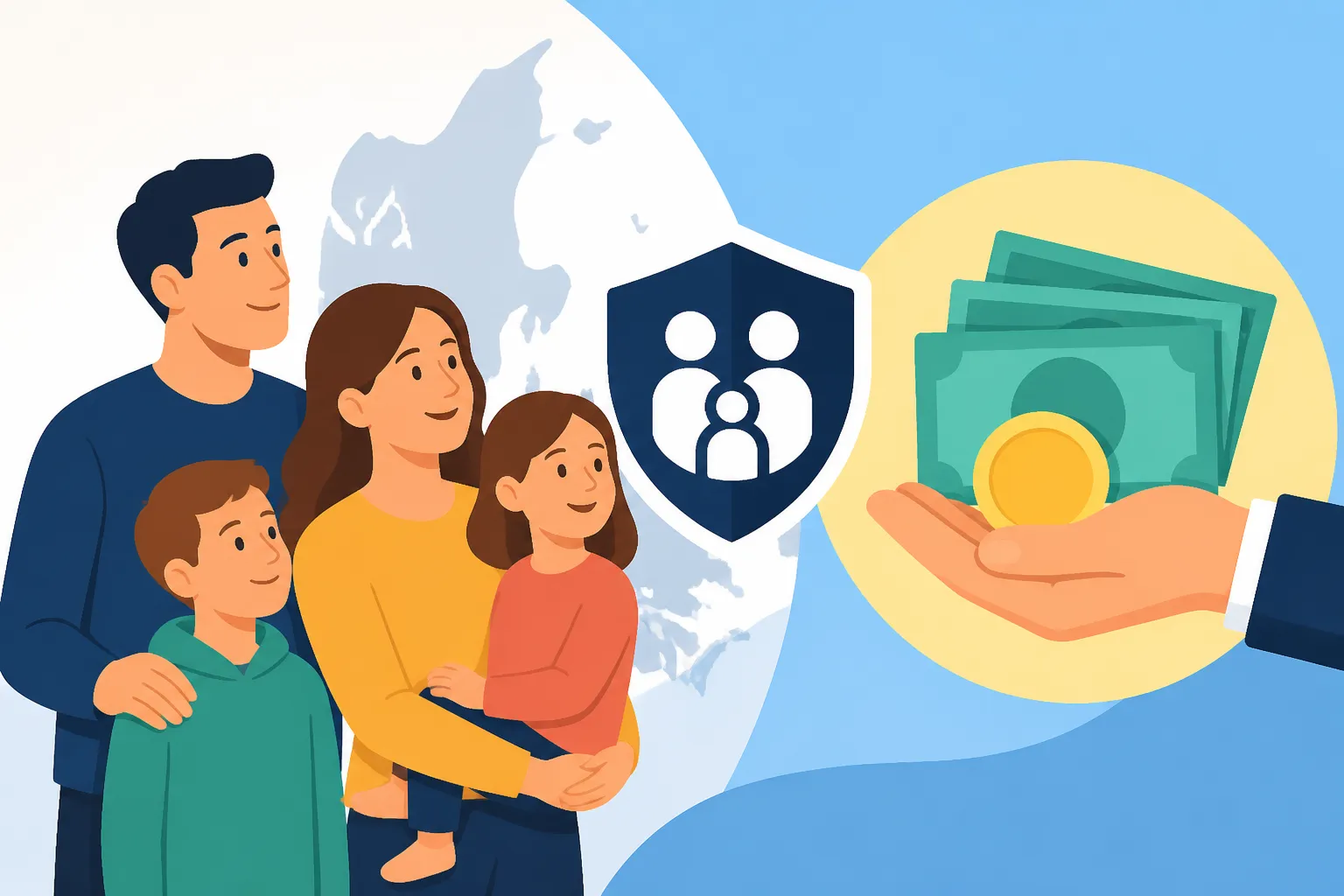
Moving to Denmark with children often feels like a constant battle with your bank account. Between the high cost of childcare and the eye-watering prices of winter gear, many expats find themselves wondering how local families manage to stay afloat while paying some of the highest tax rates in the world. This guide solves the mystery of the Børne- og ungeydelse, explaining exactly how the Danish state supports your family's finances and how you can claim your share.
Understanding the Danish Family Support System
When you first arrive and see your paycheck significantly reduced by Taxes in Denmark Explained: A-Skat, AM-bidrag, and Marginal Rates, it is easy to feel a bit defensive. However, the Danish social safety net is built on the principle of "yde efter evne, nyde efter behov" (contribute according to ability, enjoy according to need). One of the most visible ways this manifests for parents is through the Børne- og ungeydelse, commonly referred to by locals as "børnepenge" or "the child check."
Unlike some countries where family support is means-tested or tied to low-income brackets, the basic child and youth benefit in Denmark is generally universal. If you live here, work here, and have children, you are likely entitled to it. The system is divided into two distinct categories based on the age of your child, and understanding the transition between them is vital for your household budgeting.
Børneydelse for Children Aged 0 to 14
For the first fifteen years of your child's life, the benefit is known as børneydelse. This is a quarterly payment, meaning the money hits your account four times a year: in January, April, July, and October. The amount is highest when the child is an infant (0-2 years old) and gradually decreases as they grow older.
The logic behind this is that the earliest years are often the most expensive due to the high cost of vuggestue (nursery) and the frequent need for new clothing and equipment. As an expat, these quarterly injections of cash can be a lifesaver when you are trying to navigate Healthcare in Denmark for Foreign Residents: Complete System Guide (2027) or preparing for the next school term.
Ungeydelse for Teens Aged 15 to 17
Once your child turns 15, the payment structure changes. It becomes "ungeydelse" (youth benefit), and the payout frequency switches from quarterly to monthly. This transition is designed to help teenagers learn a bit about financial responsibility, as many Danish parents choose to pass some or all of this money directly to their teens to cover their own clothing or social expenses.
The monthly amount is lower than the early childhood rates but remains consistent until the child turns 18. Even though the child is older, the eligibility rules remain the same, and you must ensure your Understanding CPR Registration and Your Healthcare Entitlement remains active and updated to avoid any interruptions in these payments.
The Crucial Accrual Principle for Foreigners
This is where many expats get caught out. In the past, you could move to Denmark and receive the full benefit almost immediately. However, political shifts led to the introduction of the "optjeningsprincip" or accrual principle. This rule dictates that your entitlement to the full amount grows the longer you live and work in Denmark.
Essentially, you earn the right to the benefit over a period of six years (72 months). If you have only been here for a short time, you will only receive a percentage of the total amount. This can be quite a shock if you have budgeted for the full "check" to cover your Maternity and Paternity Leave (Barsel) Entitlements in Denmark or childcare costs.
EU and EEA National Benefits
If you are a citizen of an EU or EEA country, or Switzerland, the rules are slightly more flexible thanks to EU coordination of social security systems. If you have been working in another EU country immediately before moving to Denmark, those months of employment can often be counted toward your 6-year accrual period.
For instance, if you worked in Germany for five years and then moved to Copenhagen, you could potentially qualify for 100% of the benefit much sooner than a non-EU expat. However, the paperwork for this can be dense. You will often need to prove your previous social security contributions. While navigating this, many families use services like Wise to manage their initial relocation funds and cross-border transfers without losing a fortune in bank fees.
Challenges for Non-EU Expats
For those arriving from outside the EU (like the US, India, or the UK), the accrual rule is much stricter. You generally start at 0% and slowly climb the ladder. For every six months you reside and work in Denmark, your percentage of the benefit increases.
- 6 months: 8.3% of the benefit
- 12 months: 16.6% of the benefit
- 24 months: 33.3% of the benefit
- …and so on, until you reach 100% after 6 years.
It feels frustrating, especially when you see your Danish neighbors receiving the full amount while paying the same taxes. This is why managing your Preliminary Tax Assessment (Forskudsopgørelse): Avoiding Tax Debt is so important; you need to know exactly what is coming in versus what is going out. If you are a high-earner or a US citizen, using a specialty service like Taxes for Expats can help you understand how these Danish benefits (even if tax-free in Denmark) might interact with your home country's tax filings.
How Much Money Will You Actually Receive?
The rates for the child and youth benefit are adjusted annually by the government to keep up with inflation. While the exact DKK amount might shift slightly by 2026, the tiers remain consistent. The payments are "tax-free" in Denmark, meaning the amount you see in the table is exactly what should arrive in your bank account.
| Child's Age | Frequency | Estimated Amount (Per Child/Per Period) |
|---|---|---|
| 0 to 2 years | Quarterly | ~5,100 DKK |
| 3 to 6 years | Quarterly | ~4,000 DKK |
| 7 to 14 years | Quarterly | ~3,200 DKK |
| 15 to 17 years | Monthly | ~1,000 DKK |
Note: These figures are approximations based on current trends and the accrual percentage (assuming 100% entitlement).
Remember that if you are a single parent, you may be eligible for "børnetilskud," which is an extra supplement on top of these base amounts. However, the state is very strict about the definition of a single parent. If you have a partner living with you—even if you aren't married—you won't qualify for the single-parent supplement.
Administrative Steps: How to Claim the Benefit
One of the few pleasant surprises about the Danish system is that you often don't have to "apply" in the traditional sense. Once you have completed your CPR registration and your child is registered at your address, the system usually triggers the benefit automatically.
The payments are managed by Udbetaling Danmark, not directly by SKAT, though they share data. The money is paid into your NemKonto (your designated "Easy Account"). If you are still in the process of Opening a Bank Account in Denmark: Document Checklist and Delays, you need to prioritize this, as the state cannot pay you in cash or via a foreign account that isn't linked to the NemKonto system.
The Role of the NemKonto
Every person living in Denmark must have one of their bank accounts designated as a NemKonto. This is where all payments from public authorities—including tax refunds, salary (if you work for the state), and your child benefits—will be sent. Most Traditional Banks vs. Digital Banks (Lunar): Which is Best for Expats? allow you to set this up with a single click in their app.
If you have children with a partner and you both live together, the benefit is usually split 50/50 between the parents' NemKontos by default. If you prefer the money to go to just one parent, you can often change this setting via the "Borger.dk" portal, though both parents must usually agree to the change digitally using MitID.
Navigating International Transfers
If you are receiving these benefits but still have financial obligations back home—perhaps a mortgage in your home country or savings goals—you will want to move money efficiently. Using Wise is often the most cost-effective way for expats to send their DKK child benefits to a foreign currency account, as they provide the real exchange rate without the hidden markups often found at big Danish banks like Danske Bank or Nordea.
Impact on Taxes and Other Benefits
A common question among the expat community is: "If I receive this money, will SKAT take it back at the end of the year?" The answer is no. The Børne- og ungeydelse is non-taxable income in Denmark. It does not count toward your "income" for the purposes of calculating your tax bracket or your Preliminary Tax Assessment (Forskudsopgørelse): Avoiding Tax Debt.
However, for Americans and certain other nationalities, any "income" or "benefit" received from a foreign government can sometimes have implications for your home-country tax return. This is where professional advice from Taxes for Expats becomes invaluable. They can help you determine if these tax-free Danish crowns need to be reported or if they are excluded under specific tax treaties.
Moving and Leaving Denmark
If you move within Denmark, the benefit follows you automatically as long as you update your address. If you are Moving Addresses: Do You Automatically Get a New Yellow Card?, you don't need to worry about the money stopping, provided your CPR record is accurate.
However, if you leave Denmark permanently, your eligibility stops the moment you are no longer fully tax-liable in the country. You are legally required to inform Udbetaling Danmark if you move abroad. If you continue to receive the payments while living in another country (outside the EU coordination rules), the state will eventually find out and demand the full amount back with significant interest.
Practical Tips for New Expat Parents
Managing the "child check" requires a bit of strategy. Because the 0-14 year payments are quarterly, it is easy to spend the money the week it arrives and then struggle for the next two months. Many veteran expats suggest setting up a separate "sub-account" in your banking app specifically for the kids.
When the 5,000+ DKK arrives in January, move it to that sub-account and use it only for fixed costs like the "SFO" (after-school care) or the quarterly payment for your Healthcare in Denmark for Foreign Residents: Complete System Guide (2027) supplements.
Furthermore, keep an eye on your e-Boks or Mit.dk. Udbetaling Danmark will send you a letter every time the rates change or if your accrual percentage increases. If you think they have calculated your months of residence incorrectly—especially if you have previous EU work history—don't hesitate to call them. They are generally very helpful, and most representatives speak excellent English.
Finally, remember that while the state helps, the cost of living remains high. Utilizing local "Genbrug" (second-hand) shops for children’s clothes is a Danish cultural staple. Even the wealthiest families in the leafy suburbs of North Zealand can be found hunting for bargains. Combining these local habits with your state benefits is the real secret to surviving and thriving as a family in Denmark.
Disclaimer
The information provided in this guide is for informational purposes only and does not constitute financial, legal, or tax advice. While every effort has been made to ensure the accuracy of the rules regarding Børne- og ungeydelse as of 2026, Danish legislation and benefit rates are subject to change by the Folketing (Parliament). For specific advice regarding your tax situation, especially concerning international reporting requirements, please consult with a qualified professional or the relevant Danish authorities at Udbetaling Danmark.