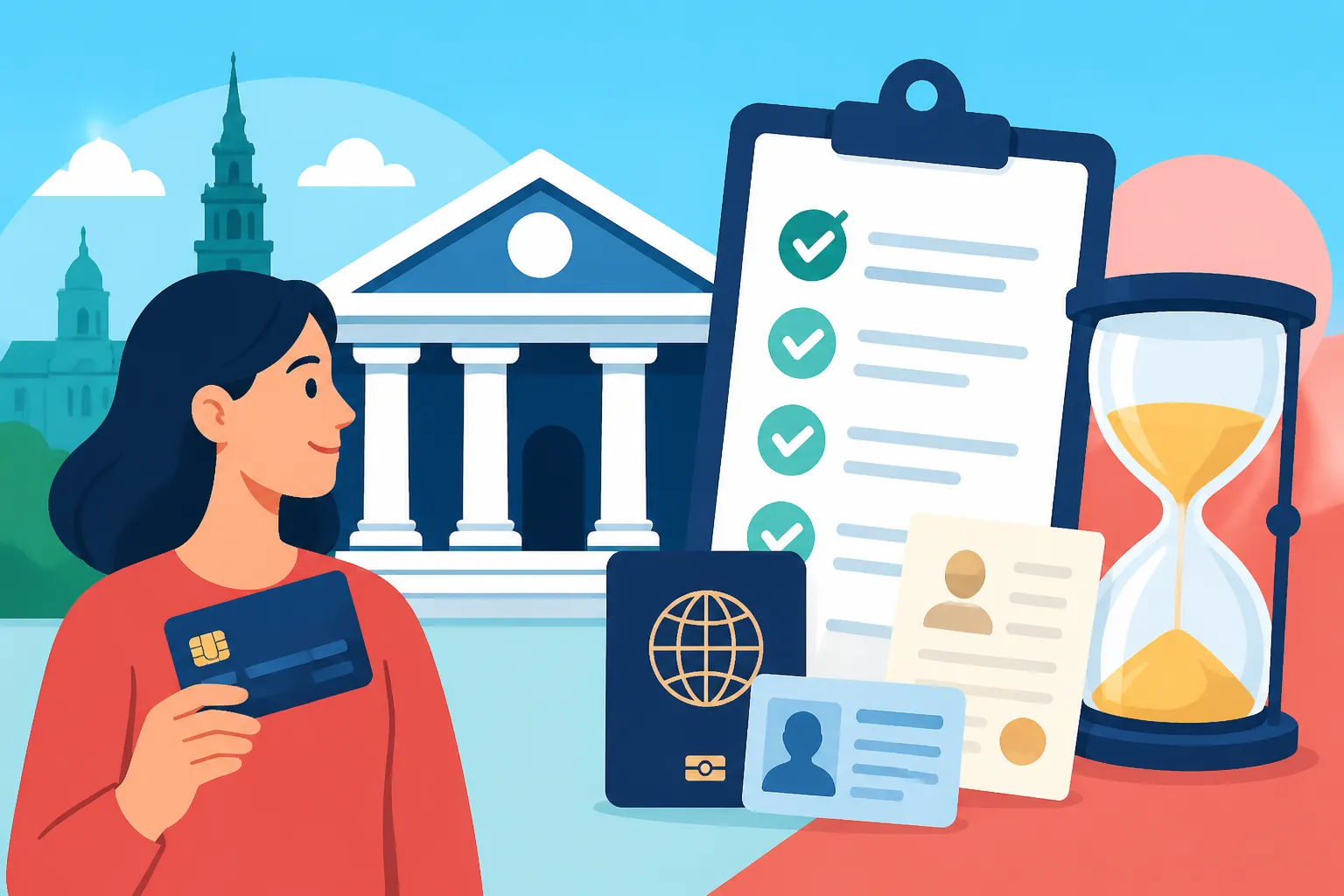
Opening a Bank Account in Denmark: Document Checklist and Delays
Ah, the infamous Danish bank account! If you're fresh off the plane, you've probably already realized that simply wanting to manage your own money here can feel like trying to solve a Rubik's Cube blindfolded, all while a bureaucrat politely tells you "ja, men…" over and over again. This guide is here to walk you through the often-frustrating process of opening a bank account in Denmark, detailing every document you’ll likely need and bracing you for the inevitable delays you might encounter.
The Initial Hurdle: Why Opening a Danish Bank Account Can Feel Like a Saga
Let's be honest, getting set up in a new country is rarely a walk in the park, but Denmark often adds an extra layer of "chicken and egg" bureaucracy, especially when it comes to banking. You need a bank account for almost everything – salary, rent, bills – but getting one often requires things you don't yet have. It's a common expat frustration, and believe me, you're not alone in feeling like you're caught in a never-ending loop.
The "Catch-22" for New Arrivals
One of the biggest headaches new arrivals face is the classic "Catch-22": you often need a Danish bank account to receive your salary, pay rent, and generally function, but to get a bank account, you usually need a CPR number, and sometimes even a registered address. This can create a significant hurdle, especially if you're living in temporary accommodation or haven't fully navigated the local registration process yet. Many expats find themselves in a precarious position for weeks, sometimes even months, relying on international cards or cash, which can be incredibly inconvenient in Denmark's largely cashless society. It's a frustrating dance, where each step seems to depend on the previous one, and you're left wondering how anyone ever manages to get started. Navigating The CPR Registration Rule: Why Your Address Matters becomes paramount very quickly.
The KYC Conundrum: Why Banks Are So Strict
The strictness isn't just about making your life harder; it's deeply rooted in international regulations designed to combat money laundering and terrorist financing. This is globally known as "Know Your Customer" (KYC) compliance. Danish banks, like all financial institutions worldwide, are legally obligated to thoroughly verify the identity and financial activities of their customers. This means they need to understand where your money comes from, how you intend to use your account, and confirm that you are who you say you are. While this is for a good cause, it translates into a mountain of paperwork and rigorous checks for new foreign residents, particularly if your financial history is entirely outside of the Danish system. For someone with an entirely foreign financial background, this can feel incredibly intrusive, as if every transaction you've ever made is under scrutiny. The process is thorough, and patience is definitely a virtue here.
The Non-Negotiables: Essential Documents for Your Bank Application
When you finally sit down with a bank advisor, whether virtually or in person, you'll need to present a precise stack of documents. Missing even one tiny piece can send you right back to square one, prolonging your wait unnecessarily. Here’s a breakdown of the documents that are almost universally required by Danish banks.
Your Golden Ticket: The CPR Number
Without a doubt, your CPR number (Central Person Register number) is the most critical piece of identification you'll need. It's Denmark's equivalent of a social security number and acts as your official identification for nearly all administrative tasks, including banking, healthcare, and taxes. Most banks simply won't open an account for you without it. Getting your CPR number involves registering with your local municipality, proving your identity, and having a fixed address in Denmark. This process itself can take a few weeks, sometimes more if there are complications with your address or visa. Once you have it, ensure you bring the official letter or your Yellow Health Card (Sundhedskort) which prominently displays your CPR number. Understanding CPR Registration and Your Healthcare Entitlement is the very first step in this entire process.
Proof of Identity: Passport and Residence Permit
You'll need valid photo identification, typically your passport. It must be current and not expired. Additionally, if you are a non-EU/EEA citizen, your Danish residence permit is equally important. This card serves as official proof of your legal right to live and work in Denmark. Banks need to see both documents to confirm your identity and your immigration status, as different statuses might affect the type of account you can open or the services you're entitled to. Make sure to bring the physical card, as often a photocopy won't suffice for the initial verification.
Proof of Address: More Than Just a Lease
While your CPR registration implies a registered address, banks often require additional, more current proof of where you actually live. This might include:
- Your Rental Contract (Lejekontrakt): A formal lease agreement for your Danish residence. It should clearly state your name, the address, and the rental period.
- A Recent Utility Bill: Something like an electricity bill, internet bill, or even a letter from your municipality addressed to you at your Danish address. The key is that it's official correspondence, not just a personal letter.
- Confirmation from Your Employer: In some cases, if you’re struggling with other forms of proof, a letter from your employer confirming your Danish address might be accepted, though this is less common and usually supplementary.
Remember, the address on these documents must match the address registered with your CPR number. Any discrepancies will raise red flags and cause delays.
The Income Statement: Explaining Your Money's Origin
This is where many expats get tripped up. Due to KYC regulations, banks need to understand the source of your funds. They want to ensure your income is legitimate and not linked to illicit activities. You'll typically need to provide:
- Employment Contract: A copy of your Danish employment contract, clearly stating your position, salary, and start date.
- Recent Payslips: If you've already started working, 1-3 recent payslips are usually required.
- Bank Statements from Your Home Country: If you've just arrived and haven't received a Danish salary yet, you'll need bank statements from your previous country (usually for the last 3-6 months) showing your salary deposits and general financial activity. This helps the Danish bank understand your financial history and the legitimate source of your initial funds. They are essentially tracing your financial footprint.
Be prepared to explain any large or unusual transactions in your foreign bank statements. Banks here are very diligent about this.
Beyond the Basics: Supplementary Documents That Banks Might Request
While the core documents are standard, there are situations where banks will ask for additional information. It’s always best to be over-prepared rather than under-prepared. These requests aren't arbitrary; they stem from the bank's need to fulfill their due diligence, especially if your financial profile is complex or your residency status is unique.
Employment Contract and Payslips
Even if you've provided an employment contract, sometimes the bank will ask for more detailed information, particularly if your employment started very recently or if your role involves significant international transactions. They might ask for:
- Employer Contact Details: To verify your employment directly.
- More Detailed Job Description: Especially if your role involves international finance or high-risk industries.
- Proof of Continued Employment: If your contract is for a fixed term, they might want to understand your plans for continued residency and income in Denmark.
This deep dive into your employment situation is part of their risk assessment, ensuring stability and legitimacy.
Source of Funds for Non-Work Income
If your income isn't solely from a Danish salary – perhaps you have investments, receive a pension from abroad, or rely on savings – the bank will need detailed documentation for these sources as well. This could include:
- Investment Portfolio Statements: From your foreign brokers.
- Pension Statements: From your previous employer or national pension scheme.
- Savings Account Statements: Explaining how a significant sum of money accumulated.
- Gift Deeds/Inheritance Documents: If you've received a large sum of money as a gift or inheritance, you'll need documentation to prove its legal origin.
Again, the goal is transparency. Banks want to ensure that all funds passing through their system are legitimate. This is where services like Taxes for Expats might become relevant, not for opening the bank account itself, but for ensuring you understand the tax implications of foreign income and can explain them clearly if asked by the bank, which ties into later tax assessments like the Preliminary Tax Assessment (Forskudsopgørelse): Avoiding Tax Debt.
Your Foreign Tax Information
This is becoming increasingly common. Banks are part of a global effort to prevent tax evasion, and many countries have agreements to share financial information. Therefore, your Danish bank might ask for:
- Tax Identification Number (TIN) from your home country: This is a standard request for reporting purposes.
- Proof of Tax Residency in your home country (before moving to Denmark): This helps them understand your previous tax obligations and ensures no tax laws are being circumvented.
- Confirmation of Tax Liability Status in Denmark: Once you have a CPR number, you are generally considered fully tax-liable in Denmark. However, for those on special tax schemes like the expat tax scheme, or those with complex international arrangements, clarifying your Tax Liability: Full vs. Limited Tax Liability for Short-Term Expats is crucial. The bank needs to know how to correctly report your financial activities to SKAT (the Danish tax authority).
Having these details ready can significantly smooth the application process.
The Waiting Game: Understanding Processing Times and Common Delays
Once you've submitted all your documents, don't expect instant gratification. Opening a bank account in Denmark as an expat is seldom a quick affair. It's a process that tests patience, and understanding why it takes time can help manage expectations.
Typical Timelines: What to Expect
In an ideal world, with all documents perfectly in order, you might be looking at 2-4 weeks from your initial appointment to actually having a functional bank account and a debit card in hand. However, for many expats, especially those with non-EU backgrounds or complex financial histories, it's not uncommon for the process to stretch to 6-8 weeks, or even longer. The initial interview might be quick, but the internal compliance checks are thorough and time-consuming. You'll likely first receive your account details, then potentially a temporary card, and finally your permanent card, often followed by your MitID setup details. The key is to start this process as soon as humanly possible after you get your CPR number.
Common Reasons for Stagnation
Several factors can lead to frustrating delays:
- Incomplete Documentation: The most common culprit. Even a minor omission or a document that isn't sufficiently clear can halt the process.
- International Background Checks: For non-EU citizens or those with a very recent arrival date, the bank might need to conduct more extensive international background checks, which naturally take longer.
- Peak Seasons: Banks, like any other administrative body, have peak times. Summer months, when many new students and workers arrive, can lead to longer processing queues.
- Communication Gaps: If there's a back-and-forth for additional documents, and you're not checking your e-Boks or email regularly, this can cause significant delays. Remember to set up E-Boks vs. Mit.dk: Receiving Official Financial Mail from the State early on.
- Bank Specific Policies: Some banks are simply slower or have more rigorous internal compliance processes than others. It can vary quite a bit.
The Impact of Nationality and Residence Status
It's an unfortunate truth that your nationality and residence status can influence the speed of your bank account application. EU/EEA citizens with a valid residence certificate often face a smoother, quicker process compared to non-EU citizens who require a full residence permit. The latter group might face additional scrutiny due to stricter immigration and anti-money laundering regulations. This isn't discriminatory on a personal level, but rather a reflection of the different levels of data sharing and regulatory frameworks between Denmark and various international jurisdictions. For example, if you are a non-EU citizen, the bank might take longer to verify your identity and source of funds due to the complexities involved in cross-border checks outside of established EU agreements.
Here's a quick overview of typical document requirements:
| Document Category | Specific Items | Importance | Potential Delay if Missing |
|---|---|---|---|
| Identity Proof | Valid Passport, Danish Residence Permit | Essential | High |
| Residency Proof | CPR Number (letter/Yellow Card), Rental Contract | Essential | High |
| Income/Source of Funds | Employment Contract, Recent Payslips, Foreign Bank Statements | Essential | High |
| Tax Information | Foreign Tax ID (TIN), Confirmation of Tax Residency | Often Required | Medium |
| Other (Situational) | Marriage Certificate, Birth Certificates (for family accounts) | Low to Medium | Low |
Navigating the Digital Age: Online Alternatives and Their Limitations
While you wait for your traditional Danish bank account to materialize, the good news is that there are digital solutions that can help bridge the gap. These can make life significantly easier for new expats, but it's important to understand their place within the Danish financial ecosystem.
Digital-First Banks: A Quicker Entry Point
Digital banks, such as Lunar, have emerged as a popular option for expats. They often have simpler onboarding processes, sometimes even allowing you to open an account with just a CPR number and MitID, or even before your MitID is fully functional. These banks are fully licensed Danish banks, meaning they can function as your NemKonto (the account designated for all payments from public authorities, like salary or tax refunds). This can be a huge relief if you're stuck in the traditional bank waiting game.
However, while convenient, they might not offer the full suite of services that a traditional brick-and-mortar bank does, such as extensive mortgage advice, investment products, or in-person branch support. For basic everyday banking, though, they are an excellent solution for many. You can learn more about specific digital banking options in Denmark by looking into resources like Lunar Bank Review: Free Accounts for Expats and Students.
Transfer Services: Bridging the Gap
While not a full-fledged bank account, international money transfer services like Wise (formerly TransferWise) can be incredibly useful during your initial setup phase. Wise allows you to:
- Receive money in multiple currencies: You can get local bank details for euros, British pounds, US dollars, and more, allowing you to receive international payments without high fees.
- Send money cheaply: Transfer funds from your foreign account to another foreign account (e.g., to pay your Danish landlord's foreign account if they allow it) or eventually to your new Danish bank account at competitive exchange rates.
- Use a debit card: Their debit card can be very handy for daily expenses and withdrawing cash while you wait for your Danish bank card.
While Wise cannot function as your NemKonto and doesn't fully replace a Danish bank account, it's an invaluable tool for managing international finances and covering your costs before you're fully integrated into the Danish banking system. It's often the financial lifeline for expats in the first few months. The article Wise vs. Revolut in Denmark: Why They Cannot Replace a Danish Bank offers a deeper dive into these options.
Why a Local Bank Account is Still Essential
Despite the convenience of digital banks and transfer services, having a traditional Danish bank account (or at least a Danish-licensed digital bank account) is almost non-negotiable for long-term residency. Here’s why:
- NemKonto: As mentioned, this is your official government payment account. Your salary, SU (student grant), and any tax refunds will go here. You must link a Danish bank account to your NemKonto. Setting Up Your NemKonto: How to Link It to Receive Salary and SU is a vital step.
- MitID: Your digital ID is inextricably linked to your Danish bank account. While you can often get MitID with other methods initially, full functionality, especially for banking apps and many government services, often relies on having an active Danish bank account. MitID for Banking: Security, Device Registration, and App Setup is a must-read.
- Bill Payments (Betalingsservice): Most Danish utility providers, landlords, and subscription services use Betalingsservice for automatic direct debits. You need a Danish bank account to set these up easily.
- Local Trust and Credit: For things like mortgages, larger loans, or even just building a financial history in Denmark, having a relationship with a local bank is crucial.
- MobilePay: While some digital banks support MobilePay, having a primary Danish bank account makes integrating with this essential payment app much smoother. Denmark is extremely cashless, and MobilePay is king.
So, while alternatives can help you survive, the goal should always be to establish a proper Danish bank account as soon as you can.
Troubleshooting Your Application: What to Do When Things Go Wrong
Even with all your ducks in a row, the application process can hit snags. Don't despair! There are steps you can take to move things along or find an alternative path.
Persistent Follow-Up: The Danish Way
Once you’ve submitted your application, don't just wait passively. While the Danish system values independence, a polite and persistent follow-up can often be beneficial.
- Be Proactive, Not Annoying: A good rhythm might be to follow up a week after submission, and then every 1-2 weeks if you haven't heard anything.
- Use the Right Channels: If you have an assigned advisor, email them directly. If not, use the bank's general customer service or online chat.
- Document Everything: Keep a record of who you spoke to, when, and what was discussed. This can be crucial if issues escalate.
- Clarify Information: If the bank asks for more documents or clarification, provide it as quickly and clearly as possible. Don't be afraid to ask why they need it, so you can provide the most relevant information.
Remember, they're dealing with many applications, and sometimes a gentle nudge is all it takes to get yours reviewed.
Seeking Professional Help
If you're facing persistent rejections or insurmountable bureaucratic hurdles, it might be time to consider professional assistance.
- Immigration Lawyers/Consultants: Some firms specialize in expat relocation and can offer advice or even directly assist with bank applications, especially if your case is complex due to visa status or financial background.
- Expat Networks and Forums: Sometimes, the best advice comes from fellow expats who have navigated similar challenges. Online communities can provide specific tips or recommend banks known for being more expat-friendly. However, always verify information from unofficial sources.
- Your Employer: If you've been hired by a Danish company, their HR department might have a contact person at a local bank or be able to vouch for you, which can sometimes expedite the process.
While these options might come with a cost, the peace of mind and time saved can be invaluable.
Considering Another Bank
If one bank proves to be an impenetrable fortress, don't be afraid to try another. Banks have different internal policies, risk appetites, and even levels of experience with international clients. What one bank rejects, another might accept, especially if you can present your case clearly and have all the necessary documentation ready.
- Research "Expat-Friendly" Banks: Some banks are known for having more robust international departments or for being generally more accommodating to new arrivals. Try asking around in expat forums or local groups.
- Try a Digital Bank First: As discussed, a digital-first bank like Lunar might be a much quicker entry point and can serve your immediate needs while you pursue an account with a larger, traditional bank if desired.
- Prepare Your Narrative: No matter which bank you approach, be ready to clearly and concisely explain your situation: why you're in Denmark, your source of income, and your intention to use the account. The more transparent and prepared you are, the better your chances.
Ultimately, getting a bank account is a foundational step in building your life in Denmark. It might feel like a test of endurance, but with patience, preparation, and perhaps a little digital help, you will get there.
Disclaimer
Please note that banking regulations and specific document requirements can change. While this guide aims to provide the most current and accurate information based on experiences up to mid-2026, it is always advisable to confirm the latest requirements directly with your chosen bank before beginning your application. This content is for informational purposes only and does not constitute financial or legal advice.