Setting Up Your NemKonto: How to Link It to Receive Salary and SU
One of the most immediate financial headaches for any expat arriving in Denmark is simply getting paid and receiving money from official sources. You've landed, maybe started a job, or begun your studies, and now you're wondering how on earth your salary, student grant (SU), or even a tax refund will actually make its way into your bank account. The answer lies in the NemKonto, a seemingly simple concept that’s absolutely critical for navigating Danish finances, and this guide is here to walk you through exactly how to set it up and ensure your money flows smoothly.
What Exactly Is a NemKonto? And Why You Absolutely Need One
When you first hear "NemKonto," you might think it's just another bank account, but it’s actually much more than that. It’s a designated bank account, linked to your CPR number, that acts as the default recipient for all payments from the Danish public sector and many private entities. Without it, you'll find yourself in a bureaucratic limbo, unable to receive vital funds.
More Than Just a Bank Account: The Public Payment System Link
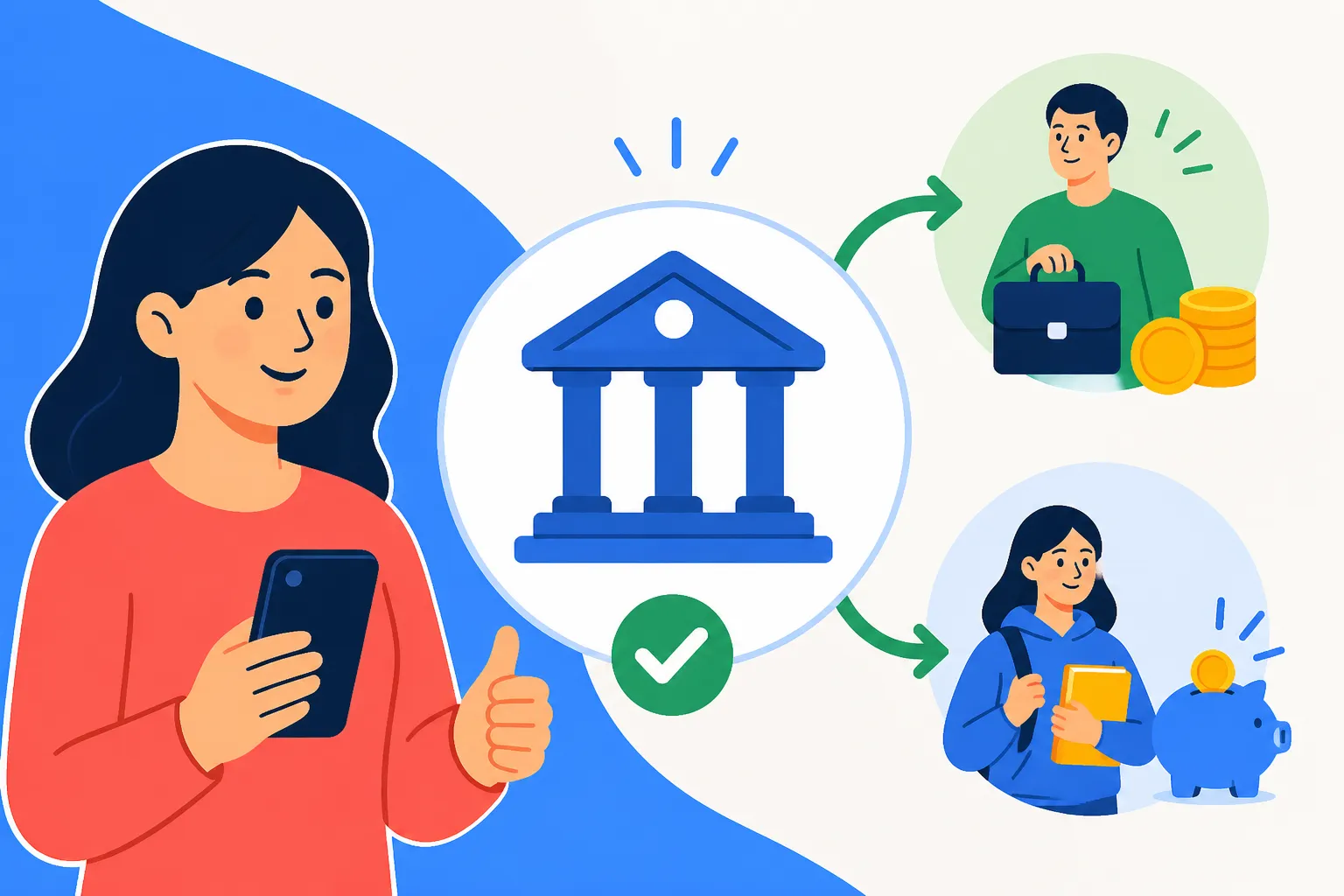
Think of your NemKonto as the central hub for virtually all money coming to you from the Danish government and related institutions. It's not a separate bank account you open; rather, it’s one of your existing Danish bank accounts that you designate as your NemKonto. This designation ensures that payments from municipalities, regions, and the state, as well as many businesses, know exactly where to go.
For instance, your employer will use your NemKonto for your monthly salary. If you're a student, your State Educational Grant (SU) will land directly in this account. Should you be fortunate enough to receive a tax refund from SKAT, that too will be paid into your NemKonto. Even child benefits (Børne- og ungeydelse), sickness benefits (sygedagpenge), or pension payouts (Folkepension, ATP) will be directed here. It simplifies the entire payment process for public authorities, cutting down on administrative costs and ensuring you get your money efficiently. It’s the Danish way of streamlining public disbursements, making sure there’s no confusion about where your funds should land.
The Legal Mandate: Why It's Not Optional
The requirement to have a NemKonto isn't just a suggestion; it's a legal obligation under Danish law for all citizens and residents over the age of 18, as well as for businesses registered in Denmark. This mandate came into effect to standardize public payments, enhance security, and reduce the processing time for millions of transactions annually. You can't truly integrate financially into Denmark without it.
This legal requirement means that once you've obtained your CPR number and opened a Danish bank account, one of your immediate next steps should be to ensure that account is registered as your NemKonto. In most cases, when you open a new bank account at a Danish bank, they will proactively offer to register it as your NemKonto, as they are fully aware of this legal stipulation. This system is managed by a central NemKonto office, ensuring that all public authorities can access the correct payment details linked to your unique CPR number. So, while it might feel like another hurdle, it’s actually designed to make your financial life simpler in the long run.
The Prerequisites: What You Need Before Setting Up Your NemKonto
Before you can even think about designating a NemKonto, there are a couple of fundamental building blocks you absolutely must have in place. Without these, the Danish financial system simply won't know who you are or where to send your money.
CPR Number and Valid ID: Your Danish Identity Cornerstones
The very first, and arguably most crucial, prerequisite for setting up a NemKonto is obtaining a Danish civil registration number, commonly known as a CPR number. This eleven-digit personal identification number is your key to almost everything in Denmark, from healthcare to banking and, yes, your NemKonto. It's the unique identifier that links you to the Danish administrative system. Without a CPR number, you are essentially invisible to the Danish public sector, and establishing a NemKonto is impossible.
You'll get your CPR number when you register your address at your local municipality (kommune) after arriving in Denmark. Alongside this, you’ll need to present a valid form of identification, typically your passport, and often your residence permit if you're a non-EU/EEA citizen. The process of getting your CPR number can feel a bit like a "chicken and egg" situation when you're also trying to secure housing, but it's the foundational step. For a deeper dive into this essential process, you might want to read our guide on Understanding CPR Registration and Your Healthcare Entitlement. Once you have that all-important piece of paper with your CPR number, you’re ready for the next step.
A Danish Bank Account: The Foundation for Your NemKonto
While the NemKonto isn’t a type of bank account, it is an existing Danish bank account that you designate. This means that having a regular Danish bank account is the second essential prerequisite. You can't just pick any international account; it needs to be an account held with a financial institution operating within the Danish banking system.
Opening a bank account in Denmark requires your CPR number and usually your MitID, which is the national digital ID that authenticates you for online banking and public services. Most major Danish banks, like Danske Bank, Nordea, Jyske Bank, and the digital-first Lunar, offer accounts suitable for expats. The process can sometimes take a bit longer than you might expect, often due to regulatory checks, so it's wise to start this as soon as you have your CPR. You can find more detailed information on the requirements and potential delays in our article on Opening a Bank Account in Denmark: Document Checklist and Delays. While services like Wise are fantastic for international money transfers, allowing you to send and receive money across borders with competitive rates, they do not function as a NemKonto. Your NemKonto must be a Danish bank account.
Step-by-Step Guide: Linking Your Bank Account to NemKonto
Once you have your CPR number and a Danish bank account set up, the actual process of linking it to become your NemKonto is surprisingly straightforward. In most cases, it happens almost without you realizing it, but it’s always good to know how to confirm or change it yourself.
The Easiest Way: Your Bank Does It for You (Often Automatically)
For most new expats, the process of assigning a NemKonto is handled seamlessly by their chosen Danish bank. When you go through the account opening procedure, whether in person or digitally, the bank representative will typically ask you if you want to register the new account as your NemKonto. They understand it's a critical step for new residents, and it's a standard part of their onboarding.
You'll usually be presented with a consent form or an option within their online banking system to authorize this designation. Once you've given your consent, the bank will then communicate with the central NemKonto office to link your new account to your CPR number. This usually takes just a few business days to process. You won't receive a separate "NemKonto card" or anything; it's simply a designation attached to your existing bank account details. Banks like Danske Bank, Nordea, and even challenger banks like Lunar, are well-versed in this procedure and aim to make it as smooth as possible for their customers.
Taking Control: Linking or Changing Your NemKonto via Borger.dk
While your bank usually takes care of it, you always have the power to check which account is registered as your NemKonto, or to change it, through the official Danish public service portal, Borger.dk. This is particularly useful if you have multiple Danish bank accounts and want to designate a specific one, or if you simply want peace of mind that everything is correctly linked.
Here’s how you can do it:
- Log in to Borger.dk with your MitID: Navigate to Borger.dk and click on "Log på" (Log in). You'll need your MitID to access your personal information. If you're new to this, our guide on Using MitID for Banking: Security, Device Registration, and App Setup can help you get started.
- Find the NemKonto section: Once logged in, search for "NemKonto" in the search bar. This will lead you to the relevant page where you can manage your designated account.
- View or change your NemKonto: On the NemKonto page, you'll see which account is currently registered. If you wish to change it, you’ll be prompted to select from a list of your Danish bank accounts. Simply choose the one you want to designate as your NemKonto and confirm your choice with your MitID.
- Confirmation: The change usually takes effect within a few banking days. You should receive a digital confirmation in your E-Boks or Mit.dk inbox once the update is complete.
This direct access via Borger.dk ensures transparency and gives you full control over where your public funds are directed, solidifying the digital convenience that is a hallmark of Danish administration.
Receiving Your Salary and SU: How NemKonto Makes It Seamless
The primary benefit of having your NemKonto established is the seamless receipt of regular income and official payments. This system truly integrates you into the Danish financial ecosystem, ensuring that money destined for you arrives efficiently and without fuss.
Employer and Public Funds: The NemKonto Connection
For your salary, the NemKonto system is a game-changer. When your employer processes payroll, they don't need to ask you for your specific bank account number every time. Instead, they simply direct the payment to your CPR number through the NemKonto system. The system then automatically routes the payment to the bank account you have designated as your NemKonto. This means less paperwork for both you and your employer and fewer chances for errors.
Similarly, for public benefits, the NemKonto is indispensable. If you're a student receiving SU (Statens Uddannelsesstøtte), the Education Agency (Styrelsen for Institutioner og Uddannelsesstøtte) will pay your monthly grant directly into your NemKonto. The same applies to tax refunds from SKAT (the Danish tax agency), which often come as a pleasant surprise around April or May. Payments like child benefits, state pension (Folkepension), and unemployment benefits (Dagpenge) from your A-kasse are all routed through this system. To fully grasp how the Danish tax system operates, especially concerning what deductions you might be eligible for and how they impact your salary and potential refunds, delving into guides like Understanding SKAT: Forskudsopgørelse vs. Årsopgørelse Explained can be incredibly helpful. For more complex tax situations, especially as an expat, services like Taxes for Expats can provide specialized guidance to ensure you're maximizing your financial position in Denmark.
Troubleshooting and Common Issues
While the NemKonto system is generally very reliable, occasionally, you might encounter minor hiccups. Knowing what to do can save you a lot of stress.
One common question arises when an employer asks for your bank details manually, rather than just relying on your CPR number. This is rare for a Danish employer, but if it happens, it might indicate they are not fully utilizing the NemKonto system, or perhaps they are an international company with different internal processes. In such cases, provide your Danish IBAN and BIC/SWIFT code, but politely inform them that for public payments, your NemKonto is the standard. If you are an EU/EEA citizen, and for some specific reason, you might be considering assigning a foreign bank account as your NemKonto (which is generally an exception rather than the rule), understanding the stringent conditions for this is crucial, as detailed in How to Assign a Foreign Bank Account as Your NemKonto.
Delays in payments are another potential concern. If your salary or SU doesn't arrive as expected, first check that your NemKonto is correctly registered on Borger.dk. Sometimes, payments can be delayed if your NemKonto was only recently set up or changed, as it takes a few banking days for the system to update. If the issue persists, contact your employer's HR or the relevant public agency (e.g., SU Styrelsen) to inquire about the payment status. Often, it's a simple administrative delay rather than a fundamental problem with your NemKonto setup. Keeping your preliminary tax assessment (Forskudsopgørelse) up to date is also crucial to avoid issues that could affect your net salary, as outlined in Preliminary Tax Assessment (Forskudsopgørelse): Avoiding Tax Debt.
Important Nuances and What NemKonto Doesn't Do
While the NemKonto is a cornerstone of Danish financial life, it's vital to understand its specific function and its limitations. It's not a magic bullet for all your financial needs, and confusing its role can lead to misunderstandings.
Foreign Bank Accounts as NemKonto: The Rare Exception
Generally speaking, your NemKonto must be a Danish bank account. This is the standard rule, designed to keep all public financial transactions within the regulated Danish banking system, ensuring efficiency and security. However, there are very specific and rare exceptions to this rule, primarily for EU/EEA citizens.
Under certain circumstances, an EU/EEA citizen might be able to designate a bank account in another EU/EEA country as their NemKonto. This is typically only possible if you are a cross-border worker (living in one EU/EEA country and working in Denmark) or if you maintain residency in another EU/EEA state while having limited ties to Denmark. The process for doing this is significantly more complex and involves proving your situation to the NemKonto office, often through specific forms on Borger.dk. It is absolutely not the default option, and most expats residing in Denmark will find it much simpler and often mandatory to use a Danish bank account. It's a nuance that can cause confusion, so always default to a Danish account unless you have a very clear and specific reason not to, and have verified its possibility. If this applies to your situation, understanding the strict criteria outlined in How to Assign a Foreign Bank Account as Your NemKonto will be crucial.
Not for Every Transaction: Daily Banking and International Transfers
It's crucial to remember that your NemKonto is specifically for receiving money from Danish public authorities and your employer. It doesn't replace your regular bank account for day-to-day transactions, bill payments, or sending money internationally. Think of it as an inbox for certain types of payments, not your entire financial toolkit.
For your daily spending, withdrawing cash, setting up direct debits (Betalingsservice) for rent and utilities, or making payments with your Dankort or other debit/credit cards, you'll use the full functionality of your chosen Danish bank account. The NemKonto designation simply ensures that public funds know which of your accounts to land in. For sending money out of Denmark to family abroad, or for making international payments, services like Wise are invaluable. They specialize in international money transfers, offering competitive exchange rates and lower fees compared to traditional banks. However, it's important to differentiate: while Wise is excellent for global transactions, it cannot be your NemKonto, nor can it replace the need for a fully functional Danish bank account for your local financial life. For a deeper look into why these services complement but don't replace Danish banks, check out our comparison of Wise vs. Revolut in Denmark: Why They Cannot Replace a Danish Bank.
Here’s a quick overview to help clarify the roles:
| Feature/Purpose | NemKonto (Designated Danish Bank Account) | Regular Danish Bank Account (General Use) | Wise (International Money Transfer Service) |
|---|---|---|---|
| Purpose | Receive public funds (SKAT, SU, benefits) | Daily transactions, bill payments, savings | Send/receive international money transfers |
| Setup | Designate an existing Danish bank account | Open with a Danish bank | Create an account online |
| Requirement | Mandatory for most residents in Denmark | Essential for daily life in Denmark | Optional, for international needs |
| Receiving Salary | Yes, through NemKonto linkage | Yes, if designated as NemKonto | No |
| Receiving SU | Yes, through NemKonto linkage | Yes, if designated as NemKonto | No |
| Paying Bills (e.g., Rent) | No (uses regular bank account functionality) | Yes, via Betalingsservice or bank transfer | No (uses regular bank account functionality) |
| Cash Withdrawals | No (uses regular bank account functionality) | Yes, at ATMs | No (uses regular bank account functionality) |
| International Transfers | No | Possible, but often with higher fees | Yes, primary function |
| Required ID | CPR number, MitID | CPR number, MitID | Varies by country, typically passport |
Establishing your NemKonto is truly one of the most foundational steps to becoming financially grounded in Denmark. From your salary to student grants, tax refunds, and various social benefits, this designated account ensures that money from the Danish public sector and your employer finds its way to you without hassle. It’s a testament to Denmark’s efficient digital infrastructure, streamlining financial processes for everyone. By taking the time to understand and properly set up your NemKonto, you're not just opening a bank account; you're unlocking your access to the Danish financial system and ensuring a smoother, less stressful expat journey. Don't forget that your NemKonto, along with your NemKonto and MitID: The Core of Danish Digital Finance (2027), are integral to your daily life here. Moreover, understanding your entitlements, such as SU for EU/EEA Citizens: Proving "Worker Status" to Get the Grant or even the details of your Danish Pension System: Folkepension, ATP, and Employer Contributions, all hinge on this essential financial cornerstone.
Disclaimer
Please note that the information provided in this guide is for general informational purposes only and does not constitute financial or legal advice. Regulations and requirements in Denmark can change, and individual circumstances vary. While every effort has been made to ensure accuracy as of the publication date (June 2026), you should always consult official sources such as Borger.dk, SKAT, your bank, or a qualified financial advisor for the most current and personalized information. We are not responsible for any actions taken based on the information presented herein.