How to Assign a Foreign Bank Account as Your NemKonto
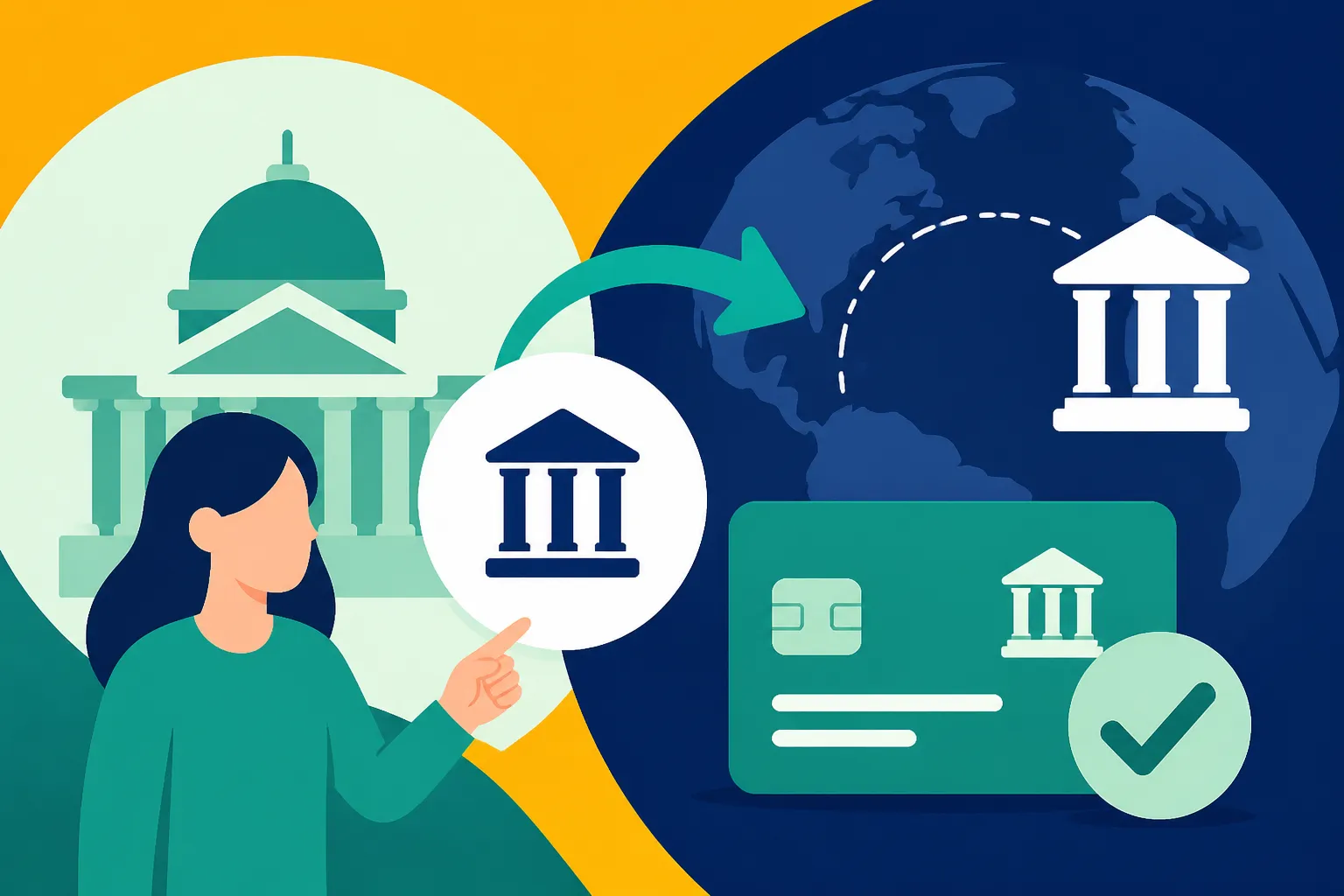
Setting up your life in Denmark often feels like a series of bureaucratic "Catch-22s." You need a CPR number to get a bank account, but you need a bank account to receive your salary or state benefits. This guide solves the immediate crisis by showing you exactly how to bypass the wait for a local bank and assign your existing foreign account as your official NemKonto.
Understanding the NemKonto System in Denmark
The term NemKonto translates literally to "easy account," but as any expat will tell you, the initial setup is anything but easy. In its simplest form, a NemKonto is a normal bank account that you designate as the default destination for all payments from the Danish public sector. This includes tax refunds, student grants (SU), maternity pay, and even salary payments from many private employers who use the national system to streamline their payroll. The genius—and the frustration—of the system is that you can only have one NemKonto at a time.
When you first arrive, the common narrative is that you must open a Danish bank account to participate in society. While having a local account is eventually necessary for things like MobilePay or getting The Dankort: Denmark’s National Debit Card and Why You Want One, it is a little-known fact that the law allows you to use a foreign bank account as your NemKonto. This is a lifesaver for those facing the typical 4-to-8-week waiting period often associated with Opening a Bank Account in Denmark: Document Checklist and Delays.
The challenge is that Danish banks are highly regulated, and the administrative burden of "Know Your Customer" (KYC) rules means they are often slow to onboard new residents. If you have just started a job and your first paycheck is due in three weeks, waiting for a local bank is not an option. By assigning a foreign account, you ensure that your hard-earned money has a place to land while you navigate the local banking landscape.
What is a NemKonto and Why Does It Matter
Every person registered in the Danish Civil Registration System (CPR) is required to have a NemKonto. It is the digital "mailbox" for your money. Without it, the government literally cannot pay you. If you are a student, this is how you receive the State Educational Grant (SU): How International Students Qualify. If you are working, this is where your tax-adjusted salary will be deposited.
The system is linked directly to your CPR number. When the tax authorities (SKAT) realize they owe you money at the end of the year, they don't ask for your bank details; they simply push the money to the NemKonto registered to your ID. This level of automation is part of why NemKonto and MitID: The Core of Danish Digital Finance (2027) is so central to life here. However, for a newcomer, this automation feels like a wall if you haven't yet secured a local account.
It is important to note that while the Danish state is happy to send money to a foreign IBAN, they will not cover the transaction fees or the currency conversion losses. This is where using a service like Wise can be incredibly beneficial. By using a Wise multi-currency account, you can often get a European IBAN that accepts payments more smoothly than a traditional bank back in your home country, especially if you are from outside the Eurozone.
The Catch-22 of CPR and Banking
The "Catch-22" is the most common complaint in expat Facebook groups. To get a bank account, you need a CPR number. To get a CPR number, you need a place to live. To get a place to live, you often need to show you can pay rent from a local account. This cycle can leave you financially stranded for months.
I remember my own arrival in Copenhagen, standing in a bank branch in Nordhavn, being told that my application would take six weeks to "process" because I was a "high-risk" foreign national. I had a salary coming in fifteen days. Assigning my foreign account as my NemKonto was the only reason I could pay my first month's rent. It allowed me to breathe and actually focus on Taxes in Denmark Explained: A-Skat, AM-bidrag, and Marginal Rates rather than worrying about where my next meal was coming from.
Furthermore, many newcomers don't realize that their employer's HR department cannot simply "fix" this for them. If the company uses a standard payroll provider like DataLøn, the system is hard-wired to look for the NemKonto associated with your CPR. If that field is empty, the payment will bounce or fail to trigger.
The Step-by-Step Process of Assigning a Foreign Bank Account
Assigning a foreign account is a two-stage process. Unlike setting up a Danish account—which usually happens automatically when you open the account—a foreign account requires manual registration and a verification step that involves physical mail. This is the part where most people get tripped up. You cannot simply toggle a switch and have it work instantly; there is a mandatory security delay.
First, you must visit the official NemKonto website (nemkonto.dk). While the site has an English version, the deep-level forms can sometimes revert to Danish, so having a translation browser extension is helpful. You will need your MitID to log in. If you don't have your MitID yet, you are in a tougher spot, but generally, the MitID is issued shortly after your CPR registration, often weeks before a bank account is ready.
Once logged in, you will navigate to the section for "Foreign account" (Udenlandsk konto). Here, you will be asked to provide specific details. It is not enough to just give a card number. You need the full IBAN and the BIC/SWIFT code of your bank. If you are using a platform like Wise, these details are easily found in your account settings under the specific currency balance you wish to use.
Using the NemKonto.dk Portal
The portal is your primary tool for managing where your money goes. Once you enter your foreign account details, the system doesn't immediately trust you. This is a high-security environment designed to prevent identity theft. After you submit your IBAN, the NemKonto secretariat will generate a physical "activation letter."
This letter is sent via standard post to the address registered to your CPR number. This is why it is vital that your name is clearly visible on your mailbox. In Denmark, if your name isn't on the box, the mail will be returned to the sender immediately. The letter contains a specific activation code that you must log back into the portal to enter. Only after this code is entered does the foreign account become your active NemKonto.
The total time for this can be anywhere from 5 to 15 business days. If you are approaching a deadline for your first salary, do this the very hour you receive your MitID. Don't wait for the Danish bank to call you back. Having this foreign link established is your safety net. You can always change it later to a local option once you've compared Traditional Banks vs. Digital Banks (Lunar): Which is Best for Expats? to see which fits your lifestyle better.
Required Documentation and Validation
While the online form is the standard route, some people—particularly those from countries with complex banking systems—may be asked to provide additional proof of ownership. This usually happens if the name on your foreign bank account does not perfectly match the name on your Danish CPR record. Even a missing middle name can occasionally trigger a manual review.
The documentation required usually includes a bank statement (not older than three months) that clearly shows your name, the IBAN, and the bank's logo. If you are an American expat, you might also want to consult with a specialist service like Taxes for Expats to ensure that registering this account for Danish income doesn't create unforeseen reporting issues back home, though generally, simply designating an account as a NemKonto is a local administrative matter.
| Feature | Danish NemKonto | Foreign NemKonto |
|---|---|---|
| Setup Time | Automatic (with bank) | 1-3 weeks (via post) |
| Transaction Fees | Generally zero for DKK | Can be high (conversion) |
| Reliability | 100% | High (if IBAN/SWIFT is correct) |
| MobilePay Access | Yes | No |
| Currency | DKK | Usually converted by bank |
The Activation Letter Hurdle
The activation letter is the most "Danish" part of this process—a digital society that still relies heavily on a piece of paper to verify your physical existence. You must be patient. If the letter doesn't arrive within two weeks, do not simply re-apply. Re-applying often cancels the previous code, and if the first letter was just delayed in the mail, you'll end up with a useless code and another 10-day wait for the second one.
If you are living in temporary housing or an Airbnb while searching for a permanent home, make sure the landlord has added your name to the mailbox. This is a common point of failure for new expats. If you can't receive mail, you can't activate your foreign NemKonto, and you're back to square one. Once that code is in the system, though, the "Easy Account" finally lives up to its name.
Pros, Cons, and Financial Realities of Foreign Accounts
While using a foreign account is a fantastic short-term solution, it isn't a permanent strategy for most residents. The primary reason is the cost of currency exchange. The Danish government will send your payment in Danish Kroner (DKK). If your foreign account is in Euros, Pounds, or Dollars, your home bank will perform the conversion at their own, often unfavorable, retail exchange rate.
Beyond the exchange rate, many traditional banks charge a "foreign inward remittance" fee. Expats can lose 200–400 DKK on a single transaction just in bank fees. This is why using a modern fintech solution like Wise is so much more effective. They allow you to hold a balance in DKK, meaning the money arrives exactly as sent, and you can choose when to convert it or use it to pay local bills.
Another factor is your tax compliance. Using a foreign account for your Danish salary means you are still fully liable for Preliminary Tax Assessment (Forskudsopgørelse): Avoiding Tax Debt. Just because the money is landing in a bank in Berlin or London doesn't mean the Danish tax man isn't watching. The employer still reports the income to SKAT before it ever leaves the country. For those with complex international tax lives, working with Taxes for Expats can help navigate the dual-reporting requirements that often arise when you have assets and income flowing across borders.
Currency Conversion and Hidden Fees
The "hidden" costs are what catch most people off guard. When you look at your payslip, it might say you earned 30,000 DKK. But by the time it hits your US or UK bank account, you might find significantly less than the exchange rate suggested. Banks often hide their profit in a "spread"—the difference between the market rate and the rate they give you.
To minimize this, look for accounts that provide a SEPA-compliant IBAN. Even though Denmark isn't in the Eurozone, many Danish banks and the NemKonto system interface most cleanly with SEPA-enabled accounts. If you use a foreign account, try to ensure it is one that doesn't charge a flat fee for receiving international transfers. Otherwise, small payments (like a 150 DKK tax refund) could be entirely swallowed by fees.
Reliability for Salary and SU
In my experience, the NemKonto system is incredibly robust. Once the activation code is entered, the link is solid. I have never heard of a payment being "lost" between the Danish state and a foreign bank, provided the IBAN was entered correctly. The government's systems are updated nightly, so once you see the "Active" status on the portal, you can be confident that the next scheduled payment will find its way to you.
For students, this is particularly vital. The SU system is notoriously rigid. If your banking details aren't in order by the cutoff date (usually the middle of the month), you won't get paid until the following month. Having your foreign account set up as a NemKonto ensures that your first month’s grant arrives on time, allowing you to focus on your studies and Money in Denmark: Banking, Payments, and Financial Setup for Expats instead of checking an empty bank balance.
When Should You Transition to a Danish Bank?
The moment you have your Danish bank account and your MitID is fully connected to it, you should switch your NemKonto over. Most Danish banks will offer to do this for you as part of their "onboarding" package. When you sign the papers for a new account, there is usually a checkbox that says "Make this my NemKonto."
Why switch? Because life in Denmark is built on the DKK. You will eventually want to pay for groceries with a card that doesn't charge you a 3% foreign transaction fee every time you buy a liter of milk. You will also need a local account to use MobilePay, which is the unofficial currency of Denmark for everything from splitting a dinner bill to buying second-hand furniture on DBA.
Furthermore, having a local financial history is essential if you ever plan on Building Credit in Denmark: RKI Registry and Debt Defaulters or applying for a mortgage. While your foreign account served you well in those first few chaotic months, the local system rewards those who fully integrate into its financial infrastructure.
The Dankort and Local Convenience
The Dankort is more than just a debit card; it is a national symbol of efficiency. It has the lowest transaction fees for merchants, which is why some small shops or canteens still prefer it over international Visas or Mastercards. You can only get a Dankort through a Danish bank. Once you have your local account and your NemKonto is pointed toward it, you'll find that managing your daily expenses becomes significantly cheaper and more streamlined.
Additionally, some local services, like certain insurance providers or gym memberships, prefer "Betalingsservice" (automated direct debit), which is much easier to set up with a Danish account. Transitioning your NemKonto to a local bank is the final step in your financial "landing" in Denmark. It signals that you are no longer just a visitor, but a resident who is part of the system.
Future-Proofing Your Finances
As you settle in, you'll start thinking about more than just your first paycheck. You'll look at your Danish Pension System: Folkepension, ATP, and Employer Contributions and wonder how to optimize your savings. Having a local bank account allows you to open an Aktiesparekonto (an investment account with tax benefits) and other savings vehicles that aren't available to you if you are only using a foreign bank.
The transition from a foreign NemKonto to a Danish one is a rite of passage. It marks the end of the "emergency" phase of your move. By following the steps in this guide, you have used the foreign account as a bridge—a way to outsmart the bureaucratic delays and keep your life moving forward while the system catches up with you.
Disclaimer
This guide is for informational purposes only and does not constitute legal, financial, or tax advice. Banking regulations in Denmark and international wire transfer rules are subject to change. Always verify the current requirements on the official NemKonto.dk website and consult with a professional accountant or tax advisor regarding your specific international financial obligations.