How to Claim Childcare Deductions on Your Danish Tax Return
Moving to Denmark with children is a massive logistical undertaking, often involving a steep learning curve regarding the local tax system. Many expats are confused by high tax rates and miss out on significant savings because they don't know the difference between a municipal subsidy and a reportable tax deduction. This guide solves that confusion by detailing exactly how to claim childcare-related expenses on your tax return.
Understanding the Danish Philosophy of Childcare Costs
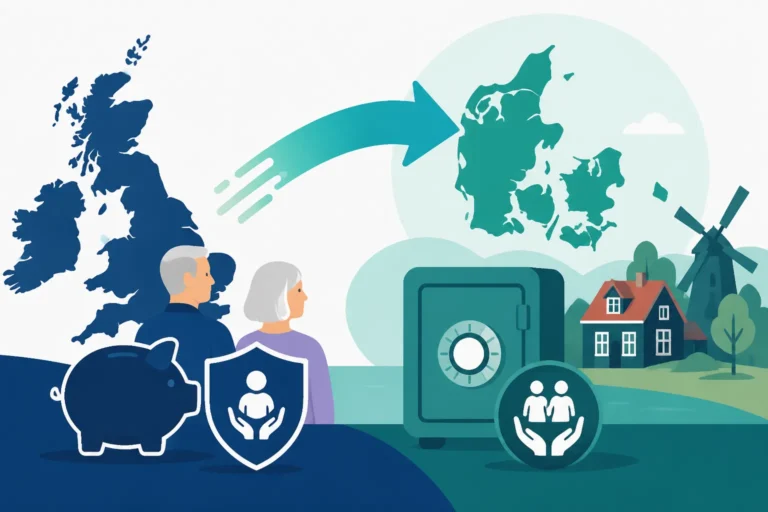
The first thing you realize when you land in Copenhagen or Aarhus is that the "cost" of childcare is handled differently than in the US or the UK. In many countries, you pay a massive private fee and then try to claw some of it back through complex tax credits. In Denmark, the system is front-loaded. The government already pays for roughly 75% of the cost of your child's spot in a vuggestue (nursery) or børnehave (kindergarten). Because the price you see on your monthly bill is already heavily subsidized, you generally cannot deduct those specific monthly nursery fees from your income tax.
However, this does not mean there are no financial benefits to be claimed. Many foreigners arrive and assume that because the base fee isn't deductible, nothing else is. This is a mistake that can cost you thousands of kroner annually. You need to understand how the system categorizes "service" versus "care" and how your residency status impacts your eligibility for the quarterly child benefit. When I first moved here, I spent months overpaying because I hadn't properly linked my children to my tax profile via the NemKonto and MitID: The Core of Danish Digital Finance (2027) system.
It is also vital to keep your global tax obligations in mind. If you are an American expat, for instance, your Danish tax payments and childcare arrangements have implications for your US filings. Services like Taxes for Expats can be invaluable here, helping you navigate the Foreign Earned Income Exclusion or the Foreign Tax Credit to ensure you aren't being taxed twice on the same income while you raise your family in the Nordics.
The Servicefradrag: Claiming Babysitting and Nanny Services
While you can't deduct the bill from the municipal daycare, you absolutely can deduct the costs of private childcare services, such as a babysitter or a nanny, under the "Servicefradrag" (service deduction). This is part of a Danish initiative to discourage "black market" labor and encourage residents to hire legal help for household tasks. If you pay a teenager from down the street or a professional nanny to watch your kids so you can work or have a night out, that labor cost is partially deductible.
To qualify for this, the payment must be made electronically. You cannot pay in cash and expect a deduction. It is advisable to use a bank transfer or a service like Wise if you are paying a provider who might be transitioning between accounts or if you need to keep a clear, digital paper trail for your records. The person you hire must be at least 18 years old by the end of the year, and they must have a Danish CPR number and be liable for tax in Denmark.
The amount you can deduct changes annually. For the 2024–2026 period, the deduction is typically around 11,900 DKK per adult in the household. This means if you and your partner live together, you can combinedly deduct nearly 24,000 DKK in labor costs for childcare and household services. When you enter this into your Preliminary Tax Assessment (Forskudsopgørelse): Avoiding Tax Debt, you effectively lower your taxable income, which results in a higher take-home pay each month.
What Qualifies as Deductible Childcare Labor
| Service Type | Eligibility | Requirement |
|---|---|---|
| Municipal Daycare Fees | No | Already subsidized by the state |
| Private Babysitting (at home) | Yes | Provider must be 18+ and paid digitally |
| Au Pair Services | Yes | Deductible under service tax rules |
| Nanny (Permanent) | Yes | Must be reported as an employer/employee |
Child Support Deductions: Børnebidrag
If you are a divorced or separated expat living in Denmark and you pay child support (børnebidrag) to a parent living either in Denmark or abroad, you are entitled to a tax deduction on those payments. This is a significant relief that many foreigners overlook. The Danish tax authority, SKAT, allows you to deduct the portion of the child support that exceeds the "basic amount" (normalbidraget), though in practice, most of the support paid is deductible as long as there is a written agreement or a decision from the Agency of Family Law (Familieretshuset).
The complexity arises when the payments are made to a parent living outside of Denmark. You must be able to document the relationship and the actual transfers. Using Wise for these international transfers is highly effective because it provides the "proof of payment" that SKAT often requests during an audit. You should also consult with Taxes for Expats if these payments are being made from a US-based income stream, as the tax treatment of alimony and child support differs significantly between the Danish and American systems.
To claim this, you must navigate to your Understanding SKAT: Forskudsopgørelse vs. Årsopgørelse Explained portal and locate the specific box for child support (usually field 56). If you don't enter this in your preliminary assessment, you will eventually get the money back as a tax refund, but it is much better for your monthly cash flow to have it factored in from the start of the year.
The Child and Youth Benefit (Børne- og ungeydelse)
While technically not a "deduction" that reduces your tax bill, the "Børne- og ungeydelse" (often called børnepenge) is the primary way the Danish state offsets the cost of raising children. This is a tax-free payment made to parents every quarter. For many expats, this "check in the mail" is a lifeline that covers the monthly cost of the nursery. However, it is not always automatic for foreigners. You must meet certain residency requirements, often referred to as the 6-month rule or the "earned right" principle based on your time spent working in Denmark or an EU country.
When you first arrive, you need to ensure that your children are properly registered in the CPR system. You can read more about this in our guide on Moving to Denmark with Family: Schools, Childcare, and Logistics. Once registered, Udbetaling Danmark will usually start the payments, but if you are from a non-EU country, you may need to provide additional documentation regarding your work permit and your social security coverage.
It is also important to note that since 2022, the benefit is typically split 50/50 between both parents if they live together. This caught many of my friends off guard when they saw their expected payment halved in their bank account. If you are managing your family finances across borders, keeping these payments in a dedicated Danish account or using Wise to manage the currency exchange for family expenses can help keep your budget predictable.
Step-by-Step: Updating Your Tax Assessment
To actually see the benefit of these deductions, you have to be proactive. SKAT does not know you hired a babysitter, and they might not know about your child support obligations. You must log in to the TastSelv system using your MitID. This process can be intimidating because of the terminology, but it is the only way to ensure you aren't leaving money on the table.
First, go to your Preliminary Tax Assessment (Forskudsopgørelse): Avoiding Tax Debt. You will want to look for the "Servicefradrag" section for your babysitting costs. You enter the total amount you expect to pay for the year. For child support, you enter the annual sum in the designated field. Once you save these changes, SKAT will calculate a new tax card (skattekort) and send it to your employer. Your monthly paycheck will then increase because your employer will withhold less tax.
If you miss the deadline for the preliminary assessment, don't panic. You can still claim these amounts when the Tax Deductions in Denmark: Commuting (Kørselsfradrag) and A-Kasse window opens in March for the previous year’s Annual Tax Assessment Notice (Årsopgørelse): Claiming Deductions. Just keep every receipt and bank statement. If you're a US citizen, make sure to share these final Danish tax statements with Taxes for Expats so they can accurately reflect your Danish tax liability on your Federal return.
Common Pitfalls and Resident Advice
One of the biggest mistakes I see expats make is assuming that "private" childcare (like a private nursery) is deductible in the same way as a babysitter. It isn't. Only the "service" element of home-based care falls under the Servicefradrag. Furthermore, many parents forget to account for the Costs of Børnehave: Sibling Discounts and Municipal Subsidies. If you have more than one child in the system, the municipality automatically gives you a 50% discount on the cheapest spot. This isn't a tax deduction, but a direct reduction in your bill, and it happens automatically through the Digital Pladsanvisning.
Another trap is the "6-month rule" for the child benefit. If you move to Denmark on the 2nd of the month, that month might not count toward your accrual for the benefit. It is essential to have enough savings—perhaps in a multi-currency Wise account—to cover the full, non-subsidized price of childcare if your registration is delayed or if you haven't yet met the residency requirements for the state subsidy.
Lastly, always remember that the Danish tax system is based on trust, but it is backed by heavy auditing. If you claim a deduction for a babysitter, make sure you have their name, CPR number, and the dates they worked. If SKAT asks for proof and you can't provide it, you will have to pay the money back with interest.
Summary of Childcare Financial Benefits
- Municipal Daycare: No tax deduction, but price is 75% subsidized by the state.
- Servicefradrag: Up to 11,900 DKK per adult for private babysitting labor.
- Child Support: Deductible if documented via bank transfer or agreement.
- Børnepenge: Tax-free quarterly payment, split between parents, based on residency.
- Sibling Discount: 50% off the second child’s daycare bill, applied automatically.
By staying on top of these details, you can significantly reduce the financial stress of relocating your family. Whether you are calculating your Taxes in Denmark Explained: A-Skat, AM-bidrag, and Marginal Rates or simply trying to figure out how to afford a night out in Copenhagen, knowing these deductions is key to a successful expat life. Don't hesitate to reach out to professionals like Taxes for Expats if your situation involves complex cross-border income, as the peace of mind is worth far more than the fee.
Disclaimer
This article is for informational purposes only and does not constitute professional tax or legal advice. Tax laws in Denmark and the requirements for deductions change frequently. You should always consult with the official Danish tax authority (Skattestyrelsen) at skat.dk or speak with a certified tax professional regarding your specific circumstances.