Moving to Denmark with Family: Schools, Childcare, and Logistics
Moving a whole family to Denmark is a monumental task that often leaves parents feeling buried under administrative paperwork while simultaneously worrying about their children’s happiness in a new culture. This guide provides a comprehensive roadmap for navigating the Danish school system, securing reliable childcare, and managing the complex logistics of relocating your household to one of the most family-centric countries in the world.
Planning the Big Move: Logistics and Documentation
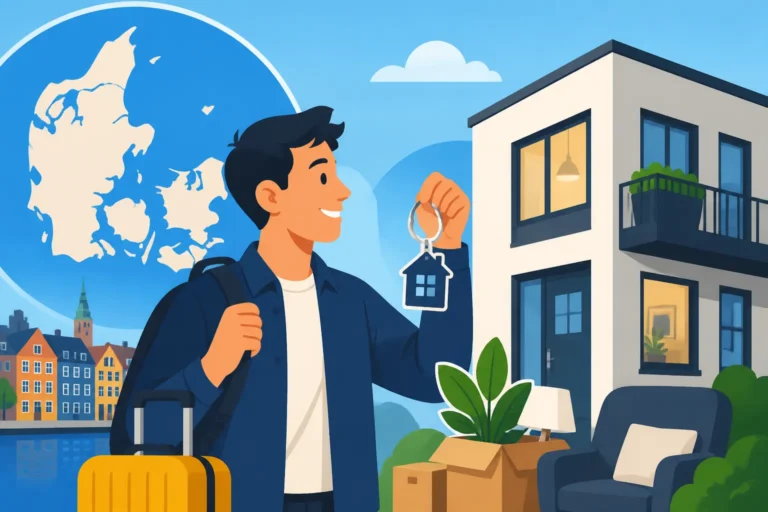
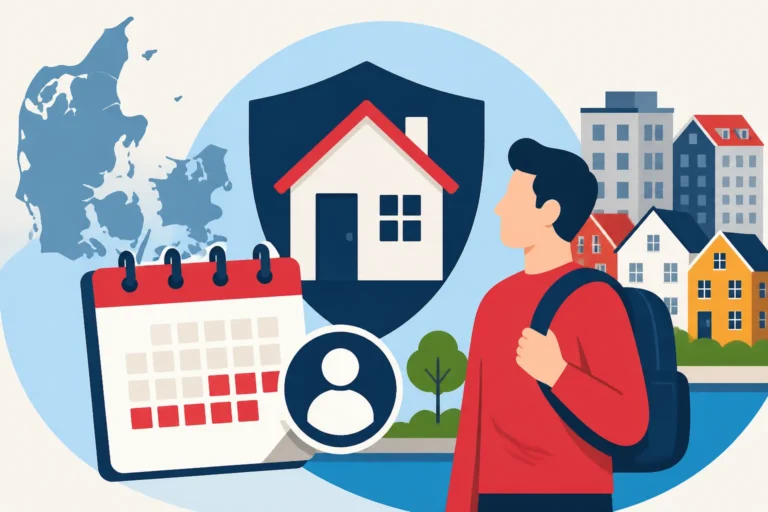
The very first hurdle you will encounter is the infamous "Catch-22" of Danish administration: you cannot get a CPR number without a permanent address, but finding a permanent address often requires showing that you are already integrated into the system. For families, this is doubly stressful because your children cannot be enrolled in a public school or daycare until they have that ten-digit civil registration number. You need to approach this with a strategy that involves securing a rental that allows for CPR registration immediately upon arrival.
When you are initially scouting for a place to live, it is vital to understand the concept of CPR Bopælspligt: The 180-Day Residency Requirement for Housing. This rule dictates that anyone living in a residence must be registered at that address if they stay there for more than a few months. Some short-term rentals or sub-leases specifically forbid CPR registration to avoid tax implications for the owner. Always ask upfront: "Can I register my family’s CPR at this address?" If the answer is no, keep looking, as you won't be able to access healthcare or schooling without it.
To bridge the gap between your arrival and finding a long-term home, many families utilize services like Spotahome to find vetted, mid-term apartments that specifically cater to expats and allow for legal registration. This can save you from the "scam-heavy" world of social media rentals. While you are in this transition phase, staying connected is another immediate priority. Before you even land at Kastrup, getting an eSIM from a provider like Airalo ensures you have data for Google Maps and translation apps the second you touch down, preventing that frantic search for airport Wi-Fi while wrangling tired children and luggage.
Finally, do not underestimate the complexity of moving your physical belongings. If you are moving from outside the EU, the customs process for "personal effects" can be rigorous. You will need to provide documentation proving you have lived abroad for at least twelve months to avoid the hefty 25% VAT on your own furniture. Keep your employment contract and previous utility bills from your home country handy, as the Danish Customs Agency (Toldstyrelsen) may request these to verify your expat status.
The Danish School System: Folkeskole and Beyond
The Danish public school system, known as the Folkeskole, is the backbone of society and covers both primary and lower secondary education (ages 6 to 16). For many expats, the lack of hierarchy and the focus on "learning through play" in the early years can be a culture shock. There is a heavy emphasis on group work and social empathy rather than rote memorization or frequent standardized testing. This approach is designed to create well-rounded citizens, but it may feel "too relaxed" if you are coming from a highly competitive academic environment.
In the public system, your child is usually assigned to a Garantiskole (guaranteed school) based on your registered CPR address. If you move into a specific neighborhood because you like the local school, you are generally guaranteed a spot. However, if that school is at capacity, the municipality may offer a spot at a nearby institution. It is worth noting that Finding an English-Speaking Pediatrician for Your Child is often easier in larger cities like Copenhagen or Aarhus, where the schools also have more experience with international families.
Integration Classes (Modtagelsesklasser)
If your children are older and do not speak Danish, the municipality will likely place them in a Modtagelsesklasse or "reception class." These are specialized groups within public schools where the primary focus is intensive Danish language acquisition alongside standard subjects. The goal is to transition the child into a regular Danish-speaking classroom within one to two years. While this is a free and effective way to integrate, it can be socially isolating for some children initially, so parental support during this phase is crucial.
Many parents worry about the "language gap" and how it affects their child's confidence. In my experience, younger children (under age 8) tend to soak up the language through immersion remarkably fast. For teenagers, however, the transition is steeper. This is where Danish Language Modules 1-6: Progression and the Prøve i Dansk Exams become relevant for the parents too; showing your children that you are also struggling and learning the language can be a powerful bonding experience and sets a great example for their own integration.
International Schools (Privatskole)
For families who are only planning to stay in Denmark for a few years, or for those with older children who need to continue an IB or British curriculum, international schools are a popular choice. Unlike many other countries, international schools in Denmark receive significant state subsidies, making them much more affordable than their counterparts in London or Singapore. However, you should still expect to pay a monthly tuition fee, and waiting lists can be notoriously long—sometimes stretching to two or three years for the most popular schools in Hellerup or Østerbro.
Choosing between a public school and an international school is a deeply personal decision. If you choose the international route, your child will be surrounded by other expats, which provides an immediate social circle but may slow down their integration into the local Danish community. Conversely, a Public vs. Private Speech Therapy (Talepædagog) for Bilingual Children comparison might show that public schools offer more integrated support for language development that is funded by the local kommune.
Childcare in Denmark: Vuggestue and Børnehave
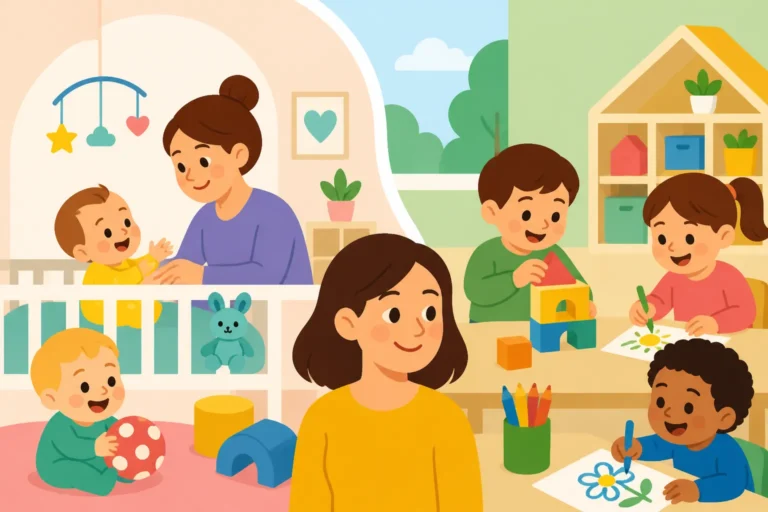
Childcare in Denmark is world-class, but the system of "Pladsanvisning" (centralized enrollment) can be a headache for the uninitiated. The system is divided into Vuggestue (nursery for ages 0-3) and Børnehave (kindergarten for ages 3-6). Most Danish children start daycare around age one, which coincides with the end of the standard parental leave period. The philosophy here is heavily focused on the outdoors; do not be surprised to see toddlers out in the rain or snow wearing high-quality "thermo-tøj" (thermal clothing).
To get a spot, you must sign up through your municipality’s online portal using your MitID. This is where the timing gets tricky. You are encouraged to sign up as soon as you have a CPR number, or even before you arrive if you have a confirmed address. The municipality guarantees a spot for your child (the Pasningsgaranti), but they do not guarantee a spot in your preferred nursery. You might be offered a spot in a facility several kilometers away, which can be a logistical nightmare if you don't have a car.
Costs and Municipal Subsidies
One of the greatest perks of living in Denmark is that the government subsidizes approximately 75% of childcare costs. The remaining 25% is paid by the parents, and the price is capped regardless of your income. In 2026, you can expect to pay roughly 3,500 to 4,500 DKK per month for a full-time nursery spot, which often includes a healthy organic lunch program. If you have more than one child in the system, you are eligible for a "sibling discount" (søskenderabat), which usually means you pay half price for the cheaper of the two spots.
It is important to understand that Understanding CPR Registration and Your Healthcare Entitlement is the foundation of these subsidies. Without a registered address, you will be charged the "full price" for childcare, which can exceed 12,000 DKK per month. Always ensure your papers are in order before the first of the month to avoid a massive bill that can't be retroactively corrected easily.
The Outdoor Philosophy and "Skovbørnehaver"
Danish childcare facilities are famous for their "forest kindergartens" (Skovbørnehaver), where children spend the majority of their day in the woods, regardless of the weather. They learn to climb trees, identify insects, and use basic tools. This builds incredible physical resilience and independence. As an expat parent, your biggest job will be ensuring your child has the right gear. You will hear the phrase "There is no such thing as bad weather, only bad clothing" a thousand times.
If your child has specific needs or chronic health issues, the daycare system is very supportive. For example, Managing Chronic Conditions (Diabetes, Asthma) in the Danish System often involves the nursery staff working closely with your GP to ensure medication is administered correctly. The communication is usually handled through an app called "Aula," which is the universal digital platform for schools and daycares in Denmark. Mastering Aula is essential for knowing when to pack extra socks or when there is an outbreak of hand, foot, and mouth disease.
Healthcare for the Whole Family
Once you receive your The Yellow Health Card (Sundhedskort): Your Key to Danish Healthcare, your family is fully covered by the Danish national health insurance. There are no co-pays for doctor visits, hospital stays, or emergency care. For a family moving from a country with private healthcare, this is a breath of fresh air, though the system operates quite differently than you might expect. Everything starts with your General Practitioner (GP).
In Denmark, you do not go directly to a specialist like a pediatrician or a dermatologist. Your GP acts as the gatekeeper. If your child has a persistent ear infection, you see the GP first, and they will provide a referral if necessary. For many expats, The Role of the GP: Why You Cannot Go Directly to a Specialist is a source of frustration, but the system is designed to ensure that specialists are only seeing the most complex cases.
Health Visitors (Sundhedsplejerske)
For families with infants or toddlers, the Sundhedsplejerske (Health Visitor) is your most important ally. Shortly after you register your address, a specialized nurse from the municipality will contact you to schedule home visits. They monitor the child's growth, development, and the overall well-being of the parents. They are also the ones who help you find local Maternity Care Timeline: Scans (Nakkefold and Misdannelse) Explained resources if you are planning to expand your family in Denmark.
The health visitor system is completely free and highly proactive. They can help with everything from breastfeeding issues to sleep training and even navigating the "post-patrum blues." They also organize "Mødregrupper" (mothers' groups) or "Fædregrupper" (fathers' groups), which are essential for Social Integration: Making Friends and Understanding Danish Etiquette in the early months of your move.
Dental Care for Children
Dental care in Denmark is entirely free for everyone under the age of 18 (and in some municipalities, up to age 22). The "Børnetandpleje" (Children’s Dental Care) is usually managed through clinics located directly at or near the local schools. You will receive an invitation in your Digital Post (e-Boks) when it is time for your child’s checkup.
This is a fantastic benefit, but it does mean that parents need to be diligent about checking their digital mail. If you miss an appointment, you may have to wait months for a new one. For adults, the story is different, and you might want to look into Dental Care in Denmark: Costs, Subsidies, and Private Insurance Options to understand why your own checkup will come with a bill while your child's is free.
Daily Life and Family Integration
Living in Denmark with a family requires a shift in how you handle daily logistics. The most obvious change is transportation. While Denmark has an excellent public transit system, many families find that a car is more of a burden than a benefit in cities like Copenhagen or Aarhus due to high taxes and parking costs. Instead, the "Christiania Bike" or cargo bike becomes the primary family vehicle.
Investing in a high-quality cargo bike allows you to drop two kids at daycare, pick up groceries, and commute to work all in one go. If you are worried about the cost, you can often find used ones on DBA (the Danish version of eBay) or use Using Swapfiets vs. Buying a Used Bike on DBA as a starting point. Just remember that biking with children requires a helmet for the little ones and a very strong lock for the bike.
Socializing through Foreningsliv
Danes are famously private, but they open up through "Foreningsliv"—the culture of associations and clubs. If you want your family to integrate, you must sign your children up for a local sports club, whether it’s football, gymnastics, or swimming. This is where you will meet other parents on the sidelines. It is much easier to make "parent friends" during a cold Tuesday evening at the local sports hall than it is at the office.
This commitment to clubs is so ingrained that the government even offers subsidies for children from low-income families to participate. For expats, this is the "secret sauce" to feeling at home. Don't be afraid to volunteer to bring sliced oranges or help set up for a tournament; these small gestures are the currency of Danish social life. You might also find that English-Speaking Jobs in Denmark: Industries That Hire Without Danish often value this kind of local community involvement on a CV, as it shows you are here to stay.
Supermarket Survival and Family Budgets
The cost of living in Denmark is high, and groceries can take a significant bite out of your budget. Supermarkets like Netto, Rema 1000, and Lidl are the go-to for budget-conscious families, while Føtex and Irma (now mostly integrated into Coop) offer more premium options. One of the first things you'll notice is the "Pant" system on bottles and cans. Teaching your children to collect and return these to the "Pantstation" is a great way to introduce them to Danish sustainability—and they get to keep the change!
When budgeting, remember that many hidden costs are covered by the state, but you will still need to manage Cost of Living in Denmark 2026: Budgets for Singles and Families effectively. For example, while the tap water is safe and delicious, it is incredibly "hard" (high in calcium/kalk). You will spend a surprising amount of time descaling your kettle and coffee machine, which is a small but ubiquitous part of Danish home maintenance.
Financial Support and Benefits
Denmark offers several financial safety nets for families. The most well-known is the "Børne- og ungeydelse," often called børnepenge (child benefit). This is a tax-free payment made to parents every quarter until the child turns 18. The amount depends on the child's age, with higher payments for infants. This money is paid out automatically to your NemKonto once your CPR registration is complete.
To qualify for the full amount, you usually need to have lived or worked in Denmark (or another EU country) for a certain period. If you are a non-EU citizen, you might only receive a percentage of the benefit in the first few years. It’s a significant help with the cost of winter clothes and extracurricular activities. Additionally, Child Sickness Days (Barns Første Sygedag): Your Rights as a Parent are a standard part of Danish employment contracts, allowing you to stay home with a sick child without losing pay.
| Category | Public System (Folkeskole/Vuggestue) | International/Private Options |
|---|---|---|
| Language | Danish (Integration classes available) | English, French, German, etc. |
| Cost (Childcare) | Subsidized (approx. 3,500-4,500 DKK/mo) | Higher, but still state-subsidized |
| School Fees | Free | 3,000 – 8,000 DKK/mo average |
| Registration | Based on CPR address | Application/Waiting list |
| Social Integration | High (Local neighborhood focus) | High (International community focus) |
| Philosophy | Play-based, flat hierarchy | Varies by curriculum (IB, British, etc.) |
Summary of the Moving Process
Success in Denmark as a family depends on your ability to front-load the administrative work. Start by securing a "CPR-legal" address, get your MitID and NemKonto set up as soon as possible, and don't be afraid to dive into the local community. Use resources like Sundhed.dk and MitID: Navigating Denmark’s Digital Health Portals to stay on top of your family’s records.
While the first six months may feel like a constant battle with digital systems and rain-soaked bike rides, the payoff is a high quality of life, a safe environment for your children, and a work-life balance that is virtually unmatched elsewhere in the world. Embrace the "Hygge," buy the best rain gear you can afford, and remember that everyone else in the playground is just as cold as you are—they're just better at hiding it.
Disclaimer
This guide is intended for informational purposes only and does not constitute legal, financial, or professional immigration advice. Rules regarding visas, school enrollment, and social benefits in Denmark change frequently. Always consult the official websites of the Danish Ministry of Education, the Danish Immigration Service (SIRI), and your local municipality (Kommune) for the most current regulations and requirements.