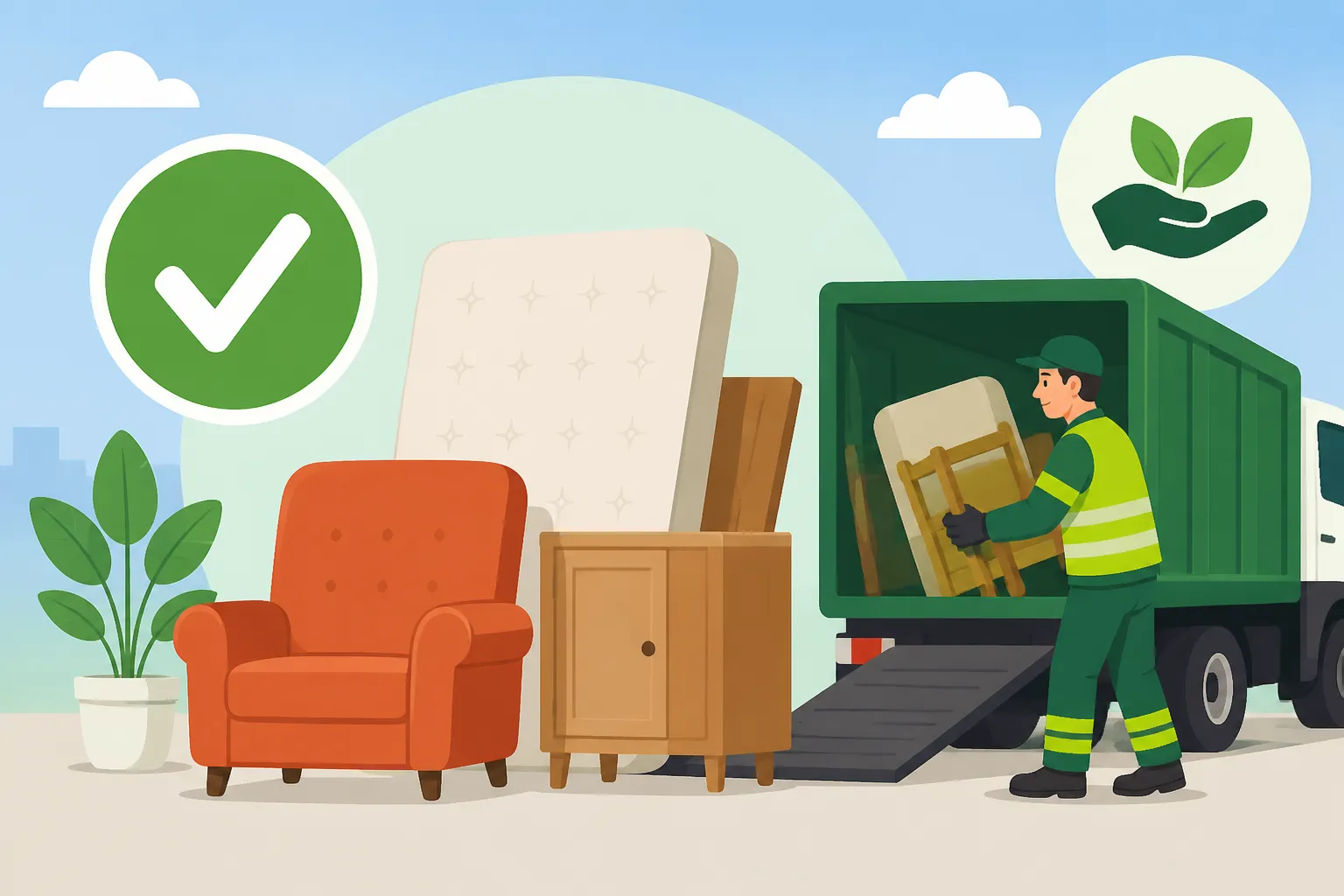
Storskrald: How to Throw Away Furniture and Large Garbage Legally
You've just moved into your new Danish apartment, delighted to finally have a place, and then it hits you: what on earth do you do with that old, broken desk the previous tenant left behind? Or maybe you've been here a while and are upgrading your sofa, but the old one is far too big for the skraldespand. Navigating waste disposal for large items in Denmark, specifically what's known as storskrald, can be surprisingly complex for newcomers, often leading to frustration and confusion. This comprehensive guide will walk you through the Danish storskrald system, ensuring you understand how to legally and responsibly get rid of your bulky items, avoiding fines and headaches.
Understanding Storskrald: More Than Just "Big Trash"
When you first hear "storskrald," your mind might immediately go to the image of any large item you want to throw away, but in Denmark, it's a bit more nuanced. Storskrald refers to bulky waste items that are too large to fit into your regular household waste bins but are not suitable for specialized recycling categories like glass, paper, or plastic packaging, nor are they hazardous waste. Think old furniture, certain electronics, large garden waste, or even old bicycles that have seen better days. It's the municipality's way of ensuring that these items don't end up illegally dumped or clogging up the regular waste stream, while also trying to facilitate some level of material recovery.
The key here is that storskrald isn't a free-for-all; it's a structured service with specific rules that vary depending on your kommune (municipality). These rules dictate what can be collected, how it needs to be sorted, and when or how you can arrange for collection. Many expats initially assume they can just leave large items on the curb, as might be the practice in their home countries. Unfortunately, that's a quick route to a stern letter from the kommune or even a fine, as Danish waste management is highly regulated and emphasizes proper sorting. It's a system designed to keep public spaces clean and to maximize recycling efforts, which means every item has its designated pathway. For those still getting their feet wet with Danish living, understanding these distinctions is as crucial as knowing how to manage your regular Garbage Sorting in Denmark: Bio-waste, Plastic, and Pant Systems.
What Counts as Storskrald and What Doesn't?
It's tempting to think "if it's big, it's storskrald," but that's a common trap. The definition is quite specific, and it's vital to get it right. Generally, storskrald includes items from your household that are too large for your communal bins. This typically encompasses:
- Furniture: Sofas, chairs, tables, beds, mattresses, wardrobes (often disassembled).
- Carpets: Rolled up and tied.
- Certain large garden waste: Like branches, if allowed by your kommune and bundled correctly (always check local rules).
- Bicycles: Old, broken bikes that can no longer be used.
- Large cardboard: Flattened and bundled.
However, there are many items that do not fall under the storskrald category and need separate disposal methods. These often include:
- Electronic Waste (E-waste): TVs, computers, refrigerators, washing machines, microwaves. These contain valuable materials and sometimes hazardous components, so they usually have their own collection points or can be taken to a genbrugsstation (recycling center).
- Hazardous Waste (Farligt affald): Chemicals, paint, batteries, light bulbs, medicine. These require special handling due to environmental and health risks.
- Construction Waste (Byggeaffald): Bricks, concrete, plasterboard, tiles, insulation. If you've been doing renovations, this is a separate stream, often requiring you to rent a container or take it to a genbrugsstation yourself.
- Textiles/Clothing: While bulky, clothes, shoes, and fabric scraps are typically collected through textile donation bins or at recycling centers, not storskrald.
- Regular Household Waste: Anything that fits in your normal trash bins (food scraps, small plastics, paper, glass bottles) is explicitly not storskrald.
The best practice is always to consult your specific kommune's website. They will have a detailed list of what they accept and how it needs to be prepared. Ignoring these distinctions can lead to your items not being collected, or worse, incurring a charge for improper disposal. It's one of those little administrative quirks that truly defines Renting in Denmark: Complete Guide for Expats (2027) and setting up your life here.
Navigating Your Municipality's Storskrald Rules
As an expat, one of the biggest lessons you learn in Denmark is that the kommune is king. Local rules and regulations govern so much of daily life, and waste management, including storskrald, is no exception. While the general principle of storskrald is similar across the country, the specifics of collection frequency, booking systems, and item restrictions can vary significantly between Copenhagen, Aarhus, Odense, or even smaller towns. It's not a one-size-fits-all situation, and assuming your friend in another city has the same rules as you do is a recipe for error.
Your first port of call should always be your kommune's official website. Look for sections titled "affald" (waste), "storskrald," or "genbrug" (recycling). Most kommuner have dedicated English sections or at least translation tools available for their main pages. This is where you'll find the most current and accurate information tailored to your specific address. Forget anecdotal advice from Facebook groups or well-meaning neighbors; the kommune website is your bible for storskrald.
Checking Your Kommune's Website and Collection Schedule
Every kommune will have a digital presence, and this is where you'll find their affaldskalender (waste calendar) or information on booking storskrald collection. For instance, if you live in Copenhagen (Københavns Kommune), you'll visit the Teknik- og Miljøforvaltningen section of their website. They generally offer scheduled collections where you book a pickup for specific types of storskrald at certain times of the year, or on demand. You might need to log in with your MitID, which underscores how central digital identification is to life in Denmark – from banking to government services, and yes, even getting rid of an old lamp. If you're new to this, remember to update your E-Boks: Don't Forget to Update Your Digital Mail Address to receive important notifications from your municipality about waste collection changes.
In Aarhus Kommune, the approach might be slightly different. They also emphasize sorting and often have specific dates for different types of storskrald or a booking system via their affaldsportal. Similarly, Odense Kommune and other municipalities will have their own online portals.
Here’s a general guide on what to look for on your kommune's waste management page:
- Affaldskalender (Waste Calendar): Many kommuner operate on a fixed schedule, perhaps collecting storskrald once a month or every other month in your specific area. You enter your address and it tells you the next collection date for various waste types.
- Booking System: Some kommuner require you to actively book a storskrald collection. This is often done online, where you specify the items you want collected. This system allows the municipality to plan their routes more efficiently. The booking window might be limited (e.g., you can only book between certain dates for a pickup the following week).
- Rules for Preparation: This is crucial. Your kommune will tell you if furniture needs to be disassembled, if branches need to be tied in bundles of a certain size, or if items need to be placed in specific clear bags.
- Placement Rules: Where exactly should you put your storskrald? Is it at the curb, by the common waste bins, or another designated spot? This is particularly important for residents in apartments who share common areas.
A quick search on your kommune's website will usually clarify all these points. And if you're ever in doubt, don't hesitate to call their waste department directly. Many kommuner have English-speaking staff who can guide you through the process.
Rules for Apartment Dwellers vs. House Owners
The physical act of disposing of storskrald can also differ depending on your housing situation.
For apartment dwellers, especially in cities, space is often at a premium, and communal areas are tightly regulated. You cannot just leave your old mattress in the courtyard. Your building management (ejendomskontor or administrator) or your landlord will often have specific rules in place that align with the kommune's storskrald guidelines.
- Designated Areas: There might be a specific storskrald room, a fenced-off area in the courtyard, or a designated spot by the main waste bins where items should be placed on collection day.
- Timing: Your building might have an internal rule that storskrald can only be placed out the evening before collection, to avoid clutter and maintain aesthetics.
- Communal Bins: Some apartment complexes have large, dedicated bins for certain storskrald items like cardboard or metal, which are emptied more frequently than the general storskrald collection.
- Who Pays? If your building management arranges for frequent storskrald pickups, the cost is usually covered by your fællesudgifter (common expenses) as part of your rent or housing association fees, similar to how Aconto Payments: How Danish Heating and Water Bills Are Estimated are handled. Always clarify this with your landlord or housing association. If you're moving out, ensuring all your items are properly disposed of is part of The Move-Out Inspection (Fraflytningssyn): Getting Your Deposit Back process, and failing to do so can result in hefty deductions.
For house owners or those living in rækkehuse (townhouses), the responsibility is often more direct. You'll typically place your storskrald at your property line, by the curb, or another easily accessible spot as directed by your kommune. You might have more flexibility with garden waste, but always check the maximum volume or length accepted.
Regardless of your living situation, the principle of sorting and proper placement remains paramount. A common mistake is mixing different types of waste, which can lead to the entire pile being rejected for collection.
The Storskrald Collection Process: Booking, Placement, and Preparation
Once you've wrapped your head around what counts as storskrald and checked your kommune's specific rules, it's time to actually get rid of your items. This process, while seemingly straightforward, requires a bit of planning and adherence to guidelines to ensure a smooth pickup.
Imagine you're finally furnishing your new apartment – maybe you found it through a platform like Spotahome – and now you have a mountain of cardboard boxes. Or perhaps you've decided to replace that old, uncomfortable armchair. The next steps are critical to avoiding frustration.
Booking Your Storskrald Pickup
This is where your kommune's website comes back into play. Depending on where you live, you'll either:
- Follow a Fixed Schedule: Your kommune might have set dates for storskrald collection in your area. You just need to know the date and ensure your items are ready by then. Mark it in your calendar!
- Book an Appointment: More commonly, you'll need to actively book a pickup. This usually involves:
- Visiting the Kommunes' Website: Navigate to the waste management section.
- Logging In (often with MitID): This identifies you as a resident and links the request to your address.
- Specifying Items: You'll likely have a dropdown menu or checkboxes to indicate what you're disposing of (e.g., "1 sofa," "2 chairs," "large electronics," "garden waste"). This helps the municipality send the right type of vehicle and crew.
- Choosing a Date/Window: You'll select from available pickup dates. Be aware that popular times, like after moving season, might have longer waiting lists.
- Confirmation: You'll receive a confirmation, usually via email or digital post, with instructions and your collection date.
Some kommuner, particularly for apartment buildings, might offer a central booking service via your building's administrator. Always check with them first if you live in an apartment. This can save you the hassle of individual bookings. If you're feeling a bit lost digitally, remember that services like Airalo can keep you connected to look up information on the go, even if you’re still getting your home internet sorted.
Preparing Your Items for Collection
This step is often overlooked, but it's vital for a successful storskrald pickup. Improperly prepared items might be left behind, and you’ll have to deal with them all over again.
- Disassemble Large Furniture: Many kommuner require large furniture like wardrobes, beds, and tables to be disassembled into smaller, manageable pieces. This makes them easier to load and reduces the overall volume.
- Bundle and Tie: For items like carpets, branches, or large cardboard boxes, you'll usually need to bundle them together and tie them securely with string or tape. The maximum dimensions for bundles are typically specified (e.g., no longer than 1.5 meters, no heavier than 20 kg).
- Separate Items by Type: This is perhaps the most crucial point. Don't create one giant mixed pile of storskrald. The collection crews might be using different trucks for different waste streams. Create distinct piles for:
- Burnable Storskrald: (e.g., sofas, mattresses, wood, plastic garden furniture that isn't hard plastic, bundled carpets).
- Metal: (e.g., old bikes, metal racks, grills).
- E-waste/White Goods: (e.g., refrigerators, washing machines, TVs, computers – if your kommune collects these as part of storskrald. Often, these are separate).
- Hard Plastic: (e.g., plastic garden chairs, large plastic toys).
- Garden Waste (if applicable): Bundled branches, grass clippings (often in specific bags).
- Hazardous Waste: Absolutely never put hazardous waste (paint, chemicals, batteries) with storskrald. These require a special collection or drop-off at a genbrugsstation.
- Remove Packaging: If you're disposing of new items' packaging, remember that cardboard needs to be flattened and bundled separately, while Styrofoam often needs to go to a genbrugsstation.
Here's a simplified table to help you categorize common items for storskrald vs. other disposal methods:
| Item Type | Generally Accepted as Storskrald | Usually NOT Storskrald (Alternative Disposal) |
|---|---|---|
| Furniture | Sofas, beds (disassembled), chairs | Small furniture (if fits in regular bin), items with hazardous components |
| Electronics (E-waste) | Large TVs, refrigerators (check kommune) | Small electronics, batteries, light bulbs (Genbrugsstation/special collection) |
| Metal | Old bikes, metal shelving | Construction metal waste |
| Textiles | Large carpets (bundled) | Clothes, shoes, fabric scraps (textile bins/Genbrugsstation) |
| Garden Waste | Bundled branches, large plant material | Soil, stones, construction garden waste |
| Building/Renovation Waste | Large cardboard (flattened & bundled) | Bricks, concrete, plaster, insulation (Genbrugsstation/container) |
| Hazardous Waste | NONE | Paint, chemicals, medicine, aerosols (Genbrugsstation/Miljøbil) |
Always double-check your local municipality's specific guidelines, as these can vary.
Placement for Collection
Finally, on the evening before or early morning of your scheduled collection, place your meticulously sorted and prepared items in the designated spot.
- Accessibility: Ensure the items are easily accessible for the collection crew. Don't block pathways, driveways, or fire exits.
- Visibility: Make sure your items are clearly visible and not hidden behind bushes or other obstacles.
- Separation: Reiterate the importance of keeping the different sorted piles distinct. A meter or two between piles can make a huge difference for the collection team.
- Weather: If rain is expected, try to cover items that shouldn't get wet, though for most storskrald, this is less of a concern than for regular paper recycling.
Once your items are collected, you can breathe a sigh of relief. You've successfully navigated another unique aspect of living in Denmark, contributing to its efficient waste management system.
Alternatives to Storskrald: Reusing, Selling, and Recycling Centers
While storskrald is a necessary service for many items, it's often not the only, or even the best, option. Denmark has a strong culture of sustainability, reuse, and recycling, and for many items you might consider storskrald, there are more environmentally friendly and sometimes even profitable alternatives. Embracing these options is not only good for the planet but also a fantastic way to integrate into Danish society's values. You'll often find Danes themselves preferring to give items a second life rather than simply disposing of them. This extends beyond major household items, even influencing daily consumption habits and the purchase of everyday goods, as covered in topics like Second-Hand Shopping (DBA and Genbrug): Saving Money Like a Dane.
Donating and Selling Your Unwanted Items
Before you even think about putting something out for storskrald, consider if it still has life left in it.
- Selling Online: Denmark has a robust second-hand market. DBA.dk (Den Blå Avis) is the dominant platform for selling everything from furniture and electronics to clothing and cars. Facebook Marketplace is also incredibly active in various local expat and Danish groups. If your item is in decent condition, you might be surprised at how quickly it sells, or at least gets picked up for free. This is especially true for items that are popular among those looking to furnish a new place on a budget.
- Giving Away: Many Facebook groups are dedicated to "give away" items, often called "Gratis Ting" or "Buy Nothing" groups. It's a fantastic way to quickly get rid of something you no longer need, knowing it will be put to good use by someone else. It fosters a sense of community and reduces waste.
- Charity Shops (Genbrugsbutikker): Many charity organizations run genbrugsbutikker that accept donations of furniture, household goods, clothing, books, and more. Popular ones include Red Cross (Røde Kors), Kirkens Korshær, and Danmission. Check their websites for specific donation guidelines and drop-off points, as they often have limitations on what they can accept (e.g., furniture must be clean and without major damage). Some might even offer pickup services for larger furniture items.
By selling or donating, you're not just decluttering; you're participating in the circular economy, extending the life cycle of products, and potentially making a little extra cash or helping out a good cause. It's a win-win situation and definitely the first avenue to explore for anything that's not truly broken beyond repair.
Utilizing Genbrugsstationer (Recycling Centers)
For items that can't be reused or sold but are also not suitable for storskrald collection, your local genbrugsstation (recycling center) is your best friend. These centers are facilities where you can drive in and dispose of a wide range of waste types, all meticulously sorted into various containers.
-
What You Can Bring: Genbrugsstationer accept almost everything, including:
- All types of electronics (e-waste): From tiny batteries to large refrigerators.
- Hazardous waste: Paint, chemicals, motor oil, fluorescent light tubes. Many have a dedicated "Miljøbil" (environmental car) or a special hazardous waste container.
- Building and renovation waste: Bricks, concrete, wood, plasterboard, insulation.
- Metals: All types of scrap metal.
- Glass, paper, plastic: For larger quantities than your household bins.
- Garden waste: Large quantities of branches, leaves, soil.
- Furniture and bulky items: If you can't wait for storskrald collection, or if your kommune doesn't collect certain bulky items via storskrald, the genbrugsstation is the place to go.
- Textiles: Dedicated bins for clothing and fabrics.
- Porcelain, ceramics, and stoneware.
-
How They Work: When you arrive, there are typically signs indicating different sorting areas and containers. Staff are often on hand to help guide you if you're unsure where to put something. The mantra here is "sort, sort, sort." You'll be expected to separate your waste into the correct categories. It’s a very organized system and truly showcases the Danish commitment to environmental responsibility. For instance, you might find separate bins for hard plastic, soft plastic, colored glass, clear glass, electronics with cords, and electronics without cords.
-
Access and Cost: Access to genbrugsstationer is usually free for private citizens, assuming you're using a private vehicle. If you arrive in a company vehicle or a van that could imply commercial waste, you might be asked for documentation or charged a fee. Check your kommune's website for opening hours and any specific rules, such as maximum weight limits for certain types of waste or requirements to show your CPR number upon entry.
Understanding and utilizing your genbrugsstation is an essential part of living sustainably in Denmark. It empowers you to take direct control of your waste and ensures that materials are recycled and processed correctly, rather than simply ending up in landfills. It might feel like a bit of a trek for just one item, but it’s an efficient system once you get the hang of it, and a great way to manage larger quantities of diverse waste types.
By familiarizing yourself with these various disposal avenues, you'll not only handle your large items legally but also contribute positively to Denmark's impressive environmental efforts.
Disclaimer
Please note that waste management rules and regulations, including those for storskrald and genbrugsstationer, are determined at the municipal level in Denmark. While this guide provides general information, it is crucial to always consult your specific kommune's official website for the most accurate and up-to-date guidelines pertaining to your address. Rules can change, and what applies in one city may not apply in another. This content is for informational purposes only and does not constitute legal advice.