Washing Machine Etiquette: Shared Laundries (Vaskekælder) in Apartments
Oh, the vaskekælder – the shared laundry room in Danish apartment buildings. If you’re a newcomer to Denmark, especially from a country where personal washing machines are the norm, this communal space can feel like stepping into an entirely new, unspoken universe. You’ve just landed, navigated the labyrinthine process of getting your CPR number, and found an apartment, only to discover that your weekly laundry isn't a simple chore in your own home, but a delicate dance of scheduling, etiquette, and silent judgment. This guide is here to shed some light on the mysterious world of the Danish shared laundry, helping you avoid awkward encounters and master the art of the vaskekælder.
The Unique World of Danish Vaskekælder: A Culture Shock
Moving into a Danish apartment, you might be excused for scanning the kitchen for a washing machine connection, or perhaps a utility room. The reality for many, especially in the bigger cities like Copenhagen or Aarhus, is often a shared laundry facility, typically located in the basement (the "kælder"). It's a fundamental part of the rental experience here, and understanding it is key to peaceful co-existence with your neighbours.
Why Shared Laundries Are So Common
It's not just about space, though that's certainly a big factor in older, central apartments. There’s a deeper, more practical and even somewhat communal rationale behind the prevalence of shared laundries.
Firstly, Danish apartment buildings, particularly those constructed before the 1970s, were simply not designed with individual washing machine hook-ups in mind. Plumbing and electrical infrastructure for individual units were either non-existent or inadequate. Retrofitting every apartment can be incredibly costly and disruptive, so a centralized solution makes more sense from a building management perspective. Think of the logistics: water lines, drainage, ventilation, and sufficient power for multiple high-wattage appliances running simultaneously. A dedicated vaskekælder simplifies all of this, consolidating the infrastructure into one robust system.
Secondly, there's an environmental and efficiency aspect. Larger, industrial-grade machines found in vaskekældere are often more energy and water-efficient per load than smaller household machines. They can handle bigger loads, reducing the number of cycles needed overall. This aligns well with Denmark's strong focus on sustainability. Furthermore, the cost of purchasing, maintaining, and repairing these machines is shared among all residents through rent or a separate laundry fee, making it more economical for everyone in the long run. Many landlords also appreciate not having to deal with individual machine breakdowns, leaks, or the noise complaints that can arise from washing machines running in separate apartments. This shared responsibility and resource efficiency are core Danish values you’ll quickly encounter in various aspects of life here.
The Booking System: Calendars, Keys, and Apps
Forget the idea of just doing laundry whenever the mood strikes. The Danish vaskekælder operates on a strict booking system, which can range from charmingly analogue to surprisingly high-tech. This is where your organisational skills, or lack thereof, will truly be tested.
In older buildings, you might find a physical booking board, often a wooden panel with slots for each day and hour, where you insert a small metal tag or key unique to your apartment. You literally "book" your time by placing your tag in an empty slot. This system demands precision and respect for others' bookings. Imagine the frustration of arriving with a full basket of dirty clothes only to find someone else's tag in your reserved slot – a silent declaration of war in the basement.
More modern buildings, or those with recent upgrades, often use digital booking systems. These typically involve a dedicated laundry card or key fob that you swipe at a central terminal in the laundry room, or even a smartphone app linked to your MitID. You log in, see the availability for machines and dryers, and reserve your desired slots. These digital systems often integrate payment directly, deducting money from a pre-paid balance on your laundry card or adding it to your monthly rent statement. While more convenient, the core principle remains: you must book your time, and you must adhere to it. When looking for an apartment, platforms like Spotahome sometimes specify if there's a shared laundry and what kind of system it uses, which can be a valuable detail to check before committing.
Your First Encounter: Overwhelm and Unwritten Rules
Stepping into a vaskekælder for the first time can be a bit daunting. You'll likely see a row of robust washing machines, perhaps a few industrial-sized dryers, and maybe even a separate area for hand-washing or a heavy-duty centrifuge. It's often cleaner and more organised than you might expect, but the silence can be deafening, broken only by the hum of machines.
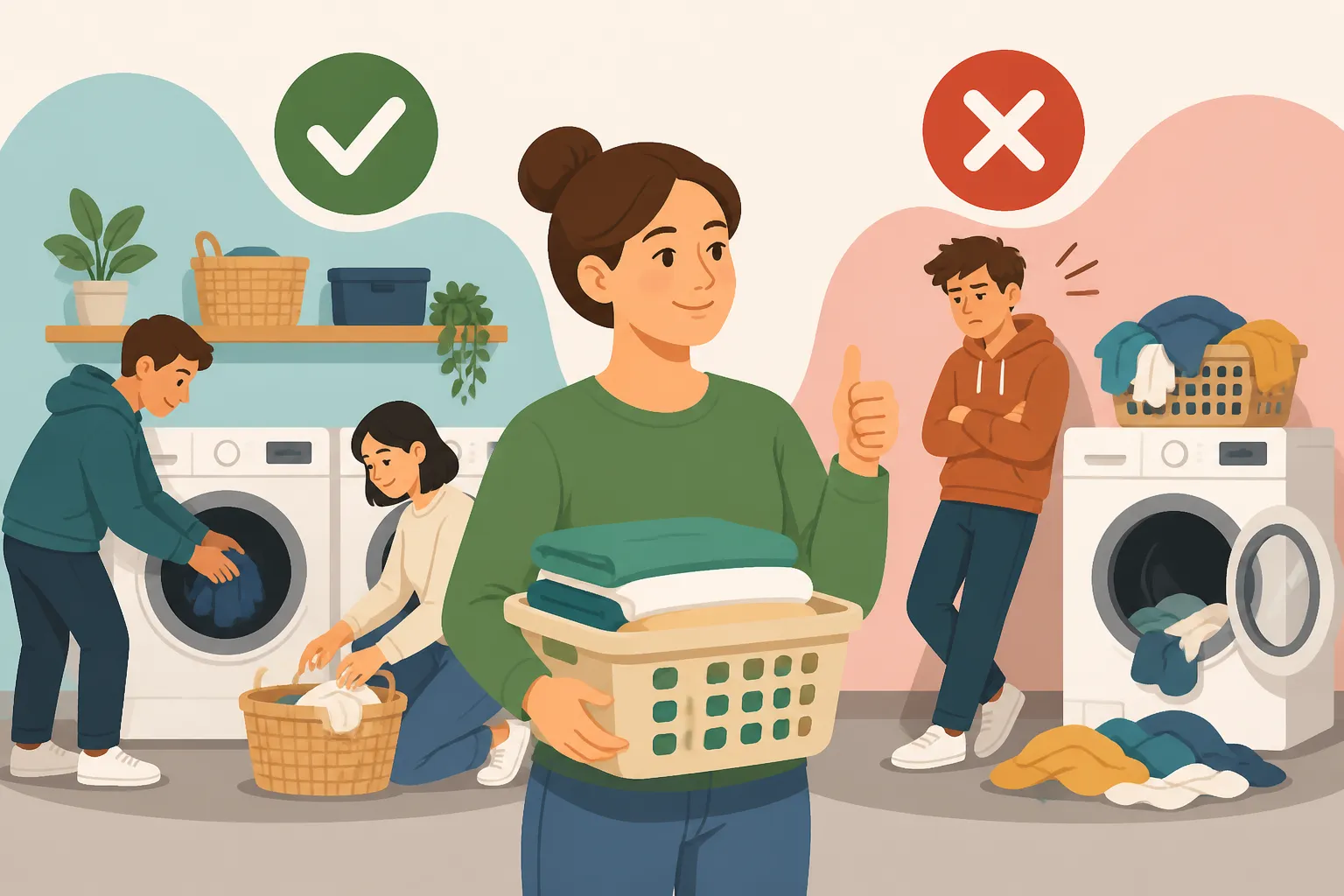
The most crucial thing to understand is that the vaskekælder runs on a bedrock of unwritten rules and mutual respect. There’s no official rulebook posted on the wall (usually), but every resident implicitly understands the code of conduct. These rules are rarely enforced by direct confrontation – Danes tend to be very conflict-averse – but rather through passive-aggressive notes, or, more commonly, by a pervasive sense of social pressure and quiet disapproval if you don't conform. You’ll quickly learn that a clean, well-maintained shared space is a point of quiet pride and collective responsibility. This collective understanding is part of the broader Danish social contract that you'll discover in many facets of your life here, from how you queue at the supermarket to how you manage waste.
Mastering Vaskekælder Etiquette: The Unspoken Rules
Navigating the shared laundry room requires more than just knowing how to operate a washing machine. It requires an understanding of the implicit social contract that governs these spaces. Get this right, and your laundry days will be peaceful. Get it wrong, and you might find yourself on the receiving end of a subtly disapproving glance or a passive-aggressive note taped to the machine.
Timing is Everything: Punctuality and Efficiency
This is perhaps the most critical rule in the vaskekælder. When you book a slot, that time is yours, and only yours. But it also means you are responsible for respecting the start and end times of that slot.
Let's say you've booked from 10:00 AM to 12:00 PM. This means your laundry should be in the machine and running by 10:00 AM, and all your clothes should be out of the machine and the area vacated by 12:00 PM, ready for the next person. Don't be that person who rolls in at 10:15 AM, fumbling with detergent, or worse, leaving their damp clothes in the machine until 12:30 PM while someone else is waiting impatiently.
Punctuality isn't just about starting on time; it's also about finishing efficiently. If you use two machines, make sure you can manage both loads to be done simultaneously or in quick succession. The person after you has their own schedule, and disrupting it is a major faux pas. If you finish early, great! But don't linger. Get your clothes, clean up, and clear out. This emphasis on efficiency and respect for scheduled time echoes in many Danish interactions, from appointments with your GP to meetings at work.
Cleaning Up After Yourself: The Golden Rule
This should be a given in any shared space, but it bears repeating: leave the vaskekælder cleaner than you found it. The machines are for communal use, and everyone contributes to their upkeep.
This means:
- Wiping down surfaces: If your detergent spills or your wet clothes leave a puddle, grab a cloth (often provided, or bring your own) and wipe it up.
- Cleaning the lint filter: Every dryer has one, and it's your responsibility to clean it after each use. A clogged lint filter is a fire hazard and reduces the dryer's efficiency. You'll often find a small bin for lint next to the dryers.
- Removing detergent residue: Check the detergent drawer in the washing machine. If there’s any leftover gunk, rinse it out.
- Sweeping/mopping: If you track in dirt, or if something leaks, take a moment to sweep or mop. There’s usually a broom and mop available.
Remember, the next person using the machine doesn't want to deal with your mess, and you certainly wouldn't want to deal with theirs. This is a subtle but powerful aspect of the Danish "we" culture – we all share this, so we all take care of it.
Respecting Others' Belongings and Space
You might think this goes without saying, but it's a common area of tension. Your clothes are your clothes, and other people's clothes are theirs.
- Don't touch other people's laundry: Unless it's an emergency (like a forgotten load preventing you from starting yours, and you have no other recourse), do not handle other people's garments. If you absolutely must remove someone's forgotten laundry from a machine, place it neatly in a basket or on a designated table. Never, ever dump it on the floor.
- Use designated spaces: If there are shared drying racks, use them efficiently. Don't hog an entire rack for a few small items if others are waiting.
- Keep your belongings confined: Don’t let your laundry bags, detergent bottles, or personal items sprawl across the entire room. Keep your items close to the machines you're using.
Respecting boundaries and personal space, even in a communal setting, is fundamental to avoiding conflict in Denmark. This ethos also applies to general apartment living, where Quiet Hours and Apartment Rules: How to Avoid Neighbor Conflicts are strictly observed to maintain peace among residents.
Noise and General Consideration
While a vaskekælder is designed to handle noise, remember that it's often located in a basement, sometimes directly under someone's apartment.
- Mind the clock: Check if your building has designated quiet hours for the laundry room. Some buildings prohibit doing laundry after a certain hour (e.g., 9 PM) or before a certain hour (e.g., 7 AM).
- Keep voices down: If you're chatting with a neighbour, keep your voices low. The sounds carry more than you might think.
- Gentle closing: Don't let machine doors slam, and avoid clanking detergent bottles unnecessarily.
This mindfulness extends to all shared spaces in Danish housing. Understanding the Typeformular A10: Understanding the Standard Danish Lease Agreement can also shed light on any specific rules your building might have regarding noise or use of communal facilities.
Practical Tips for a Smooth Laundry Day
Beyond the etiquette, there are practical steps you can take to make your vaskekælder experience as smooth and stress-free as possible.
Essential Laundry Supplies: What to Bring
This isn't your home laundry room where everything is within arm's reach. You need to be prepared.
- Detergent and fabric softener: Pre-measure if you can to avoid fumbling and spilling. Choose detergents suitable for Danish water (often hard), and consider eco-friendly options, which are widely available and popular here.
- Laundry bags: Not just for carrying your dirty clothes down, but also for bringing your clean, often still-damp items back up to your apartment.
- Small cleaning cloth/sponge: Useful for wiping up any spills or cleaning the machine’s drum quickly before or after use.
- Coins or laundry card: If your system isn't app-based, ensure you have the correct payment method. Many systems are cashless these days, relying on pre-paid cards or direct billing, but it's always good to check.
- A book, podcast, or phone with Airalo eSIM data: Sometimes, especially if you have multiple loads, you might find yourself with a bit of downtime while waiting for a cycle to finish, making a moment to catch up on a good read or listen handy.
Understanding the Machines: Settings and Cycles
Danish washing machines and dryers are generally efficient and high-quality, but the labels might be in Danish. Don't panic!
- Common Danish terms:
- Vask (wash)
- Tør (dry)
- Centrifugering (spin cycle)
- Fuldvask (full wash)
- Forvask (pre-wash)
- Skånevask (delicate wash)
- Kulørt vask (colour wash)
- Hvid vask (white wash)
- Koge/kulørt (boil/colour – often for very hot washes, e.g., 60-90°C)
- Fintvask (fine wash)
- Uld (wool)
- Syntetisk (synthetics)
- Eco/Øko (eco-friendly, energy-saving cycles)
- Temperatures: Danish machines typically display temperatures in Celsius (e.g., 30°C, 40°C, 60°C).
- Trial and error (with caution): If you're unsure, start with a basic "colour wash" (kulørt vask) at 40°C for most items. Most machines have clear icons, too. If possible, ask a neighbour for a quick run-through on your first visit. Many buildings have a small instruction sheet posted, sometimes in English.
Dealing with Common Vaskekælder Frustrations
Even with the best intentions, things can go awry.
- Someone took your spot: This is a major no-no. If it happens, first, check if you genuinely booked correctly. If so, and it’s a physical calendar, you can leave a polite, but firm, note on the machine. If it's a digital system, contact your building administration. Avoid direct confrontation if possible, as it's not the Danish way. Document everything if it becomes a recurring issue.
- Forgotten clothes: If you find someone else's clean laundry still in a machine after their slot has ended, carefully remove it and place it in a laundry basket or on a table nearby. Don't leave it in the machine, as that blocks the next person.
- Machine breakdown: If a machine isn't working, immediately report it to the building administration or landlord. There's usually a number posted in the vaskekælder. Often, there's a small sign to place on the machine indicating it's ude af drift (out of order).
- Damaged items: If your clothing gets damaged due to a faulty machine, document it immediately. Take photos, keep the damaged item, and report it to the building management. This is where having Indboforsikring: Why Home Contents Insurance is Crucial for Renters might come into play, as some policies cover personal items damaged by shared building utilities.
- Disputes: For more serious or persistent issues that aren't resolved by polite notes or direct communication, you might need to involve your landlord or housing association. If you feel your rights as a tenant are being violated, remember that organisations like LLO (Lejernes Landsorganisation), the tenants' union, can offer advice and support. For particularly sticky situations, filing a formal complaint to the How to Submit a Dispute to the Huslejenævnet (Rent Control Board) could be an option, but that's usually a last resort for serious issues.
The Cost Factor: How Vaskekælder Payments Work
The cost of using the vaskekælder is typically managed in one of a few ways:
- Pre-paid laundry card: You load money onto a card at a central machine or online, and each wash/dry cycle deducts a set amount.
- Included in rent: Less common, but sometimes the cost is simply part of your monthly rent, allowing unlimited use.
- Monthly bill: The usage is tracked and added to your monthly utility statement or rent.
Costs can vary but expect to pay anywhere from DKK 15-30 per wash cycle and DKK 10-20 per drying cycle. While it might seem like an extra expense, it's generally far cheaper than running your own machine in your apartment, factoring in electricity and water.
Alternatives and When to Consider Them
While the vaskekælder is the default for many, there are situations where you might seek alternatives.
Laundromats (Vaskerier): For When the Vaskekælder Fails
If your vaskekælder is perpetually busy, or if you have a massive load that won't fit, public laundromats (known simply as vaskerier) are an option. You'll find them in most cities, offering large capacity machines and dryers, often coin-operated or via mobile payment apps. They can be a lifesaver for duvet covers, heavy winter coats, or when you just need to get laundry done quickly without the booking hassle. Just be aware that they can be a bit more expensive than your building's shared facility.
Your Own Machine: Is It Possible?
Having your own washing machine in your apartment offers unparalleled convenience. But is it even allowed?
- Landlord permission: This is the absolute first step. You must get explicit permission from your landlord or housing association. Many older buildings simply don't have the plumbing or electrical capacity, and unauthorised installation can lead to severe issues (leaks, electrical overloads) and potential eviction. Your lease agreement, the Renting in Denmark: Complete Guide for Expats (2027), will likely have clauses about alterations to the property.
- Space constraints: Danish apartments, especially in cities, are often compact. Finding a spot for a washing machine, even a slim model, can be a challenge. If you live in an apartment where Why Your Danish Apartment Comes Without Light Fixtures is the norm, it's a good indicator that utility hook-ups might be equally sparse.
- Noise considerations: Even if permitted, consider the noise for your neighbours. Running a spin cycle late at night can quickly lead to neighbour complaints, especially in thinly walled apartments. This ties back directly to the importance of Quiet Hours and Apartment Rules: How to Avoid Neighbor Conflicts.
- Humidity and mold: Without proper ventilation, running a washing machine and drying clothes indoors can significantly increase humidity, leading to issues with mold (Managing Humidity and Mold (Skimmelsvamp) During Danish Winters).
In short, getting your own machine is often more trouble than it's worth for many expats unless you're in a very modern apartment or a house.
Dry Cleaning Services (Renseri) and Special Items
For delicate items, suits, or clothing that requires professional cleaning, a renseri (dry cleaner) is your best bet. These are widely available, and prices are generally reasonable for specific items. Don't risk expensive garments in a communal machine if you're unsure of its settings or cleanliness. This is also a good option for items that take too long to dry and might suffer in a communal dryer, or if you simply can't find a free drying slot in the vaskekælder.
Ultimately, the vaskekælder is one of those quintessential Danish experiences that, once mastered, becomes a normal part of life. It’s a small slice of Danish communal living, and while it takes some adjustment, it’s a system that works, built on shared responsibility and mutual respect. Embrace the schedule, clean up after yourself, and you'll find your laundry days in Denmark to be remarkably peaceful.
Disclaimer
The information provided in this guide is for general informational purposes only and does not constitute legal, financial, or professional advice. While we strive to keep the information up-to-date and accurate, regulations and circumstances in Denmark can change. Always consult with official Danish authorities, your landlord, or legal professionals for advice tailored to your specific situation. We are not responsible for any actions taken based on the information in this guide.