Aconto Payments: How Danish Heating and Water Bills Are Estimated
Moving to Denmark, you quickly learn that while many things are delightfully efficient, the way utilities are handled can feel like a riddle wrapped in a mystery, especially those infamous "aconto" payments. You settle into your new apartment, get your CPR number, and then bam – a bill arrives for heating and water that isn't based on your actual usage, but on an estimate. It's baffling, frustrating, and often leaves expats wondering if they're being overcharged or if there's some hidden Danish trick. But fear not, my friend, because this guide is here to shed some much-needed light on how Danish heating and water bills are estimated, what aconto truly means, and how to navigate this uniquely Danish system without pulling your hair out.
Demystifying Aconto: What Exactly Are These Payments?
When you first encounter an aconto bill, it’s understandable to feel a bit lost. In many countries, you pay for utilities after you’ve used them, based on precise meter readings. Denmark, however, does things a little differently with heating and water, embracing a system that prioritizes predictable payments over real-time accuracy. It's not a scam, but a deeply ingrained part of Danish rental culture that takes some getting used to.
The Philosophy Behind Aconto in Denmark
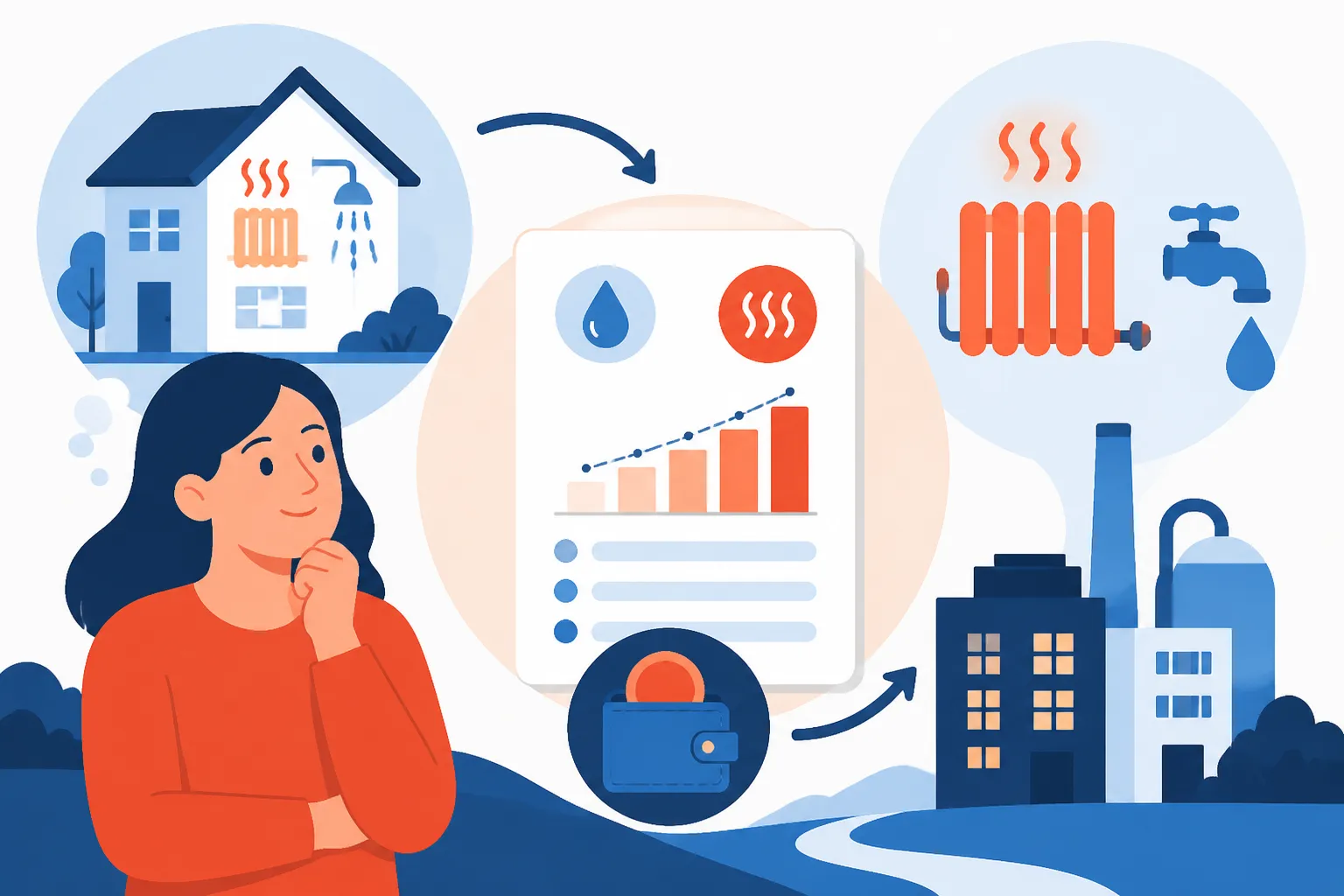
The core idea behind aconto is fairly simple, if a bit counter-intuitive for newcomers: you pay a fixed, estimated amount towards your heating and water consumption throughout the year. Think of it like a subscription service where the price is set in advance, and then adjusted later based on your actual usage. Landlords use this system to smooth out the financial burden for both themselves and their tenants. Instead of hitting you with a massive heating bill in the dead of winter when energy consumption is at its peak, aconto spreads that cost evenly across all twelve months.
From a landlord's perspective, aconto ensures a steady income stream for utilities, making budgeting easier. For you, the tenant, it means no sudden, eye-watering bills that could derail your monthly finances. The downside, of course, is that you're paying for energy and water you haven't technically consumed yet, which can feel unsettling. It relies on a system of trust and later reconciliation, a concept that often causes significant head-scratching among those of us from less trust-based bureaucratic systems. You might find yourself constantly monitoring your usage, worried about a huge bill at the end of the year, even though you’re paying diligently every month. This initial confusion is a rite of passage for many expats, and it's perfectly valid to feel frustrated by it. It just feels so indirect, doesn't it?
Breaking Down Your Aconto Statement
So, what does an aconto statement actually entail? Typically, your monthly or quarterly rent payment will include a separate line item for "varme aconto" (heating aconto) and "vand aconto" (water aconto). Sometimes, these might be combined into a single "forbrug aconto" (consumption aconto). It’s vital to check your Typeformular A10: Understanding the Standard Danish Lease Agreement very carefully to see which utilities are covered by aconto and which you need to set up directly.
Unlike electricity, which is often billed directly by an energy provider (more on that later), heating and water are usually managed by your landlord or housing association. They act as an intermediary, collecting your estimated payments and then settling with the actual utility companies. The statement itself will show the period it covers, the amount you’re paying, and sometimes a breakdown of how the estimate was initially reached (though this is less common on the regular payment slips). What it won't show is your actual consumption for that specific month or quarter, because that’s the whole point of aconto – it’s an estimate, not a real-time reflection. You're simply paying into a pot that will be balanced out later. Keep these statements, along with all your rent receipts, as they will be crucial when the annual reconciliation rolls around. It’s your paper trail in case any discrepancies arise later.
The Art of Estimation: How Your Usage is Calculated
The big question, of course, is how on earth do they come up with these aconto estimates in the first place? It can feel like pulling numbers out of a hat, especially if you're the first tenant or a new arrival to Denmark with no prior usage history. However, there is a method to the madness, even if it's not always transparent from the outset.
Factors Influencing Initial Estimates
When your landlord or housing association sets your initial aconto payments, they consider several key factors to arrive at what they hope will be a reasonably accurate estimate:
- Previous Tenant's Consumption Data: This is often the primary factor. If the apartment has been rented before, the landlord will look at the historical heating and water usage of previous occupants. This gives them a baseline for what a typical household in that specific unit consumes. However, if the previous tenant was a frugal single person and you're a family of four, this estimate might quickly prove inaccurate.
- Apartment Size and Type: Larger apartments naturally require more heating. The location within the building also matters; ground-floor apartments or corner units often experience more heat loss compared to those sandwiched between other heated units.
- Insulation Quality of the Building: Older buildings, even if charming, can be less energy-efficient. Landlords usually have an idea of their building's general insulation standards, which influences the heating estimate.
- Number of Occupants: While many initial estimates are based on a standard "household," if you've clearly stated you're a family of four moving into a three-bedroom flat, the landlord might adjust the water estimate upwards from day one.
- General Energy Prices: Although aconto is an estimate of usage, the cost per unit of heating or water also plays a role in the total estimated amount. If energy prices have recently soared, even a standard usage estimate will result in a higher aconto payment.
For new tenants, especially foreigners, the initial estimate might be a bit of a shot in the dark, or heavily reliant on potentially outdated data. This lack of your personal historical data often means you start with a generic average, which might not reflect your habits at all. This is a common source of frustration, as you feel you're paying an arbitrary amount. It's perfectly fine to ask your landlord about the basis of the initial estimate – sometimes they can provide a breakdown or explain their reasoning.
Reading Your Meters: The Foundation of the Annual Reconciliation
Despite paying estimated aconto amounts throughout the year, your actual consumption is being tracked. This is where your individual meters come into play. For heating, apartments often have small calorimeters (heat meters) on each radiator or a central meter for the entire apartment's heating supply. For water, there will be a water meter, usually located in the bathroom, kitchen, or a utility cupboard. These meters are the crucial pieces of evidence that will determine if you get money back or owe more at the end of the year.
Who reads these meters? It varies. In some modern buildings, they might be read remotely by the utility company. More commonly, however, the landlord, the building administrator, or an external company might come by once a year to take readings. In some cases, particularly in smaller buildings, you might even be asked to self-report your readings. This is why it is absolutely critical that you document the meter readings when you move into an apartment. Take photos, note down the date, time, and values, and ensure they are clearly recorded in your The Move-In Inspection Indflytningssyn Documenting Property Flaws report. Do the exact same thing when you move out – it's the only way to protect yourself and ensure fairness in the final The Move-Out Inspection Fraflytningssyn Getting Your Deposit Back. Without these initial readings, you could be held responsible for the previous tenant's consumption, or face an uphill battle to prove your case.
The Grand Reckoning: Understanding the Annual Reconciliation
This is where the rubber meets the road. After a year of faithfully paying your aconto, your actual usage is finally compared to your estimated payments. This process, known as the annual reconciliation (or årlig varmeregnskab and vandregnskab), determines if you’ve paid too much or too little. It’s often a moment of anxiety for many expats, as it can result in a pleasant surprise or a dreaded extra bill.
The Reconciliation Process Explained
The annual reconciliation typically happens once a year, usually in the late spring or early summer, covering the previous year's consumption (e.g., in May 2026, you'd get the reconciliation for the period of January 1 to December 31, 2025). The process goes like this:
- Actual Usage Data: Your landlord or housing association collects the final meter readings for heating and water for the entire year.
- Cost Calculation: They apply the actual prices per unit of heating and water from the utility companies to your measured consumption. This determines your true cost.
- Comparison: This true cost is then compared to the total aconto payments you made over the year.
- Outcome:
- Refund (Tilbagebetaling): If your total aconto payments exceeded your actual consumption costs, you'll receive a refund. This is always a nice surprise!
- Additional Payment (Efterbetaling): If your actual consumption costs were higher than your total aconto payments, you will receive an invoice for the difference. This is the dreaded efterbetaling, and it can sometimes be a substantial amount, especially after a cold winter or if your initial estimates were too low.
It’s important to understand that an efterbetaling isn't necessarily a sign that your landlord is trying to scam you. It simply means the initial estimate was insufficient to cover your actual usage and the real costs. However, if you receive a surprisingly large additional payment, it's absolutely within your rights to scrutinize the figures.
Common Reasons for Efterbetaling (Additional Payment)
Experiencing an efterbetaling can be a bitter pill, especially if you’ve been careful with your consumption. Here are some of the most common reasons why you might end up owing more:
- Initial Estimates Were Too Low: This is probably the most frequent cause. If your landlord based the aconto on a previous, very frugal tenant, or simply underestimated for a new rental, your payments won't have kept pace with your real usage.
- Unusually Cold Winter: Denmark's winters can be long and chilly. If you experience a particularly harsh winter, you'll naturally use more heating, potentially pushing your consumption well beyond the average estimate.
- Increase in Water/Heating Prices: Energy prices can fluctuate. If the cost of water or heating significantly increased during the year covered by the reconciliation, your initial aconto might not have accounted for it.
- Increased Consumption: Your habits might have changed. Perhaps you started working from home more, leading to longer periods of heating, or you've been taking longer showers. An extra person moving in without updating the landlord can also dramatically increase water usage.
- Poor Insulation or Inefficient Heating System: In older buildings, heat can literally seep out of windows and walls, requiring you to crank up the radiators more often to maintain a comfortable temperature. While this isn't your fault, it directly impacts your usage.
- Leakage/Faulty Equipment: In rare cases, a leaky toilet or a malfunctioning heating valve could lead to unusually high consumption. If you suspect this, inform your landlord immediately.
The shock of a large efterbetaling can be quite jarring, especially if you weren't expecting it. It's one of those uniquely Danish administrative hurdles that catches many expats off guard. The key is to be prepared and understand your rights.
What to Do if You Disagree with the Reconciliation
If you receive an efterbetaling that seems unfairly high, or if you simply don't understand the calculations, don't just pay it blindly. You have rights as a tenant.
- Request a Detailed Breakdown: Your landlord is legally obliged to provide a detailed statement showing how the reconciliation was calculated. This should include your start and end meter readings, the unit prices for heating and water, and the calculation of your total consumption. Don't be shy about asking for this – it's your money.
- Check Your Documentation: Compare the meter readings on the reconciliation statement with the photos and notes you took when moving in and, if possible, during the year. This is where your meticulous record-keeping pays off!
- Contact Your Landlord/Administrator: Once you have the detailed breakdown, if you still have questions or believe there's an error, contact your landlord in writing. Clearly state your concerns and ask for clarification.
- Seek External Advice: If you're unable to resolve the issue directly with your landlord, consider reaching out to a tenant's union like LLO (Lejernes Landsorganisation). They specialize in tenant rights and can advise you on whether you have a legitimate case for dispute. Joining LLO Tenants' Union How to Fight Unfair Rent Increases is highly recommended for any renter in Denmark, as their expertise can be invaluable in these situations. They can help you interpret the complex Danish rental laws and represent you if needed. You can also get broader information on your Tenant Rights and LLO Lejernes Landsorganisation Protection.
Practical Tips for Managing Aconto and Saving Energy
While aconto payments are a fixed part of Danish rental life, you're not powerless. By understanding the system and adopting some Danish habits, you can influence your consumption and minimize those dreaded efterbetalinger.
Monitoring Your Consumption
One of the best ways to avoid a shock reconciliation bill is to actively monitor your usage throughout the year.
- Regular Meter Checks: If you have access to your heating and water meters, make a habit of checking them monthly. Note down the readings in a simple spreadsheet or a notebook. This will give you a rough idea of your ongoing consumption and allow you to compare it to your aconto payments. If you see your usage skyrocketing, you can adjust your habits before the annual bill arrives.
- Utility Company Portals: Some utility companies or housing associations offer online portals where you can track your consumption digitally. Ask your landlord if such a service is available for your building. This makes monitoring much easier than manually checking meters.
- Communicate with Landlord: If you notice a significant change in your household (e.g., a new baby, a partner moving in), inform your landlord. They might be able to adjust your aconto payments mid-year to better reflect your increased usage, which can soften the blow of the final reconciliation.
Energy-Saving Habits in Denmark
Danes are generally quite conscious of energy consumption, partly due to the high cost of utilities. Adopting some local habits can make a big difference:
- Heating Wisely:
- Don't Overheat: Most Danes keep their homes at a comfortable, but not scorching, 20-22°C. Wear layers if you feel chilly rather than cranking up the heat.
- "Chok-udluftning" (Shock Ventilation): Instead of leaving windows slightly ajar for long periods (which just wastes heat), Danes practice "chok-udluftning." This involves opening several windows wide for 5-10 minutes, creating a strong draft, to quickly air out the apartment. This replaces stale air without significantly cooling down walls and furniture, which retain heat.
- Radiator Usage: Don't put furniture directly in front of radiators, as it blocks heat distribution. Turn down radiators in unused rooms.
- Seal Drafts: If you notice drafts around windows or doors, politely bring it to your landlord's attention.
- Water Conservation:
- Shorter Showers: This is probably the most impactful way to reduce water consumption.
- Fix Leaks Promptly: Even a slow drip can waste a surprising amount of water over time. Report any leaks to your landlord immediately.
- Efficient Appliances: If you're buying your own appliances (unlikely for heating/water, but good for context), look for energy and water-efficient models.
- Electricity: While often billed separately, being mindful of your electricity usage is also crucial. For more tips on managing electricity costs, check out Saving Money on Electricity Running Appliances at Night in Denmark.
By being proactive and adopting these habits, you not only contribute to a greener Denmark but also save your own wallet from hefty bills.
Communication is Key
Don't be afraid to ask questions. If something on your statement is unclear, or if you're unsure about how something works, reach out to your landlord or the building administration. It's better to clarify things upfront than to deal with a large, unexpected bill later. A good landlord will appreciate you taking an interest and seeking understanding. They often deal with many international tenants and are used to explaining these local peculiarities.
Aconto for Newcomers and Rental Scenarios
Navigating aconto can be particularly tricky when you're first moving to Denmark, or if you're in a specific rental situation like a short-term lease or a sublet. Being prepared and knowing what to look for can save you a lot of stress and money down the line.
What to Look For in Your Lease Agreement
Your rental contract is your bible when it comes to utilities. Make sure you understand exactly what your aconto covers. The standard Danish lease agreement, Typeformular A10: Understanding the Standard Danish Lease Agreement, will have a section detailing utility payments. Pay particular attention to Section 11 of Typeformular A10: The Hidden Clauses to Watch For, as this is where landlords sometimes add specific agreements or deviations from standard practice.
Specifically, look for:
- Which utilities are "aconto": Clearly identify if heating, water, and sometimes even hot water, are paid via aconto.
- Which utilities are "direkte forbrug": This means you’re responsible for setting up an account directly with the utility provider and paying them based on your exact usage. Electricity is almost always handled this way.
- Initial Meter Readings: Ensure that the initial meter readings for heating and water are explicitly stated in your lease or in your move-in inspection report. If they aren't, insist on having them recorded before you sign anything or move in. This is your insurance policy.
- Frequency of Reconciliation: While usually annual, the contract might specify the exact period covered.
Understanding these details from day one will prevent any unpleasant surprises later. If you find a rental through platforms like Spotahome, make sure you thoroughly review the contract terms regarding utilities, as they often aim for transparency but the Danish system still applies.
Short-Term Rentals and Subletting
If you're in a short-term rental or subletting, the aconto system might be handled a little differently.
- All-Inclusive Rent: For many short-term rentals (e.g., leases under 6-12 months), landlords might offer an "all-inclusive" rent where utilities are simply built into the monthly price, and there's no separate aconto or reconciliation. This can offer simplicity but means you have no control over potential refunds for low usage. Always confirm this explicitly.
- Subletting: If you're subletting, your "landlord" is actually the main tenant. They are responsible for the aconto reconciliation with the primary landlord. You'll need to agree with the main tenant how your share of heating and water will be calculated and settled. It's crucial to document meter readings with the main tenant when you move in and out to ensure a fair settlement. For more details on the legalities of subletting, see Short-Term Rentals and Subletting Fremleje Legal Rules for Expats.
- Shared Living: In shared apartments, the aconto payments are typically split evenly among residents. This can lead to friction if one roommate is very wasteful with water or leaves the heating on high constantly, impacting everyone's share in the final reconciliation. Open communication about energy usage is vital here.
The Challenge of the Moving-Out Reconciliation
One of the most common headaches for expats leaving Denmark is the final aconto reconciliation. This bill usually takes several months to process after you’ve moved out, as it relies on the annual cycle of the utility companies. This means:
- Deposit Hold-Up: Your landlord will often hold back a portion of your rental deposit until the final reconciliation is complete. This can be frustrating, especially if you need the money for your next move.
- Importance of Documentation: Again, meticulously documenting your meter readings on the day you move out is paramount. Take clear, timestamped photos of all meters. This will be your only proof of your final consumption. Without it, you could be charged for the next tenant's usage. Refer to The Move-Out Inspection Fraflytningssyn Getting Your Deposit Back for more details on protecting your deposit.
- Forwarding Address: Ensure your landlord has a valid forwarding address (even if it's abroad) so they can send you the final reconciliation and any potential refund check.
The delay in the final settlement is a normal part of the Danish system, but it requires patience and proactive documentation from your side.
Beyond Aconto: Other Utility Payments
While heating and water often fall under the aconto system, other essential utilities are typically handled differently. Understanding this distinction is key to setting up your home smoothly. For a broader overview, check out Utilities Setup Electricity, Water, Heating, and Internet.
Electricity: Often Direct, Not Aconto
Unlike heating and water, electricity is almost always set up and paid directly by you, the tenant, to an electricity provider. This means:
- Direct Billing: You choose your electricity company (there are many in Denmark), sign up for a contract, and receive bills based on your actual, metered electricity consumption. No aconto here!
- Choosing a Provider: You have the freedom to choose your electricity supplier. Many Danes opt for green energy plans. For more guidance on this, read Electricity Providers in Denmark Choosing a Green Energy Plan.
- Meter Readings: When you move in, you or your landlord will note the initial electricity meter reading. You'll then typically receive monthly or quarterly bills based on your actual usage or an estimated usage that is reconciled regularly.
- No CPR, No Problem (Sometimes): While having a CPR number makes setting up utilities much easier, some electricity providers might allow you to sign up before you receive it, requiring a deposit instead. However, for a seamless process, having your CPR number is always best.
Internet and Mobile: Your Responsibility
These are entirely your responsibility to set up and pay for separately. They are not part of any aconto system or landlord-managed utilities.
- Internet (Bredbånd): You'll need to choose an internet provider and a plan that suits your needs. Options include fiber optic, cable, and mobile broadband. This is a crucial step for feeling settled. Get the full scoop on Setting Up Internet Bredbånd in Denmark Fiber vs Mobile Broadband.
- Mobile Phone: Getting a local SIM card or an eSIM is usually one of the first things expats do to stay connected. Services like Airalo are excellent for ensuring you have data coverage from the moment you land, even before you get your Danish number. There are many competitive mobile plans available in Denmark once you're fully settled.
Understanding these distinctions will help you budget effectively and ensure all your essential services are up and running without confusion.
Aconto Management Dos and Don'ts
| Do's | Don'ts |
|---|---|
| Do meticulously document initial meter readings (photos + notes). | Don't assume your landlord's estimate is always accurate. |
| Do ask your landlord for a detailed reconciliation breakdown. | Don't ignore a suspiciously high efterbetaling. |
| Do monitor your consumption throughout the year if meters are accessible. | Don't leave windows open for hours while the heating is on high. |
| Do adopt Danish energy-saving habits (e.g., "chok-udluftning"). | Don't neglect to inform your landlord of major household changes. |
| Do keep all your aconto statements and payment receipts. | Don't pay any reconciliation bill without understanding it. |
| Do consider joining LLO for tenant protection and advice. | Don't forget to provide a forwarding address when you move out. |
| Do set up electricity and internet directly with providers. | Don't expect your final reconciliation immediately after moving out. |
Disclaimer
The information provided in this guide is intended for general informational purposes only and does not constitute legal, financial, or professional advice. While we strive to provide accurate and up-to-date information, rules and regulations in Denmark can change. Always consult with relevant authorities, legal professionals, or tenant organizations like LLO for advice specific to your situation.