Saving Money on Electricity: Running Appliances at Night in Denmark
When you first arrive in Denmark, the sheer efficiency of everything is often a pleasant surprise – the public transport, the smooth digital systems, the general sense of order. But then the utility bills start rolling in, and for many expats, the cost of electricity can be a real jaw-dropper. It’s a common frustration, but there’s a smart, Danish-style hack many locals use: running your high-energy appliances at night. This guide will dive deep into why this works, how to do it effectively, and how to trim those surprisingly high electricity costs from your monthly budget.
Understanding Danish Electricity Pricing: Why Nighttime is Your Wallet's Best Friend
One of the biggest surprises for newcomers, beyond the actual price tag on a pint of beer, is often the electricity bill. Unlike some countries with flat rates, Denmark’s electricity prices are often dynamic, meaning they change throughout the day, sometimes even hour by hour. This isn't just a quirk; it's deeply integrated into Denmark's ambitious green energy strategy.
Many of you, myself included, probably started your Danish journey by meticulously budgeting the cost of living here. You might have even used platforms like Spotahome to secure your first rental, only to be surprised by the actual running costs of a Danish household. The key to understanding these costs, especially for electricity, lies in the grid's operation and how renewable energy plays a starring role. Your electricity bill isn't just about how much you consume; it's about when you consume it.
The Dynamics of Variable Pricing
Denmark is a global leader in wind energy, which is fantastic for the environment, but it introduces a fascinating dynamic to electricity pricing. The more wind blowing, the more green energy is produced, and often, the cheaper the electricity becomes. Conversely, when the wind isn't blowing much, or during periods of high demand (think everyone cooking dinner and watching TV simultaneously), prices tend to climb.
This is where the Nord Pool Spot market comes in. This is the official power market for Nordic and Baltic countries, and it sets the hourly spot prices for electricity. Your utility provider then buys electricity at these fluctuating prices and adds their own fees, transmission costs, taxes, and other levies. The "spot price" is the actual cost of electricity at any given hour. If you’re on a variable-rate contract (and many Danish households are), your bill directly reflects these hourly fluctuations. This means that if you run your washing machine or charge your electric car when the spot price is low, you pay significantly less than if you run it during peak hours. Peak hours are typically mornings (6 AM – 9 AM) and evenings (4 PM – 8 PM), when most people are home and using electricity. Overnight, when demand drops and often the wind picks up, prices plummet. This can lead to quite dramatic differences, where an hour of electricity at 3 AM might cost a fraction of what it does at 6 PM.
Fixed vs. Variable Contracts: Making an Informed Choice
When you're setting up your Utilities Setup: Electricity, Water, Heating, and Internet, one of the first decisions you'll face is choosing an electricity provider and a contract type. It's not just about finding an English-speaking customer service agent; it's about understanding how your usage habits align with pricing models.
Fixed-Price Contracts: These offer stability. You pay a set price per kWh for a specific period, regardless of market fluctuations. This can be great for peace of mind, as you know exactly what you'll pay, making budgeting easier. However, it means you won't benefit from the super-low (or even occasionally negative, though rare for consumers) prices during off-peak hours or particularly windy days. For expats who prefer predictability and don't want to constantly monitor prices, this might seem like a safe bet. But in the long run, especially if you can adapt your usage, you might miss out on significant savings.
Variable-Price Contracts (also known as 'Spotpris' or 'Flexpris'): This is where the magic of nighttime savings happens. Your price per kWh changes hourly, directly reflecting the market's spot price. While there's an element of unpredictability, it offers the greatest potential for savings if you're willing to be strategic with your consumption. This model incentivizes you to shift your heavy usage to off-peak times. Many providers offer apps that let you track prices in real-time, helping you decide exactly when to hit "start" on that dishwasher.
Here’s a quick comparison to help you weigh your options:
| Feature | Fixed-Price Contract | Variable-Price Contract (Spotpris) |
|---|---|---|
| Price Stability | High, predictable monthly costs | Low, fluctuates hourly/daily with market |
| Savings Potential | Limited, no benefit from low market prices | High, significant savings possible by shifting usage |
| Budgeting | Easier, consistent electricity expenses | More challenging, requires monitoring and adaptive usage |
| Effort Required | Low, set it and forget it | High, active monitoring and scheduling of appliance use |
| Market Risk | Low, protected from price spikes | High, susceptible to high peak prices if not managed |
| Green Impact | Indirect, but less direct incentive to use green energy | Direct, incentivizes usage when renewable energy is abundant |
Choosing a variable contract doesn't mean you have to become an energy market expert overnight. Most modern Electricity Providers in Denmark: Choosing a Green Energy Plan offer intuitive apps that display current and forecasted prices, making it surprisingly easy to see when the best times to run your appliances are. It's a bit of a learning curve, but the savings can be substantial.
Practical Strategies for Shifting Your Electricity Consumption
Once you understand the 'why' behind variable pricing, the 'how' becomes much simpler. It's all about being mindful and making small adjustments to your daily routine. This isn't just about saving money; it’s also about contributing to a more stable and sustainable energy grid, which is a big part of the Danish ethos. Remember, your goal is to minimize high-consumption activities during those morning and evening peak hours.
Targeting High-Consumption Appliances for Maximum Savings
Certain appliances are notorious energy guzzlers. By simply shifting when you use these, you can make a noticeable dent in your electricity bill.
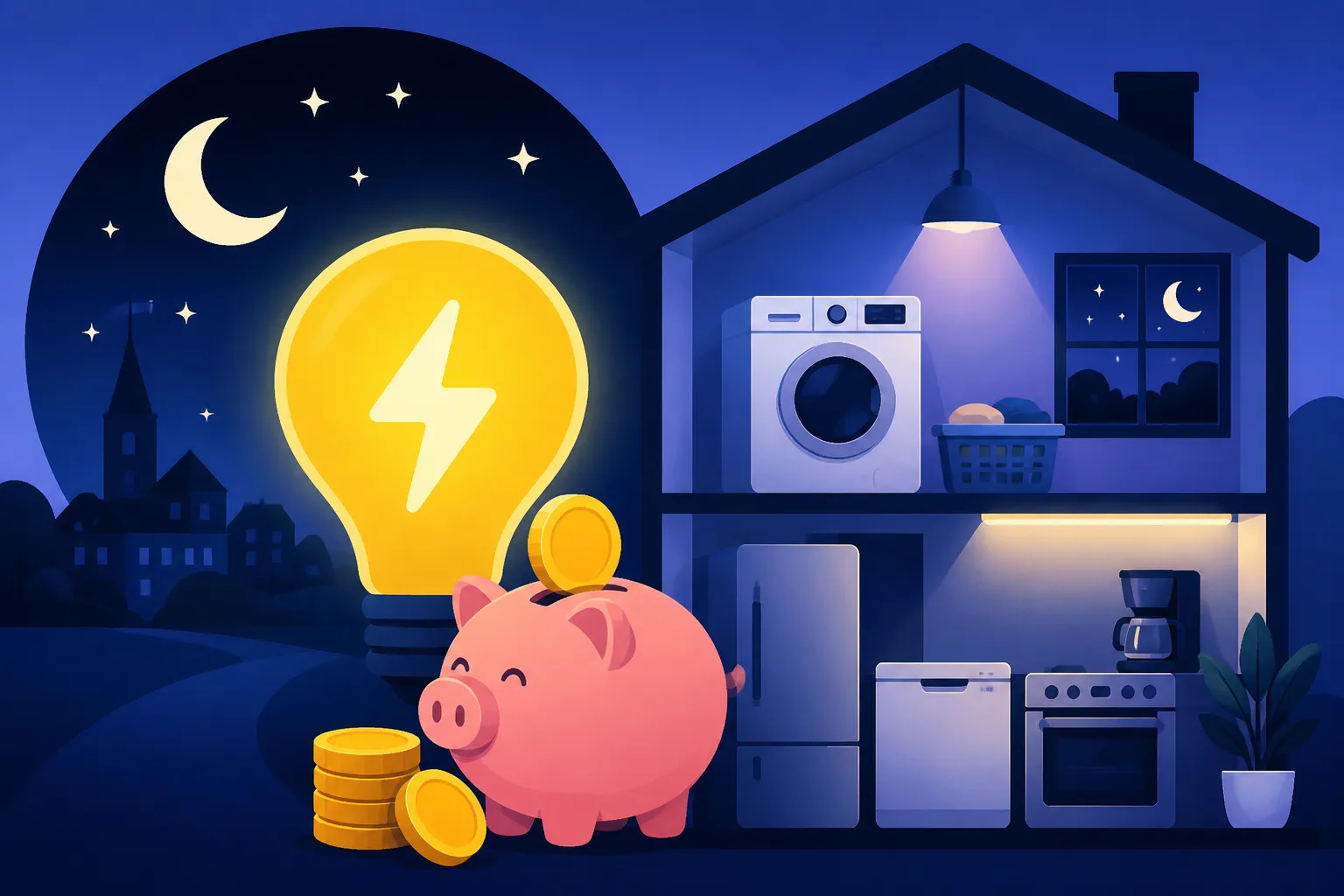
- Washing Machines & Dishwashers: These are often the prime candidates for nighttime operation. A typical wash cycle or dishwasher run can consume a significant amount of electricity. If you're on a variable rate, setting these to run after 10 PM or before 6 AM can lead to considerable savings. Many modern machines have delay start functions, making this incredibly easy. Just be mindful of noise if you live in an apartment building with thin walls or shared laundry facilities, as Quiet Hours and Apartment Rules: How to Avoid Neighbor Conflicts are a very real thing here!
- Real-life scenario: Imagine running your washing machine, which uses about 0.5-1 kWh per cycle, during a peak evening hour where electricity might cost 3-4 DKK/kWh. That's 1.5-4 DKK for one load. If you run it at 2 AM when the price drops to 0.5-1 DKK/kWh, you're paying just 0.25-1 DKK. Multiply that by a few loads a week, and it adds up!
- Electric Vehicle (EV) Charging: If you're an EV owner in Denmark, this is perhaps the single biggest area for savings. Charging an entire car battery uses a huge amount of electricity. Always, always charge overnight if you have a variable contract. Smart chargers and dedicated apps can even automatically schedule charging to coincide with the lowest spot prices, often during the deep hours of the night.
- Tumble Dryers: While it's always more energy-efficient to hang laundry to dry (especially with Denmark's often windy weather), if you must use a tumble dryer, treat it like your washing machine. Run it during off-peak hours. These machines can consume even more electricity than a washing machine.
- Electric Heating (if applicable): While district heating (fjernvarme) is common, some homes or apartments might have electric heaters or underfloor heating. If you have control over this, consider pre-heating during cheap hours and then letting the insulation do its job, or reducing consumption during peak times. However, this requires a more nuanced approach to avoid making your home uncomfortably cold.
Leveraging Smart Home Technology and Apps
The digital infrastructure in Denmark makes it incredibly easy to manage your electricity consumption strategically. Setting up your digital life is key here, from your NemKonto and MitID: The Core of Danish Digital Finance (2027) to ensuring you have reliable internet and mobile data, perhaps even with a handy eSIM from a service like Airalo for seamless connectivity. These tools also extend to managing your home's energy.
- Utility Provider Apps: Most major Danish electricity providers (like EWII, Andel Energi, Norlys, Aura Energi, etc.) offer excellent smartphone apps. These apps don't just show you your current consumption; they display real-time and forecasted hourly electricity prices. You can often see the greenest hours (when wind power is high) and the cheapest hours at a glance. Get familiar with your provider's app – it’s your best friend for smart energy use.
- Third-Party Energy Apps: Beyond your provider's app, there are general energy tracking apps available that pull data from Nord Pool. Apps like "Elpriser" or "Min Strøm" (My Power) can give you a quick overview of hourly prices across different providers, allowing you to see the cheapest times without needing to log into your specific utility app.
- Smart Plugs & Timers: For appliances without built-in delay start functions, smart plugs are a game-changer. These small devices plug into your wall socket, and your appliance plugs into them. You can then control the smart plug via an app, setting schedules for when the appliance turns on and off. Imagine your coffee machine starting at 5 AM when electricity is cheapest, so it's ready for you at 6 AM. Or your electric towel rail warming up during the cheap hours.
- Home Energy Monitors: Some devices can give you a real-time readout of your home's total electricity consumption, helping you identify hidden energy hogs. This empowers you to see the immediate impact of turning off lights or unplugging devices.
Embracing Other Low-Effort, High-Impact Habits
While shifting big appliance usage is powerful, combining it with other simple habits can amplify your savings and reduce your overall Cost of Living in Denmark 2026: Budgets for Singles and Families.
- Unplug "Vampire" Devices: Many electronics consume a small amount of power even when turned off (standby power). Think phone chargers, TVs, game consoles, and computers. Unplugging them when not in use, or using power strips with on/off switches, can save surprising amounts over a year.
- Embrace Natural Light: Denmark might be dark in winter, but during the longer summer days, make the most of natural light. Turn off lights in rooms you're not actively using.
- Efficient Cooking: Use lids on pots and pans to trap heat and reduce cooking time. Use the oven less for small items; a microwave or air fryer is often more energy-efficient for quick tasks. Consider batch cooking during off-peak times if you have a slow cooker or electric stove.
- LED Lighting: If your rental doesn't already have them, swap out old incandescent or halogen bulbs for energy-efficient LED alternatives. They last longer and consume a fraction of the electricity. Remember that many Danish rentals come without light fixtures, so this might be one of your first purchases!
- Mindful Heating & Cooling: While Denmark isn't known for extreme heat, if you have any form of electric cooling (rare, but sometimes present in newer builds), use it sparingly. In winter, maintain a comfortable but not overly warm indoor temperature. Every degree makes a difference. Also, remember to ventilate your home daily by opening windows briefly to exchange air, which helps with humidity and keeps heating systems efficient.
By integrating these strategies, you're not just reacting to high bills; you're proactively managing your consumption in a way that aligns with Denmark's sustainable energy landscape. It’s a smart move for your wallet and a small contribution to the planet.
The Broader Context of Danish Energy and Sustainability
Understanding why Denmark's electricity market operates with variable pricing helps put your personal energy-saving efforts into perspective. It’s not just about getting a cheaper bill; it’s about participating in a larger, greener vision that's deeply ingrained in the Danish way of life. When you shift your consumption to off-peak hours, you’re not just saving money, you're becoming an active participant in Denmark's energy transition.
Denmark's Green Energy Push
Denmark is a world leader in renewable energy, particularly wind power. Massive offshore wind farms are a common sight along the coasts, and they contribute a significant portion of the country's electricity needs. The goal is to maximize the use of these clean energy sources.
However, wind doesn't blow consistently. Sometimes there's an abundance of wind, creating a surplus of cheap, green electricity. Other times, the wind might be still, requiring other sources (often less green, or imported) to meet demand. Variable electricity pricing is a clever mechanism to encourage consumers to use power when it's most abundant and green. By running your appliances at night or during windy periods, you are essentially signaling to the grid that demand can be flexible, allowing more renewable energy to be integrated without waste or strain on the system. It's a testament to how Danes think about the bigger picture, where individual actions contribute to collective goals.
Beyond the Bill: Environmental Impact and Grid Stability
For many expats, the initial focus on electricity is purely financial, and understandably so – Danish bills can be daunting! But living here, you quickly realize there’s often a deeper, societal motivation behind seemingly complex systems. When you optimize your electricity usage for off-peak hours, you're actually providing several benefits beyond your wallet:
- Reducing CO2 Emissions: By using electricity when wind power is plentiful, you're directly reducing your carbon footprint. You're ensuring that the power you consume comes from clean sources rather than relying on fossil fuels or imported electricity when renewables are low. This aligns perfectly with Denmark's climate goals and your own desire to live a more sustainable life in your new home.
- Supporting Grid Stability: A stable electricity grid is essential for a modern society. When everyone uses electricity during peak times, it creates immense stress on the grid, potentially leading to bottlenecks or even blackouts (though these are rare in Denmark due to robust infrastructure). By spreading out demand, especially for heavy loads like EV charging or laundry, you help to flatten the demand curve. This makes the grid more efficient, resilient, and less reliant on firing up reserve power plants that might be less environmentally friendly.
- Maximizing Renewable Integration: One of the challenges of renewable energy like wind and solar is its intermittency. You can't just "store" all the excess wind power when it's blowing fiercely. By creating incentives for consumers to use power during these high-generation times, Denmark is finding clever ways to maximize the utilization of its green energy, making its investments in renewables more effective.
So, the next time you set your dishwasher to run at 1 AM, take a moment to appreciate that you're not just saving a few kroner. You’re actively participating in Denmark’s green transition, helping to stabilize the national grid, and reducing your environmental impact. It’s a small, tangible way to integrate into the sustainable mindset that truly permeates daily life here. After all, life in Denmark often involves understanding these deeper layers, whether it's navigating Understanding CPR Registration and Your Healthcare Entitlement or decoding your utility bills.
Final Thoughts and Practical Advice
Adjusting to Denmark's electricity pricing model can feel like another bureaucratic hurdle when you first arrive. It's easy to get frustrated by the seemingly complex system after handling things like Renting in Denmark: Complete Guide for Expats (2027) and all the associated challenges. But once you get the hang of it, it genuinely becomes a simple, almost automatic part of your routine. Think of it as another Danish lesson learned, much like mastering the art of the perfect rundstykke or remembering to take off your shoes indoors.
Many expats find that after an initial period of shock, they learn to appreciate the logic behind it. It fosters a more conscious relationship with energy consumption, something many of us didn't really think about back home. So, dive into your electricity provider's app, set those timers, and embrace the night-owl appliance routine. Your wallet, and the planet, will thank you.
Disclaimer
The information provided in this guide is intended for general informational purposes only and does not constitute financial, legal, or professional advice. Electricity prices and regulations in Denmark can change. While every effort has been made to ensure accuracy, readers should consult official sources, their specific utility providers, or professional advisors for the most current and personalized information.