Getting a Fine on the Train (Kontrolafgift): How to Appeal
That sickening lurch in your stomach when a Danish train conductor asks to see your ticket, and you suddenly realize you’ve forgotten to tap in, or you’re in the wrong zone, or your Rejsekort is empty. It's a rite of passage for many expats, often followed by the dreaded kontrolafgift – a train fine. This isn't just about the money; it's about the feeling of bureaucratic failure in a new country. Don't worry, you're not alone, and this guide will walk you through understanding these fines, why they happen, and crucially, how you can appeal them.
Understanding the Danish Train Fine System (Kontrolafgift)
Let's cut right to it: public transport in Denmark is generally efficient and reliable, but the system of kontrolafgifter, or control fees, for rule violations is strict and unforgiving. It can feel like a sudden, harsh introduction to Danish precision, especially if you’re used to more lenient systems back home.
What is a Kontrolafgift?
A kontrolafgift is essentially a penalty fare issued by public transport operators like DSB (Danish State Railways), Movia (bus, local train, metro in Copenhagen area), or Arriva (regional trains and buses). It’s not just a polite reminder; it’s a non-negotiable financial penalty for not having a valid ticket for your journey. As of late 2024, a standard fine in most of Denmark is DKK 750, though this can vary slightly depending on the operator and type of violation, and can be higher for more serious infractions or repeat offenders.
The fundamental principle is "no valid ticket, no travel." This means your ticket must be valid for the entire duration and distance of your journey, including any transfers, and you must be able to present it upon request. This applies whether you're taking a long-distance train, a local S-train, the Metro in Copenhagen, or a city bus. The moment you step onto the transport without a proper ticket or having correctly tapped in your Rejsekort, you're technically in violation. The conductors and inspectors are not there to give warnings; their job is to enforce the rules. It can be a very impersonal and somewhat intimidating experience, especially if there's a language barrier, which only adds to the stress.
Common Reasons Expats Get Fined
Many expats find themselves caught out, not out of malice, but simply due to misunderstanding the intricacies of the Danish system. It’s easy to make an honest mistake when you’re navigating a new country and its public transport rules. Here are some of the most frequent reasons:
- Forgetting to Tap In/Out with Rejsekort: This is probably the number one culprit. The Rejsekort is fantastic for convenience, but it requires both a "tap in" at the start of your journey and a "tap out" at the end. Forgetting to tap out often results in being charged for the maximum possible journey, but forgetting to tap in is a direct fineable offense as it means you technically have no valid ticket. You might have credit on your card, but if it's not tapped in, it's not active.
- Insufficient Funds on Rejsekort: You must have a minimum balance (usually DKK 50 for personal cards, DKK 70 for anonymous) on your Rejsekort to tap in. If you try to tap in with less, it simply won't work, and you won't have a valid ticket. Many new arrivals are still getting used to checking their balance via the Rejsekort app or at the card reader.
- Incorrect Zones or Duration: Denmark uses a zone-based system for pricing, especially around cities. While the Rejsekort usually handles this automatically, if you're buying single tickets, it's crucial to select the correct number of zones or ensure your ticket covers your entire journey. Misunderstanding Navigating Zones in Copenhagen: How Ticket Pricing Works can lead to fines, even if you paid something.
- Invalid Digital Ticket: Buying a ticket through the DSB app or another transport app requires activation before you board. A screenshot of a ticket is usually not accepted because it doesn't prove activation or validity for the specific time. Furthermore, your phone battery dying can render your ticket inaccessible, which is still your responsibility.
- Thinking a Ticket is Valid for Longer: Some paper tickets or older systems might have different validity periods than you're used to. Always double-check the time and date on your ticket.
- Not Understanding the Language: While inspectors might speak English, the signs, ticket machines, and app instructions are primarily in Danish. This language barrier can lead to genuine misunderstandings about ticket types, validity, or tapping procedures.
- Just an Honest Mistake: Sometimes, you're rushing, distracted, or simply made an oversight. While understandable, in the eyes of the transport authority, it's still a violation.
It’s an easy trap to fall into, and the sense of frustration can be immense. Before you even think about an appeal, take a deep breath and understand that this is a common experience for many expats. To truly master the system and avoid such pitfalls, diving into the specifics of Public Transport in Denmark: Rejsekort, Trains, and Commuting is essential.
The Immediate Aftermath: What Happens When You Get a Fine
Receiving a fine on Danish public transport is rarely a pleasant experience. It often happens quickly, in public, and can feel quite confrontational, especially for those not accustomed to such direct administrative interactions.
The On-the-Spot Fine Process
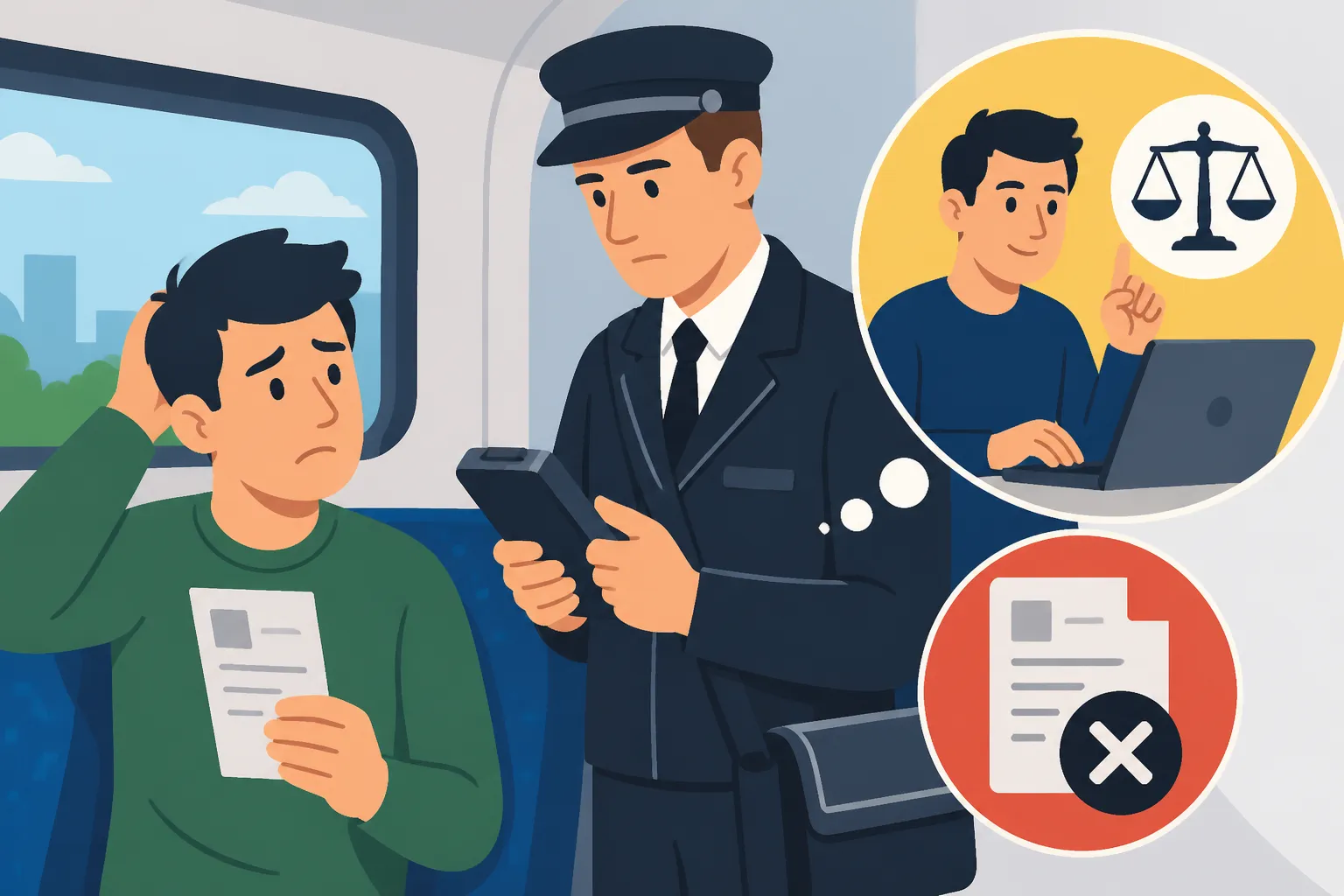
When a ticket inspector catches you without a valid ticket, they will ask to see your ID. This is typically your passport or your Danish Yellow Health Card (Sundhedskort), as it contains your CPR number and registered address. They need this to issue the kontrolafgift and ensure it's delivered to the correct person and address. If you can't provide valid ID, they might involve the police, which nobody wants.
The inspector will then proceed to issue the fine. This usually involves:
- Verbal explanation: They will explain the reason for the fine, often in Danish, but usually can switch to English if needed. However, don't expect a lengthy debate or negotiation.
- Physical or Digital Ticket: You will receive a physical printout of the fine, or in some cases, it might be registered digitally and you’ll receive an SMS or email confirmation, with the formal notice arriving via your registered digital post (e-Boks or Mit.dk) or physical mail.
- Information Collection: They will record your name, date of birth, CPR number (if you have one), and your registered address. This is why having your correct address registered, as explained in The CPR Registration Rule: Why Your Address Matters, is so critical for all official communication in Denmark.
- No Immediate Payment: You generally do not pay the fine directly to the inspector on the spot. You'll receive instructions on how to pay later.
It's common to feel flustered or even unfairly treated in this situation. However, it's important to remain calm and cooperative. Arguing vehemently with the inspector rarely changes their decision and can sometimes escalate the situation unnecessarily. Collect the fine, understand the stated reason, and save any documents they give you. You'll need these details for any potential appeal.
Payment Deadlines and Consequences of Non-Payment
Once you receive your kontrolafgift, whether it’s a physical slip or a digital notification, it will specify a payment deadline. This is typically around 14 days from the date the fine was issued. It’s absolutely crucial to adhere to this deadline or initiate an appeal process within this window.
Here’s what happens if you don’t pay on time:
- Late Fees: Danish administrative systems are quick to add penalties. If the fine isn't paid by the deadline, a late fee will almost certainly be added, increasing the total amount you owe. This can be substantial, often increasing the original fine by 50% or more.
- Debt Collection: If you continue to ignore the fine and the late fees, the transport operator will eventually pass your case on to a debt collection agency (inkasso). This is a serious escalation. Debt collection agencies in Denmark are persistent, and they will pursue the debt through official channels.
- Impact on Credit History: While a single transport fine might not immediately show up on a credit blacklist (like RKI), persistent non-payment that goes to debt collection can certainly impact your financial standing and ability to get loans or certain contracts in the future. Danish financial systems, as outlined in Money in Denmark: Banking, Payments, and Financial Setup for Expats, are very interconnected.
- Legal Action: In extreme cases, particularly for very large debts or repeat offenders, the transport operator could pursue legal action, though this is rare for a single train fine.
Remember, official communication in Denmark is primarily digital via e-Boks or Mit.dk. It's vital to regularly check your digital post, as notices about fines, payment reminders, and debt collection efforts will likely be sent there. If you're new to the system, understanding E-Boks vs. Mit.dk: Receiving Official Financial Mail from the State is paramount to managing your affairs. Even if you've moved, ensure your address is updated with the authorities, as a fine will always be sent to your registered address. Otherwise, you might miss critical deadlines.
How to Appeal Your Danish Train Fine (Step-by-Step)
Okay, so you've got the fine in hand, that knot in your stomach still there. But don't despair just yet! While Danish authorities are strict, there are legitimate grounds for appeal, and if you have a valid reason and solid evidence, you stand a chance.
Assessing Your Case: Is an Appeal Worth It?
Before you embark on the appeal process, take a moment to honestly evaluate your situation. Was it a genuine, understandable mistake, or a clear violation? Appeals are typically considered for situations like:
- Technical Glitch: Your Rejsekort didn't register the tap-in despite multiple attempts, or the ticket machine malfunctioned, or the app crashed.
- System Error: The system wrongly charged you or issued an incorrect ticket, which can sometimes happen.
- Language Barrier Misunderstanding: You genuinely misunderstood instructions due to the language barrier, leading to an honest error.
- Immediate Rectification: You realized your mistake (e.g., forgot to tap in) immediately and purchased a valid ticket right after, but before being caught, or within the next stop.
- First-time Offender with a Minor Error: Sometimes, if it's your absolute first offense and a very minor technicality, particularly for new residents, there might be a slim chance of leniency, though this is not guaranteed.
On the other hand, appeals are almost always rejected if:
- You simply didn't buy a ticket.
- You forgot to tap in/out without any technical issue.
- You knowingly traveled with an invalid ticket.
- Your phone battery died, rendering your digital ticket inaccessible (it's your responsibility to ensure your phone has charge).
- You have a history of fines.
Be realistic. If it was a clear oversight on your part, it might be less stressful and ultimately cheaper to just pay the fine. However, if you genuinely believe there was a legitimate reason or an extenuating circumstance, definitely consider an appeal.
The Formal Appeal Process for DSB and Other Operators
The appeal process is typically handled online through the transport operator's website. For DSB, this is usually found under a section like "Customer Service" or "Kontakt os" (Contact Us) with a specific link for kontrolafgift appeals. For Movia or Arriva, you'll find similar sections on their respective sites.
Here's a general step-by-step guide:
- Locate the Appeal Portal: Go to the website of the transport company that issued the fine (e.g., DSB, Movia, Arriva). Look for "Kundeservice," "Kontakt os," or a specific link like "Klage over kontrolafgift" (Complain about control fee).
- Gather Your Information: You'll need the fine number (reference number on the fine), the date of the fine, and your personal details (name, CPR number, email, phone, and address).
- Explain Your Case Clearly: This is where you write your appeal.
- Be Concise and Factual: Avoid emotional language or lengthy apologies. Stick to the facts.
- State the Fine Number: Always start with the fine's reference number.
- Date and Time of Incident: Provide the exact date, time, and route if possible.
- Your Argument: Clearly explain why you believe the fine should be cancelled or reduced. Was there a technical error? Did you immediately rectify a mistake?
- Language: While many operators have an English option for their appeal forms, it's often safer to write in simple English that can be easily translated, or use a translation tool if you're writing in Danish.
- Attach Evidence: This is critical. Without proof, your appeal is just words. We’ll dive into what kind of evidence in the next section.
- Submit Your Appeal: Once you’ve filled everything out, submit the form. You should receive a confirmation email with a case number. Save this for your records.
Remember that while you’re settling into your new Danish life, which might include finding a place to call home through services like Spotahome, you're constantly learning to navigate new systems. This appeal process is just another part of that learning curve, reinforcing the need for diligence. Having a reliable internet connection is crucial for this, and if you're using an eSIM from a provider like Airalo, you can ensure you have data on the go to manage these kinds of digital tasks without a hitch.
Essential Documentation and Evidence
Your appeal needs to be backed by solid proof. The more evidence you can provide, the stronger your case. Here are common types of documentation that can support your appeal:
- Rejsekort Transaction History: If your appeal relates to a Rejsekort issue, access your transaction history via the Rejsekort website or app. This can show failed tap-ins, insufficient balance alerts, or an unusual journey pattern if there was a system error.
- Ticket Purchase Receipts: If you bought a single ticket, provide the digital receipt or a clear photo of the physical ticket. This is especially useful if you purchased the correct ticket but believe it was wrongly deemed invalid.
- Screenshots of App Errors: If a transport app (e.g., DSB app) malfunctioned, take screenshots of error messages, timestamps, or any evidence of failed transactions.
- Bank Statements: If you were charged for a ticket but the system shows no record, a bank statement proving the payment can be powerful evidence. Redact any sensitive information.
- Witness Statements: While less common for train fines, if someone witnessed a machine malfunction or can corroborate your story, their statement might help.
- GPS Data/Location History: In very specific cases where you need to prove your location at a certain time (e.g., you were at a broken ticket machine), phone location data might be relevant, though this is usually for more complex cases.
- Proof of Immediate Rectification: If you bought a valid ticket immediately after realizing your mistake, show the timestamp of that new ticket purchase compared to the time you were fined.
Always submit copies, not originals, and ensure any photos or screenshots are clear and legible. Your goal is to make it as easy as possible for the person reviewing your appeal to understand your side of the story and verify your claims. Don't be shy about providing detailed evidence; it's better to provide too much than too little.
What to Expect After You Appeal
Once you've submitted your appeal, the waiting game begins. Danish administrative processes, while thorough, are not always lightning-fast.
Response Times and Potential Outcomes
Typically, you should receive an acknowledgment that your appeal has been received. The actual review process can take anywhere from a few days to several weeks, depending on the volume of appeals and the complexity of your case. Patience is key here.
You will usually be notified of the decision via email, standard postal mail, or – most commonly – through your digital post via e-Boks or Mit.dk. Make sure you regularly check these channels.
There are a few possible outcomes for your appeal:
- Fine Cancelled (Afslået): This is the best outcome! The transport operator agrees with your reasoning and evidence, and the fine is completely withdrawn. You won't have to pay anything.
- Fine Reduced (Nedsat): In some cases, they might acknowledge a partial error or show leniency for a minor technicality, reducing the amount of the fine.
- Appeal Rejected (Fastholdt): The most common outcome if your case isn't exceptionally strong. The transport operator decides that the fine was issued correctly and must be paid in full. They will usually provide a brief explanation for their decision.
If your appeal is accepted, you’ll receive written confirmation. If it's rejected, the original fine, potentially with added late fees, will again become due. Remember, a common frustration for many in Denmark is the relatively low success rate of appeals unless you have genuinely strong, verifiable evidence of a system error or malfunction.
What If Your Appeal is Rejected?
If your initial appeal is rejected, it can feel incredibly disheartening, especially if you felt you had a strong case. At this point, your options become more limited:
- Pay the Fine: This is often the most straightforward and recommended course of action. If your appeal has been rejected, it's highly unlikely that further appeals to the same body will yield a different result without new, compelling evidence. Continued non-payment will only lead to escalating late fees and eventually debt collection.
- Second Appeal (Rare): While technically possible to request a re-evaluation or even escalate to a higher administrative body, for a standard kontrolafgift, this is rarely worth the time, effort, and potential additional costs involved. The Danish system is designed to be quite final once a decision has been made on an appeal.
- Seek Legal Advice (Very Rare for Fines): For the DKK 750 or DKK 1,200 range of train fines, hiring a lawyer would be disproportionately expensive and almost certainly not worth the cost. This option is typically reserved for much larger disputes.
Ultimately, if your appeal is rejected, swallow the bitter pill, pay the fine, and consider it a lesson learned. It's often better to cut your losses and move on than to let a relatively small fine balloon into a much larger, more stressful debt.
Preventing Future Fines: Tips for Expats
Navigating Danish public transport shouldn't be a constant source of anxiety. With a few simple habits and a deeper understanding of the system, you can almost eliminate the risk of kontrolafgifter.
Mastering the Rejsekort and Digital Tickets
The key to avoiding fines often lies in mastering your ticketing method.
- Always Tap In AND Out with Rejsekort: Make this a habit. It's not optional. Set a reminder on your phone if you need to, or always keep your Rejsekort in a dedicated, easy-to-access pocket so you physically feel it when you tap. Check the screen at the Rejsekort reader to ensure it registered properly (it should show a green checkmark or confirmation). Many people keep their Rejsekort (Travel Card): Anonymous vs. Personal Cards updated and auto-recharge enabled to prevent insufficient funds.
- Check Your Rejsekort Balance: Regularly check your balance on the Rejsekort app (yes, there's an app!) or at the orange Rejsekort machines at stations. Set up auto-recharge if possible, so you never run out of funds.
- Buy Digital Tickets in Advance (and Activate!): If you're using the DSB app for single tickets, always purchase and activate the ticket a minute or two before you board your train or bus. Don't wait until the conductor is standing over you. Ensure your phone has sufficient battery life for the entire journey.
- Understand Zones: While Rejsekort handles zones automatically, if you're buying paper tickets or have specific routes, be aware of the zone system. The Rejseplanen app is excellent for planning your journey and will tell you the correct zones and ticket price.
- Keep Proof of Purchase: Whether digital or physical, always have easy access to your ticket and a receipt of its purchase.
Staying Informed About Public Transport Rules
Rules and systems can sometimes change, so staying informed is your best defense.
- Use Official Apps: Download and regularly use the official apps like Rejseplanen (for journey planning) and the DSB app (for tickets and train info). These apps often provide information in English.
- Read the Small Print: When you get a new Rejsekort or buy a specific type of ticket, take a moment to understand its specific terms of use and validity.
- Don't Assume: What was valid in your home country or even another part of Denmark might not be valid on your current journey. If in doubt, ask a staff member (at a station kiosk) before you board. Most Danes are happy to help a confused expat avoid a fine.
- Plan Ahead for Major Journeys: For longer trips or travel across multiple zones, especially involving different transport operators, use Rejseplanen and buy your ticket well in advance. Consider a Commuter Passes (Pendlerkort): Saving Money on Daily Train Rides if you travel the same route frequently.
- Update Your Address: Ensure your official Danish address is always up-to-date with your municipality. As mentioned, fines and other official correspondence will be sent to your registered address. Forgetting to update it can mean you miss payment deadlines and appeals opportunities, leading to bigger headaches.
By proactively understanding and adhering to the Danish transport rules, you can enjoy the convenience of the system without the stress of unexpected kontrolafgifter. It’s all part of settling into the rhythm of life in Denmark.
Disclaimer
Please note that the information provided in this guide is for general informational purposes only and does not constitute legal advice. Public transport rules and fine amounts in Denmark are subject to change. Always refer to the official websites of DSB, Movia, Arriva, or other relevant transport authorities for the most current and accurate information. If you are facing a complex legal issue regarding a fine, consider seeking advice from a qualified legal professional in Denmark.