Exchanging a US Driver’s License in Denmark: Deadlines and Tests
Moving to Denmark from the US often feels like navigating a beautiful, yet incredibly intricate maze, and figuring out what to do with your American driver's license is definitely one of those perplexing corners. You might be an experienced driver from back home, thinking it'll be a straightforward exchange, but trust me, it's rarely that simple. This guide is here to walk you through the realistic steps, the frustrating bureaucracy, and the often-unexpected tests you'll face when exchanging your US driver's license for a Danish one.
The Initial Grace Period: Driving on Your US License in Denmark
Alright, so you've just landed in Denmark, perhaps you're still buzzing from the move, trying to get your Understanding CPR Registration and Your Healthcare Entitlement sorted, and maybe you've even picked up a rental car or know someone who has one. The good news is, for a little while, your US driver's license is generally valid here. But here's the catch, and it's a big one: this grace period isn't indefinite, and it starts ticking the moment you establish residency.
For non-EU/EEA citizens, which includes those of us from the United States, you typically have 180 days from the date you register your official address (that all-important CPR registration!) to drive on your foreign license. Six months might sound like a decent chunk of time, but believe me, it flies by when you're trying to set up a new life, find housing, get a job, and learn how to use MobilePay for everything.
During this initial period, it's absolutely crucial that you carry your valid US driver's license with you at all times when driving. While an International Driving Permit (IDP) isn't strictly mandated for US citizens in Denmark, many expats will tell you it's a good idea to have one. It acts as an official translation of your license, which can make things a lot smoother if you're ever stopped by the police, as not all officers might be familiar with the format of every single state's driver's license. Think of it as an extra layer of peace of mind in those early, chaotic days.
The moment your 180-day window closes, your US license becomes invalid for driving in Denmark. This isn't just a minor inconvenience; it's a serious legal matter. Driving without a valid license after this period can lead to hefty fines, points on your (non-existent) Danish license, and even confiscation of the vehicle you're driving. More importantly, your car insurance might be invalidated, leaving you in a very vulnerable position if you're involved in an accident. It's a risk simply not worth taking. While you're still getting settled and figuring out your long-term housing, perhaps through platforms like Spotahome, make sure you keep an eye on that 180-day countdown. It’s a hard deadline, and the Danish authorities are not lenient with it.
The Mandatory Exchange Process for US Licenses
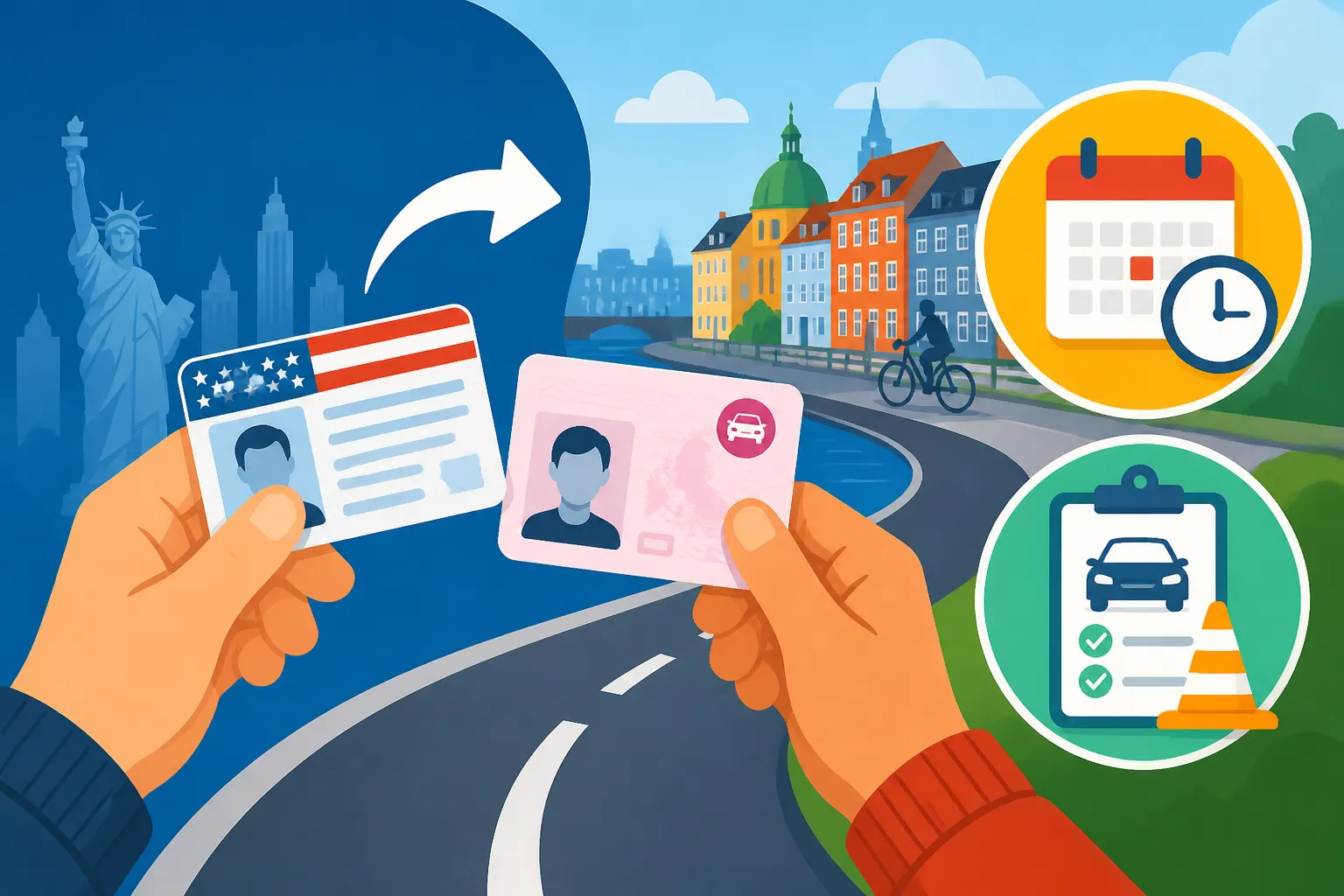
This is where the reality check hits for many Americans. Unlike some countries or regions that have reciprocal agreements allowing a straight swap, US driver's licenses are not directly exchanged for Danish ones without going through a process that includes both a theoretical and a practical driving test. Yes, even if you've been driving for decades without a single accident, Denmark generally requires you to prove your knowledge of their specific traffic laws and demonstrate your driving ability under local conditions. This can feel incredibly frustrating and even a bit insulting, but it's the system, and we just have to navigate it.
The entire process involves several key steps, and each requires patience, attention to detail, and a willingness to embrace the Danish way of doing things.
Applying to Borgerservice: The Starting Line
Your journey begins at your local Borgerservice (Citizen Service Center). This isn't just a casual stroll-in; you'll need to gather a specific set of documents beforehand. Missing even one item can send you home and delay the entire process, which is exactly the kind of bureaucratic hiccup we all dread as expats.
Here’s what you’ll typically need to bring:
- Your CPR Number: Absolutely non-negotiable. You can't even begin this process without it.
- Valid Residence Permit (Opholdstilladelse): Proof that you are legally residing in Denmark.
- Original US Driver's License: This is the license you’re seeking to exchange. Make sure it's valid and not expired.
- Recent Passport Photo: Headshots are specific in Denmark, often with strict requirements for background and facial expression. It's best to get these done at a professional photo booth or a photographer who knows Danish passport photo standards to avoid rejection.
- Medical Certificate (Lægeattest): This is a critical and often underestimated step. You must visit a Danish GP (General Practitioner) to obtain this. We'll dive deeper into this in the next section, but be prepared for a comprehensive check-up, not just a quick glance. You might need to book this well in advance.
- Declaration of Surrender: At some point in the process, you will be required to sign a declaration stating that you will surrender your US driver's license upon successful acquisition of your Danish one. This can be a point of contention for some, as it means you effectively give up your physical US license.
- Application Form: Usually available at Borgerservice or sometimes downloadable online. Fill it out completely and accurately.
- Fees: There are administrative fees for the application itself, separate from driving school costs or test fees.
Once you submit your application and documents at Borgerservice, they will review everything. If all is in order, they'll process your application and give you the green light to proceed with the theoretical and practical tests.
The Theoretical Test (Teoriprøve)
Don't let your decades of driving experience fool you into thinking this will be a breeze. The Danish theoretical test is designed to ensure you understand Danish traffic laws, which can differ significantly from those in the US.
- Format: It's typically a multiple-choice test, often presented on a computer. The questions are usually accompanied by images or videos depicting traffic situations. You’ll need to identify hazards, apply right-of-way rules, and understand various traffic signs.
- Content: Expect questions on topics like speed limits, parking regulations, specific rules for roundabouts, bicycle safety (a huge one in Denmark!), pedestrian crossings, and signs that might not have direct equivalents in the US. For instance, the infamous "right-hand rule" (højre vigepligt), where traffic from the right has priority at unmarked intersections, is a concept often drilled into Danish drivers but less common in the US.
- Language: While the test is typically in Danish, you can often request an English version if you book your test in advance through your driving school. However, it's wise to still familiarize yourself with Danish traffic terminology, as road signs and some driving school materials will primarily be in Danish.
- Preparation: This is where a driving school becomes indispensable. They will provide you with textbooks, online practice platforms, and mock tests specifically designed to prepare you for the Danish theoretical exam. Trying to wing it by simply reading an English translation of traffic laws is a recipe for failure.
The Practical Driving Test (Køreprøve)
If you pass the theoretical test (congratulations!), the next hurdle is the practical driving test. This is often the most nerve-wracking part for experienced drivers from abroad.
- The Examiner: The test is conducted by a police examiner (politiprøvesagkyndig), who sits in the back of the car, observing your every move.
- The Car: You will typically take the test in a driving school car, usually a newer model with dual controls. Your driving instructor will be present during the test, sitting in the passenger seat next to you, which can be comforting.
- What to Expect: The examiner will guide you through a route, assessing your ability to drive safely, independently, and in accordance with Danish traffic rules. They'll watch how you handle various situations: turning, parking, navigating roundabouts, merging, speed adjustments, and your overall awareness of other road users, especially cyclists.
- Common Pitfalls for US Drivers: Many US drivers struggle with the subtle differences in Danish driving culture. Being overly aggressive, failing to yield to cyclists in appropriate situations, not checking mirrors often enough, or driving too fast for conditions (even if within the speed limit) can lead to deductions. The Danish driving style emphasizes fluidity, predictability, and extreme caution around vulnerable road users. Turning right on a red light, a common practice in many US states, is almost universally forbidden in Denmark unless explicitly indicated by a green arrow.
- The Outcome: The examiner will tell you immediately whether you've passed or failed. If you pass, they'll issue a temporary driving permit, and your new Danish driver's license will be sent to your registered address via E-Boks vs. Mit.dk: Receiving Official Financial Mail from the State within a few weeks. If you fail, you'll need to rebook and pay for another test. This is not uncommon, so don't get too discouraged if it happens.
Getting a Medical Certificate (Lægeattest): A Crucial First Step
Before you can even apply at Borgerservice, you need to prove you're medically fit to drive. This means visiting a Danish general practitioner for a driving license medical examination. It’s not just a formality; it’s a genuine check-up.
First, you’ll need to be registered with a Danish GP. If you’re still in the process of choosing one, our guide on How to Choose and Change Your General Practitioner (GP) in Denmark can be incredibly helpful. Once you have a GP, call their clinic and specifically request an appointment for a driving license medical certificate (lægeattest til kørekort). Be clear about the purpose of your visit when booking, as these appointments might be longer than a routine check-up.
During the examination, the GP will check several aspects of your health:
- Eyesight: This includes a standard eye chart test and often a check for peripheral vision and color blindness. If you wear glasses or contact lenses, make sure to bring them, as your license will be endorsed to reflect this.
- General Health: The doctor will ask about your overall health, any chronic conditions (like diabetes, epilepsy, or significant heart issues), and medications you are currently taking. They need to assess if these conditions could impair your ability to drive safely.
- Neurological Checks: They might perform simple neurological tests, like checking your reflexes and coordination.
- Mental Health: They will inquire about any history of mental health conditions that could affect your concentration or judgment while driving.
The cost for this medical certificate is typically out-of-pocket, as it's not covered by your standard public [The Yellow Health Card (Sundhedskort): Your Key to Danish Healthcare). Prices can vary, but expect to pay several hundred DKK. Once the GP completes the examination and deems you fit to drive, they will issue the certificate, which you then submit to Borgerservice with your other application documents. This step can often be a bottleneck due to GP appointment availability, so try to book it as early as possible.
Choosing a Driving School (Køreskole) and Costs
Even if you consider yourself a seasoned driver, enlisting the help of a driving school is practically mandatory for exchanging a US license. They don't just teach beginners; they specialize in preparing experienced foreign drivers for the Danish tests.
- Finding an English-Speaking Instructor: This is paramount. While you might understand Danish well enough for daily life, traffic laws and nuanced driving instructions require crystal-clear communication. Many driving schools in larger cities like Copenhagen and Aarhus cater to expats and have English-speaking instructors. Ask around in expat groups or forums for recommendations.
- What They Offer: A good driving school will provide:
- Theoretical Lessons: These classes (or online modules) are specifically designed to teach you Danish traffic laws and prepare you for the theoretical test. They often use engaging materials and practice tests.
- Practical Driving Lessons: Even if you're a good driver, these lessons are crucial. The instructor will observe your driving, correct any habits that don't align with Danish standards, and familiarize you with common test routes and situations. They'll specifically focus on areas like roundabout etiquette, parallel parking (which is often a mandatory maneuver in the test), and interacting with cyclists and pedestrians.
- Car for the Test: The driving school will arrange for you to use their car for both your theoretical and practical tests, which is usually included in the package.
Let's talk about the elephant in the room: costs. Getting a Danish driver's license from scratch (or effectively from scratch, as it is for US license holders) is not cheap. It's a significant investment, but a necessary one if you plan to drive in Denmark long-term.
Here’s an estimated breakdown of typical costs (these are averages and can vary greatly by school and city, so always get specific quotes):
| Item | Estimated Cost (DKK) | Notes |
|---|---|---|
| Medical Certificate (Lægeattest) | 400 – 800 | Paid directly to your GP, not covered by public health. |
| Borgerservice Application Fee | 280 – 1,000 | Varies by municipality and year, check current rates. |
| Driving School Package (basic) | 12,000 – 18,000 | Includes theoretical lessons, some practical lessons, car for tests, materials. |
| Additional Driving Lessons | 500 – 700 per lesson | Most experienced drivers will still need 5-10 extra lessons to adapt. |
| Theoretical Test Fee (Police) | 1,000 | Paid to the police, usually through the driving school. |
| Practical Test Fee (Police) | 1,000 | Paid to the police, usually through the driving school. |
| Car Rental for Practical Test (School) | 1,000 – 1,500 | Fee charged by the driving school for using their car during the official test. |
| Total Estimated Cost (minimum) | 16,000 – 23,800 | Expect higher if you need many extra lessons or re-tests. (~2100-3200 USD) |
This upfront cost can be quite a shock, but view it as an investment in your independence and safety on Danish roads. It's a common budget item for many expats and something to factor into your overall Cost of Living in Denmark 2026: Budgets for Singles and Families.
Navigating the Waiting Times and Bureaucracy
The Danish system, while efficient in many ways, isn't always fast. Especially when it comes to processes involving multiple government agencies and private entities (like driving schools and GPs), waiting times can accumulate and test your patience. Many expats find this part particularly trying, especially when they're used to quicker turnaround times back home.
Let's lay out a typical timeline, keeping in mind that these are estimates and can fluctuate:
- GP Appointment for Medical Certificate: Booking an appointment with your GP can take anywhere from a few days to a a couple of weeks, depending on their availability.
- Borgerservice Processing: Once you submit your application at Borgerservice, it might take a few days to a couple of weeks for them to process it and give you the go-ahead for tests.
- Driving School Availability: Getting enrolled in a driving school and starting lessons usually depends on their schedule. Theoretical lessons might start immediately, but practical lessons depend on instructor availability.
- Booking Theoretical Test: Once your driving school deems you ready, booking the official theoretical test through the police system can sometimes involve waiting lists, ranging from a few days to several weeks.
- Booking Practical Test: This is often the longest wait. After passing your theoretical test and completing your practical lessons, you might face a wait of 2-6 weeks, or even longer during peak seasons (like summer or around holidays), to get a slot for your practical test.
All these individual waits can quickly add up, easily pushing the entire process to several months. It's not uncommon for expats to take 3-6 months to complete everything from start to finish. This is precisely why it's so important to start the process as soon as possible after your CPR registration, ideally within the first month or two, to avoid nearing or exceeding your 180-day grace period.
During this period of waiting, you'll be relying heavily on public transport or your trusty bike, making sure your phone is always charged and you have data for navigation – maybe even with an eSIM from providers like Airalo to stay connected cheaply. Our guides on Public Transport in Denmark: Rejsekort, Trains, and Commuting and Danish Cycling Culture: Rules, Buying a Bike, and Safety will become your best friends. It’s a great opportunity to truly embrace the Danish way of life, even if you’re missing the convenience of a car.
What if My US License Expires During the Process?
This is a really important concern, and it can throw a serious wrench into your plans. Generally, your foreign driver's license must be valid when you submit your application to Borgerservice. If your US license expires while your application is being processed, or while you're waiting for your theoretical or practical tests, it can create significant complications.
In most cases, Danish authorities require a currently valid foreign license for the exchange process. If it expires mid-way, they might pause or even reject your application, forcing you to start over, potentially from the very beginning, and possibly requiring you to obtain a new, valid US license first. This could mean a trip back to the US or navigating international renewal processes, which can be a huge hassle and costly.
My strong advice: Check the expiration date of your US driver's license well in advance of your move to Denmark. If it's due to expire within 6-12 months of your arrival, try to renew it before you leave the US. This will give you a much longer window to complete the Danish exchange process without added stress. If you can't renew it before you leave, make renewing it a top priority with your state's DMV as soon as you realize it will expire during your Danish stay, even if you have to do it by mail.
Driving Without a Valid Danish License: The Risks
Let me be absolutely clear: driving in Denmark without a valid Danish driver's license after your 180-day grace period has expired is a serious offense. This isn't just about getting a ticket; the consequences can be far-reaching and severely impact your life in Denmark.
- Hefty Fines: You will face significant financial penalties. These fines are not trivial and can be in the thousands of DKK.
- Confiscation of Vehicle: In some cases, especially with repeat offenses or if you're involved in an accident, the vehicle you're driving (even if it's not yours) can be confiscated by the police.
- Insurance Invalidity: This is perhaps the most critical risk. If you are driving without a valid license, your car insurance policy will almost certainly be null and void. If you cause an accident, you will be personally liable for all damages, which can be hundreds of thousands or even millions of DKK. This could lead to financial ruin.
- Revocation of Future License: If you're caught driving illegally, it can jeopardize your ability to obtain a Danish driver's license in the future, as it will be noted in your record.
- Immigration Consequences: For non-EU/EEA citizens, serious traffic offenses, including driving without a valid license, can have negative implications for your residence permit, especially if you're in the process of extending it or applying for permanent residency. It can be seen as a violation of Danish law and a lack of respect for the legal system.
The Danish authorities take traffic laws and safety very seriously. It's simply not worth the risk to drive without a valid license once your grace period is over. Embrace public transport, cycling, and walking during this interim period.
Practical Tips and Expat Experiences
Navigating the driver's license exchange in Denmark can be a real emotional rollercoaster for expats. You might feel a mix of frustration, amusement at the bureaucracy, and eventually, a sense of accomplishment. Here are some practical tips gleaned from my own and other expats' experiences:
- Embrace the Driving School: Seriously, don't skip this. Even if you're a Formula 1 driver, Danish traffic rules and driving culture have their nuances. A good instructor will highlight the differences and ensure you're prepared for the specific expectations of the police examiner. For instance, the emphasis on checking blind spots (the "dødvinkel" check) for cyclists is far more pronounced here.
- Focus on Danish Specifics: Pay extra attention to rules concerning roundabouts (they're everywhere!), yielding to the right (højre vigepligt), and bicycle lanes. Danes are incredibly direct, and their driving reflects that – predictable and rule-abiding.
- Don't Rush It: As tempting as it is to speed through, take your time with the theoretical materials and practical lessons. It's better to pass on the first try than to rush and face re-test fees and delays.
- Join Expat Forums: Groups on Facebook or other platforms are invaluable resources. You can ask for recommendations for English-speaking driving schools in your area, share experiences, and get tips from others who have gone through the same process. They can also be a great source of emotional support when the bureaucracy gets overwhelming.
- Practice, Practice, Practice: Use any online theoretical test platforms your driving school provides. For practical driving, if you have a friend or partner with a Danish license, ask them to take you out for practice drives (but only within your 180-day grace period if you're still on your US license, or once you have your temporary Danish one if you failed the practical test and are waiting for a re-take). Have them point out local rules and typical Danish driving habits.
- Understand "Hygge" on the Road: While it sounds counterintuitive, Danish driving, much like Danish life, has an underlying sense of order and consideration. It's less about aggressive maneuvering and more about smooth transitions, clear signaling, and anticipating others' movements, especially cyclists.
- Budget Accordingly: As discussed, this process is expensive. Factor the costs into your moving budget from the very beginning. This includes the medical certificate, Borgerservice fees, driving school packages, extra lessons, and test fees. Use a service like Wise for international money transfers if you're still moving funds from abroad to cover these costs.
- Don't Drive Illegally: After your 180 days, accept that you cannot drive until you have a Danish license. It's not worth the risk to yourself, your finances, or your immigration status. The public transport system is excellent, and cycling is a way of life!
The process of exchanging your US driver's license for a Danish one is certainly a rite of passage for many American expats. It's challenging, often expensive, and definitely bureaucratic, but once you hold that Danish license, you’ll have a new sense of independence and integration into your new home.
Disclaimer
The information provided in this guide is for general informational purposes only and does not constitute legal or professional advice. While we strive to keep the information up-to-date and accurate, regulations regarding driver's licenses and immigration in Denmark can change. It is always recommended to consult official Danish authorities (like Borgerservice, SIRI, or the Danish Transport Authority) or a qualified legal professional for the most current and specific advice pertaining to your individual situation. We are not responsible for any actions taken based on the information in this guide.