What Does the Danish Post Office (PostNord) Actually Do?
When you first arrive in Denmark, you might expect the post office to be a straightforward affair, much like in your home country. However, you'll quickly realize that PostNord, Denmark's primary postal and logistics provider, operates a bit differently in this highly digitalized society. This isn't just about sending letters anymore; it's a complex ecosystem of package delivery, digital communication, and logistical hubs, often leading to a good deal of head-scratching for newcomers. This guide will demystify PostNord's role today and equip you with the knowledge to navigate its services smoothly.
The Evolving Role of PostNord in a Digital Age
Back in the day, the Danish postal service was much like any other: a place where you'd send letters, buy stamps, and maybe even pay your bills. But the world, and especially Denmark, has moved on. The digital revolution hit hard and fast here, transforming what a "post office" actually does. Today, PostNord is less about paper mail and more about powering the e-commerce engine that keeps Denmark ticking. It's a logistical beast, really, deeply integrated into the fabric of daily life, even if its traditional storefronts have largely disappeared.
Beyond Letters: A Logistics Powerhouse
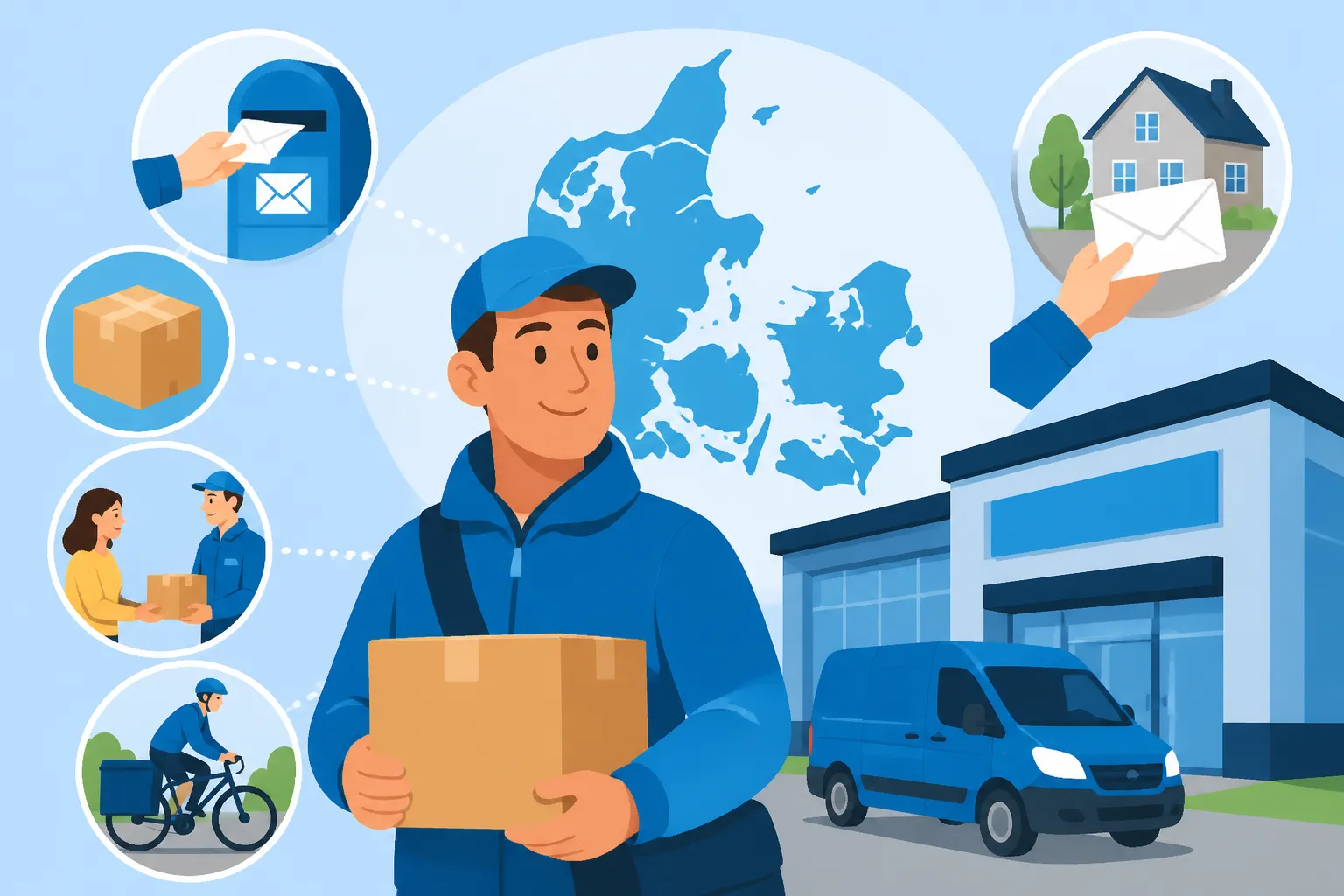
Remember those quaint little post offices, often standalone buildings with bustling counters? Well, those are mostly a thing of the past in Denmark. The volume of traditional letters has plummeted, making those large-scale operations redundant. Instead, PostNord has pivoted dramatically, becoming an absolute behemoth in parcel and package delivery. Think about it: every online order you place, whether it's for new furniture, a pair of shoes, or even groceries from some services, will likely pass through PostNord's network at some point.
This transformation is particularly noticeable because PostNord is actually a Danish-Swedish company. It bridges the two countries, making cross-border e-commerce between them incredibly efficient. For us expats, this means that while sending a physical letter might feel like a relic of the past, receiving that international package from home or getting your latest online purchase from a Danish webshop is very much a part of the modern PostNord experience. It’s a logistics company first and foremost, focusing on speed, tracking, and efficient distribution networks rather than solely on the delivery of physical correspondence.
The Decline of Physical Post Offices
One of the biggest surprises for many newcomers is the sheer lack of traditional PostNord offices. You won't find a big PostNord sign on a high street building in most Danish towns anymore. This isn't a sign that the service has disappeared; rather, it has integrated itself into everyday retail.
What used to be a dedicated Post office is now typically a "Postbutik" (post shop) or "Pakkeshop" (parcel shop) located within a supermarket, convenience store, or even a kiosk. This can be a bit disorienting at first. You might walk into a local Netto or Føtex supermarket, pick up your groceries, and then head to a small, often unassuming counter, sometimes right by the customer service desk, to pick up or drop off a parcel. While it means fewer dedicated staff members focused solely on postal services, it also means extended opening hours, often matching the supermarket's schedule. This shift reflects Denmark's pragmatic approach to public services: integrate where it makes sense, streamline for efficiency, and embrace digital solutions wherever possible.
Essential Services for Expats: Packages, Parcels, and Practicalities
For expats, your most frequent interactions with PostNord will almost certainly revolve around packages – sending them, receiving them, and dealing with the occasional customs hiccup. The system is designed for convenience, but it has its quirks that are important to understand.
Sending and Receiving Packages in Denmark
Navigating the Danish package delivery system can feel like learning a new language, especially with all the options available. When you're sending or expecting a package, whether it's a domestic delivery within Denmark or something coming from abroad, PostNord offers various methods. The most common for receiving parcels are home delivery, picking up at a "Postbutik," or using one of their increasingly ubiquitous "Pakkeboks" (parcel boxes).
Pakkebokse are perhaps the most Danish solution to parcel delivery. These are large, bright yellow locker systems found all over the country – outside supermarkets, at train stations, or just on street corners. They're a brilliant solution for busy individuals because they offer 24/7 self-service pick-up and drop-off. When a parcel is delivered to a Pakkeboks, you'll get a text message (SMS) or an email with a unique code. You simply go to the Pakkeboks, enter the code on the touchscreen, and a locker door pops open with your package inside. It's incredibly convenient and widely used. If you're using an eSIM from a provider like Airalo while you're getting settled, make sure your temporary number is linked to your PostNord account or delivery preferences, so you don't miss these critical notifications.
For international incoming parcels, there's an extra layer of complexity: customs. Denmark, being part of the EU, has specific rules for goods arriving from outside the EU. You might find yourself unexpectedly charged import VAT and an administrative handling fee by PostNord. This can be a real pain, especially if you weren't expecting it. Usually, you'll receive a notification (either digitally via the PostNord app or a physical letter) stating that your package is being held, and you'll need to pay these fees online before it's released for delivery. It's a common expat frustration, so be prepared for potential extra costs when ordering from non-EU countries. For a deeper dive into these charges, you might want to look into Understanding the Danish Customs Rules for Importing Goods Online.
Navigating Returns and Pick-ups
Online shopping is huge in Denmark, and with it comes the need for easy returns. Most Danish online retailers provide a pre-paid return label, often for PostNord. You simply affix the label to your package and drop it off at any Postbutik or Pakkeboks (if it fits and the return service supports it). It’s usually a smooth process, but always double-check the return instructions from the specific retailer, as some might use other couriers.
If PostNord attempts a home delivery but you're not there to receive it, they'll usually leave a notification either physically in your mailbox or digitally through the PostNord app (or SMS/email). This notification will tell you which Postbutik your package has been redirected to for pick-up. You'll typically have about 7-10 days to collect it before it's returned to the sender. It's vital to pick it up promptly, as returns to sender can be a lengthy and frustrating process, especially for international items. When you go to pick up your package, remember to bring valid ID (like your Yellow Health Card or passport) and the pick-up code from your notification.
The PostNord app is your best friend here. It centralizes all your tracking, notifications, and even allows you to redirect packages if you know you won't be home. It's a classic example of how Danish services lean heavily on digital convenience. Just make sure your registered phone number (the one linked to your CPR) is up-to-date for seamless integration.
Digital Mail, Physical Mail, and Official Communications
Here's where it gets really interesting, and often confusing, for expats. In Denmark, the vast majority of official communication from government agencies, municipalities, and even many private companies has shifted away from physical mail and into a mandatory digital system. This fundamentally changes what PostNord handles in terms of official documents.
The Shift from Physical Mail to Digital Post e-Boks and Mit.dk
For most official communications in Denmark, your physical mailbox is nearly obsolete. Instead, everything from your tax statements from SKAT, notifications from Udbetaling Danmark, letters from your municipality, and even some bank statements will arrive in your Digital Post. The two main platforms for this are e-Boks and Mit.dk. These are secure digital mailboxes that are legally considered your official point of contact with Danish authorities.
So, what does PostNord actually do in this scenario? Essentially, very little for official mail. They will only deliver physical letters if a sender explicitly opts out of Digital Post for that specific communication, or if the recipient (you) is exempt from Digital Post (which is rare for working expats). This means that if you're waiting for something critical from, say, SKAT, you should be checking your e-Boks or Mit.dk, not your physical mailbox. Missing an important digital letter can have serious consequences, from fines to missed deadlines. It's crucial to understand Navigating the Digital Post (e-Boks/Mit.dk) System for Official Mail as soon as you settle here.
This digital-first approach means that your physical address, while important for your CPR registration, is less about receiving official letters and more about establishing your residency and getting your packages.
Managing Your Address and Mail Forwarding
Your address is fundamentally linked to your CPR number, which is your key to almost everything in Denmark, including healthcare. When you move, you must register your new address with the folkeregister (national register) via Borger.dk. This isn't just a formality; it updates your official residential record. If you are staying in temporary housing, perhaps through a service like Spotahome, before finding a permanent place, it's a good idea to clarify how you'll receive any necessary physical mail in the interim. While most things are digital, some initial setup items might still arrive physically.
Once you register your address change on Borger.dk, it automatically notifies PostNord. This means your new address should be updated in their system for package deliveries. However, if you're temporarily leaving Denmark or want to ensure you don't miss any physical mail during a transition, you can set up a mail forwarding service directly with PostNord. This service redirects any physical letters (which, as we've discussed, are few and far between from official sources) to your new temporary or international address. While most services like your Yellow Health Card are tied to your CPR and automatically update with an address change, understanding the system helps. You might find it useful to read about Moving Addresses: Do You Automatically Get a New Yellow Card? for more context on how address changes affect official documents.
Common Expat Frustrations and How to Overcome Them
Despite its efficiency, the Danish postal and logistics system can present a few head-scratchers for expats. Trust me, you're not alone if you've felt a bit lost trying to figure out a delivery notification or understand a customs charge.
Language Barriers and Customer Service
Ah, the good old language barrier! While many Danes speak excellent English, interacting with customer service in Denmark can sometimes be a challenge if you don't speak Danish. This is particularly true if you need to call PostNord's hotline about a complex delivery issue or a missing parcel. You might get lucky and connect with an English-speaking agent immediately, but it's not always guaranteed.
My best advice here is to start online. PostNord's website often has an English option, and their tracking system is quite robust. If you need to make an inquiry, try using their online contact forms or chat functions, if available, as these are often easier to manage with translation tools if you're struggling. For more complex issues, if you have a Danish friend or colleague, don't hesitate to ask for help with making the call. They'll understand the nuances better and can navigate the conversation. It's a common expat tactic to lean on the goodwill of locals for these administrative hurdles!
Understanding Delivery Notifications and Fees
Delivery notifications in Denmark, whether via SMS, email, or a physical note, can sometimes be frustratingly brief or use specific Danish terminology that isn't immediately clear. For example, a note saying "pakke omdirigeret til pakkeshop" simply means your package has been redirected to a parcel shop. But if you're new, you might wonder why it wasn't delivered to your door. This usually happens if you weren't home, if the package required a signature, or if the sender chose a parcel shop delivery option.
The most common frustration, hands down, is dealing with customs fees and handling charges for international parcels from outside the EU. You'll often receive a notification (either digital or physical) stating that your package is awaiting payment of "told og moms" (customs and VAT) plus an "udlægsgebyr" or "importgebyr" (disbursement or import fee) from PostNord for handling the customs process. These fees can quickly add up, turning an inexpensive online purchase into a surprisingly costly endeavor.
Here's a quick breakdown of what you might encounter:
| Fee Type | Description | Who Charges It | When It Applies |
|---|---|---|---|
| Moms (VAT) | Danish sales tax (typically 25%) applied to the value of goods + shipping from outside the EU. | SKAT (Danish Tax Agency), collected by PostNord | All goods from non-EU countries, regardless of value (with some very minor exceptions). |
| Told (Customs Duty) | Specific duties on certain types of goods from outside the EU. | SKAT, collected by PostNord | Goods valued over ~DKK 1,150 (approx. €150) from outside the EU. |
| Importgebyr / Udlægsgebyr | PostNord's administrative fee for handling the customs clearance process on your behalf. | PostNord | Every package from outside the EU that incurs VAT/duty. |
It's important to understand that PostNord's administrative fee is separate from the customs and VAT that go to the Danish state. You're paying them for the service of clearing your package through customs. Always factor these potential costs in when buying items from non-EU countries. The PostNord app usually makes it easy to pay these fees online, which then releases your package for final delivery.
In conclusion, PostNord in Denmark is a modern logistics giant, less about traditional letters and more about efficient package delivery in a highly digital society. While it means fewer physical post offices and more reliance on digital tools like the PostNord app and Pakkebokse, it's an incredibly efficient system once you get the hang of it. Embrace the digital, keep an eye on your e-Boks for official mail, and don't be shy about asking for help with those tricky Danish delivery notifications!
Disclaimer
The information provided in this guide is for general informational purposes only and does not constitute legal or financial advice. While we strive to keep the content up-to-date and accurate, regulations and services in Denmark can change. Always consult official sources, such as PostNord's website, Borger.dk, or professional advisors for the most current and specific information pertaining to your individual situation.