Navigating Building Management (Ejendomskontor) vs. Landlord Roles
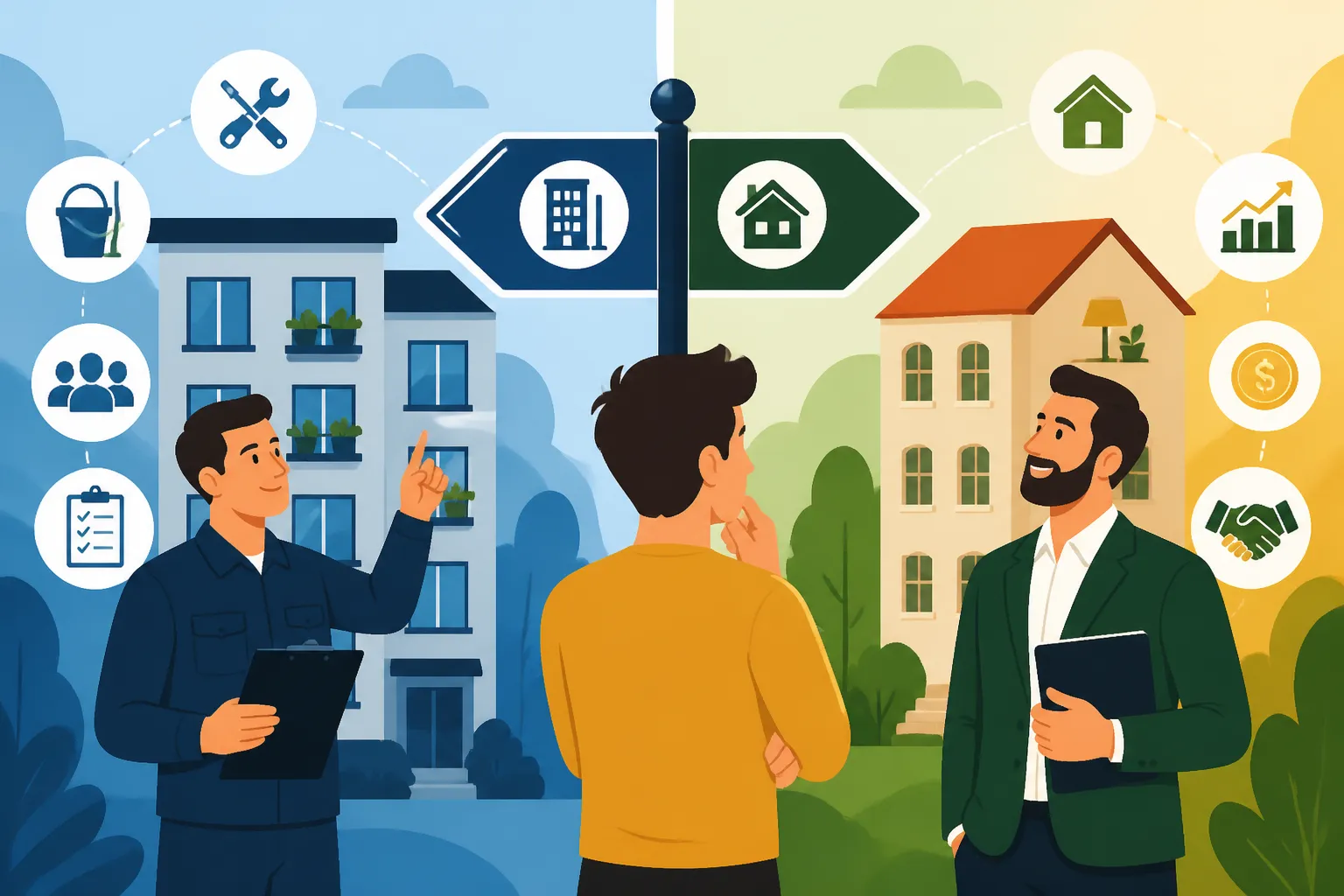
Oh, the glorious Danish rental market! If you've just moved here, or even if you've been around a while, you've probably faced that moment of utter confusion: who do you actually call when the communal washing machine eats your favorite socks, or a window suddenly won't close? Is it the landlord you barely remember meeting, or that mysterious "building management" entity? This guide is here to untangle the often-blurred lines between your landlord (udlejer) and the building management (ejendomskontor) in Denmark, equipping you with the knowledge to navigate your rental life with confidence and fewer head-scratching moments.
Understanding the Landlord Udlejer Their Core Domain
In Denmark, your landlord, or udlejer, is the individual or legal entity that owns the property you are renting. This might be a private person who owns a single apartment, or it could be a large company that owns an entire apartment complex. Regardless of their size, the landlord holds the ultimate responsibility for the property itself and the terms of your tenancy. They are the ones with whom you have signed your lease agreement, typically the standard Danish form called a Typeformular A10: Understanding the Standard Danish Lease Agreement.
Their primary duties revolve around the legal and financial aspects of your tenancy, as well as the fundamental structural integrity of the property. This means they are responsible for ensuring the property is in a habitable condition when you move in, and for addressing any major structural defects that might arise. Think big-ticket items: a leaking roof, foundational issues, major exterior wall damage, or problems with the building's central heating system. These are not typically day-to-day maintenance concerns but rather significant repairs that impact the long-term viability and safety of the building. Your landlord is also the one who collects your rent, manages your initial rental costs, including your Initial Rental Costs: Navigating Deposits and Prepaid Rent Laws, and is ultimately responsible for the return of your deposit, subject to the conditions laid out in your lease and the outcome of The Move-Out Inspection Fraflytningssyn: Getting Your Deposit Back.
Communication with your landlord can vary greatly. Some private landlords prefer direct contact for everything, while larger corporate landlords might have an entire department dedicated to tenant relations, or they might outsource specific functions to a building management company. It’s crucial to understand this distinction from the outset, often clarified within your lease agreement. For example, a common frustration for new arrivals is discovering that their beautiful apartment from a platform like Spotahome doesn't come with light fixtures, which often falls under tenant responsibility unless explicitly stated otherwise, illustrating how landlord agreements can delegate certain expectations to the tenant directly. However, for any significant breaches of contract, major structural repairs, or issues concerning your deposit and lease termination, your landlord is the ultimate decision-maker and the person you must formally engage with.
The Ejendomskontor Building Management The Operational Arm
Now, let's talk about the ejendomskontor, or building management. This is typically a separate entity or a specific department within a larger housing association, tasked with the day-to-day operation, maintenance, and administration of a residential property or complex. Think of them as the hands-on operators, the people who deal with the practicalities of communal living. They are the ones who make sure the lights are on in the hallway, the grass is cut in the courtyard, and the shared laundry room is functioning as it should.
Their responsibilities usually include things like cleaning common areas, routine maintenance and minor repairs within your apartment (provided these aren't your responsibility as per the lease), and handling issues related to shared facilities. If you have a leaky tap, a clogged drain, or a broken lock on your door, the ejendomskontor is usually your first port of call. They often manage the building’s communal waste disposal systems, coordinate access for contractors for building-wide services, and ensure that the Washing Machine Etiquette: Shared Laundries Vaskekælder in Apartments is maintained. For expats trying to find English-Speaking Handymen: Finding Plumbers and Electricians for their own apartment, the ejendomskontor might even have a list of trusted contractors they work with regularly.
The ejendomskontor also plays a crucial role in maintaining peace and order within the building. They are often the ones who mediate Noise Complaints: How to Deal with Loud Neighbors Legally, enforce house rules, and manage access like key distribution or intercom systems. They act as the buffer between tenants and the landlord for most operational issues, ensuring that the landlord isn't bogged down by every minor repair or tenant squabble. For newcomers, understanding that this central point of contact exists can save a lot of frustration, as they are equipped to handle most of the immediate, practical issues that arise in daily rental life.
Navigating the Overlap Who Do You Call When Things Go Wrong?
Here's where it gets a little murky, and where most expats (and Danes, frankly!) encounter confusion. The division of labor between your landlord and the ejendomskontor isn't always crystal clear, and it largely depends on the specific agreements outlined in your rental contract. Your lease agreement is the Bible here, detailing who is responsible for what. Sometimes, a landlord might retain more direct control over maintenance, especially in smaller properties, effectively blurring the line where a separate ejendomskontor would typically step in. Conversely, a large housing association might delegate almost everything to a highly organized ejendomskontor.
The key is to understand the nature of your problem. Is it a major structural issue or something that affects the building's long-term integrity? That’s likely the landlord. Is it a day-to-day operational issue or a problem with shared facilities? That’s almost certainly the ejendomskontor. For instance, if your apartment has a recurring issue with plumbing that the ejendomskontor has repeatedly patched up but never truly fixed, it might be time to escalate the issue to the landlord, as it could indicate a deeper, structural problem. However, if your lightbulb blows (and you remember that Why Your Danish Apartment Comes Without Light Fixtures), that’s usually on you!
Always start by consulting your lease agreement. It should specify who to contact for different types of issues. If it’s not clear, the general rule of thumb for most operational matters is to contact the ejendomskontor first. If they can’t help, or if the issue falls outside their purview, they will usually direct you to the landlord or their representative. It’s vital to document all communications: keep emails, note down dates and times of phone calls, and take photos or videos of any issues. This paper trail is invaluable if you ever need to escalate an issue or involve tenant protection agencies like the Tenant Rights and LLO Lejernes Landsorganisation Protection.
Here's a quick reference table to help clarify typical responsibilities:
| Responsibility Area | Typically Landlord (Udlejer) | Typically Building Management (Ejendomskontor) | Common Overlap/Grey Area |
|---|---|---|---|
| Lease Agreement | Drafts, signs, renews, deposit management | May facilitate signing, key handover | Specific clauses on maintenance and tenant obligations |
| Rent & Deposit | Collects rent, manages deposit, initial payments | Occasionally handles payment reminders for landlord | |
| Major Structural Repairs | Roof, facade, foundational, central heating system | Coordinates access for contractors, reports issues to landlord | Defines what constitutes 'major' vs. 'minor' repairs |
| Minor Internal Repairs | (If explicitly stated in lease, e.g., appliance replacement) | Leaky taps, clogged drains, door locks, window issues | Tenant often responsible for minor internal repairs (e.g., lightbulbs, minor wear and tear) |
| Common Area Maintenance | (For small properties without ejendomskontor) | Cleaning, gardening, snow removal, waste management | If a small building, landlord may directly manage |
| Shared Facilities | (For small properties without ejendomskontor) | Laundry rooms, bike sheds, storage units, communal spaces | |
| Neighbour Disputes | Escalation point for serious, unresolved issues | First point of contact, mediation, enforcement of house rules | Enforcement of house rules, communication of serious breaches |
| Move-in/Move-out | Final approval of inspection, deposit return | Conducts initial The Move-In Inspection Indflytningssyn: Documenting Property Flaws and move-out inspections, key management | Documentation of defects, wear and tear |
| Utilities | May include some utilities in rent (Aconto) | Facilitates setup (common areas), meter readings | Tenant usually sets up their own utilities directly for their unit |
Best Practices for Expat Tenants in Denmark
Navigating the Danish rental landscape can feel like a maze, especially with the language barrier and different administrative structures. As an expat, arming yourself with knowledge and good habits is your best defense against misunderstandings and disputes. First and foremost, never sign a lease agreement without thoroughly reading and understanding every clause, particularly sections outlining maintenance responsibilities and notice periods. Don't be shy about asking for an English translation if you're not fully confident in your Danish – though the legally binding document will always be in Danish.
Secondly, always communicate in writing, especially when dealing with maintenance requests or complaints. An email provides a clear, timestamped record of your communication, which can be invaluable if a dispute arises. If you do have a phone conversation, follow up with an email summarizing what was discussed and agreed upon. Remember to keep your contact details, including your digital post address (like E-Boks: Don't Forget to Update Your Digital Mail Address), updated with both your landlord and ejendomskontor to ensure you receive all official communications.
Finally, know your rights as a tenant. Denmark has strong tenant protection laws, and organizations like LLO (Lejernes Landsorganisation) can provide advice and support if you feel your landlord or ejendomskontor is acting unfairly. While platforms like Spotahome can simplify the initial search for an apartment, always remember that the specific details of management and maintenance will be in your local Danish lease. Be proactive, document everything, and don't hesitate to seek advice from fellow expats or tenant associations if you're unsure. Taking these steps will help you distinguish between the landlord's ultimate responsibility and the ejendomskontor's daily operational role, making your rental experience in Denmark much smoother.
Disclaimer
The information provided in this guide is intended for general informational purposes only and does not constitute legal advice. While we strive to provide accurate and up-to-date information, rental laws and regulations in Denmark can be complex and may change. We strongly recommend consulting with a legal professional or a tenant rights organization like LLO for advice specific to your individual situation.