English-Speaking Handymen: Finding Plumbers and Electricians
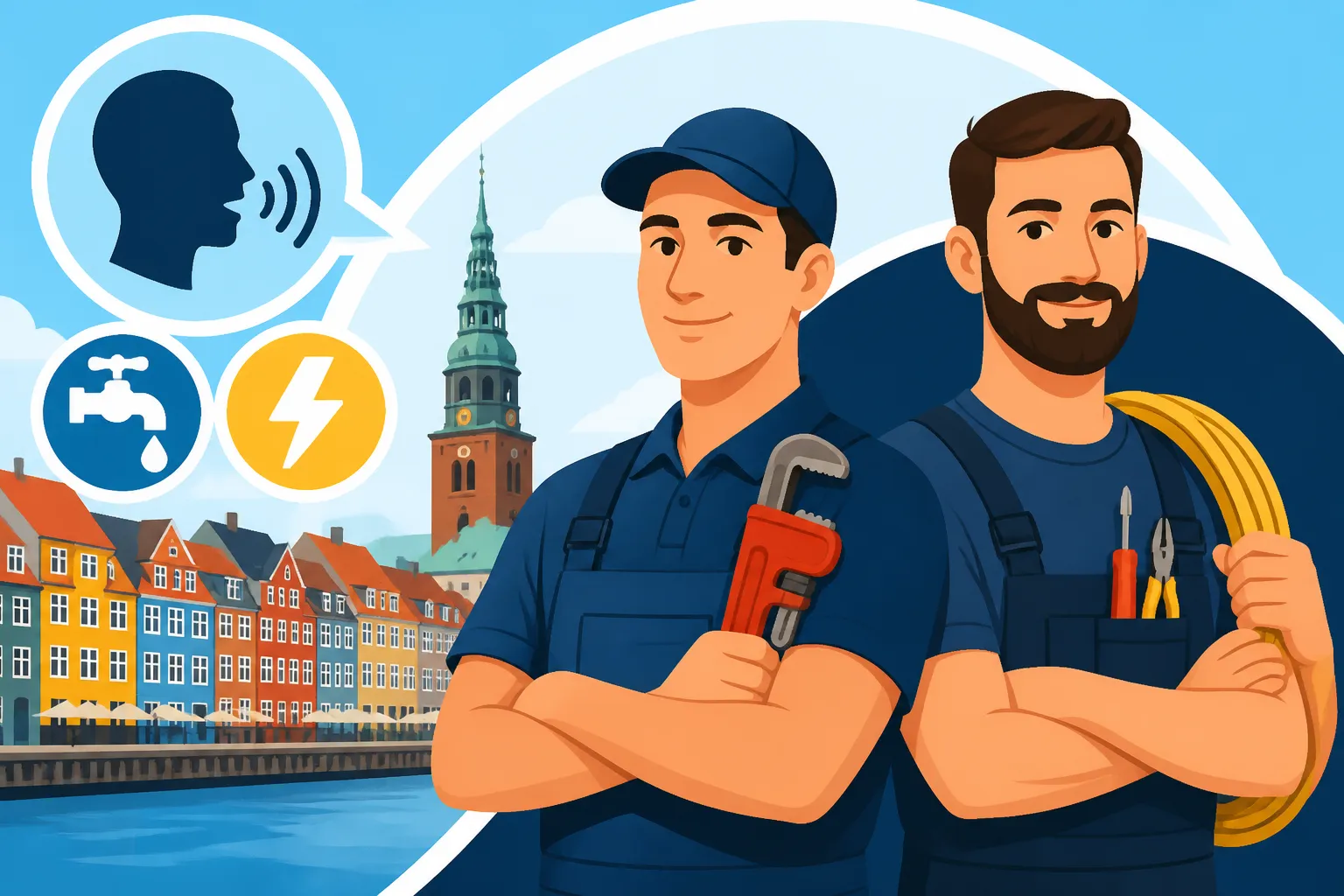
Ah, the dreaded moment when something in your Danish home decides to stop working. Whether it’s a mysteriously flickering light, a drain that’s more of a lake, or a washing machine staging a revolt, the immediate panic is often compounded by one thought: "How on earth do I find an English-speaking handyman in Denmark?" It’s a completely valid worry, and believe me, you’re not alone in feeling utterly lost. This guide is here to walk you through the very real challenges and offer practical, expat-tested strategies for finding reliable plumbers (VVS-installatører) and electricians (elektrikere) who can communicate effectively, ensuring your home repairs are handled with minimal stress.
The Unique Challenges of Danish Home Repairs for Expats
Navigating home repairs in a new country is a special kind of beast. In Denmark, this challenge takes on a few distinct characteristics that can make even the simplest fix feel like scaling the Alps. You’re not just dealing with a broken appliance; you’re dealing with a system that operates differently, a language barrier, and a cultural approach to service that might surprise you.
Language Barrier in a Critical Situation
Imagine this: your toilet is overflowing, water is seeping into the hallway, and you’re frantically trying to explain the urgency and specifics of the situation over the phone. Now, imagine doing that in broken Danish, or worse, trying to get across the nuances of a complex electrical fault to someone who only speaks Danish. It’s a nightmare. Even if you’ve picked up some conversational Danish, technical jargon is a whole different ballgame.
The truth is, many tradespeople in Denmark, especially the older generation or those working in smaller, family-run businesses, might not be fluent in English. While younger professionals are often more comfortable, it’s far from a guarantee. This language gap isn't just an inconvenience; it can lead to miscommunications about the problem itself, the proposed solution, the timeline, and ultimately, the cost. You want to be absolutely certain they understand the extent of the issue, especially for safety-critical jobs like electrical work or major plumbing leaks. Without clear communication, you might end up with a temporary fix when you needed a permanent one, or worse, a solution to a problem you didn't even have.
Navigating Danish Service Culture
Danish service culture can be a bit of a puzzle for newcomers. Punctuality is generally expected, but what about communication frequency? Don't expect constant updates or overly effusive customer service. Danes are generally direct, efficient, and get straight to the point. This isn't rudeness; it's just how business is often conducted. You might find that plumbers and electricians are less likely to provide a detailed breakdown of every single screw and pipe, preferring instead to give an overall assessment and a quote.
Another aspect is the emphasis on quality and adherence to strict regulations. Danish standards for electrical and plumbing work are incredibly high, which is fantastic for safety and durability, but it also means things might take longer and cost more than you’re used to. Shortcuts are generally not tolerated, and qualified professionals will insist on doing things "the proper Danish way," even if it seems excessive to your foreign eyes. This also means you won't easily find "cash-in-hand" side jobs that might be cheaper but potentially illegal or uninsured. Embrace the professionalism, but be prepared for a less chatty and more task-focused interaction.
The Cost Factor and Transparency
Let’s not beat around the bush: home repairs in Denmark can be expensive. Like many services in a high-wage economy, the hourly rates for skilled tradespeople like plumbers and electricians reflect their extensive training, certifications, and the general Cost of Living in Denmark 2026: Budgets for Singles and Families. When you combine that with VAT (moms) at 25%, even a relatively minor fix can quickly add up.
Many expats find the pricing less transparent than they're used to, particularly if they can't fully understand the Danish explanation. Typically, you'll be charged an hourly rate, often with a minimum charge (e.g., for the first hour), plus the cost of materials. Some companies will charge a separate "call-out fee" (udkørsel) just for showing up. Getting a fixed-price quote can sometimes be challenging for complex or unknown issues, as the professional might need to assess the problem first. This lack of upfront clarity, coupled with high prices, can be a source of frustration, making it even more crucial to find someone you can communicate with clearly and trust. It’s not uncommon to receive an invoice that itemizes hours and materials, but perhaps without a minute-by-minute breakdown, which can be jarring if you're used to more detailed billing.
Where to Hunt for English-Speaking Handymen
Finding a tradesperson who can fix your leaky faucet and explain it to you in English feels like finding a unicorn. But don't despair; they exist! You just need to know where to look and, more importantly, how to ask.
Online Platforms and Expat Communities
Your first port of call should always be the vibrant online expat communities. Facebook groups like "Expats in Copenhagen," "Aarhus Expats," or more specific "DIY & Home Improvement Denmark" groups are goldmines. People there are always asking for recommendations, and you'll often find a list of tried-and-tested handymen who are known to speak English. When you ask, be specific about your location and the type of work needed. You'll often see the same names pop up again and again, which is a good sign.
Beyond Facebook, there are general service platforms that cater to a broader audience, including expats. Websites like Handyhand.dk or 3byggetilbud.dk allow you to post a job description and receive bids from various tradespeople. While these aren't specifically for English speakers, you can specify your language requirement in the job description. Be sure to check reviews and ask clarifying questions about language before committing. Some general classified sites like DBA.dk (Denmark's equivalent of Craigslist) might also have service listings, but these require more careful vetting. For temporary accommodation or initial setups, you might have used platforms like Spotahome, which can sometimes provide insights into local service providers, though it's not their primary function. Think of these as a starting point, but always verify through other channels.
Personal Recommendations and Word of Mouth
Hands down, the most reliable way to find a good, English-speaking handyman is through personal recommendations. Ask your colleagues, friends, and neighbors – especially other expats who have been in Denmark for a while. They’ve likely been in your shoes and have already done the legwork (and potentially endured a few bad experiences) to find someone reliable.
A personal recommendation comes with a level of trust that online searches simply can’t provide. It means someone you know has had a positive experience, not just with the quality of work, but also with communication and fair pricing. Don't be shy about asking. Danes are generally helpful, and once you get chatting about the universal woes of home maintenance, you'll find people eager to share their insights. This is also where networking in person, through expat meetups or community events, can truly pay off. A friendly chat over a cup of coffee could lead to the perfect contact for your plumbing emergency.
Local Business Directories and How to Filter
While perhaps less direct, traditional business directories can still be useful, especially when combined with a bit of savvy filtering. Google Maps is your friend here. Search for "VVS København" (plumber Copenhagen) or "elektriker Aarhus" (electrician Aarhus), and you’ll get a list of local businesses. Look for indicators on their websites or Google My Business profiles that suggest they are expat-friendly. This might be an English version of their website, a mention of "international clients," or even just a contact email rather than just a phone number.
Another popular Danish directory is Krak.dk, which is essentially Denmark's Yellow Pages. While primarily in Danish, you can search for businesses and then look for clues. Some companies might explicitly state "English spoken" (Engelsk tales) in their service descriptions, or you might find reviews from international customers. It requires a bit more digging, but it’s a systematic approach. When contacting them, start with an email explaining your issue in English and explicitly asking if they have staff who can communicate in English. This saves both your time and theirs.
Preparing for Your Handyman Visit: What to Expect and How to Communicate
Once you’ve found a potential candidate, a bit of preparation on your part can make the entire process smoother, less stressful, and potentially save you money.
Clearly Documenting the Issue
Before the handyman even sets foot in your apartment, gather as much information as possible about the problem. Photos and short videos are incredibly helpful. For a plumbing issue, take pictures of the leak, any visible damage, and the area around it. For electrical problems, a video of a flickering light, a photo of the fuse box, or even a diagram of where the affected outlets are located can be invaluable.
Write down a clear, concise description of the issue in English.
- What is happening? (e.g., "The kitchen faucet is dripping constantly.")
- When did it start? (e.g., "It started last night after I used the dishwasher.")
- Are there any symptoms? (e.g., "The water pressure in the shower is also lower.")
- Have you tried anything to fix it? (e.g., "I tried tightening the tap, but it didn't help.")
This kind of detailed information allows the professional to understand the problem quickly, even if their English isn't perfect, and helps them come prepared with the right tools or parts. It also prevents misunderstandings and ensures they don't spend valuable time diagnosing something you've already identified. If you're new to the country and relying on your phone for all these communications, make sure you have a reliable data plan – something like an Airalo eSIM can be a lifesaver for connectivity in those crucial moments.
Getting Quotes and Understanding Invoicing
Always try to get a quote or at least an estimate before any work begins. For simple, well-defined tasks, a fixed price (fast pris) might be possible. For more complex issues where the extent of the problem isn't immediately clear, you'll likely get an hourly estimate plus materials. Don't be afraid to ask for this in writing, even if it's just an email.
Here's a table to help you understand common Danish terms on quotes and invoices:
| Danish Term | English Translation | Explanation |
|---|---|---|
| Timepris | Hourly rate | The cost per hour for the tradesperson's labor. Often with a minimum charge. |
| Udkørsel / Kørsel | Call-out fee / Travel time | A separate charge for the time or distance traveled to your location. |
| Materialer | Materials | Cost of parts, pipes, wires, fittings, etc. |
| Kørsel / Servicevogn | Van charge / Service vehicle | Sometimes an additional flat fee for the use of the service van and its standard equipment. |
| Moms | VAT (Value Added Tax) | The 25% sales tax added to all services and materials. Always included in final prices for consumers. |
| Tilbud | Offer / Quote | A formal price proposal for a specific job. |
| Faktura | Invoice | The bill for services rendered. |
| Betalingsfrist | Payment deadline | The date by which the invoice must be paid. |
When you receive the invoice, review it carefully. If anything is unclear, ask for clarification. Don't hesitate to question charges you don't understand, especially if you had an initial estimate. Most reputable businesses will be willing to explain. Remember that the final price will always include Moms (VAT), so if you're given a pre-VAT estimate, mentally add 25%.
Ensuring Quality and Follow-up
Danish craftsmanship is generally of a high standard, but mistakes can happen anywhere. After the work is completed, inspect it thoroughly before the handyman leaves, if possible. Test the repaired appliance, flush the toilet, turn on the lights – whatever is relevant to the job. If you notice any immediate issues or concerns, bring them up on the spot.
If problems arise after they’ve left, contact the company promptly. Most professional tradespeople offer a warranty on their work. If you're renting, and it's a defect covered by your landlord, remember The "14-Day Defect Reporting" Rule After Moving Into a Rental to protect your deposit. If you believe the work was substandard or caused further damage, gather evidence (photos, dates of communication) and attempt to resolve it directly with the company. If that fails, you might consider reaching out to consumer protection services, though this can be a more complex process without Danish language proficiency. Joining a tenant's union (like LLO) if it's a rental dispute can also provide significant support.
Specific Tips for Plumbers (VVS-installatører) and Electricians (Elektrikere)
While the general advice applies to both, there are some specific nuances for finding and working with plumbers and electricians in Denmark.
Plumbing Specifics: Hard Water, Old Pipes, and Emergencies
Denmark is infamous for its extremely hard tap water, rich in calcium (kalk). This can lead to mineral buildup in pipes, appliances, and fixtures over time, often causing issues like reduced water pressure or malfunctioning dishwashers and washing machines. When seeking a plumber, specifically mention if you suspect hard water is contributing to your problem. A plumber might recommend Tips for Dealing with Denmark's Extremely Hard Tap Water (Kalk) or even installing a water softener, though these are rare in rentals.
Many older Danish apartments have older plumbing systems, which can be prone to leaks or blockages. If you live in an older building, be prepared for the possibility that a simple fix might uncover a larger underlying issue with the building's infrastructure. In these cases, your landlord (if renting) or housing association (if owning an andelsbolig or ejerlejlighed) will need to be involved.
For plumbing emergencies, such as a burst pipe or a major leak, time is of the essence. Many VVS companies offer an "emergency service" (døgnvagt or akut VVS), but this often comes with a significantly higher price tag, especially outside regular working hours. Keep the emergency number of a trusted English-speaking VVS company handy. If you’re dealing with a shared laundry room, be aware of Washing Machine Etiquette: Shared Laundries (Vaskekælder) in Apartments as some issues might be collective. Also, if you’re concerned about dampness or mildew, a plumber might be able to identify the source, tying into general home maintenance like Managing Humidity and Mold (Skimmelsvamp) During Danish Winters.
Electrical Specifics: DIY Limitations, Fuse Boxes, and Danish Sockets
Electrical work in Denmark is highly regulated, and for good reason: safety. Unlike in some other countries where minor electrical fixes might be a common DIY project, Danish law is quite strict about who can perform electrical installations. For anything beyond changing a lightbulb or plugging in an appliance, you generally need a certified electrician. Do NOT attempt to tinker with your fuse box (sikringsskab) or install new outlets yourself unless you are a qualified professional.
A common "surprise" for expats is that many Danish apartments come without light fixtures – just bare wires hanging from the ceiling. This means you'll need to purchase and install your own lamps. While connecting a lamp to existing wires might seem straightforward, if you're unsure, it’s always best to call an electrician. This relates to Why Your Danish Apartment Comes Without Light Fixtures. Understanding your fuse box and how to reset a tripped fuse is essential. If fuses keep tripping, it indicates an underlying electrical problem that needs professional attention.
Danish power sockets are typically Type K, which is different from many other European countries and certainly from North America or the UK. You'll need adapters for any foreign appliances. An electrician can help with proper installation of new appliances that require hard-wiring, ensuring they meet Danish safety standards.
Useful Resources & Brands for the Expat Homeowner/Renter
When you're first setting up your home in Denmark, it can feel like a maze of new rules and systems. Remember that your CPR Registration Rule: Why Your Address Matters is foundational, as it links you to your municipality and enables access to many services, including those related to housing and utilities. This is also how your official mail regarding things like How Aconto Bills Are Reconciled Annually by Your Landlord reaches you.
For getting settled in and needing specific furniture or decor items, local stores are great, but sometimes you need to quickly find accommodation or temporary fixes. For example, if you're still looking for a long-term rental, a platform like Spotahome might have helped you find an apartment that explicitly states whether basic services are covered or if you're responsible for maintenance. While not a handyman service, these platforms can be a piece of the puzzle in ensuring a smooth housing experience.
And let's face it, in today's digital age, staying connected is paramount. When you're trying to call a plumber in a panic or frantically search for "elektriker nær mig" (electrician near me), you need your phone to work. For new arrivals, or even just for backup, an eSIM service like Airalo can ensure you have immediate data connectivity without the hassle of buying a physical SIM card right after you land. It's a small detail, but when you're dealing with a home emergency, every little bit of convenience helps.
Conclusion
Finding an English-speaking handyman in Denmark might initially feel like a Herculean task, but with the right approach and a bit of patience, it's entirely achievable. Leverage the power of expat communities, ask for personal recommendations, and don't be afraid to clearly communicate your needs and language preferences when contacting local businesses.
Remember that Danish service providers operate with high standards and professionalism, which, while sometimes pricier, generally ensures quality work. Be prepared to clearly document your issue, understand the local invoicing system, and follow up to ensure satisfaction. By taking these steps, you’ll not only solve your immediate home repair woes but also gain valuable experience navigating the Danish service landscape – a skill that will serve you well during your expat journey. Your home is your sanctuary, even when it’s throwing a fit, and finding the right help makes all the difference.
Disclaimer
The information provided in this guide is for general informational purposes only and does not constitute professional advice. While every effort has been made to ensure accuracy, regulations and market conditions in Denmark can change. Always consult with certified professionals, relevant authorities, or legal counsel for specific advice pertaining to your individual situation. We are not liable for any actions taken based on the information provided herein.