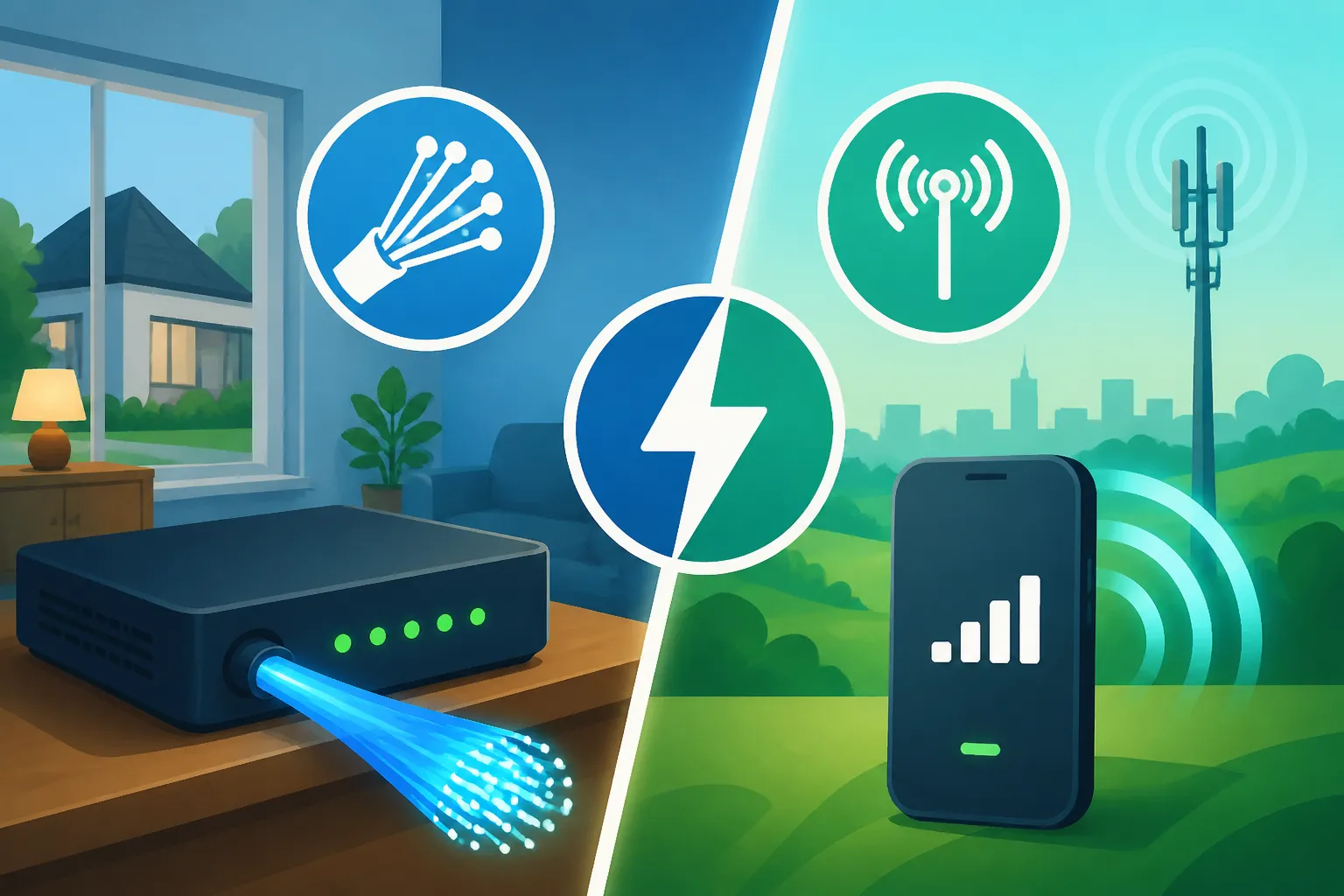
Setting Up Internet (Bredbånd) in Denmark: Fiber vs. Mobile Broadband
Ah, the internet! It’s one of those things you just assume will be there when you land in a new country, isn't it? But many newcomers to Denmark find that setting up your internet – or bredbånd, as they call it here – can be surprisingly tricky. This guide is going to walk you through everything you need to know, from deciphering the jargon to choosing between fiber and mobile broadband, so you can get connected without the usual expat headaches.
The Digital Backbone: What is Bredbånd in Denmark?
When you arrive in Denmark, one of the first things you'll realize is how digitally integrated everything is. From banking to healthcare to public services, virtually everything happens online, often requiring your MitID. This means reliable internet isn't just a luxury; it's an absolute necessity. Understanding "bredbånd" is your first step to digital freedom here.
Decoding the Terminology
"Bredbånd" simply means broadband in Danish, and it refers to high-speed internet access. Unlike some countries where you might distinguish between different types of internet like ADSL, cable, or fiber more explicitly in common parlance, "bredbånd" is often used as an umbrella term. However, when you dig into the specifics of providers and packages, you'll certainly encounter the underlying technologies. The two main players you'll be choosing between are Fiberbredbånd (fiber optic broadband) and Mobilt Bredbånd (mobile broadband). We'll dive deep into both, but it's good to know that the Danes generally prioritize stable, fast connections, so whatever you choose, you're likely to get a decent service. The key is knowing what fits your needs and budget.
The Critical Role of Your Address and CPR Number
Before you even think about signing an internet contract, you absolutely must have a registered address and your coveted CPR number. I can’t stress this enough. Most internet providers, just like banks and utility companies, require a Danish CPR number to sign a contract. It's their way of identifying you and linking you to your official address. Without it, you're essentially a ghost in the system, and getting any kind of long-term utility service, including internet, becomes a Herculean task.
This is where the infamous "CPR Catch-22" often comes into play. You need an address to get a CPR number, but often you need a CPR number to finalize a rental contract or even to get utilities set up. It's frustrating, I know. My advice for newcomers is always to prioritize securing an apartment where you can immediately register your CPR. Don't be shy about asking landlords or rental agencies if the address allows for CPR registration. You might be staying in a temporary Spotahome rental or an Airbnb initially, and while that's great for landing, it often won't allow for official CPR registration, which in turn holds up everything else, including your internet. For a deep dive into this, you might want to check out our guide on The CPR Registration Rule: Why Your Address Matters. Remember, no CPR means no official contracts, and that includes your long-term bredbånd.
Fiber Optic Internet: Denmark's Premier Connection
If you're looking for the absolute best in terms of speed and reliability, fiber optic internet is where it's at in Denmark. It’s increasingly common, especially in cities and newer developments, and for good reason.
The Unmatched Speed and Reliability of Fiber
Fiber optic cables use light to transmit data, which is fundamentally faster and more stable than traditional copper wires. What does this mean for you? Blazing fast download and upload speeds that remain consistent, even during peak hours. If you're someone who relies on the internet for demanding tasks – think remote work with large file transfers, online gaming, 4K streaming, or if you have multiple devices and people using the internet simultaneously – fiber is your champion.
Imagine you're trying to have a video call with family back home while your partner is streaming a Danish crime drama, and the kids are playing online games. With a solid fiber connection, these activities can all happen smoothly without buffering or pixelated faces. The reliability is also a huge plus; fiber is less susceptible to electrical interference or long-distance signal degradation compared to older technologies. While it generally comes with a slightly higher price tag, for many expats, the peace of mind and performance it offers are well worth the investment. It’s truly the gold standard for home internet here.
Checking Fiber Availability at Your Danish Address
This is perhaps the most crucial step. While Denmark has made significant strides in fiber rollout, it's not universally available. Availability is highly address-specific. Just because your neighbor across the street has fiber doesn't necessarily mean you do, especially if there's been older infrastructure on one side of a road.
Here’s how you check: Most major internet providers in Denmark have an online tool on their website where you can simply enter your address (vejnavn og husnummer) and postcode (postnummer) to see what types of bredbånd are available. Some common providers to check include TDC NET, Hiper, Waoo, Stofa, YouSee, and Norlys. TDC NET, for instance, owns a significant portion of the underlying infrastructure, so many smaller providers lease lines from them. You might also find independent fiber networks popping up, especially in more rural areas or new housing developments, often managed by local energy companies.
My personal tip: Don’t just check one provider. Check several. Sometimes one provider might have access to a fiber network that another doesn't, or they might offer different packages on the same network. When you're in the process of finding an apartment, it's a smart move to ask the landlord or real estate agent about the internet situation. They might know which providers serve the building or even if the building is "fiber-ready." This small step can save you a lot of headache down the line.
The Fiber Installation Process: What to Expect
Once you’ve confirmed fiber is available and you've signed a contract, the installation process typically involves a technician visit. This is probably the biggest difference from mobile broadband, which you can often set up yourself in minutes.
First, the good news: Danes are generally quite punctual and efficient. The technician will usually schedule an appointment within a specific window (e.g., 9 AM to 1 PM). However, getting that initial appointment might take anywhere from a few days to a couple of weeks, depending on demand and if new cabling needs to be pulled to your apartment. If your apartment already has a fiber termination box (a small white box usually on a wall near your main entrance or living room), it might be a quicker activation. If not, the technician will need to install one.
During the visit, the technician will set up the fiber modem/router, ensure the connection is working, and usually provide some basic instructions. They might also help connect one device to ensure everything is smooth. Be prepared for a language barrier; while many technicians speak English, it's not guaranteed. Having a Danish-speaking friend on standby or using a translation app can be helpful. Also, ensure you're home for the entire appointment window – missing it could mean significant delays and a rescheduling fee. It sounds like a hassle, but once it's done, you're usually set for years of trouble-free high-speed internet. This installation aspect is certainly something to factor into your moving timeline when you're thinking about Renting in Denmark: Complete Guide for Expats (2027).
Mobile Broadband: Your Flexible Friend for Connectivity
While fiber offers unparalleled performance, it's not always the most practical solution, especially when you first arrive or if your living situation is temporary. This is where mobile broadband, or mobilt bredbånd, truly shines.
Understanding the Benefits of Mobile Broadband
Mobile broadband uses the same cellular networks that your phone does (3G, 4G, and increasingly 5G) to provide internet access. The primary appeal for expats is its flexibility and ease of setup. You typically get a SIM card and a small USB dongle or a portable Wi-Fi router (often called a MiFi device). You pop in the SIM, turn it on, and voila – instant internet. There's no technician visit, no drilling, and often shorter contract periods, or even pay-as-you-go options.
This makes it an ideal solution for your first few weeks or months in Denmark, especially if you're still hunting for a permanent place or waiting for your CPR number. For instance, if you've just landed and are staying in temporary accommodation, or if you're waiting for your fiber installation, mobile broadband can bridge that crucial connectivity gap. It’s portable, too, so you can take your internet with you to the park, on a train, or to a café if you need a reliable connection away from home. Think of it as your personal internet hotspot, always ready.
Navigating Data Caps and Speed Variations
While convenient, mobile broadband isn’t without its trade-offs. The most significant is usually the data cap. Unlike most fiber or fixed-line bredbånd plans, which often offer unlimited data, mobile broadband plans typically come with a finite amount of data per month (e.g., 50GB, 100GB, 200GB). If you exceed this, your speed will often be throttled significantly, or you might incur extra charges. This makes it less ideal for heavy users who stream a lot of video, download large files, or work from home extensively.
Another factor is speed variation. While 4G and 5G networks in Denmark are generally excellent and widespread, the actual speed you experience can fluctuate based on your location, network congestion, and even the weather. In busy urban areas, during peak hours, or inside buildings with thick walls, speeds can drop. This variability is something to consider if you need a rock-solid connection for critical tasks. Also, upload speeds on mobile broadband are usually significantly lower than download speeds, which can be an issue if you frequently upload large files.
For immediate connectivity upon arrival, before you even get your Danish SIM, a service like Airalo for an eSIM can be a lifesaver. It’s not a long-term solution for home internet, but it ensures you're online from the moment you land, allowing you to navigate, communicate, and perhaps even research local internet providers before you commit to a Danish mobile broadband plan.
When Mobile Broadband Makes the Most Sense for Expats
Mobile broadband truly shines in specific scenarios for expats in Denmark:
- Temporary Stays: If you're here for a short-term project, a semester abroad, or just a few months, a mobile broadband contract with a short commitment (or no commitment) makes perfect sense.
- Bridging the Gap: While you wait for your CPR number, bank account, and fiber installation appointment, mobile broadband can keep you connected. It prevents that disconnected feeling many expats face in their first few weeks.
- Secondary Connection: Some expats opt for mobile broadband as a backup, or for specific portable needs. Perhaps you need internet for your summer sommerhus (summer house) or for working on the go.
- Low Usage: If you're a very light internet user, primarily checking emails and occasional browsing, a smaller mobile broadband package might be more cost-effective than a full-fledged fiber plan.
It’s about balancing your immediate needs for connectivity with the long-term demands of a stable home setup. Many expats start with mobile broadband and transition to fiber once they are more settled. If you're exploring options for getting Expat Health Insurance: Coverage Before You Get Your CPR Number, you might find mobile broadband a useful tool to manage those initial online applications too.
Let's look at a quick comparison:
| Feature | Fiber Optic Bredbånd (Fiberbredbånd) | Mobile Broadband (Mobilt Bredbånd) |
|---|---|---|
| Technology | Fiber optic cables | 3G/4G/5G cellular networks |
| Speed | Very high, consistent (100 Mbps to 1000+ Mbps) | Variable, generally good (20 Mbps to 300+ Mbps, depending on coverage and congestion) |
| Reliability | Excellent, stable, low latency | Good, but can fluctuate based on location and network load |
| Data Limits | Typically unlimited | Usually capped (e.g., 50-500 GB/month), throttling common after limit |
| Portability | Fixed to one address | Highly portable (MiFi device, USB dongle) |
| Installation | Professional installation, often requires technician visit | Self-install, plug-and-play |
| Contract | Longer commitments (6-12+ months) common | Shorter commitments, pay-as-you-go options available |
| Best For | Heavy users, remote work, streaming, multiple users | Temporary needs, light users, portability, bridging gaps |
| Cost | Generally higher monthly fee for comparable speeds | Often lower initial cost, but per-GB cost can be higher if exceeding data limit |
Choosing Your Internet Provider: Navigating the Danish Market
Once you know which type of bredbånd is right for you, the next step is to pick a provider. This can feel overwhelming, as Denmark has a competitive market with many players, some offering infrastructure, others reselling.
Key Factors for Expats to Consider
When you’re weighing your options, especially as an expat, keep these factors in mind:
- Availability: As mentioned, this is number one. If fiber isn't available, then mobile broadband or even older DSL/cable might be your only choice.
- Speed vs. Cost: How much speed do you actually need? Don't pay for 1000 Mbps fiber if you only browse emails. Conversely, don't skimp on speed if you're working remotely and need flawless video calls. Balance your budget with your real usage patterns.
- Data Limits: This is crucial for mobile broadband. Understand your monthly data consumption. For fiber, most plans are unlimited, so it's less of a concern.
- Contract Length & Flexibility: Many expat lives are in flux. Can you get a shorter contract (e.g., 6 months)? What are the cancellation terms? A 12-month lock-in might be too much if you foresee moving or leaving Denmark sooner.
- Customer Service in English: This is a big one. While many providers have English-speaking staff, it's not always guaranteed. Check reviews or try calling their support line before you commit. Nothing is more frustrating than having a technical issue and not being able to communicate it effectively.
- Router/Equipment: Does the provider include the router in the price, or do you have to buy/rent it separately? Is it a good quality router?
- Bundles: Some providers offer bundles with TV packages, mobile phone plans, or even streaming services. If you're considering setting up your Utilities Setup: Electricity, Water, Heating, and Internet all at once, a bundle might save you money, but make sure you need all parts of the bundle.
Major Players and Smaller Niche Providers
The Danish internet market includes a mix of large, established companies and smaller, often regional, players.
- YouSee: One of the largest providers, offering a wide range of internet, TV, and mobile services. They often use a mix of fiber and cable networks.
- TDC NET: While not directly selling to consumers for bredbånd, TDC NET owns a massive chunk of the underlying fiber infrastructure. Many other providers, like Nuuday (which owns YouSee and Hiper), lease lines from TDC NET.
- Hiper: Known for competitive pricing, especially for fiber and high-speed connections. Often a popular choice for expats looking for good value.
- Waoo / Norlys: Often regional, but provide excellent fiber connections, especially in areas where they operate the local energy grid.
- Stofa: Another prominent player, often seen in specific residential areas and offering fiber and cable internet.
- Telmore / Oister / Call me: These are primarily mobile phone providers, but they also offer mobile broadband packages, leveraging their robust cellular networks.
When you're comparing, remember that often the same underlying fiber infrastructure might be used by multiple providers. For example, if TDC NET fiber is available at your address, you might find similar speeds offered by Hiper, YouSee, or others, with the main difference being pricing, customer service, and contract terms. This competition is great for consumers, so do your homework!
Unmasking Hidden Fees and Contract Traps
Always read the fine print! Danish contracts are generally quite transparent, but there are still things to watch out for:
- Setup Fees (Oprettelsesgebyr): Many providers charge a one-time fee to set up your connection. This can vary significantly, so factor it into the total cost.
- Router Rental/Purchase: Clarify if the router is included, if it’s a rental with a monthly fee, or if you need to buy it outright.
- Minimum Contract Period (Bindingsperiode): This is the period you are locked into the contract, typically 6 to 12 months. If you cancel before this period is up, you'll usually have to pay for the remaining months.
- Price Increases: Check if there are any clauses about price adjustments after an introductory period. Sometimes, a great initial offer might jump significantly after 6 or 12 months.
- Cancellation Notice (Opsigelsesperiode): Even after your binding period, you’ll typically need to give a month’s notice to cancel. Factor this in if you plan to move or switch providers.
- "Free" Services: Sometimes you'll see "free" trials for streaming services or security software bundled in. Make sure you know how to cancel them if you don't want them after the trial, or you could end up paying.
Remember, the goal is to get online efficiently and affordably, so a little scrutiny now can prevent financial surprises later.
Setting Up Your Internet Connection: Step-by-Step for New Arrivals
Getting your internet up and running might feel like a mini-project, but by following a logical sequence, you can make it as smooth as possible.
The Activation Timeline for Fiber and Mobile Broadband
For Mobile Broadband:
This is usually the quickest. Once you’ve chosen a provider and plan, you can often pick up the SIM card and MiFi device/dongle at a physical store (e.g., Telia, Telenor, TDC shops) or have it delivered within a few days. Activation is typically instant once the SIM is in the device and you've followed the quick setup instructions. Within an hour of receiving the device, you can usually be online.
For Fiber Optic Internet:
This requires more patience.
- Order & Confirmation: You sign the contract online or in a store. You'll receive a confirmation email with your order details and an estimated activation date.
- Technician Appointment: If an installation is needed, you'll typically be contacted to schedule a technician visit. This can be days or a couple of weeks out.
- Installation Day: The technician arrives, installs the necessary equipment (modem/router), and tests the connection.
- Activation: The service is usually active right after the technician leaves, or sometimes within 24 hours.
All in all, you're looking at potentially 1-3 weeks from ordering fiber to actually being connected. This is why having a temporary mobile broadband solution like Airalo or a Danish mobile broadband plan can be a lifesaver during this waiting period.
Essential Documents and Digital IDs for Contract Signing
To sign up for bredbånd, you’ll almost certainly need:
- Your CPR Number: As discussed, this is non-negotiable for long-term contracts.
- A Danish Bank Account: You'll need this for direct debit payments (Betalingsservice). Setting up a NemKonto and MitID: The Core of Danish Digital Finance (2027) is a primary step, and sometimes requires a separate process of Opening a Bank Account in Denmark: Document Checklist and Delays.
- MitID: This is your digital ID and signature. You'll use it to securely sign contracts online and log into your provider's self-service portal. If you haven't set up your MitID yet, prioritise this! Read up on Using MitID for Banking: Security, Device Registration, and App Setup as it's critical for almost all digital interactions in Denmark.
- Proof of Address: While your CPR number is linked to your address, some providers might ask for an official document like a rental contract or a utility bill as secondary proof, especially if your CPR registration is very new.
Make sure you have these ready. Trying to sign a contract without them will lead to frustration and delays.
Basic Troubleshooting for Initial Setup
Even with perfect planning, sometimes things don't go smoothly. Here are a few common issues and troubleshooting tips:
-
No Connection After Installation:
- Check cables: Are all cables (power, ethernet from modem to router, fiber optic cable) securely plugged in?
- Restart devices: Turn off your modem and router, wait 30 seconds, then turn the modem back on. Wait until its lights stabilize, then turn on the router.
- Check lights: Most modems/routers have status lights. Consult the manual (or search online) to understand what the light patterns mean. A red or flashing light often indicates a problem.
- Contact support: If all else fails, call your provider's customer service.
-
Slow Speeds:
- Ethernet vs. Wi-Fi: Test your speed with a device connected directly to the router via an ethernet cable. If wired speed is good but Wi-Fi is slow, the issue might be your Wi-Fi signal (interference, distance, old router).
- Router placement: Is your router in a central location, not tucked away in a cabinet or behind a TV?
- Too many devices: Are too many devices hogging bandwidth? Try disconnecting some to see if speeds improve.
- Check your plan: Are you actually getting the speed you paid for? Use an online speed test.
-
Wi-Fi Not Showing Up:
- Router is on: Is your Wi-Fi router powered on and its Wi-Fi indicator light on?
- SSID Broadcast: Occasionally, the Wi-Fi network (SSID) might be hidden. Check your router settings (via a wired connection) or consult your provider.
Remember, most issues are simple, and a quick restart or a call to support can often resolve them. Don't be afraid to ask for help!
Final Thoughts on Staying Connected in Denmark
Getting your internet set up in Denmark might involve a few bureaucratic hurdles, but once you're past them, you'll appreciate the quality and efficiency of the Danish digital infrastructure. It's a country that genuinely embraces digital solutions, and your internet connection will be your gateway to navigating it all.
Preparing for Your Internet Needs Before Arrival
Don't wait until you land to think about internet. While you're still planning your move, consider these points:
- Temporary Data: Plan for immediate mobile data. An eSIM from
Airaloor a roaming plan from your home country can give you crucial connectivity for navigation, messaging, and urgent communication upon arrival. This helps immensely during those initial days when you're still finding your feet and probably asking yourself Can I Register My CPR at an Airbnb or Hotel in Denmark?. - Research Providers: Jot down a few potential internet providers in Denmark based on what's available in the areas you're considering living. Look at their packages and general reviews.
- Understand Your Needs: How much data do you typically use? What speeds are essential for your work or leisure activities? Having a clear idea will help you pick the right plan without overspending or underspending.
- Language Barrier Preparedness: Have a translation app ready on your phone for potential interactions with technicians or customer service, just in case.
Thinking ahead about your internet, much like thinking about MobilePay and Cashless Denmark: Surviving Without Physical Cash, means one less stressor when you're busy with all the other complexities of moving to a new country.
Future-Proofing Your Home Connectivity
Once your bredbånd is established, you can relax a bit. However, technology moves fast. Here are some thoughts for the long run:
- Consider Upgrades: As more devices enter your home (smart home tech, more streaming), you might find yourself needing faster speeds. Most providers make it relatively easy to upgrade your plan.
- Wi-Fi Mesh Systems: If you live in a larger apartment or a house and experience Wi-Fi dead spots, investing in a Wi-Fi mesh system can dramatically improve coverage and speed throughout your home.
- Cybersecurity: With so much of your life online here (from your E-Boks vs. Mit.dk: Receiving Official Financial Mail from the State to your bank, remember to practice good cybersecurity habits. Use strong, unique passwords, and consider a VPN if you need extra security or want to access geo-restricted content from home.
Having reliable internet is foundational to a smooth life in Denmark. By understanding your options and preparing for the setup process, you'll be enjoying seamless connectivity in no time, leaving you free to focus on all the other wonderful, and sometimes baffling, aspects of expat life in this charming country.
Disclaimer
The information provided in this guide is intended for general informational purposes only and does not constitute legal, financial, or professional advice. While we strive to keep the content up-to-date and accurate, regulations, policies, and market offerings in Denmark can change frequently. Always consult official government websites, specific service providers, or qualified professionals for the most current and personalized information relevant to your individual situation. Reliance on any information in this guide is solely at your own risk.