Translating the Typeformular A10 Contract into English: Clause by Clause
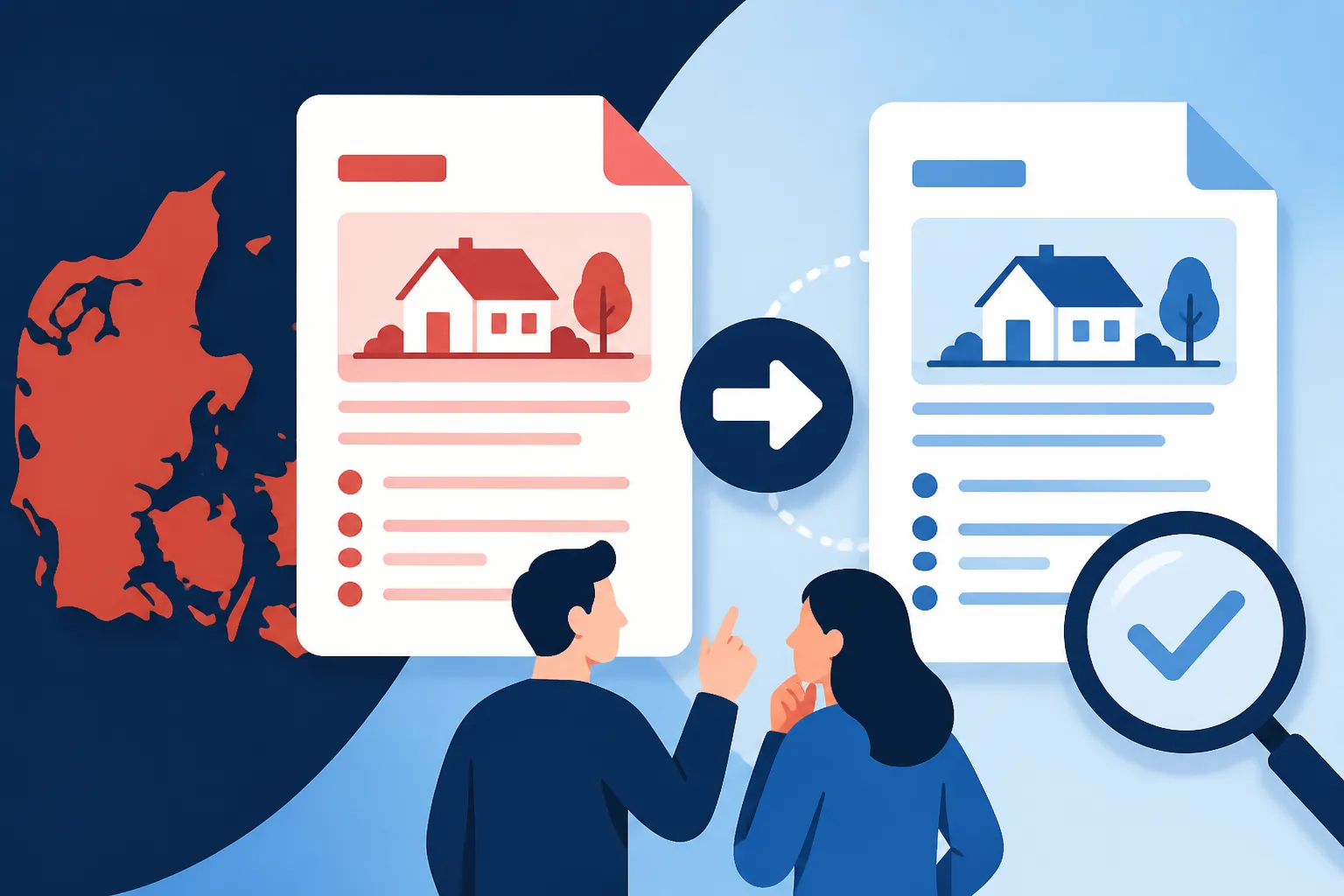
Alright, my fellow expats, let's talk about something that makes even the most seasoned Danes a bit wary: the dreaded rental contract, specifically the Typeformular A10. It’s a beast, filled with legalese, and unless you're fluent in Danish property law, it can feel like you're signing away your firstborn. This guide is here to demystify that monster, breaking down the Typeformular A10 clause by intimidating clause, so you can understand exactly what you're agreeing to before you put pen to paper in your new Danish home.
The Unavoidable Reality of the Typeformular A10
Navigating the Danish rental market can feel like an Olympic sport, even before you get to the paperwork. You've probably spent weeks, maybe months, scouring sites like BoligPortal or even the wild west of Facebook housing groups, only to finally find a place, and then bam! – you’re handed a multi-page document that might as well be written in ancient runes. This document is almost universally the "Typeformular A10," the standard lease agreement form issued by the Danish Ministry of Housing. Landlords, both professional and private, tend to use it because it's officially recognized and helps ensure a basic level of compliance with the Danish tenancy act (Lejeloven).
However, just because it's standard doesn't mean it's simple. It’s designed to cover a vast array of scenarios, and many clauses are filled with legal jargon that even native speakers can struggle with. For us expats, it's doubly difficult. You might get a rough Google Translate version, but crucial nuances are often lost, leading to misunderstandings that can cost you dearly down the line – especially when it comes to getting your deposit back. Remember, your landlord is likely to adhere strictly to what’s written in this contract, so understanding it thoroughly is your first line of defense. This isn't just a formality; it's the foundation of your rights and obligations in your new Danish home. You might feel rushed, especially if you found a place through platforms like Spotahome where things move quickly, but do not rush signing.
Demystifying the Clauses: A Section-by-Section Breakdown
Let's dive into the core of the Typeformular A10. While every contract might have minor variations or added riders, the main sections (called paragraffer in Danish, often abbreviated to §) are consistent.
§ 1 – Leased Property and Term (Det Lejede og Lejeperioden)
This section lays out the basics.
- Address and Description: This is where the property you're renting is clearly identified – the address, apartment number, and sometimes even a brief description of the unit (e.g., "3-værelses lejlighed" for a 3-room apartment).
- Lejeperiode (Lease Term): This is crucial. It defines whether your lease is for an ubegrænset periode (indefinite period) or a tidsbegrænset periode (fixed-term period).
- Ubegrænset Periode: This is generally preferred by tenants as it means the lease runs indefinitely until either you or the landlord gives proper notice to terminate. The notice period for tenants is typically three months, though this can vary.
- Tidsbegrænset Periode: This means the lease has a specific start and end date (e.g., from January 1, 2026, to December 31, 2027). You are legally bound to stay for the entire duration unless a specific clause in §11 (Special Terms) allows for earlier termination. If there’s no such clause, trying to break a fixed-term lease can lead to serious financial penalties, as you might be liable for rent until a new tenant is found, or even for the full remaining term. This is a common trap for new expats, so pay very close attention to this.
- Overtagelsesdag (Takeover Date): The date you officially get the keys and the lease begins.
§ 2 – Rent and Payments (Lejens Størrelse og Forbrugsregnskab)
This section details the financial aspects of your tenancy beyond the initial deposit.
- Årlig Leje (Annual Rent) & Månedlig Leje (Monthly Rent): The total rent per year and the amount you pay each month. This typically doesn't include utilities, so don't mistake it for your total monthly housing cost.
- Forudbetalt Leje (Prepaid Rent): This is a separate amount, typically 1-3 months' rent, that effectively covers your last month(s) of rent when you move out, provided you've given proper notice. It's often requested in addition to the deposit. For a deeper dive, check out our guide on Initial Rental Costs: Navigating Deposits and Prepaid Rent Laws.
- Depositum (Security Deposit): Again, usually 1-3 months' rent, held by the landlord to cover any damages beyond normal wear and tear when you move out. This is a battleground for many expats, so documenting the apartment's condition thoroughly when you move in is paramount. Our article on The Move-Out Inspection (Fraflytningssyn): Getting Your Deposit Back explains why this is so important.
- Á Conto Bidrag (On-Account Payments): This refers to your estimated payments for utilities like heating (varme), water (vand), and sometimes even electricity (el) if it's not directly billed to you. These are estimates, and at least once a year, the landlord must provide a forbrugsregnskab (consumption statement) to reconcile your payments against your actual usage. You either get money back or owe more. Understanding how these are calculated is crucial, as discrepancies are common.
- Betalingsbetingelser (Payment Terms): When rent and á conto payments are due each month, and how they should be paid (usually via bank transfer to a NemKonto).
§ 3 – Maintenance and Repairs (Vedligeholdelse)
This is another hotly contested area for deposit returns.
- Indvendig Vedligeholdelse (Internal Maintenance): This refers to internal upkeep like painting, wallpaper, and floor sanding.
- Udvendig Vedligeholdelse (External Maintenance): This typically covers the building's exterior, roof, shared facilities, etc.
- Hvem vedligeholder (Who Maintains): The contract must clearly state whether the indvendig vedligeholdelse is the responsibility of the tenant (lejer) or the landlord (udlejer).
- If it's the tenant's responsibility, you might be required to contribute to an indvendig vedligeholdelseskonto (internal maintenance account) on top of your rent. This is a common Danish concept where a portion of your rent goes into a fund for future maintenance, but you can only use it for your apartment.
- If it's the landlord's responsibility, you still need to treat the property with care, but you won't be solely on the hook for major renovation costs at move-out (unless you caused damage).
- Normal vs. Nyistandsat: This goes hand-in-hand with maintenance. Our article on Normal vs. Nyistandsat: Maintenance Terms That Dictate Your Deposit explains how the condition the apartment is handed over (newly renovated vs. normal wear and tear) dictates what you are expected to return it as. If it says nyistandsat, expect a higher standard of return.
§ 4 – Alterations and Improvements (Forbedringer og Forandringer)
This clause addresses changes you might want to make to the apartment.
- Generally, as a tenant, you need written permission from the landlord to make any forandringer (alterations or changes) to the property, even minor ones like painting a wall a different color.
- If you make improvements (forbedringer) that increase the value of the property, you might be entitled to godtgørelse (compensation) when you move out, but this is rare and heavily regulated. Don't count on it unless explicitly agreed upon in writing. Always get permission before drilling into walls or making any significant cosmetic changes.
§ 5 – Condition on Takeover (Lejemålets Stand ved Overtagelsen)
This is another critical section, directly related to your deposit.
- It states that you accept the property in its current condition. This is why a indflytningssyn (move-in inspection) report is absolutely vital.
- If you don't receive an official move-in report from the landlord, you should create your own. Take extensive photos and videos of every defect, no matter how small, and send them to the landlord via email within 14 days of moving in. This is your chance to document pre-existing damage, as explained in The "14-Day Defect Reporting" Rule After Moving Into a Rental. Without this, the landlord can claim you caused the damage, and it will come out of your deposit.
§ 6 – Use of the Property (Anvendelse)
This clause outlines how you are allowed to use your rented home.
- Beboelse (Residential Use Only): Typically, the property is rented for residential purposes only. You cannot run a business out of it without explicit permission.
- Husdyr (Pets): This is a huge one for animal lovers. It will state whether pets are tilladt (allowed) or ikke tilladt (not allowed). If allowed, there might be further conditions, like only small dogs or cats. If the contract says no pets, do not bring one in without written consent – it can be grounds for eviction.
- Fremleje (Subletting): If you plan to rent out a room or the entire apartment for a period (e.g., while traveling), this section will specify the rules. Generally, you need the landlord's permission to sublet, and there are strict rules under Danish law, often limiting it to a certain percentage of the property or a maximum duration. See our article on Short-Term Rentals and Subletting (Fremleje): Legal Rules for Expats for more details.
§ 7 – Termination of the Lease (Opsigelse)
This section details how and when the lease can be ended.
- Opsigelsesvarsel (Notice Period): For an indefinite lease (§1), this will state the notice period you or the landlord must give. For tenants, it's commonly three months. For landlords, it varies depending on the type of property and reason for termination (e.g., it can be longer for private apartments than for rooms).
- Uopsigelighed (Non-terminable Period): This might be relevant for indefinite leases. It means that for a certain initial period (e.g., the first 12 months), neither party can terminate the lease. This adds a layer of security for both parties but also means you're locked in.
- For fixed-term leases, as mentioned in §1, the general rule is uopsigelighed for the entire term unless specific exceptions are made in §11.
§ 8 – Landlord's Access (Udlejers Adgang til det Lejede)
This outlines when the landlord can enter your apartment.
- The landlord typically needs to provide reasonable notice (usually 24-48 hours) to enter your apartment for inspections, repairs, or showing it to new tenants. They cannot just let themselves in without your permission, except in emergencies (like a burst pipe). This protects your right to privacy.
§ 9 & § 10 – Default and Eviction (Misligholdelse og Ophævelse)
These sections outline what happens if either party fails to uphold their end of the contract.
- Misligholdelse (Breach of Contract): Examples include non-payment of rent, significant damage to the property, or unauthorized subletting.
- Ophævelse (Termination due to Breach): If you severely breach the contract, the landlord can terminate the lease without notice, potentially leading to eviction. This is a very serious matter. Always communicate with your landlord if you foresee any issues with rent payment or other obligations.
§ 11 – Special Terms (Særlige Vilkår)
Ah, §11. This is where things can get truly tricky, and it's often the place where landlords insert clauses that deviate from the standard Lejeloven, sometimes to your detriment.
- Renovation Clauses: This section might specify if the apartment is to be returned nyistandsat (newly renovated) at your expense, even if it wasn't nyistandsat when you moved in. This can be illegal under Danish law (as per the "Normal vs. Nyistandsat" article linked above), but it still appears in contracts. Be very wary of clauses that seem to put an unfair burden of renovation costs on you.
- Earlier Termination for Fixed-Term Leases: If you have a fixed-term lease but the landlord is willing to allow earlier termination with a notice period, it must be explicitly stated here. Otherwise, you're bound for the full term.
- Specific Rules: Any other specific rules about noise, common areas, cleaning schedules, or even what kind of washing machine you can use might be listed here.
- LLO Membership: Landlords often put clauses in here that limit your rights or contradict standard Danish tenancy law. This is where joining a tenant's union like LLO (Lejernes Landsorganisation) can be invaluable. Their legal experts can review your contract for unfair or illegal clauses. You can learn more about this in Tenant Rights and LLO (Lejernes Landsorganisation) Protection.
Key Danish Terms in Rental Contracts
To help you navigate, here’s a quick reference table for some common Danish terms you'll encounter in the Typeformular A10:
| Danish Term | English Translation | Explanation |
|---|---|---|
| Lejer | Tenant | You, the renter. |
| Udlejer | Landlord | The owner of the property. |
| Lejemål | Leased Property | The apartment, house, or room being rented. |
| Lejeperiode | Lease Term | Duration of the rental agreement (fixed-term or indefinite). |
| Ubegrænset periode | Indefinite period | Lease continues until properly terminated by notice. |
| Tidsbegrænset periode | Fixed-term period | Lease has a specific start and end date. |
| Overtagelsesdag | Takeover Date | Date you take possession of the property. |
| Opsigelsesvarsel | Notice Period | The time required to terminate the lease (e.g., 3 months). |
| Uopsigelighed | Non-terminable period | Period during which the lease cannot be terminated by either party. |
| Månedlig Leje | Monthly Rent | The base rent paid each month. |
| Depositum | Security Deposit | Money held by the landlord for damages. |
| Forudbetalt Leje | Prepaid Rent | Rent paid in advance to cover the last month(s) of tenancy. |
| A conto | On-account payment | Estimated payments for utilities (heating, water), reconciled annually. |
| Forbrugsregnskab | Consumption statement | Annual statement reconciling estimated utility payments with actual usage. |
| Indvendig vedligeholdelse | Internal maintenance | Upkeep inside the apartment (painting, floors, etc.). |
| Nyistandsat | Newly renovated | Condition where property is returned to an "as new" standard. |
| Normal stand | Normal wear and tear | Expected deterioration over time, not tenant's responsibility to renovate. |
| Husdyr | Pets | Whether animals are allowed or not. |
| Fremleje | Subletting | Renting out the property or a part of it to another tenant. |
| Særlige Vilkår | Special Terms | Extra clauses that modify or add to the standard contract terms. |
| Huslejenævnet | Rent Control Board | Local board that mediates disputes between landlords and tenants. |
What to Do Before Signing and If You Have Issues
Understanding the Typeformular A10 is a monumental first step, but it's just one part of securing your rental. Even with the best translation, questions will arise, and you might encounter clauses that seem unfair or even illegal.
Before You Sign
- Read EVERYTHING Carefully: Do not skim. Take your time. If necessary, get a native Danish speaker to help you, or use online translation tools for the trickier bits. However, be aware that subtle legal meanings can be lost in translation.
- Verify the Landlord: Ensure the person renting the property is actually the legal owner or has explicit permission to rent it out. This protects you from scams.
- Inspect the Property Thoroughly: Before signing, and definitely before moving in, do a detailed inspection. Take photos and videos of everything – walls, floors, appliances, windows. Document any existing damage, no matter how minor. This forms your evidence for The Move-In Inspection (Indflytningssyn): Documenting Property Flaws.
- Question Everything You Don't Understand: If a clause is unclear, ask the landlord for clarification in writing. Don't rely on verbal agreements.
- Be Wary of Section 11: As mentioned, this section can contain clauses that are not standard or might even be illegal. Pay particular attention here. Clauses about returning the apartment "newly renovated" at your cost, regardless of its initial state, are often problematic.
- Consider Legal Review: If the rental amount is high, or if you have specific concerns, it's highly recommended to have a legal professional or LLO review the contract before you sign. This small investment upfront can save you thousands of kroner and immense stress later.
- Ensure CPR Registration: Confirm the apartment allows for CPR registration. Without a valid address where you can register your CPR number, you'll hit roadblocks for everything from getting your Yellow Health Card to opening a bank account.
If You Encounter Issues
Let's be realistic: even with the best intentions and thorough checks, things can go wrong. Maybe the landlord is trying to withhold part of your deposit, or perhaps there's a dispute over the á conto utility bill.
- LLO (Lejernes Landsorganisation): This is the Tenants' National Organisation, and joining them is one of the best investments you can make as a renter in Denmark. For a reasonable annual fee, they offer legal advice, help review contracts, and can represent you in disputes with your landlord. They are experts in Danish tenancy law and can often mediate or represent you at the How to Submit a Dispute to the Huslejenævnet (Rent Control Board).
- Documentation is Key: Maintain meticulous records of all communication with your landlord, all payments, and all documented conditions of the apartment (move-in/move-out reports, photos, emails). This is your ammunition if a dispute arises.
- Be Prepared for the Long Haul: Danish bureaucracy can move slowly, and rental disputes can take time. Patience and persistence are vital.
Moving to Denmark is an exciting adventure, but the administrative hurdles, like deciphering your rental contract, can be daunting. From making sure your phone is set up with an e-sim from a service like Airalo for easy data access while you're sorting out your local SIM, to understanding the nuances of Danish rental law, it's a lot to take in. Just remember, you're not alone in this, and taking the time to understand your Typeformular A10 is one of the smartest things you can do to protect yourself and ensure a smooth tenancy. For more general advice on finding a place, you can always refer to our comprehensive guide on Renting in Denmark: Complete Guide for Expats (2027).
Disclaimer
The information provided in this guide is for general informational purposes only and does not constitute legal advice. While we strive to provide accurate and up-to-date information, rental laws and regulations in Denmark can change, and individual situations vary. Always consult with a legal professional, the Danish Rent Control Board (Huslejenævnet), or a tenant's union like Lejernes Landsorganisation (LLO) for advice specific to your circumstances.