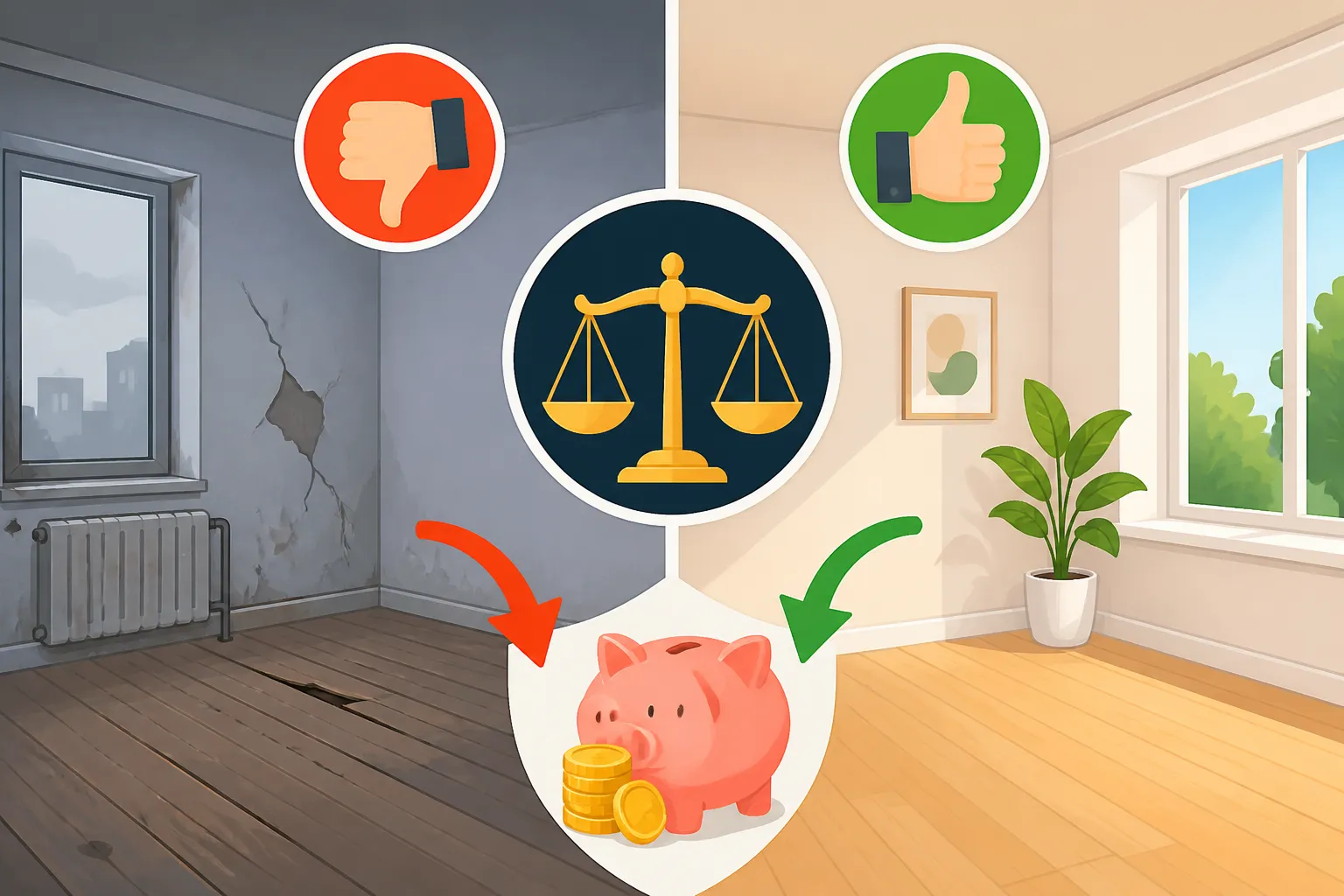
Normal vs. Nyistandsat: Maintenance Terms That Dictate Your Deposit
It's a familiar story for many of us who've navigated the Danish rental market: you move out of your lovely apartment, confident you've left it in good condition, only to have a significant chunk, or even all, of your deposit vanish into thin air. This guide will meticulously break down the crucial maintenance terms "normal istandsat" and "nyistandsat" (normally maintained and newly renovated) to equip you with the knowledge needed to protect your hard-earned deposit when your tenancy ends in Denmark.
The Core of the Problem: Deposit Deductions in Denmark
Arriving in Denmark, you quickly learn about the often substantial deposits and prepaid rent required before you even get the keys to your new place. What many new arrivals don't fully grasp until it's too late is how easily those funds can be depleted upon moving out. This isn't just a minor administrative hurdle; it's a common source of stress and financial loss for expats who aren't familiar with the nuances of Danish rental law and landlord expectations.
Why Danish Deposits Feel Like a Black Hole
For many, the Danish rental system can feel like a one-way street when it comes to deposits. You pay a hefty sum upfront – often three months' rent for deposit and another three months for prepaid rent – and then, when you leave, it feels like an uphill battle to get any of it back. Landlords in Denmark are legally entitled to deduct costs for damages or wear and tear that go beyond what's considered "normal use" of the property. The challenge, of course, lies in defining what exactly constitutes "normal use" and what crosses the line into chargeable damage. This ambiguity, coupled with the high cost of services like painting and cleaning in Denmark, often leaves tenants feeling unfairly charged, especially when they genuinely believe they've looked after the property.
It's a frustrating experience to meticulously clean and tidy your former home, only to receive a bill for a full repaint or floor sanding. This often stems from a fundamental misunderstanding of the maintenance obligations stipulated in your lease agreement, which are far more specific than what many might be used to in their home countries. Many expats, myself included, have had to learn these hard lessons, often losing a substantial portion of our initial rental costs, simply because we weren't fully aware of these distinct Danish terms. For a broader overview of the rental landscape, check out our guide on Renting in Denmark: Complete Guide for Expats (2027).
The Legal Basis: Lejeloven and Lease Agreements
The bedrock of tenant-landlord relations in Denmark is the Danish Tenancy Act, known as Lejeloven. This comprehensive piece of legislation outlines the rights and responsibilities of both parties. However, simply knowing the law exists isn't enough; how your individual lease agreement is drafted, specifically which boxes are ticked and what supplementary clauses are added, will determine your precise obligations. The standard lease agreement used across Denmark is called Typeformular A10. This form is designed to standardize rental contracts, but it still leaves room for specific agreements regarding the property's condition upon moving out.
It's absolutely paramount to understand that while Lejeloven sets the general framework, your specific lease agreement will detail the exact conditions for returning the property. For example, Section 11 of this form is where you'll find those crucial terms that dictate how the property must be maintained and returned. Many landlords, unfortunately, will simply present the contract for signing without fully explaining these critical clauses, especially to non-Danish speakers. This is why a thorough review of your lease, ideally before signing, is non-negotiable. Don't be shy about asking for an English translation or bringing someone knowledgeable with you. To dive deeper into the standard contract, read our article on Typeformular A10: Understanding the Standard Danish Lease Agreement.
Decoding "Normal Istandsat" (Normal Wear and Tear)
When you see "normal istandsat" in your lease, it generally refers to the expectation that you will return the property in a state reflecting normal wear and tear from ordinary use. This is the more tenant-friendly standard, implying that you are not expected to deliver a brand-new apartment, but rather one that has been looked after reasonably well during your tenancy. Understanding this distinction is vital, as it can save you a significant amount of money.
What "Normal Istandsat" Truly Means
"Normal istandsat" quite literally translates to "normally maintained" or "normally restored." In the context of a Danish rental, it means the property should be returned in a condition that reflects its age and the period of your tenancy, accounting for the natural depreciation and minor signs of use that occur in any home. You are not responsible for the costs associated with wear and tear that is considered normal. This includes things like minor scuffs on walls, slight fading of paint due to sunlight, or the natural wear of flooring in areas with high foot traffic. The key here is "normal use." If you've been living in the apartment as one would ordinarily, then minor imperfections are generally the landlord's responsibility to cover.
However, the line between "normal" and "excessive" can sometimes feel blurry, and this is where documentation becomes your best friend. A landlord cannot simply charge you for repainting an entire apartment if only a few small, reasonable marks are present. They must demonstrate that the damage goes beyond what's expected from everyday living. If your contract specifies "normal istandsat," it means the landlord can only deduct for actual damages, neglect, or use that goes far beyond what is considered normal for a household.
Practical Examples of Normal Wear and Tear
Let's look at some real-life scenarios to illustrate what usually falls under "normal istandsat" and therefore shouldn't be charged to your deposit:
Imagine you've lived in an apartment for three years. You have a couch that touched the wall, leaving a faint scuff mark that isn't easily visible unless you really look for it. This would typically be considered normal wear and tear. Similarly, if you've hung a few paintings using small nails or picture hooks, and you've neatly filled and sanded these small holes before moving out, these are generally accepted as normal. The landlord might expect a touch-up of the paint in these specific spots, but not necessarily a full repaint of the entire wall or room unless the existing paint was already old and due for renewal anyway.
Consider the flooring. Over a few years, any wooden floor or linoleum will show some signs of use. There might be a slight sheen change in high-traffic areas like hallways or around the kitchen counter. These are natural effects of people walking, cooking, and living. Unless there are deep scratches, gouges, or significant water damage due to negligence, these subtle changes in the floor's appearance are typically covered by the "normal istandsat" clause. A landlord cannot charge you for sanding and varnishing a floor that was already several years old just because it shows minor, normal signs of use. The expectation is that the property simply needs a basic clean and repair of any actual damages, not a complete overhaul.
Understanding "Nyistandsat" (As Good As New/Renovated Condition)
Now, let's talk about the term that causes the most headaches and financial hits for departing tenants: "nyistandsat." This term signifies a much stricter and more expensive standard for returning a rental property, often leaving tenants with little to no deposit left to claim. It's crucial to distinguish this from "normal istandsat" as early as possible in your rental journey.
The Stricter Standard of "Nyistandsat"
"Nyistandsat" literally means "newly renovated" or "restored to new condition." When this term is explicitly stated in your lease agreement, it means you are generally obligated to return the property in a state that is as close to brand-new or freshly renovated as possible. This is a very high bar, and it comes with significant financial implications. Typically, this clause means you are responsible for the costs of professional repainting of all walls and ceilings, professional deep cleaning of the entire premises, and often, professional floor sanding and varnishing – regardless of how long you've lived there or how careful you've been.
This standard is usually applicable when you move into a property that has genuinely just been renovated or is brand-new. The logic is that you received it in pristine condition, and therefore, you must return it in pristine condition. However, some landlords will attempt to apply this clause even to older properties, which can make the clause legally questionable. The core issue for expats is that this means paying for significant maintenance work that you might not deem necessary, essentially contributing to the landlord's ongoing property upgrades.
Tenant Obligations Under "Nyistandsat" Clauses
The financial implications for tenants under a "nyistandsat" clause are substantial. We're talking about expenses that can easily eat up your entire deposit and even your prepaid rent. For example, if you live in a 70 sqm apartment, a full professional repaint could cost anywhere from 10,000 to 20,000 DKK or even more, depending on the number of rooms and ceiling conditions. Professional deep cleaning adds another several thousand DKK, and floor sanding can easily be 5,000-10,000 DKK per room or more. It quickly adds up, often exceeding the total deposit.
Many expats find themselves in a situation where they've paid diligently for years, only to realize upon moving out that their entire deposit is earmarked for these "nyistandsat" costs. It often feels like the landlord is using the tenant's deposit to fund routine maintenance and updates to their property. This is why it’s so critical to understand this term at the lease-signing stage, and ideally, to avoid signing a contract with a "nyistandsat" clause if the property itself is not truly new or freshly renovated. These are precisely the hidden clauses you need to watch out for, as discussed in our detailed guide on Section 11 of Typeformular A10: The Hidden Clauses to Watch For.
Key Differences and Financial Implications
The difference between "normal istandsat" and "nyistandsat" isn't just semantic; it's the difference between getting most of your deposit back and potentially losing it all, or even owing more. Understanding this distinction is the single most important piece of knowledge for any tenant in Denmark.
Side-by-Side Comparison of Maintenance Standards
Let's lay out the key differences in a clear, concise way:
| Feature | Normal Istandsat (Normal Wear and Tear) | Nyistandsat (As Good As New/Renovated) |
|---|---|---|
| Tenant Liability | Only for damages beyond normal wear and tear (e.g., holes, stains, broken fixtures due to negligence). | For all maintenance to bring the property back to a new condition, including repainting, cleaning, floor treatment, regardless of wear. |
| Typical Costs | Minor repairs, touch-up painting in specific damaged areas, basic cleaning. Costs are generally lower. | Full professional repaint, deep cleaning, floor sanding/treatment. Costs are significantly higher. |
| Examples of Condition | Faint scuffs on walls, minor floor wear, small nail holes (filled). | Pristine, freshly painted walls, spotless and professionally cleaned surfaces, newly treated floors. |
| Move-in Condition | Property may show existing signs of normal use. | Property is genuinely new or freshly renovated upon move-in. |
| Best Practice for Tenant | Document thoroughly, conduct a basic clean, fix specific damages. | Document extremely thoroughly, consider professional cleaning/painting before move-out. |
This table clearly illustrates the stark contrast in your obligations and potential financial outlay. It’s not just about keeping the place clean; it’s about the standard of cleanliness and maintenance expected.
The "Nyistandsat" Trap: Why It's Often Unfair
The "nyistandsat" clause can indeed feel like a trap, and for good reason. One of the main points of contention, and a frequent area for legal challenge, is when a landlord applies this clause to a property that wasn't actually "nyistandsat" when you moved in. If you rented an apartment that was already several years old and hadn't seen a fresh coat of paint or new floors in ages, then a clause demanding "nyistandsat" upon your departure is often considered invalid or at least heavily disputable under Lejeloven. Landlords cannot profit from your tenancy by getting a free renovation.
Danish law also includes principles of depreciation. This means that if an item (like a painted wall or a wooden floor) has a certain lifespan, a landlord cannot charge you the full cost of replacing it with a brand-new equivalent if the original was already nearing the end of its useful life. For instance, if a wall was last painted five years ago and its expected life is ten years, you should only be liable for a percentage of the repainting cost, not the full amount. However, landlords often overlook this detail, hoping tenants will simply pay up. This is where organizations like LLO (Lejernes Landsorganisation), the Danish Tenants' Union, become invaluable. Joining LLO (Tenants' Union): How to Fight Unfair Rent Increases can provide you with legal support and representation in such disputes.
Protecting Your Deposit: Essential Steps for Expats
Navigating the Danish rental market can be daunting, but with the right proactive steps, you can significantly increase your chances of getting your deposit back. It's all about diligent documentation, understanding your contract, and knowing your rights.
Document Everything: The Move-In Inspection (Indflytningssyn)
This cannot be stressed enough: document everything when you move in. The single most important thing you can do to protect your deposit is to thoroughly document the condition of the property on the day you take possession. This is done through what's called an Indflytningssyn (move-in inspection). You should take high-resolution photos and videos of every room, every wall, every floor, every fixture, and every appliance, noting any existing scratches, dents, scuffs, stains, or imperfections. Don't just focus on obvious damage; capture the overall condition. Zoom in on anything that looks less than perfect. Date-stamp your photos or videos if possible.
After documenting, ensure you get a copy of the official move-in report (indflytningsrapport), and critically, review it carefully. If the landlord has missed anything you documented, add it in writing before you sign. Remember, you have a 14-day window after moving in to report any newly discovered defects or issues that weren't noted in the initial report. Send these additional observations to your landlord in writing (email is usually sufficient, but registered mail is even better for proof). This creates an undeniable record of the property's condition before you even settled in. For a step-by-step guide on this critical process, consult The Move-In Inspection (Indflytningssyn): Documenting Property Flaws.
Understanding Your Lease: Section 11 and Beyond
Before you even think about signing on the dotted line, you must meticulously read your lease agreement. Pay particular attention to Section 11 of the Typeformular A10. This is where the landlord specifies the maintenance standard for your departure. If it states "nyistandsat," and the property isn't genuinely brand new or freshly renovated, then alarm bells should be ringing. You have the right to negotiate or question this clause. If you're unsure, or if the contract is only in Danish, it's highly advisable to seek professional legal advice or consult with LLO before signing. Don't rely solely on a landlord's verbal assurance, as only what's in writing counts legally.
It's also worth remembering that even if you sign a contract, some clauses can be overridden by law. For instance, if a "nyistandsat" clause is deemed unreasonable given the property's actual condition at move-in, it might not hold up in court or with the Rent Control Board (Huslejenævnet). This due diligence at the beginning can save you immense grief and money later on. The initial rental costs can be quite high, so it's worth understanding exactly what you're committing to; learn more about Initial Rental Costs: Navigating Deposits and Prepaid Rent Laws.
The Move-Out Inspection (Fraflytningssyn) and Dispute Resolution
When it's time to move out, ensure you are present for the Fraflytningssyn (move-out inspection). Do not let the landlord conduct it alone. This is your last chance to compare the property's current state with your extensive move-in documentation. Walk through the property with the landlord, armed with your photos and videos. If the landlord points out "damages," refer back to your initial documentation. If they claim a mark is new, and you have a picture of it from move-in, you have strong evidence.
Crucially, do not sign the move-out report if you disagree with any of the landlord's claims or proposed deductions. You have the right to refuse to sign. If you sign, it indicates your agreement, making it much harder to dispute later. If a dispute arises and you cannot reach an agreement, your next step is to take the matter to the Huslejenævnet (Rent Control Board) in your municipality. This is an impartial body designed to mediate and rule on tenant-landlord disputes. Again, LLO can be a tremendous asset here, offering guidance and even representing you. For more detailed steps on this process, see The Move-Out Inspection (Fraflytningssyn): Getting Your Deposit Back. You will also receive official communication regarding such disputes through your digital postbox, so keep an eye on E-Boks vs. Mit.dk: Receiving Official Financial Mail from the State.
Preparing for Handover: DIY vs. Professional Help
When your tenancy is nearing its end, assess your obligations based on your lease. If it's "normal istandsat," a thorough clean and fixing any specific damages you caused (like a broken shelf or a large, unfillable hole in the wall) should suffice. You can handle the cleaning yourself, ensuring it's to a good standard.
However, if your contract specifies "nyistandsat," you might need to seriously consider professional help. A full repaint and deep cleaning are demanding tasks, and if not done to a professional standard, the landlord might still deduct the cost of redoing it from your deposit. It’s often a difficult decision whether to invest in professional cleaning and painting yourself or to let the landlord arrange it and deduct from your deposit. Sometimes, getting quotes from local Danish companies for these services before moving out can give you leverage. You might find that professional services are cheaper than what the landlord will charge. Remember, the goal is to meet the standard without paying exorbitant landlord-inflated prices.
Real-World Scenarios and Expat Challenges
The concepts of "normal istandsat" and "nyistandsat" are best understood through the experiences of others. Expats often face unique challenges, from language barriers to a lack of familiarity with local legal frameworks, which can make these maintenance terms particularly tricky.
Hypothetical Case Studies
Let's look at a few common scenarios:
Case 1: Sarah's Nyistandsat Nightmare
Sarah, a young professional from the US, found a beautiful apartment in Østerbro through a popular online portal. The lease, presented in Danish, briefly mentioned "nyistandsat" upon departure. Unaware of its implications, and trusting her landlord's friendly demeanor, she signed. After three years of careful living, she moved out. Despite leaving the apartment spotless and making minor repairs, she received a bill for a full repaint, floor sanding, and professional cleaning – totaling over 25,000 DKK. Her entire deposit (20,000 DKK) was gone, and she still owed money. She realized too late that the apartment, already a decade old when she moved in, was certainly not "nyistandsat" at the start, making the clause highly debatable. Had she documented the apartment's initial condition and understood the clause's true meaning, her situation could have been vastly different.
Case 2: Mark's Documentation Triumph
Mark, an experienced expat from the UK, rented an older apartment in Vesterbro. His contract stipulated "normal istandsat." During his move-in, he spent two hours meticulously photographing every wall, floor, and fixture, even the tiniest scuff marks and chips, creating a comprehensive digital album. Two years later, upon his move-out, the landlord tried to charge him for "significant wall damage" and "worn floors." Mark calmly presented his dated photos, showing the marks were pre-existing and the floor wear was consistent with normal use over two years. Faced with undeniable evidence, the landlord dropped most of the charges, and Mark received nearly his full deposit back, minus a small, agreed-upon fee for specific damage he had genuinely caused.
Case 3: Lena's Online Search and the Hidden Cost
Lena, a student looking for her first place in Aarhus, used an online platform like Spotahome to find an apartment remotely before arriving in Denmark. The convenience was great, but the contract, again, included the "nyistandsat" clause, which she skimmed over, focusing on the rent and location. She relied on the platform's general terms and photos, assuming everything was transparent. Six months before her planned move, she overheard other students discussing their deposit woes and suddenly realized the "nyistandsat" clause was going to be a massive financial burden. She panicked, wondering how she could possibly afford a full repaint as a student. Her struggle highlights how easily these clauses can be missed, especially when the focus is on simply securing a place in a competitive market.
Language Barriers and Miscommunication
One of the biggest hurdles for expats is the language barrier. Danish legal terminology, even when translated literally, often carries specific legal nuances that are hard to grasp without local experience. Relying solely on Google Translate for your lease agreement is a risky game. A direct translation might not convey the full legal weight or common interpretation of terms like "nyistandsat" within the Danish legal context.
It's common for landlords to explain things in Danish, or in English without fully clarifying the strict implications of these maintenance terms. This can lead to significant miscommunication and later, disputes. Always ask for clarification in writing, and if possible, have a Danish speaker or legal expert review critical documents. If you're on a short-term stay or just arrived and need reliable data to ensure you can communicate, translate on the go, or look up information, a local eSIM from brands like Airalo can be an absolute lifesaver. It ensures you have consistent internet access to connect with translation apps, reach out to legal aid, or send important emails during those crucial first days. Without understanding the intricacies, you could inadvertently agree to costly terms.
Disclaimer
The information provided in this guide is for general informational purposes only and does not constitute legal advice. While we strive to offer accurate and up-to-date information for expats in Denmark, rental laws can be complex and are subject to change. We highly recommend seeking professional legal counsel from a Danish lawyer or consulting with the Danish Tenants' Union (LLO) for advice specific to your individual situation and lease agreement.