Using Swapfiets vs. Buying a Used Bike on DBA
Ah, the eternal expat dilemma in Denmark: how to get around without breaking the bank on a car, and specifically, what to do about a bike! You arrive in this cycling paradise, see everyone effortlessly gliding by, and quickly realize a bicycle isn't just a leisure activity here; it's practically a third limb for most Danes. But for us newcomers, figuring out the best way to acquire one can feel like navigating a maze of unfamiliar options, from subscription services to local online marketplaces. This guide is here to untangle that knot for you, comparing the popular Swapfiets subscription model with the classic Danish approach of buying a used bike on DBA, so you can make an informed choice that fits your expat life.
The Danish Cycling Obsession: More Than Just a Commute
When you first land in Denmark, one of the most striking things you'll notice – after perhaps the endless grey skies, depending on the season – is the sheer number of bicycles. It's not just a hobby; it's deeply ingrained in the culture, an essential part of daily life, and for many, a point of national pride. You might have cycled a bit back home, but here, it’s a whole different ballgame.
Why Bikes Rule the Roads in Denmark
Danes embrace cycling with an enthusiasm that borders on religious fervor, and it's easy to see why. The infrastructure is simply incredible. You'll find dedicated, often wide, bike lanes (cykelstier) on almost every major road, making cycling feel incredibly safe and efficient. Distances in Danish cities are generally manageable, especially in places like Copenhagen, Aarhus, or Odense, making a bike the fastest way to get from A to B for many urban dwellers. It’s also flat – mostly, thankfully! – meaning you don't need to be an Olympic athlete to tackle your daily commute.
For a new expat, this can be both inspiring and a little intimidating. You might be used to driving everywhere or relying on public transport, and suddenly, you're in a city where your colleagues, friends, and even grandparents are cycling to work, school, and the grocery store, often with multiple children or groceries piled onto cargo bikes. It feels like an unspoken rule that you must get a bike. And honestly, once you get past the initial fear of navigating new traffic rules and learn to signal like a local, you’ll likely fall in love with the freedom and efficiency it offers. It's a key part of integrating into the Danish rhythm of life.
The Cost-Benefit Analysis of Car Ownership vs. Cycling
Let's be brutally honest for a moment: owning a car in Denmark is a luxury most expats quickly decide they can do without. The taxes on vehicles are eye-watering, insurance costs can make your jaw drop, and then there's the perpetually frustrating quest for parking, which often comes with a hefty price tag attached. Even fueling up is significantly more expensive than in many other countries. For the vast majority of daily commutes and errands within cities and even between nearby towns, a car simply doesn't make financial sense or offer much practical advantage over public transport or, yes, cycling.
This is where your bike comes in as the ultimate hero. Compared to a car, a bicycle is incredibly cheap to "run." Your main costs are the initial purchase or subscription, occasional maintenance, and a good lock. When you factor in the health benefits, the environmental perks, and the sheer joy of experiencing Danish cities from two wheels, the decision to embrace cycling becomes a no-brainer. Even if you rely on public transport for longer journeys, like taking the train from Copenhagen to Aarhus, having a bike for the "last mile" makes your life so much easier. Consider it an essential investment in your Danish life and your wallet. For tips on broader financial planning, you might find our guide on Money in Denmark: Banking, Payments, and Financial Setup for Expats helpful.
Swapfiets: The Subscription Model for Effortless Cycling
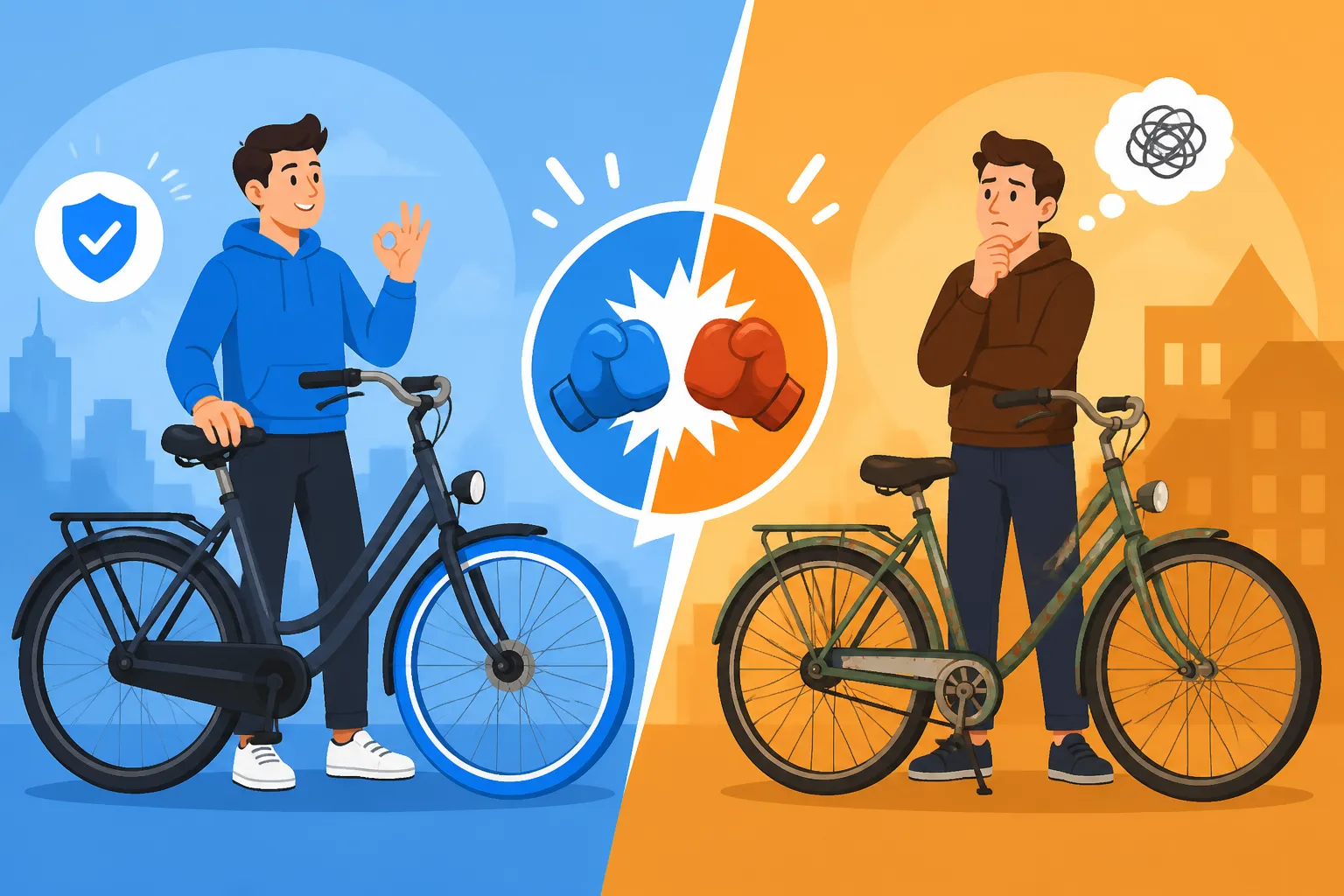
Alright, let's dive into one of the newer, and increasingly popular, options for getting yourself a trusty steed in Denmark: Swapfiets. You’ve probably seen their bikes around – they're distinctively blue-front-tired, which makes them instantly recognizable. This isn’t about ownership; it’s about access and convenience, a bit like a Netflix for bikes.
What is Swapfiets and How Does It Work?
Swapfiets is a Dutch company that offers bicycles on a monthly subscription basis. The core promise is simple: for a fixed monthly fee, you get an "always working" bike. If anything goes wrong – a flat tire, a broken light, a wonky chain – you simply contact them via their app, and they will either repair your bike on the spot or swap it for a new one, often within a day or two. It’s designed to take all the hassle out of bike ownership.
The registration process is straightforward. You sign up online or via their app, choose your bike type (they have standard city bikes, e-bikes, and even e-mopeds), and provide your payment details. You usually pay a small one-time registration fee or deposit, and then the monthly subscription begins. They’ll then deliver the bike right to your doorstep, or you can pick it up from one of their stores. It's a fantastic option for new arrivals who might be overwhelmed with administrative tasks and just need a reliable way to get around quickly. For instance, if you're still navigating temporary accommodation after using a service like Spotahome to find a place, having a Swapfiets delivered can be a real lifesaver to explore your new neighborhood.
The Pros of Subscribing to Swapfiets
The biggest advantage of Swapfiets, hands down, is the peace of mind. You never have to worry about maintenance. Got a flat tire on your way to work? No problem. A quick message in the app, and someone will come to you or arrange a swap. This saves you the time, effort, and often unexpected cost of finding a bike repair shop, especially if your Danish isn't quite fluent yet. For expats who are not mechanically inclined or simply don't have the time to deal with bike repairs, this is a huge selling point.
Another significant pro is the minimal upfront cost. Unlike buying a bike, which can set you back anywhere from a few hundred to several thousand DKK, Swapfiets only requires a monthly payment and sometimes a small initial fee. This makes it a very accessible option, especially if you're still managing your initial move-in expenses, like rent deposits and prepaid rent. It also offers flexibility; if you're only in Denmark for a year or two, you can simply cancel your subscription (after a minimum period, usually 3-6 months) without the headache of trying to sell a used bike before you leave.
The Cons and Hidden Considerations of Swapfiets
While Swapfiets offers unparalleled convenience, it’s not without its drawbacks. Firstly, the monthly cost, while seemingly small, can add up significantly over time. Over a year or two, you might end up paying more in subscription fees than you would have for a decent used bike outright. It's an ongoing expense, rather than a one-time investment. For example, a standard Original bike can cost around 200 DKK per month. Over two years, that’s 4,800 DKK, which could buy you a very good used bike, or even a new entry-level one.
Secondly, you don't own the bike, which means you have no real choice in its appearance or customization options beyond choosing the model. Every Swapfiets bike looks pretty much the same, with that signature blue front tire. For some, this lack of personalization might be a minor aesthetic point, but for others, the joy of cycling comes from having a bike that truly feels like theirs. Lastly, while repairs are included, during peak seasons or busy times, there might still be a wait for a technician or a bike swap. If your bike breaks down right before an important meeting, even a few hours' wait can be inconvenient.
Buying a Used Bike on DBA (Den Blå Avis): The Traditional Danish Way
For many long-term residents and those who want a more permanent solution, diving into the second-hand market on DBA is the quintessential Danish way to acquire a bike. It requires a bit more effort, certainly, but it can also be incredibly rewarding and cost-effective in the long run.
Navigating DBA: Denmark's Digital Flea Market
DBA, short for "Den Blå Avis" (The Blue Newspaper), is Denmark's largest online marketplace for everything second-hand. From furniture to electronics to, you guessed it, bicycles, if you can imagine it, it's probably for sale on DBA. Think of it as Denmark's equivalent to Craigslist or Gumtree, but much more widely used and often with a better user experience. To get started, you'll want to head to dba.dk. You can search in English for terms like "bike," "bicycle," "mountain bike," or "city bike," but using Danish terms like "cykel" (bike), "damecykel" (women's bike), "herrecykel" (men's bike), or "elcykel" (e-bike) will yield more results.
Filtering by location (postnummer/postal code) is crucial, as you’ll likely need to pick up the bike yourself. Communication with sellers is often in Danish, but many younger Danes will be happy to switch to English if you ask politely. Be prepared to use Google Translate or ask a Danish friend for help. Many transactions happen via MobilePay, so make sure you have that set up – it’s a non-negotiable part of daily life here. Our guide on Apps for Daily Life in Denmark: MobilePay, Rejseplanen, and e-Boks can help you get started with this essential payment tool, or you can consult Using MitID for Banking: Security, Device Registration, and App Setup to ensure your digital finances are ready.
The Advantages of Bike Ownership via DBA
The primary advantage of buying a used bike on DBA is the one-time cost. While you might pay more upfront than a single month of Swapfiets, the long-term financial benefits are usually clear. Over a year or two, you will almost certainly save money. A decent used city bike can be found for 800-2000 DKK, and with proper care, it can last for many years.
Moreover, owning your bike gives you complete independence. You can customize it, accessorize it, and genuinely make it your own. There’s a certain satisfaction that comes with having a bike that reflects your personality, rather than a uniform subscription model. If you decide to leave Denmark or upgrade your bike down the line, you also have the option to sell it yourself, recouping some of your initial investment. This ownership model means you're investing in an asset, rather than just renting a service.
The Disadvantages and Pitfalls of Buying Used
The biggest downside of buying a used bike is that all maintenance and repair costs fall squarely on your shoulders. A flat tire means either learning to fix it yourself (a useful skill!) or taking it to a bike shop, which can get expensive. If you’re not mechanically inclined, these costs can quickly add up. This is particularly challenging for new expats who are still adapting and might find the language barrier at a bike shop intimidating. Using your data to search for local repair shops might be the first step, so having a good mobile plan with services like Airalo can be unexpectedly helpful here.
Another significant risk is inadvertently buying a "lemon" – a bike with hidden problems that become apparent only after a few rides. This could range from worn-out gears to a subtly bent frame. Even worse, there's always the risk of accidentally buying a stolen bike. Bike theft is, unfortunately, quite prevalent in Denmark. To mitigate this, always ask the seller for the original purchase receipt (kvittering) and verify the frame number if possible. If the price seems too good to be true, it often is. Without a receipt, you have no proof of legal ownership, which could lead to complications if the bike is ever recovered by the police.
Key Factors to Consider for Your Decision
Now that we’ve laid out the two main options, let’s zoom in on some crucial factors that should guide your decision-making process. This isn’t just about cost; it’s about aligning your choice with your lifestyle, your comfort level, and your long-term plans in Denmark.
Budget and Long-Term vs. Short-Term Stay
Your budget and the expected duration of your stay in Denmark are probably the most significant factors. If you're here for a short stint, say 6-12 months, or perhaps even just an academic year, Swapfiets often makes more sense. The convenience of not having to buy, maintain, and then sell a bike in a relatively short period can outweigh the higher cumulative cost. For example, 12 months of a standard Swapfiets will cost you around 2,400 DKK. Buying a decent used bike for 1,500 DKK might seem cheaper initially, but if you then struggle to sell it for 500 DKK when you leave, your actual saving is minimal, and the effort of selling might not be worth it.
However, if you're planning to be in Denmark for two years or more, buying a used bike will almost certainly be the more economical choice. After about 12-18 months, the cumulative cost of a Swapfiets subscription usually surpasses the cost of a good used bike. You’ll hit a break-even point, and from then on, every month of ownership is essentially "free" (minus maintenance). You can also factor in the potential resale value, which further enhances the long-term cost-effectiveness. Our Cost of Living in Denmark 2026: Budgets for Singles and Families guide can provide a broader context for budgeting your overall expenses.
Maintenance and Convenience vs. Independence
How much do you value convenience, and how comfortable are you with a bit of DIY? With Swapfiets, convenience is king. You literally never have to worry about a flat tire or a squeaky chain. You report it, they fix it or swap it. This can be a huge stress reliever, especially if you’re new to the country, don’t speak Danish fluently, and don’t want to navigate bike shops. It’s perfect for those who want a completely hassle-free experience.
On the other hand, buying a used bike means you are fully responsible. This brings independence. You choose your mechanic, you choose your parts, or you learn to do it yourself. This can be empowering, and a great way to save money on small repairs. But it also means that unexpected repairs will come out of your pocket and require your time and effort. You might even find yourself looking up YouTube tutorials for bike chain maintenance – a truly Danish initiation ritual!
Bike Theft in Denmark: A Harsh Reality
Let’s not sugarcoat it: bike theft is a significant problem in Denmark, particularly in larger cities like Copenhagen and Aarhus. It’s a sad reality that almost every Dane has a story about a stolen bike. This factor plays a crucial role in deciding between Swapfiets and owning.
Swapfiets bikes are equipped with specific locks, and the company often takes on the risk of theft, provided you locked it correctly. If your Swapfiets bike is stolen, you typically pay a deductible (often around 500-1000 DKK), and they replace it. This is a huge benefit, as you're not out the full cost of a new bike.
If you own your bike, the entire financial burden of theft falls on you. This is where a good lock (or two!) becomes an essential, non-negotiable investment. Seriously, don’t skimp on locks. Additionally, your contents insurance (indboforsikring) often includes coverage for bicycles, but make sure to check the terms and conditions regarding theft, especially if it happens outside your home. Our guide on Indboforsikring: Why Home Contents Insurance is Crucial for Renters provides more detail on this essential coverage. Always ensure you lock your bike to something fixed, not just the wheel to the frame.
Here's a quick comparative overview:
| Feature | Swapfiets (Subscription) | Used Bike (DBA Purchase) |
|---|---|---|
| Upfront Cost | Low (initial fee/deposit, if any) | Moderate to High (purchase price) |
| Monthly Cost | Fixed monthly fee | None (after purchase) |
| Maintenance | Included, hassle-free repairs/swaps | Your responsibility, additional costs for repairs |
| Theft Risk | Covered by Swapfiets (with deductible if applicable) | Your financial loss (unless covered by personal insurance) |
| Flexibility | Easy to cancel (after minimum period) | Requires effort to sell when leaving/upgrading |
| Ownership | Rental model, never truly yours | Full ownership, asset for resale |
| Customization | Limited to bike model choice | Full freedom to customize and accessorize |
| Best For | Short-term stay, low hassle, new arrivals, no DIY skill | Long-term stay, budget-conscious, independent, DIY friendly |
Practical Tips for Each Option
Regardless of whether you choose the convenience of a subscription or the independence of ownership, there are some universal truths about cycling in Denmark, along with specific tips for each path.
Maximizing Your Swapfiets Experience
If you go the Swapfiets route, make sure you thoroughly understand their terms and conditions, especially regarding the minimum subscription period and the deductible in case of theft. While their service is generally excellent, being informed will prevent any surprises. Don't hesitate to use their app for any issue, no matter how small. That's what you're paying for! If you have a longer commute or simply want a less strenuous ride, consider their electric bike options. While more expensive monthly, they can be a game-changer for tackling longer distances or headwinds, keeping you fresh for work or studies. Remember to always lock your bike properly, even if it's "insured," to avoid unnecessary deductibles and the inconvenience of reporting a stolen bike.
Smart Shopping on DBA
For those venturing into the world of second-hand bikes, a bit of savvy can save you a lot of headache and money. When you go to inspect a bike, here’s a checklist:
- Frame: Check for any cracks, significant dents, or rust. A damaged frame is a deal-breaker.
- Wheels: Spin them to check for wobbles. Squeeze the tires to gauge their condition.
- Brakes: Test both front and back brakes. They should be responsive.
- Gears: Shift through all the gears to ensure they change smoothly.
- Chain: Look for excessive rust or stiffness.
- Lights: Check if they work, or if the bike has mounts for new lights.
- Seat Post: Make sure it can be adjusted up and down smoothly.
Always ask for the original purchase receipt (kvittering). This is your best defense against buying a stolen bike and can be crucial if you ever need to claim insurance. Don't be afraid to negotiate the price. Danes are generally open to a respectful haggle, especially on DBA. If you're unsure about the bike's condition, consider having a bike-savvy friend come along, or factor in the cost of a professional check-up at a bike shop after purchase.
Essential Bike Accessories and Rules in Denmark
No matter which bike you choose, certain accessories and adherence to local rules are non-negotiable for safe and legal cycling in Denmark.
- Lights: This is absolutely critical. You must have working front and rear lights during dusk, dark, and poor visibility. Failure to do so will result in a hefty fine. Get good, bright LED lights. Our guide on Mandatory Bike Lights and Hand Signals in Danish Traffic delves into this in more detail.
- Lock: As mentioned, invest in a strong lock, preferably two (a wheel lock and a chain/U-lock to secure it to a fixed object). You'd be surprised how quickly a flimsy cable lock can be cut.
- Helmet: While not legally mandatory for adults, wearing a helmet is highly, highly recommended. Danish drivers are generally careful around cyclists, but accidents happen. Your head is worth protecting. You can read more about this in Do I Need a Helmet to Ride a Bike Legally in Denmark?.
- Reflectors: Your bike should have a white front reflector, a red rear reflector, orange pedal reflectors, and yellow/white wheel reflectors. These are often integrated into the tires.
- Hand Signals: Learn and use hand signals for turning and stopping. It’s part of the unspoken etiquette and keeps everyone safe.
- Lane Discipline: Stick to the bike lanes, ride on the right, and respect traffic lights. Don't weave in and out of pedestrians or cars.
Cycling in Denmark is an amazing experience and a fantastic way to embrace your new home. Whether you opt for the care-free Swapfiets or the independent route of a used DBA bike, getting on two wheels will be one of the best decisions you make here. Happy cycling!
Disclaimer
The information provided in this guide is intended for general informational purposes only and does not constitute legal, financial, or professional advice. While we strive to provide accurate and up-to-date information, rules and regulations in Denmark can change. It is always recommended to consult official sources, such as SIRI, Borger.dk, or relevant professional advisors, for the most current and specific guidance pertaining to your individual situation. We assume no responsibility for any decisions made based on the information contained herein.