Maternity Care Timeline: Scans (Nakkefold and Misdannelse) Explained
Finding out you are pregnant in a foreign country often triggers a wave of panic alongside the excitement, especially when you realize the healthcare system functions entirely differently than back home. I remember sitting in my GP's office in Vesterbro, clutching a Danish pamphlet and wondering if I had already missed the deadline for the most important tests. This guide solves that confusion by breaking down every milestone of the Danish maternity timeline, specifically focusing on the critical Nakkefold and Misdannelse scans.
The Danish Approach to Maternity Care
When you first enter the Danish maternity system, you might be surprised by how midwife-led the process is. Unlike many other countries where an OB-GYN manages every detail, the Danish system assumes pregnancy is a natural state rather than a medical condition. You will primarily interact with your General Practitioner (GP) and a designated midwife (jordemoder) at your local hospital, such as Rigshospitalet or Hvidovre Hospital.
The system is highly structured and remarkably efficient once you understand the rhythm. It is designed to be low-intervention for healthy pregnancies, but the screening process for chromosomal abnormalities and physical development is robust and offered to every resident. Because the system relies heavily on your CPR number, it is essential to have your registration in order. If you are still waiting for your administrative paperwork to clear, you might find the Healthcare in Denmark for Foreign Residents: Complete System Guide (2027) particularly useful to understand your rights during this transitional period.
The Pregnancy Passport: Your Vandrejournal
Before you even get to your first scan, you will attend an initial appointment with your GP, usually between weeks 6 and 10. This is a foundational step where the doctor creates your "Vandrejournal"—a physical (and increasingly digital) pregnancy record that you must carry with you to every single appointment.
What Happens at the First GP Visit
During this visit, the doctor will take blood samples, check your blood pressure, and discuss your medical history. They will also send the necessary referrals to the hospital where you will give birth. If you haven't yet secured a doctor you feel comfortable with, you should look into How to Choose and Change Your General Practitioner (GP) in Denmark to ensure you have a supportive point of contact.
The Double Test Blood Work
The blood sample taken during this visit is crucial for the first scan. It is known as the "Double Test," which measures specific hormones (PAPP-A and beta-hCG). These results are combined with the data from your first ultrasound to calculate the probability of chromosomal conditions. It is a pragmatic, data-driven system that can feel a bit cold at first, but it provides a very high level of accuracy for those who choose to undergo screening.
The First Scan: Nakkefoldscanning (Weeks 11–14)
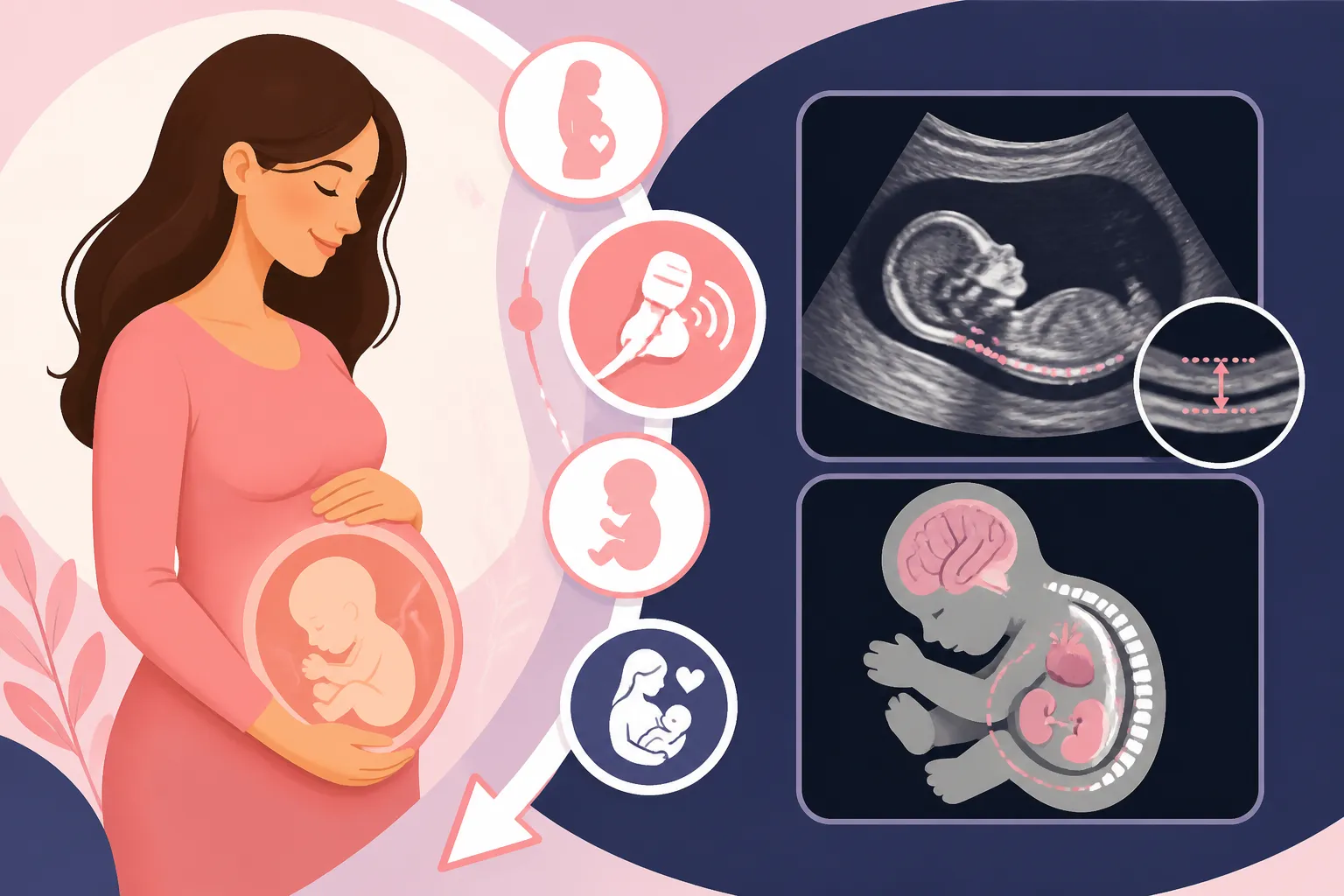
The Nakkefoldscanning, or nuchal translucency scan, is the first time you will see your baby. In Denmark, this scan is typically performed between 11 weeks and 3 days and 13 weeks and 6 days of pregnancy. It is not mandatory, but the vast majority of parents in Denmark opt-in.
The Purpose of the Nuchal Fold Test
The sonographer measures the thickness of the fluid-filled space at the back of the baby's neck. A thicker measurement can sometimes indicate an increased risk of Down syndrome, Edwards syndrome, or Patau syndrome. The sonographer will also check that the heart is beating and confirm whether you are carrying multiples.
Understanding the Risk Assessment
After the scan, the hospital’s software combines your age, the Double Test blood results, and the nuchal fold measurement to produce a risk score. In Denmark, a "high risk" result is generally defined as anything higher than 1 in 300. I recall the silence in the room while the sonographer calculated our numbers—it is a moment of high tension for every expat parent. If you fall into the high-risk category, you will be offered further testing, such as a NIPT (Non-Invasive Prenatal Test) or a chorionic villus sampling (CVS).
The Role of Private Insurance During This Phase
While the public system is excellent, some expats prefer the peace of mind that comes with private consultations, especially if they are navigating the system before their Yellow Health Card (Sundhedskort): Your Key to Danish Healthcare arrives. Companies like SafetyWing offer specialized expat insurance that can bridge the gap if you are in the first 90 days of your residency. Similarly, Cigna Global provides comprehensive plans that some international residents use to access private scanning clinics like Ultralydklinikken for additional reassurance scans.
The Second Scan: Misdannelsesscanning (Weeks 18–22)
The second major milestone is the Misdannelsesscanning, often called the "anomaly scan" or "20-week scan." This is a much longer and more detailed appointment, usually lasting 30 to 45 minutes.
A Head-to-Toe Anatomy Check
During this scan, the sonographer performs a meticulous check of the baby’s internal organs. They look at the four chambers of the heart, the structure of the brain, the kidneys, the spine, and the limbs. They are also checking the position of the placenta and the amount of amniotic fluid. It is a deeply technical scan, and while it is exciting to see the baby's profile, the primary goal is medical screening for physical abnormalities.
Finding Out the Gender
In Denmark, you can usually find out the gender of the baby during the Misdannelsesscanning, provided the baby is in a cooperative position. However, the sonographer will not ask you if you want to know—you must proactively tell them at the beginning of the appointment. Some expats find the Danish "matter-of-fact" attitude a bit surprising; the sonographer might move quickly through the organs, so don't be afraid to ask them to slow down and explain what you are seeing.
What Happens if an Abnormality is Found?
If the sonographer spots something that requires a second look, you will be referred to a fetal medicine specialist. Denmark has some of the world's leading experts in this field, particularly at large university hospitals. The emotional weight of these appointments can be heavy, and it is worth knowing that you are entitled to an interpreter if you feel your Danish (or English) isn't sufficient to understand complex medical terminology.
Comparing the Two Major Scans
The following table provides a quick reference for the two primary scans you will encounter in the Danish public system.
| Feature | Nakkefoldscanning | Misdannelsesscanning |
|---|---|---|
| Timing | 11w 3d to 13w 6d | 18w 0d to 21w 6d |
| Primary Goal | Chromosomal risk assessment | Detailed physical anatomy check |
| Blood Work Required | Yes (The Double Test) | No |
| Duration | 15–20 minutes | 30–45 minutes |
| Key Measurements | Nuchal fold, crown-rump length | Heart, brain, spine, organs, limbs |
| Gender Reveal | Usually too early | Yes (if you ask) |
Practical Logistics for Your Appointments
Navigating a Danish hospital for the first time can feel like a maze. Most maternity wards are located in a specific "Gynækologisk-Obstetrisk" department.
Scanning Your Yellow Card
The very first thing you must do when you arrive at the hospital is find the self-service kiosk and scan your Yellow Card. This registers you in the system and notifies the sonographer that you have arrived. If you are new to the country and haven't received your physical card yet, you can often use the digital version. For more on the logistics of these cards, check How to Download the Sundhedskort App on Your Phone.
The Importance of Punctuality
Danish healthcare runs on a very tight schedule. If your appointment is at 10:15, they expect you to be there, checked in, and sitting in the waiting room by 10:10. If you are late, your appointment may be shortened or cancelled, which is a stress you definitely don't need when you're 20 weeks pregnant.
Partner Involvement
One of the best parts of Pregnancy in Denmark: Midwife Consultations, Scans, and Hospital Births is the inclusion of the partner. In Denmark, it is culturally expected that the partner (or a support person) attends both major scans. They are treated as an equal part of the process, and the sonographers will usually ensure they have a clear view of the screen.
Post-Scan Care and Midwife Visits
Once you have cleared the Misdannelsesscanning, your care shifts more toward the midwife. You will have fewer ultrasounds from this point on unless there is a specific medical reason, such as concerns about the baby's growth or the mother's blood pressure.
Regular Midwife Consultations
Your midwife visits will focus on the "low-tech" aspects of pregnancy: listening to the heartbeat with a Doppler, measuring your symphysis-fundal height, and discussing your birth plan. This is the time to ask about Giving Birth in Denmark: Pain Relief Options and Postpartum Care and to decide if you want to aim for a home birth or a hospital delivery.
Managing Expectations as an Expat
Many expats are used to more frequent scans in the third trimester. In Denmark, if everything is proceeding normally, you might not have another ultrasound after week 20. If this makes you anxious, you can always book a private "growth scan" (tilvækstscanning). This is where having supplemental coverage like Cigna Global can be beneficial, as it may cover private specialist fees that the public system does not deem strictly necessary. For those traveling back to their home country during pregnancy, SafetyWing's flexibility can also provide peace of mind regarding emergency complications while abroad.
Cultural Nuances and Support Systems
The Danish maternity system expects a high level of "active participation" from parents. You are expected to read the materials provided on platforms like Sundhed.dk and to be prepared for your appointments.
Language and Communication
While almost all doctors and midwives in Denmark speak excellent English, the written materials and digital portals are often in Danish. Using the Sundhed.dk and MitID: Navigating Denmark’s Digital Health Portals guide will help you find your test results and scan summaries online.
Postpartum Support
The care doesn't end when the baby arrives. You will be introduced to a "Sundhedsplejerske," a health visitor who comes to your home to check on the baby’s development and your mental well-being. Understanding What is the Danish Sundhedsplejerske (Health Visitor) system for babies? before you give birth will help you appreciate this unique and highly supportive part of the Danish welfare state.
Final Thoughts for Expectant Parents
The Danish maternity timeline is designed to be a steady, reassuring path toward parenthood. While the terminology like Nakkefold and Misdannelse sounds intimidating at first, the actual experience is one of high-quality care and professional support. I remember the relief of walking out of my 20-week scan, seeing the little "all clear" box checked on my Vandrejournal, and finally feeling like I could start buying baby clothes.
If you are just starting this journey and are worried about the costs or access, remember that once you have your CPR number, these scans are entirely free. For those in the waiting period, Expat Health Insurance: Coverage Before You Get Your CPR Number is a vital resource to ensure you don't miss these critical scanning windows. Denmark is a wonderful place to have a baby—lean into the system, ask your questions clearly, and enjoy the journey toward meeting your new little Dane.
Healthcare Disclaimer
The information provided in this guide is for informational and educational purposes only and does not constitute professional medical advice, diagnosis, or treatment. Always seek the advice of your GP, midwife, or other qualified health provider in Denmark with any questions you may have regarding a medical condition or the specific details of your pregnancy. The Danish healthcare system frequently updates its protocols; therefore, you should always verify appointment timings and screening procedures with your local maternity ward or via official channels such as Borger.dk or Sundhed.dk.