Buying and Registering a Car: The 150% Vehicle Registration Tax
One of the biggest eye-openers for many new arrivals in Denmark is the sticker shock when it comes to buying a car. You might think you've prepared for the high cost of living, but then you see the price tag on a modest family car and do a double-take. That astronomical price isn't just a quirk of the Danish market; it's largely due to a hefty 150% vehicle registration tax. This guide will meticulously break down what this tax means for you, how to navigate the Danish car market, and whether owning a car here truly makes financial sense for an expat.
The Danish Car Market: A Steep Learning Curve
Many newcomers are shocked when they first look at car prices. It’s not just you; it’s genuinely different from most places. This initial shock often leads to a quick re-evaluation of transportation needs. While Denmark boasts an incredible public transport network and a world-renowned cycling culture, there are still situations where a personal car feels necessary, especially if you're living outside the major cities or have a growing family.
Why Cars Cost So Much: The Registration Tax Explained
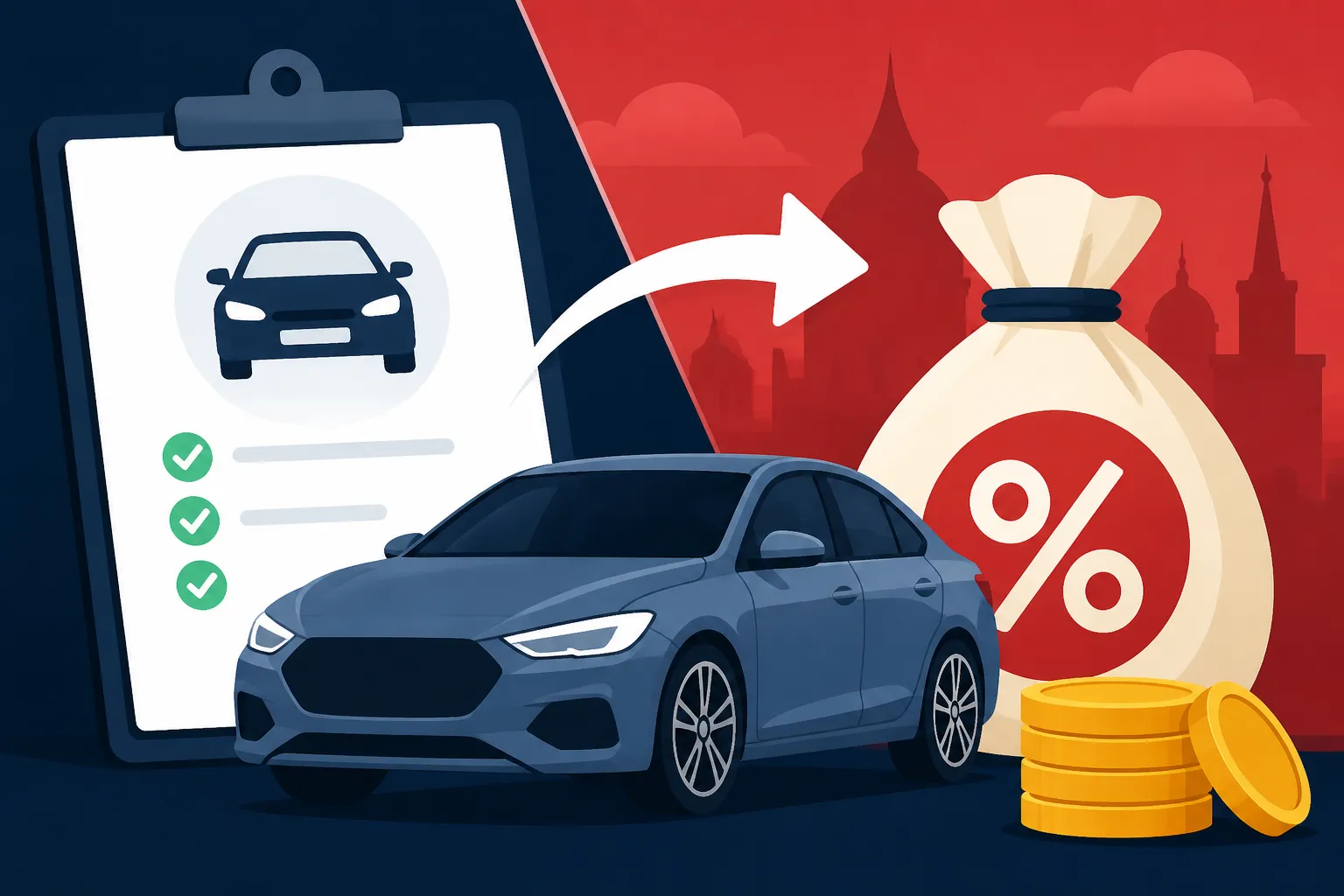
The infamous 150% vehicle registration tax, or registreringsafgift, is the primary culprit behind Denmark's exorbitant car prices. This isn't just a small sales tax; it's a significant lump sum added to the vehicle's value before VAT. The tax structure is designed to heavily disincentivize car ownership and encourage greener transportation, which, while environmentally sound, can be a real punch to the wallet for individuals.
Historically, this tax has been in place for decades, evolving over time with various adjustments, but always remaining a substantial barrier. It's not a flat 150% on the advertised price; rather, it’s a progressive tax based on the vehicle's purchase price, and it applies to both new and imported used cars. For the portion of the car's value up to a certain threshold (which adjusts annually), the tax is lower, but for anything above that, it jumps dramatically, often reaching the full 150%. This means luxury cars or even moderately expensive family cars can effectively double or even triple in price after the tax is applied. For instance, a car that might retail for €20,000 elsewhere could easily fetch €50,000-€60,000 here. This explains why Danes often hold onto their cars for longer than in many other countries; the depreciation hit, combined with the initial tax burden, makes frequent upgrades impractical for most.
New vs. Used: Navigating the Options
When faced with these prices, many expats instinctively turn to the used car market, hoping to find a better deal. While used cars are indeed cheaper than new ones, the registreringsafgift has already been paid on them, and their price reflects that initial, massive investment. So, while you're not paying the 150% tax directly, its impact is embedded in the price you see.
Buying a new car offers the perk of knowing its full history and having a factory warranty, but you're paying the absolute maximum amount for the registration tax based on the car's current market value. The depreciation in the first few years is also incredibly steep, making it a less financially savvy option for many. On the other hand, the used car market in Denmark is robust. You can find everything from small city cars to larger family vehicles. The benefit here is that a significant portion of the initial depreciation and the tax hit has already occurred. However, you need to be diligent about checking the car's history, mileage, and maintenance records. You can look for used cars at authorized dealerships (where you often get a warranty), independent used car dealers, or through private sellers on platforms like Bilbasen.dk or Facebook Marketplace. Always ensure you can test drive the car and, if possible, have it inspected by an independent mechanic.
Understanding the Vehicle Registration Tax (Registreringsafgift)
The registreringsafgift isn't just a simple percentage you apply to a car's price. It's a complex beast, especially when you consider how SKAT (the Danish tax agency) determines a vehicle's value. It’s a bit of a labyrinth, even for Danes, and it’s certainly not designed for easy understanding by newcomers.
How the Tax is Calculated: A Dissected Example
Let's break down the general principle, keeping in mind that the exact thresholds and rates can change with annual budget agreements. As of my last check, the calculation generally works like this: a lower percentage (e.g., 25%) is applied to the first part of the car's value (let's say up to DKK 67,000), and then a higher rate (the notorious 150%) is applied to the value above that threshold. This effectively means that the more expensive the car, the higher the overall percentage of its value goes towards the tax.
Imagine a hypothetical car with a market value of DKK 250,000 (excluding VAT, which is then added later).
- The first DKK 67,000 might be taxed at 25%, equating to DKK 16,750.
- The remaining DKK 183,000 (DKK 250,000 – DKK 67,000) would be taxed at 150%, equating to DKK 274,500.
- Total registration tax in this example: DKK 16,750 + DKK 274,500 = DKK 291,250.
So, a car with a pre-tax market value of DKK 250,000 would incur nearly DKK 300,000 in only registration tax. Then you add the 25% VAT to the car's value and the registration tax, and you can see how prices quickly spiral. It’s mind-boggling, I know. This system disproportionately impacts larger or more powerful cars, contributing to the prevalence of smaller, fuel-efficient vehicles on Danish roads. This deep dive into the costs really helps you grasp the full financial commitment involved.
The Role of SKAT and Valuation
SKAT, the Danish tax authority, plays a crucial role in this entire process. For new cars, manufacturers or importers declare the price, and SKAT applies the tax. For imported used cars or even used cars sold privately, SKAT assesses the car’s market value, which is the basis for the registreringsafgift. This "market value" isn't necessarily what you paid for it abroad, but rather what a similar car would typically sell for in Denmark, factoring in age, mileage, condition, and equipment. This can be a point of contention for many individuals importing cars, as SKAT's valuation might be higher than anticipated, leading to a larger tax bill.
If you disagree with SKAT's valuation, you do have the right to appeal. This process involves submitting documentation, potentially getting independent appraisals, and a review by SKAT. However, it can be a lengthy and bureaucratic process, often requiring a good understanding of Danish administrative procedures and a fair bit of patience. For most expats, especially those new to the system, it’s a hurdle that feels almost insurmountable without expert help. This is where getting professional advice from a company specializing in vehicle imports and valuations can be invaluable, as they understand the nuances of SKAT's system.
The Practicalities of Buying a Car in Denmark
So, you've crunched the numbers, wrestled with the tax, and decided a car is indeed essential for your Danish life. Now comes the practical side of actually purchasing and owning one. It’s not just about the money; it’s about the paperwork, the required registrations, and understanding what Danish car ownership entails.
Documentation and Requirements for Expats
First and foremost, to own and register a car in Denmark, you’ll need a CPR Registration Rule: Why Your Address Matters, which is your personal identification number. Without it, you can't really do much in Denmark, including registering a vehicle. This is usually one of the first things you sort out when you move here, but it’s a non-negotiable for car ownership. Beyond your CPR number, you’ll need a valid Danish driver’s license or have exchanged your foreign one, as outlined in our guide on Driving in Denmark: Exchanging Your Foreign Driver’s License. You’ll also need a NemKonto and MitID: The Core of Danish Digital Finance (2027) to handle payments, official communications, and digital transactions related to your car, such as road tax and insurance.
For many, the initial period in Denmark is a whirlwind of setting up. You're trying to find stable housing (perhaps initially with a temporary rental through services like Spotahome), get your banking sorted, and just generally settle in. Ensuring you have mobile data for all this vital research and communication is key – I remember using an eSIM like Airalo when I first arrived, just to stay connected. Only once these foundational elements are in place can you truly dive into the more complex process of car ownership. Remember that Opening a Bank Account in Denmark: Document Checklist and Delays can sometimes take longer than expected, so plan accordingly.
Insurance and Other Mandatory Costs
Car ownership in Denmark isn't just about the purchase price and registration tax. There are ongoing costs that you must factor into your budget. The most critical is insurance. By law, every car owner must have ansvarsforsikring, which is liability insurance. This covers damages you might cause to other people, their vehicles, or property. Driving without it is illegal and will incur severe penalties.
Beyond the mandatory liability insurance, most people opt for kaskoforsikring, which is comprehensive insurance. This covers damage to your own vehicle, theft, fire, and vandalism. Given the high value of cars in Denmark, skipping comprehensive insurance is a huge financial risk. Premiums can vary wildly based on your age, driving history, the car's model, and where you live. It pays to shop around and get quotes from several providers. In addition to insurance, you'll pay an annual or semi-annual road tax (ejerafgift or grøn ejerafgift), which is based on your car's fuel efficiency, emissions, and sometimes its weight. This is automatically deducted from your NemKonto once your car is registered. Don't forget other regular expenses like fuel, maintenance, parking fees (especially in cities), and the cost of winter tires, which are highly recommended, if not legally mandated in specific conditions. When you consider the full picture, the Cost of Living in Denmark 2026: Budgets for Singles and Families clearly shows that a car adds a significant chunk to your monthly expenses.
The Registration Process: Getting Your Plates
Once you've purchased your chosen vehicle, the final hurdle is getting it officially registered and acquiring those distinct white Danish license plates. The process varies slightly depending on whether you're buying from a dealer or a private individual.
Dealer vs. Self-Registration
If you buy a new or used car from an authorized dealership in Denmark, they will almost always handle the entire registration process for you. This is a huge relief for many expats, as it eliminates a lot of the administrative headache. The dealer will ensure the registreringsafgift has been paid (if it's a new car, they handle the initial payment; for used, it was paid by a previous owner), transfer ownership to your name, and get the new number plates issued. All you typically need to provide is your CPR number, a valid ID, and proof of insurance.
However, if you're buying a car from a private seller, the responsibility falls to you. The transfer of ownership and registration of the vehicle must be done online via Motorstyrelsen's (the Danish Motor Vehicle Agency) digital platform. You'll need your MitID to log in and complete the transaction. Both the buyer and seller must participate digitally. You'll enter the vehicle's details, the purchase price, and then pay the fee for the transfer of ownership. It's a fairly straightforward digital process, but it can be daunting if you're not used to navigating Danish government websites in Danish. Ensure you have your insurance in place before completing the transfer, as it's a requirement. The vehicle must be registered within a short period (usually three working days) after the purchase. If you want to claim the Commuter Allowance (Kørselsfradrag): Claiming Tax Benefits for Traveling to Work, you'll need proof of ownership and registration for your annual tax assessment.
Importing a Car: A Costly Endeavor
Bringing your beloved car from your home country to Denmark is almost universally a financially punishing decision. While it might seem appealing to avoid the local prices, the Danish registreringsafgift applies to all cars driven on Danish roads, regardless of where they were purchased. This means you'll have to pay the full, hefty registration tax on your imported vehicle.
The process involves several steps:
- Notification to SKAT: You must inform SKAT within a certain timeframe of importing the car.
- Valuation: Your car will be valued by SKAT based on what a similar used car would be worth in Denmark. This valuation forms the basis of the registreringsafgift.
- Tax Payment: You'll receive a bill for the registration tax, which must be paid before you can get Danish plates. This is often the biggest shock for those trying to import.
- Inspection and Registration: The vehicle might need a technical inspection (syn) to ensure it meets Danish standards, and then you can proceed with registration and getting Danish license plates.
Given the significant costs and bureaucratic steps, it is almost always more economical to sell your car abroad and buy a used one in Denmark, or explore alternatives like leasing. Very few expats find it worthwhile to import their personal vehicles unless it's a rare or highly specialized car for which the Danish market offers no equivalent.
Alternatives to Car Ownership: Is It Worth It?
After all this talk about taxes and costs, you might be asking yourself: Is owning a car in Denmark really worth it? For many, especially those living in Copenhagen, Aarhus, or other major cities, the answer is often no. Denmark offers a plethora of excellent alternatives.
Public Transport, Cycling, and Car Sharing
Denmark prides itself on its world-class public transportation system. Trains, buses, and the Copenhagen Metro are efficient, clean, and reliable, connecting even smaller towns. A Rejsekort (travel card) makes navigating the system seamless, and you can learn more about it in our guide to Public Transport in Denmark: Rejsekort, Trains, and Commuting. For daily commutes within cities, especially Copenhagen, cycling is not just a mode of transport; it's a way of life. The infrastructure for bikes is phenomenal, making it safe and enjoyable to get around. If you're considering it, check out our Danish Cycling Culture: Rules, Buying a Bike, and Safety guide.
Beyond that, car-sharing services have become increasingly popular, particularly in urban areas. Companies like GreenMobility and ShareNow offer flexible rental options, allowing you to pick up and drop off cars at various points around the city. This is an excellent solution for occasional longer trips, moving furniture, or when you simply need a car for a few hours without the commitment of ownership. These services are discussed further in Car Sharing Services in Copenhagen: GreenMobility and ShareNow. For those living further afield, public transport is still robust, but the car-sharing options might be less readily available.
Leasing vs. Buying
If buying seems too expensive or too much hassle, leasing is a popular alternative for many Danes and expats. Leasing allows you to use a new car for a fixed monthly fee over a set period (typically 2-3 years) and mileage, without the large upfront cost of the registration tax. The leasing company handles the initial purchase, the tax, and often includes services like maintenance and insurance, rolling it all into one predictable monthly payment.
There are primarily two types:
- Operational Leasing (Privatleasing): This is the most common for private individuals. You effectively "rent" the car for a period, and at the end of the term, you simply return it. You're not responsible for the car's residual value or selling it. This offers great predictability and peace of mind, though you don't build equity in the vehicle.
- Financial Leasing: More common for businesses, this is akin to a loan agreement where you are responsible for the residual value of the car at the end of the term.
Leasing can offer significant advantages, especially given the depreciation and high registration tax. It provides a clearer overview of your monthly transport costs and allows you to drive a newer, more reliable vehicle without the large capital outlay. However, always read the fine print regarding mileage limits, wear and tear charges, and early termination fees. It’s a solution that many find strikes a good balance between needing a car and avoiding the full financial burden of ownership.
Here's a quick comparison to help you weigh your options:
| Feature | Buying New (DK) | Buying Used (DK) | Leasing (Privatleasing) |
|---|---|---|---|
| Upfront Cost | Very High (includes full registration tax) | Moderate to High (tax already paid, embedded in price) | Low (deposit, first month's payment) |
| Registration Tax | Paid fully, 150% on higher value | Already paid by previous owner, reflected in used price | Included in monthly payment by leasing company |
| Maintenance | Covered by warranty initially, then owner's responsibility | Owner's responsibility, potentially higher for older cars | Often included in monthly fee (service lease) |
| Flexibility | High (sell anytime, no mileage limits) | High (sell anytime, no mileage limits) | Moderate (fixed term, mileage limits, early termination fees) |
| Depreciation | Very High, especially in first years | Moderate, most initial depreciation already occurred | Not your concern, risk borne by leasing company |
| Resale Value | Your responsibility to sell | Your responsibility to sell | Not your concern, return the car |
| Admin Burden | Moderate (dealer helps, ongoing taxes) | Moderate (DIY registration, ongoing taxes) | Low (leasing company handles most things) |
As you can see, each option has its own set of pros and cons, and the best choice really depends on your personal circumstances, how long you plan to stay in Denmark, and your financial situation. The decision to buy a car in Denmark is a significant one, and understanding the formidable 150% vehicle registration tax is paramount to making an informed choice.
Disclaimer
The information provided in this guide is for general informational purposes only and does not constitute financial, legal, or tax advice. While we strive to keep the information up-to-date and accurate, laws and regulations in Denmark, particularly concerning vehicle taxation, can change. Always consult with a qualified professional (e.g., a tax advisor, lawyer, or car expert) for advice tailored to your specific situation before making any decisions related to car purchase or import in Denmark.