Driving in Denmark: Exchanging Your Foreign Driver’s License
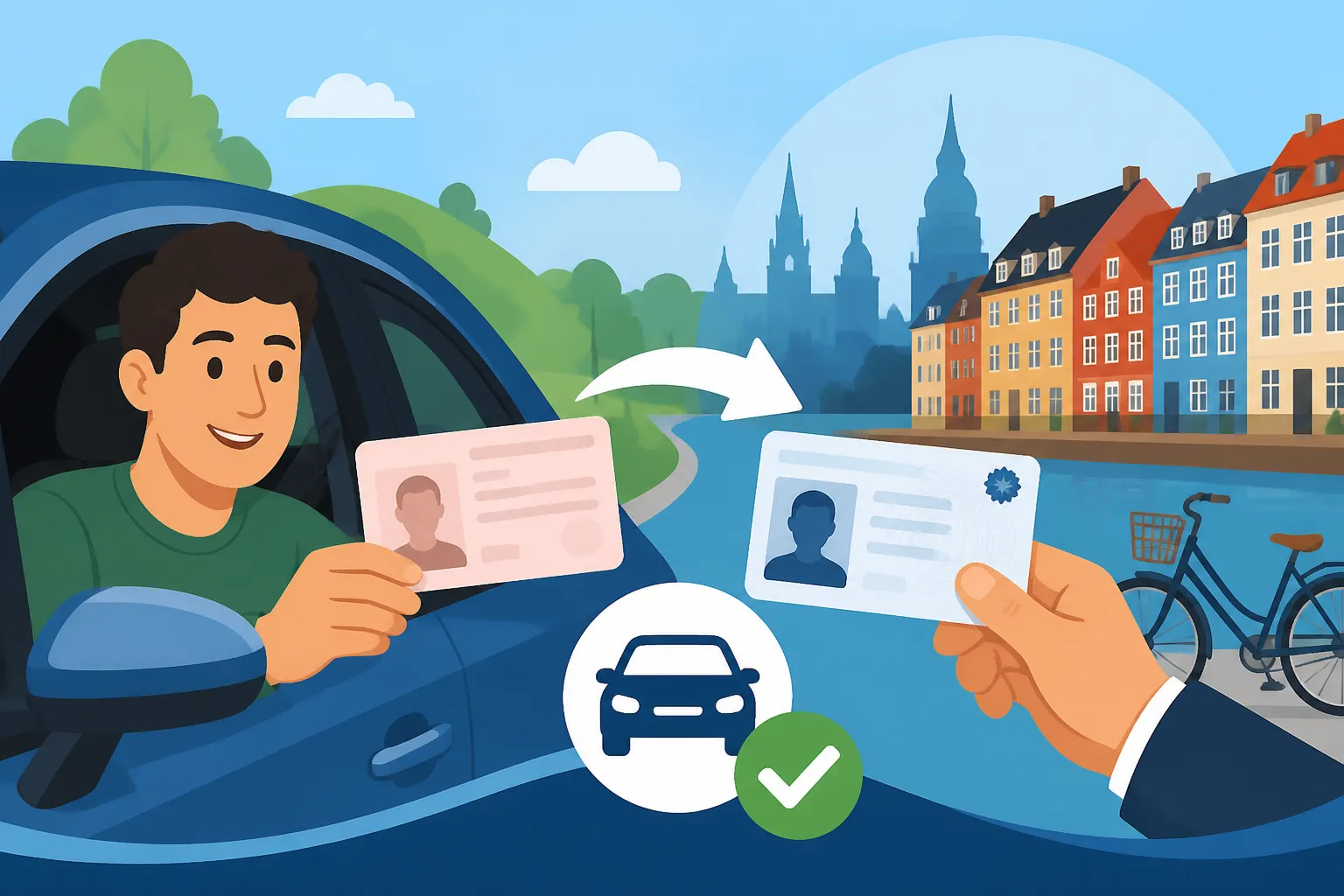
Oh, the Danish driver's license saga. If there's one thing that unites many expats trying to get settled in Denmark, it's the sheer head-scratching frustration that comes with figuring out what to do with your foreign driving permit. It's not always straightforward, it's often expensive, and the rules depend entirely on where you got your original license. This guide is here to untangle that bureaucratic mess, offering you a clear, empathetic path through the process of exchanging your foreign driver's license in Denmark.
The Initial Confusion: Do You Even Need to Exchange It?
Let's be honest, when you first land in Denmark, a driving license might not be the top of your priority list. You're probably juggling getting your CPR Registration Rule: Why Your Address Matters, setting up your Money in Denmark: Banking, Payments, and Financial Setup for Expats, and maybe even figuring out a place to stay through services like Spotahome. But if you plan on driving, even occasionally, understanding the rules for your license is absolutely critical to avoid hefty fines and legal headaches down the line. The short answer to "do I need to exchange it?" is almost always "yes," but the when and how differ wildly.
Tourists and Short-Term Stays: The 185-Day Rule
If you're just visiting Denmark for a holiday, or perhaps on a short-term business trip, you generally don't need to worry about exchanging your license right away. As a tourist, your valid foreign driver's license (issued in Latin alphabet or accompanied by an international driving permit) is usually accepted for up to 180 days. This "185-day rule" is a bit of a standard across the EU and it basically means that if you're residing in Denmark for less than 185 days in a 12-month period, your foreign license remains valid.
However, this rule becomes tricky when you move to Denmark with the intention of staying. The 185-day period starts from the day you establish normal residency, which is usually tied to your CPR registration. So, if you move here, get your CPR number, and plan to be here for more than six months, that clock starts ticking immediately. Don't fall into the trap of thinking it's 185 days from when you first drive here; it's from when you become a resident. This distinction is crucial, as many expats get caught out by it.
EU/EEA and Swiss Licenses: The Easy Route
For those lucky enough to hold a driver's license issued in an EU/EEA country or Switzerland, the process is thankfully much, much simpler. Your license is generally recognized in Denmark as long as it's valid and unexpired. You don't have to exchange it for a Danish one. You can continue to use it until it expires.
However, once your EU/EEA or Swiss license is nearing its expiry date, you will need to exchange it for a Danish license. This exchange process is typically administrative; you just submit an application to your local municipality (borgerservice), along with your current license, passport, and proof of residence. There's usually no need for retesting, which is a massive relief. It's usually a straightforward affair, involving a trip to the borgerservice, filling out a form, paying a fee, and perhaps getting your photo taken. Many expats choose to exchange it earlier just to have a fully Danish document and simplify any interactions with authorities or insurance companies, but it's not legally mandated until expiration.
Non-EU/EEA Licenses: The Hard Truth
Alright, let's get down to the nitty-gritty for everyone else, particularly those from countries like the USA, Canada, Australia, India, and so many more. This is where things get significantly more complicated and, often, more expensive. If your driver's license was issued in a country outside the EU/EEA or Switzerland, you generally have a strict 14-day window to exchange it once you establish permanent residency in Denmark. Yes, you read that right: 14 days from your CPR registration. After this period, your foreign license becomes invalid for use in Denmark.
Here's the kicker: for most non-EU countries, exchanging your license isn't a simple administrative swap. It often involves passing both a theoretical (written) and a practical (driving) test in Denmark. Even if you've been driving for decades in your home country, you might have to re-prove your skills according to Danish standards. This is a common source of immense frustration and surprise for many new arrivals. You'll hear countless stories of experienced drivers having to take lessons and re-learn things like parallel parking "the Danish way." It's a system designed, some would argue, more for safety and revenue than for convenience.
The Clock is Ticking: Understanding Deadlines and Consequences
The deadlines for exchanging your foreign driver's license are not suggestions; they are hard rules with significant consequences if ignored. Many expats, understandably overwhelmed with the initial move, often let these dates slip by. Please, learn from others' mistakes and prioritize this. The Danish authorities are quite strict, and ignorance of the law is not a valid excuse.
The 14-Day Registration vs. the 185-Day Exchange
This is perhaps the most confusing point for non-EU citizens. While your foreign license is technically valid for up to 185 days from the date you establish normal residence (meaning you can drive on it during this period), you must apply to exchange it within 14 days of receiving your CPR number and officially registering your address at the municipality. This doesn't mean you get your new Danish license within 14 days; it means the application process must be initiated.
So, for example, if you move to Copenhagen and get your CPR number on January 1st, you have until January 14th to go to the borgerservice and start the exchange process. During the period after you've applied but before you've received your Danish license, you might still be able to drive on your foreign license (if it's not expired and is from a non-EU country that typically requires retesting), but you must carry proof of your application. This grace period can be a lifesaver, especially if you're using a short-term rental found through platforms like Spotahome or just getting settled. Remember that for countries not requiring a test (a very short list, mostly certain US states or specific agreements), your original license becomes invalid after 14 days, and you await your Danish one. It's a critical difference.
What Happens If You Miss the Deadline?
Missing the 14-day deadline for initiating the exchange (for non-EU licenses) means your foreign license becomes invalid for driving in Denmark. Period. This is not a gray area. If you are stopped by the police and cannot produce a valid Danish license or proof of a timely exchange application, you could face significant penalties.
Even if you do manage to apply late, the process might be more scrutinized, and you may face additional hurdles or delays. In some cases, if you miss the 185-day mark, you might be treated as if you've never held a license, potentially requiring you to go through the entire process as a brand-new driver, including mandatory driving lessons, first aid courses, and extensive training, which is far more expensive and time-consuming. This is definitely a scenario you want to avoid at all costs, so setting a reminder the moment you get your CPR number is paramount.
Driving Without a Valid Danish License: Fines and Legal Trouble
Driving in Denmark without a valid license (either your foreign one being invalid or no Danish one yet) is a serious offense. The fines are substantial and can run into thousands of DKK. Beyond the monetary penalties, you could face points on your (non-existent) license, and in extreme or repeated cases, even have your vehicle impounded or face more severe legal consequences.
Crucially, if you're involved in an accident while driving without a valid license, your insurance could be invalidated. Imagine the nightmare: you're involved in a fender bender, and suddenly you're liable for all damages because your license status was murky. This alone should be enough motivation to get the process sorted as quickly and correctly as possible. It's not just about avoiding a police ticket; it's about protecting yourself financially and legally in a country where rules are strictly enforced.
The Exchange Process: Step-by-Step for Non-EU Licenses
Okay, so you've got a non-EU license, and you know you need to exchange it. Brace yourself, because this is where the real fun begins for most. It's a process that requires patience, paperwork, and potentially, a lot of driving practice.
Required Documents: Get Ready for Bureaucracy
Before you even think about booking an appointment, gather your documents. This step alone can be a test of endurance. You'll typically need:
- Your valid foreign driver's license: This is a given. Ensure it's not expired.
- Passport or national ID card: To prove your identity.
- Your Danish Yellow Health Card (Sundhedskort): This proves your CPR registration and address. If you're still waiting for it, proof of CPR registration might suffice, but having the card makes things smoother. You can read more about Understanding CPR Registration and Your Healthcare Entitlement here.
- Proof of residency: This might be your rental contract or a letter from the municipality.
- A recent passport-sized photo: Adhering to Danish passport photo standards (neutral expression, clear background, etc.). Don't try to use an old one; get a fresh one from a photo booth or professional.
- A medical certificate (lægeattest): This is a specific form filled out by a Danish doctor. You'll need to book an appointment with a GP for this, and it comes with a fee. This certificate confirms you are medically fit to drive. Make sure to specify it's for a driver's license when booking the appointment.
- Payment for the application fee: This is a non-refundable fee you pay to the municipality. The exact amount can vary slightly, so check your local borgerservice website.
Sometimes, depending on your nationality and the specifics of your foreign license, you might also need an official translation of your license if it's not in English, German, or French, or if it doesn't use the Latin alphabet. Always double-check with your local municipality for the most up-to-date and specific list of requirements for your exact situation.
Booking Your Appointment: Borger.dk is Your Friend (Sometimes)
Once you have your documents, you need to book an appointment at your local borgerservice (citizen service center). In Denmark, most official interactions are done by appointment, especially for something as complex as a driver's license exchange. You'll typically use Borger.dk to find your local municipality's website and book a time slot.
The booking system can sometimes be a bit clunky, and wait times for appointments can vary significantly, especially in larger cities like Copenhagen or Aarhus. It's wise to book this appointment as soon as you have your CPR number, even if you don't have all documents yet, as you can always reschedule. Remember, that 14-day clock starts ticking from your CPR registration, not from when you secure an appointment! When navigating official Danish websites, having a robust mobile data plan, perhaps from a provider like Airalo, can be really helpful for translation and quick access.
At the appointment, a municipal employee will review your documents, take your photo (or accept yours), and process your application. If your license requires testing, they will provide you with information on how to proceed with finding a driving school.
The Dreaded Driving Test: Theory and Practical Exams
For most non-EU citizens, the exchange process culminates in passing both a theoretical and a practical driving test. These are not "easy" tests; they are designed to assess your understanding of Danish traffic laws and your ability to drive safely according to Danish standards.
-
Theoretical Test (Teoriprøve): This is a multiple-choice computer-based test, usually taken at a designated test center. You'll be shown scenarios and asked to identify hazards or correct actions. You can take this test in English. Many driving schools offer preparation courses or materials to help you study the specific nuances of Danish road rules, which differ from other countries in subtle but important ways. It's highly recommended to take some lessons, even if you're a seasoned driver, to understand these differences.
-
Practical Test (Køreprøve): This is the actual driving exam with a certified examiner. You'll drive in real traffic, demonstrating your ability to handle various situations, park, maneuver, and follow all traffic laws. You'll need to arrange this through a driving school, which will provide the car for the test. Again, taking several driving lessons with a Danish instructor is almost universally recommended, even for experienced drivers. They can pinpoint areas where your driving style might conflict with Danish expectations and help you adapt. These tests are not cheap, and neither are the lessons, so prepare your budget for this stage. You can refer to Money in Denmark: Banking, Payments, and Financial Setup for Expats for budgeting tips.
Costs Involved: Prepare Your Wallet
Let's not sugarcoat it: exchanging a non-EU driver's license in Denmark can be expensive. Here's a breakdown of potential costs:
| Item | Estimated Cost (DKK) | Notes |
|---|---|---|
| Application Fee (to municipality) | 280 – 320 | Varies slightly by municipality, non-refundable. |
| Medical Certificate (lægeattest) | 500 – 800 | Paid to your GP. |
| Passport Photo | 50 – 100 | From a photo booth or professional. |
| Theoretical Test Fee (to Trafikstyrelsen) | 1,000 – 1,200 | Paid for each attempt. |
| Practical Test Fee (to Trafikstyrelsen) | 1,000 – 1,200 | Paid for each attempt. |
| Driving Lessons (if needed, per hour) | 400 – 600 | Highly recommended for both theory and practical test prep. Cost adds up quickly. |
| Theory Course Material/App | 300 – 500 | Supplementary study materials. |
| Translator (for tests, if needed) | 500 – 1,000+ per hour | Only if you can't take the test in English and need a certified translator. |
| Total Estimated Cost | 3,500 DKK – 10,000+ DKK | Can be much higher if multiple attempts are needed or extensive lessons are required. |
These are estimates, and the actual costs can fluctuate. If you need multiple attempts at either test or extensive driving lessons, the cost can easily climb into the tens of thousands of DKK. It's a significant financial outlay, so factor it into your initial moving budget.
Special Cases and Common Pitfalls
While the general rules apply, there are always unique situations and nuances that can catch expats off guard. Denmark's bureaucracy, while efficient, isn't always flexible.
US, Canadian, and Australian Licenses: Is a Test Always Necessary?
This is a frequently asked question, and the answer, unfortunately, is "it depends." For most US states, Canadian provinces, and Australian states, a full re-test (theory and practical) is required. There are very few exceptions, typically involving specific bilateral agreements that exempt citizens from certain countries or, in some rare cases, specific states (e.g., some US states historically had agreements, but these can change).
It's crucial not to assume your home country has a special agreement. The most reliable way to confirm is to check the Danish Agency for Road Safety (Færdselsstyrelsen) website or directly ask your local borgerservice when you initiate the application. Even if you think there's an agreement, bring all your documentation, as the rules can be intricate and subject to change without much fanfare. The general rule of thumb is: if it's not EU/EEA/Switzerland, expect to test.
Automatic vs. Manual: What Your New License Will Reflect
If you take your practical driving test in an automatic transmission car (which is increasingly common, especially if you borrow a driving school's car), your Danish driver's license will come with an endorsement (Code 78) restricting you to driving automatic vehicles only.
If you want to be able to drive a manual transmission car in Denmark, you must take and pass your practical test in a manual car. This can be a point of contention for some who only have access to automatics or are more comfortable with them. If you anticipate ever needing to drive a manual car (e.g., for work, renting a specific vehicle, or if you eventually buy a used car), it's worth considering taking lessons and testing in a manual, even if it adds to the complexity. This is important to consider before choosing a driving school and the type of vehicle for your lessons.
Motorbikes and Other Categories: Specific Rules
The rules discussed so far primarily apply to standard passenger car licenses (Category B). If you hold licenses for other categories, such as motorcycles (A1, A2, A), trucks (C), or buses (D), these will have their own specific exchange requirements.
Typically, if you need to exchange your car license through retesting, you'll likely need to retest for other categories as well. The process and costs for these additional categories can be even more extensive, involving specialized driving schools and more rigorous practical exams. If you have multiple license categories, make sure to inform the borgerservice at your initial appointment so they can provide you with the full, tailored information you need. Don't assume that once your car license is sorted, the others will automatically follow.
Language Barriers: Bringing a Translator to the Test
The theoretical driving test can usually be taken in English, which is a huge relief for many expats. However, for the practical driving test, the instructions from the examiner will be given in Danish. While some examiners might be able to offer basic instructions in English, it's not guaranteed, and relying on it is a risk you probably don't want to take, especially during a high-stakes test.
If your Danish isn't up to snuff (and let's be honest, for many new arrivals, it's not), you have the option to bring a certified translator to your practical driving test. This comes at an additional cost, of course, but it can be well worth it to ensure you understand every instruction clearly and can focus on your driving. Your driving school can often help you arrange for a suitable translator. Remember, this is about safety and passing the test, so eliminate any potential misunderstandings.
Getting Around Without a Car While You Wait
Given the potential for delays and the cost of the exchange process, many expats find themselves without a valid driving license for some time after arriving. But fear not, Denmark is incredibly well-equipped for getting around without a private car.
Public Transport: Your Best Friend
Denmark boasts an excellent public transport system. Whether you're in Copenhagen, Aarhus, or smaller towns, you'll find an efficient network of buses, trains, and sometimes metros or light rails. The Rejsekort (travel card) is your key to seamless travel across different operators and regions. You can load money onto it and simply tap in and out. It automatically calculates the cheapest fare for your journey.
While you're waiting for your license, embracing public transport is not just a necessity; it's often a more relaxing, cost-effective, and environmentally friendly way to commute. Many expats even find they don't need a car at all once they get used to the convenience of the trains and buses. Check out our comprehensive guide on Public Transport in Denmark: Rejsekort, Trains, and Commuting for all the details. For staying connected while navigating, a global eSIM from a provider like Airalo can ensure you always have mapping and transport app access.
Cycling Culture: Embracing the Danish Way
There's no getting around it: Denmark is a cycling nation. From toddlers in cargo bikes to executives in suits, everyone cycles. It's often the fastest, easiest, and cheapest way to get around cities and even into the suburbs. The infrastructure is fantastic, with dedicated bike lanes everywhere.
If you don't have a car, getting a bike is practically a rite of passage. You can buy a new one, a used one (check DBA.dk, the Danish equivalent of Craigslist), or even lease one through services like Swapfiets. Just remember to familiarize yourself with the Danish traffic laws for cyclists – they are serious about bike safety, and fines for infractions can be issued to cyclists too! Read our guide on Danish Cycling Culture: Rules, Buying a Bike, and Safety to get started.
Car Sharing Services: Temporary Solutions
If you occasionally need a car but don't want the hassle or expense of ownership (or if your license is still pending), car-sharing services are a fantastic option. Companies like GreenMobility and ShareNow operate in major cities like Copenhagen, offering electric cars that you can pick up and drop off within designated zones. You pay by the minute or hour, and all costs like insurance and charging are included.
These services can be incredibly useful for trips where public transport isn't ideal, like a large grocery run, moving a few boxes, or a weekend excursion. You'll need a valid driver's license (your foreign one might be accepted if still valid, or your new Danish one) and a credit card to sign up. They offer flexibility without the commitment of a lease or purchase. Learn more about Car Sharing Services in Copenhagen: GreenMobility and ShareNow.
After the Exchange: The Danish Driving Experience
Congratulations! You've navigated the bureaucratic maze, passed your tests, and now hold a shiny new Danish driver's license. What's next? Well, owning and driving a car in Denmark comes with its own set of rules, costs, and considerations.
Rules of the Road: Understanding Danish Traffic Laws
Even after passing your test, it's a good idea to stay abreast of Danish traffic laws. They might seem similar to other countries, but there are nuances. For instance, cyclists often have right-of-way, and speed limits are strictly enforced. Roundabouts are plentiful, and their rules can sometimes be confusing for newcomers. Always yield to traffic from the right unless otherwise indicated, and pay close attention to signs.
Another key aspect is the strict enforcement of drink-driving laws. Denmark has a very low blood alcohol limit, and penalties are severe. Don't risk it. Be mindful of parking rules as well; parking fines are common and expensive, especially in city centers. Familiarity with the road signs, lane markings, and general driving etiquette will make your daily commute much smoother and safer.
Car Insurance and Registration: The Next Steps
If you plan to own a car, getting it insured and registered is paramount. All cars in Denmark must have at least third-party liability insurance (ansvarsforsikring). Without it, you cannot legally drive. You can choose from various insurance providers, and it's worth shopping around for the best quotes, as premiums can vary significantly based on your driving history, the car model, and where you live.
After purchasing a car, it needs to be registered in your name with the Danish Agency for Road Safety (Motorstyrelsen). This involves paying a registration fee and receiving new license plates. The seller will usually handle some of the initial paperwork for the transfer of ownership, but you are responsible for ensuring it's properly registered to you. This is a crucial step detailed further in Buying and Registering a Car: The 150% Vehicle Registration Tax.
Road Taxes and Environmental Zones: More Costs to Consider
Owning a car in Denmark is expensive. Beyond the initial purchase price and insurance, you'll pay various ongoing taxes and fees. The most significant is the registration tax (registreringsafgift), which is applied when a car is first registered in Denmark and can be as high as 150% of the car's value, making new cars incredibly expensive. Used cars have a portion of this tax still embedded in their price.
You'll also pay a green owner tax (grøn ejerafgift), which is an annual or semi-annual tax based on your car's fuel efficiency and CO2 emissions. More polluting cars pay more. Additionally, some larger cities, like Copenhagen, have environmental zones (miljøzoner) where older, more polluting vehicles are restricted or require a special permit. If you drive a diesel car, be aware of these rules. Understanding these costs is essential for any expat considering car ownership in Denmark, and they should be factored into your overall budget, as detailed in our guide to Taxes in Denmark Explained: A-Skat, AM-bidrag, and Marginal Rates.
Disclaimer
Please note that the information provided in this guide is for general informational purposes only and is subject to change. While we strive to offer accurate and up-to-date advice based on current regulations, Danish traffic laws and administrative procedures are complex and can be updated by the authorities. It is always recommended to consult the official websites of the Danish Agency for Road Safety (Færdselsstyrelsen), the Danish Agency for International Recruitment and Integration (SIRI), and your local municipality (borgerservice) for the most current and specific requirements applicable to your individual situation. Engaging with a local driving school or legal professional may also be advisable for personalized guidance.