The Yellow Health Card (Sundhedskort): Your Key to Danish Healthcare
Arriving in Denmark and realizing you cannot even book a basic doctor's appointment without a small piece of plastic is an incredibly jarring experience for any newcomer. I remember sitting in my unfurnished Aarhus apartment with a splitting headache, realizing my international insurance was a headache to use and I had no "Yellow Card" yet. This guide solves every mystery surrounding the Sundhedskort, from the moment you register for your CPR number to the day you scan it at your first GP visit.
What Exactly is the Yellow Health Card?
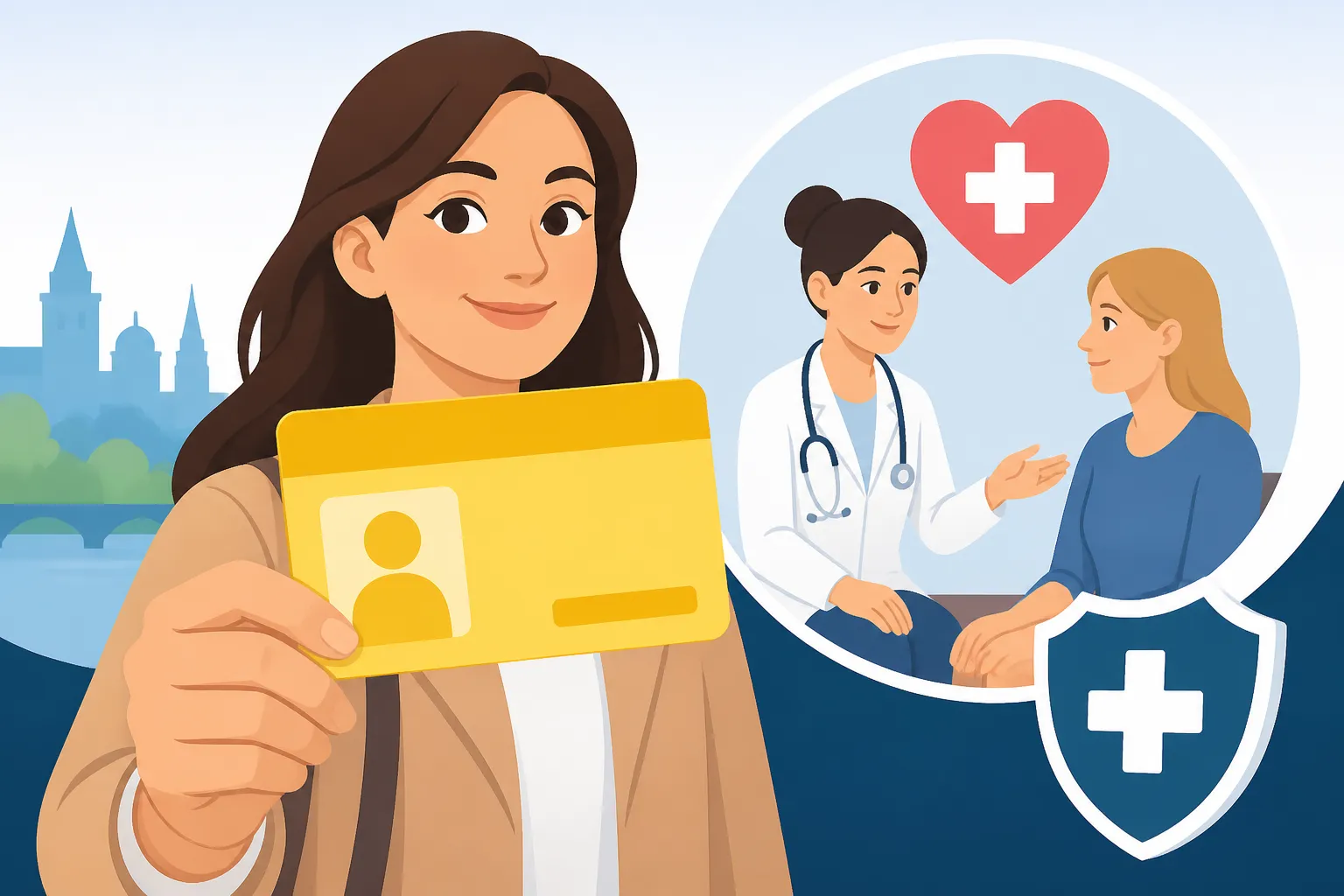
The Sundhedskort, affectionately known by everyone as the "Yellow Card" due to its distinct canary-yellow hue, is arguably the most important document you will carry in Denmark, perhaps even more so than your residence permit in daily life. It is your physical proof of coverage under the Danish public healthcare system. Without it, you are essentially invisible to the administrative machinery that runs the country’s clinics, hospitals, and pharmacies. When you hold this card, you are no longer just a visitor; you are a registered resident entitled to the same healthcare benefits as a born-and-bred Dane.
The card itself is deceptively simple. It contains your name, your CPR number (your unique civil registration number), and the contact information for your assigned General Practitioner (GP). It serves as your primary ID for almost all public services. If you want to check out a book at the library, pick up a prescription, or even sign up for a gym membership in some cases, the magnetic stripe on the back of this card is what gets the job done. It is the literal key to Healthcare in Denmark for Foreign Residents: Complete System Guide (2027).
Understanding the legal weight of this card is crucial. In Denmark, healthcare is funded through local taxation, not through individual insurance premiums like in the US or some other European nations. Your possession of the card signifies that you are part of this tax-funded ecosystem. However, it is important to remember that the card is not a travel document. While it grants you rights within the Danish borders, it does not replace the need for a passport or a residence card when crossing borders, nor does it provide comprehensive coverage once you leave the country.
Anatomy of the Card
When you first receive your card in the mail, take a moment to look at the details. In the top right, you will see your ten-digit CPR number. This number is your lifeblood in Denmark; you will memorize it faster than your own phone number. Below your name and address, you will find the name, address, and phone number of your doctor. This is the only doctor you can see for non-emergency issues without paying a significant fee.
There is also a "Group" designation, usually "Group 1" for the vast majority of residents. This determines how much freedom you have to choose specialists and how much of the bill the state covers. If you are curious about how these tiers function, you should read more about What Does 'Group 1' vs 'Group 2' Health Insurance Mean? to ensure you are in the category that best fits your lifestyle and budget.
Differences Between Physical and Digital Cards
In recent years, Denmark has moved rapidly toward a "mobile-first" society. You can now download the Sundhedskort app, which serves as a legal digital version of your yellow card. This app generates a QR code that can be scanned at most doctor’s offices and pharmacies. It is a lifesaver for those of us who constantly forget our wallets but never our phones.
However, do not throw away the physical card. There are still some older clinics or smaller pharmacies where the digital scanner might not be updated, or your phone battery might die right when you need to prove your identity at the Emergency Room. The physical card remains the "gold standard" of proof. For more details on setting this up, check out How to Download the Sundhedskort App on Your Phone.
How to Obtain Your Sundhedskort
The process of getting your Yellow Card is inextricably linked to your registration as a resident. You cannot simply apply for the card on its own; it is a "side effect" of getting your CPR number. This is often the first major hurdle for expats, as you need a permanent address to register for a CPR, but you often need a CPR to sign a permanent lease. It is the classic Danish "Catch-22."
Once you have successfully navigated the Understanding CPR Registration and Your Healthcare Entitlement, the card is automatically triggered for production. You don’t need to fill out a separate form or visit a health office. The system knows you exist, knows where you live, and knows which doctor you chose during your registration process.
The CPR Registration Link
When you visit the International House or your local Borgerservice (Citizen Service) to register your move to Denmark, you will be asked to choose a doctor from a list of those currently accepting new patients near your home. This choice is vital because that doctor’s name will be printed directly onto your card. If you are unsure who to pick, it is often helpful to look at local reviews or ask in expat Facebook groups, though many people simply pick the one closest to their front door.
I remember my own registration vividly. I was so overwhelmed by the paperwork that I just pointed at a name on the screen. Luckily, my GP turned out to be wonderful, but I’ve known others who ended up with a doctor two bus transfers away because they didn't check the map. This is why learning How to Choose and Change Your General Practitioner (GP) in Denmark is one of the most proactive things you can do during your first week.
Timeline and Delivery Expectations
One of the most common questions in expat forums is: "How long does it take for the card to arrive?" Typically, after your CPR registration is finalized, you should receive your yellow card in your physical mailbox within 10 to 14 days. It arrives in a standard white envelope from Udbetaling Danmark or your local municipality.
If you are a non-EU citizen, there is often a period where you are "in-between" coverage. While you are waiting for your residence permit to be processed and your CPR to be issued, you are technically not covered by the public system. During this gap, many expats rely on SafetyWing to provide a safety net so they aren't hit with massive bills if an accident happens in those first few weeks. For a deeper look at this waiting period, see How Long Does It Take to Receive the Yellow Card in the Mail?.
Changing Addresses and Replacements
Life happens. You might move to a different neighborhood, or like me, you might accidentally leave your card in a pair of jeans that goes through a 60-degree wash cycle. If you move, you must report your change of address online via Borger.dk. When you do this, the system automatically sends you a new Yellow Card with your updated address (and potentially a new doctor if you moved far enough).
If you simply lose the card, there is a small fee (usually around 285 DKK) to order a replacement. This can also be done easily through the Borger.dk portal. To avoid the stress of being cardless, it is wise to have the digital app version as a backup. If you find yourself in this situation, read What to Do If You Lose Your Yellow Health Card in Denmark for a step-by-step recovery guide.
Choosing Your General Practitioner (GP)
In Denmark, your GP is the "gatekeeper" to the entire medical system. You cannot simply call up a dermatologist or an ear-nose-throat specialist and book an appointment; you must go through your GP first for a referral. This is a shock to many who come from systems where you can self-refer to anyone you like. Because of this, the doctor listed on your Yellow Card is the most important professional relationship you will have in the country.
When you are looking for a doctor, you need to consider more than just proximity. Some doctors specialize in pediatric care, others in sports medicine, and some are more comfortable conducting consultations in English than others. While most Danish doctors speak excellent English, some are more patient than others when navigating the cultural nuances of an expat’s medical history.
Group 1 vs. Group 2
When you register, you are asked if you want to be in Group 1 or Group 2. 99% of expats (and Danes) choose Group 1. In Group 1, all your visits to the GP and any specialists they refer you to are completely free of charge. You are, however, locked into seeing your specific GP.
In Group 2, you have the freedom to see any GP and any specialist without a referral. However, the catch is that you must pay a portion of the bill yourself. The state only covers what the service would have cost in Group 1, and you pay the "excess." For most, the "free" nature of Group 1 far outweighs the flexibility of Group 2. If you are still confused, I highly recommend checking out What Does 'Group 1' vs 'Group 2' Health Insurance Mean? before you make your final choice.
Finding the Right Doctor
Geography is the primary factor the system uses. Usually, you must choose a doctor within 15 kilometers of your home (or 5 km in densely populated areas like Copenhagen). If you want a doctor further away, you often have to waive your right to home visits, which are rare but possible in extreme cases of illness.
Finding a doctor who is actually "open" for new patients can be a challenge in big cities. The system is often at capacity. When you are looking at the list on Borger.dk, look for the green status indicators. If you are struggling to find someone in the capital, How to Find a GP Accepting New Patients in Copenhagen offers some clever strategies for navigating the waitlists.
The Process of Changing Doctors
You aren't married to your doctor. If you find that your GP’s bedside manner doesn't mesh with your personality, or if they are always fully booked when you need them, you can change your doctor online. There is a fee for this change (unless you are moving addresses), but it is a straightforward process.
I changed my doctor twice in my first three years. The first time was because I moved, and the second was because I found a GP who had more experience with the chronic condition I manage. It made a world of difference in my comfort level with the Danish system. You can find the portal and instructions at How to Change Your Doctor Online via Borger.dk.
| Feature | Group 1 (Standard) | Group 2 (Flexible) |
|---|---|---|
| Cost of GP Visit | Free | Partial Payment Required |
| Specialist Access | Requires Referral from GP | No Referral Needed |
| Choice of Doctor | Locked to the GP on your card | Can visit any GP |
| Hospital Treatment | Free | Free |
| Expats' Choice | ~99% | ~1% |
Using the Card in Daily Life
The moment you walk into a doctor’s clinic or a hospital waiting room in Denmark, you will see a small terminal, usually with a red light or a screen, near the entrance. This is the Sundhedskort scanner. There is no receptionist waiting to greet you and check you in manually in most cases. You are expected to walk up, slide your card through the magnetic reader, or scan the QR code from your app.
This action does two things: it notifies the doctor’s computer that you have arrived, and it registers the visit for billing purposes between the doctor and the state. If you don’t scan your card, the doctor doesn't get paid, and you might sit in the waiting room for hours while the doctor thinks you are a no-show. This ritual is so ingrained that even in the middle of a flu-induced haze, you'll see Danes instinctively reach for their yellow cards.
Scanning at the Clinic
The "scan-in" culture is something I had to learn the hard way. During my first visit for a chest infection, I sat for forty-five minutes, wondering why people who arrived after me were being called in. Eventually, a kind nurse asked if I had "remembered to say hello to the machine." For more on this essential etiquette, read Why You Must Scan Your Yellow Card in the Waiting Room.
This process applies to almost everything. If you go to a specialist (after a referral), a physiotherapist, or even a blood donation center, the Yellow Card is your "check-in" ticket. It's also how the system tracks your data securely. When you scan, the provider can see your basic registration details, though they cannot see your full medical history unless you’ve granted specific permissions or they are your primary GP.
Pharmacies and Prescriptions
The Yellow Card is also your "prescription card." In Denmark, we have a system called the "centralized medicine card." When your doctor prescribes something, they don't give you a piece of paper. Instead, they upload the prescription to a national database linked to your CPR number.
When you walk into any Apotek (pharmacy) in the country, you simply hand over your Yellow Card. The pharmacist scans it, sees all your active prescriptions, and hands you your medicine. It is incredibly efficient. However, keep in mind that the Yellow Card does not make medicine free; it only tracks your subsidies. You can manage this digitally through Using the Medicinkortet App: Managing Your Prescriptions Digitally. For a breakdown of how much you’ll actually pay at the counter, see Pharmacies in Denmark: Apotek Rules, Prescriptions, and Subsidies.
Hospital Admissions and Emergency Use
In an emergency, the Yellow Card is your ticket to care. If you have to call 1813 (the out-of-hours medical line in the Capital Region) or visit a "Lægevagten" (Emergency GP), the first thing they will ask for is your CPR number from your card.
If you are admitted to a hospital, your card will be scanned to pull up your records and ensure you are correctly registered in the system. It is also used to arrange for things like patient transport if you are eligible. Even in high-stress situations, the card remains the central point of contact. To prepare for these moments, it’s wise to understand Emergency Medical Care in Denmark: Calling 112, Lægevagten, and ERs.
Limitations and Supplemental Coverage
One of the biggest shocks for newcomers is realizing what the Yellow Card doesn't cover. Coming from some countries, you might assume that "universal healthcare" means everything from your teeth to your toes is handled. In Denmark, that isn't the case. The public system is robust for general health, but it has significant gaps in dental care, vision, and certain types of physical therapy.
This is where the distinction between "publicly funded" and "fully covered" becomes clear. While you won't pay a krone for a heart transplant or a GP visit, you might be looking at a several-thousand-krone bill for a simple root canal. This is why many expats and Danes choose to supplement their Yellow Card with private insurance.
What is NOT Covered (Dental, Vision, and more)
Dental care for adults in Denmark is largely private. While the state provides some subsidies, the bulk of the cost falls on you. This is why you will see dental clinics on every street corner that look more like high-end boutiques than medical offices—they are competing for your business. For a clear look at these costs, read Dental Care in Denmark: Costs, Subsidies, and Private Insurance Options.
Vision is another area where you are on your own. Glasses and contact lenses are not covered by the Yellow Card. Likewise, while you can get a referral for a psychologist or a physiotherapist, you will still usually have to pay a significant co-pay (often 40-60% of the cost). If you're managing a condition that requires these services, looking into Private Health Insurance (Sygeforsikring "danmark"): Is It Worth It? is a very smart move.
Private Insurance Options
Because of these gaps, many expats opt for a high-tier private plan like Cigna Global, which can cover things like international specialists, private hospital rooms, and more comprehensive dental work than what the Danish system offers. This is particularly popular among those who want the option of seeking treatment back in their home country or in private Danish hospitals to avoid waiting lists.
Another option is SafetyWing, which is excellent for those who travel frequently outside of Denmark and want a plan that follows them. While the Yellow Card is your base, these private additions are the "walls and roof" of your financial protection. If you are worried about wait times in the public sector, you might also want to read about Waiting Times in Danish Public Hospitals and Patient Rights.
Travel Outside Denmark and the Blue Card
Your Yellow Health Card is generally only valid within Denmark (and to some extent, for emergency care in Greenland and the Faroe Islands). If you travel to Germany, Spain, or any other EU country, the Yellow Card is not enough. You need the "Blue Card" (European Health Insurance Card or EHIC).
You can order the Blue Card for free once you have your Yellow Card and CPR number. It ensures you get the same medical treatment as a citizen of the country you are visiting. However, the Blue Card is not travel insurance—it won't fly you home if you break your leg skiing. This is a common misconception that leads to financial ruin for many travelers. For more on this, check Healthcare for EU/EEA Citizens: Using the Blue EHIC Card in Denmark.
Digital Integration and Modern Healthcare
Denmark is consistently ranked as one of the most digital nations on earth, and the Yellow Card is the physical anchor for this digital health ecosystem. Almost every interaction you have with the health system will eventually be logged on a portal called Sundhed.dk.
By using your Sundhed.dk and MitID: Navigating Denmark’s Digital Health Portals, you can see a complete history of your doctor visits, your laboratory results (like blood tests), and even the notes your doctor wrote during your last consultation. It is a level of transparency that is rare in other countries, and it puts the power of your health data directly into your hands.
The Sundhedskort App
I cannot stress enough how much easier the Sundhedskort app makes life. Once you have your MitID set up, you can log into the app and it will display your card, along with the cards of your children. This is a game-changer for parents who no longer have to carry three different pieces of plastic to every pediatric check-up.
The app also makes it easy to see exactly which doctor you are registered with and their opening hours. It’s one of the Best Apps for Daily Life in Denmark: MobilePay, Rejseplanen, and e-Boks. If you haven't downloaded it yet, I suggest doing it today—it takes two minutes and saves hours of stress if you ever lose your wallet.
MitID and Online Portals
Your Yellow Card is essentially useless for online services without MitID. MitID is your secure digital signature in Denmark. It’s what you use to log into your bank, your tax records, and your medical portal. When you want to renew a prescription or book an appointment with your GP, you will likely use the "Min Læge" app, which authenticates you via MitID and links to the data on your Yellow Card.
This integrated system is why the Danish healthcare experience feels so seamless once you are "in." You can book an appointment at 11:00 PM on a Sunday via the app, show up on Monday, scan your card, and the doctor already has your history. To learn how to navigate this, see Booking a Doctor's Appointment in Denmark: MinLæge App Guide.
Privacy and Medical Records
With all this data floating around, many expats are rightfully concerned about privacy. The Danish system is highly regulated. Only healthcare professionals directly involved in your treatment are allowed to access your records. You can even see a "log" on Sundhed.dk of every person who has looked at your file.
If you are uncomfortable with certain data being shared, there are ways to limit access, though this can sometimes make treatment more complicated if you end up in the ER. For a deep dive into how your data is handled, look at How to View Your Medical Records and Lab Results on Sundhed.dk.
Troubleshooting Common Issues
Even with a system as efficient as Denmark’s, things can go wrong. Maybe your card never arrived in the mail, or perhaps there is a typo in your name that is causing issues at the pharmacy. Because the Yellow Card is so central to life, any glitch can feel like a major crisis.
The good news is that almost every issue with the Sundhedskort can be solved with a quick visit to the Borgerservice or a few clicks on Borger.dk. The Danes are very aware of how vital this card is, and they have built-in "temporary" solutions to keep you covered while problems are being fixed.
Lost or Stolen Cards
If your card is stolen, the first thing you should do is order a new one. As mentioned, there is a fee for this. While you are waiting for the new physical card to arrive, your digital card in the Sundhedskort app will update immediately and is perfectly valid for use.
If you don't have a smartphone or can't use the app, you can ask Borgerservice for a "temporary health certificate" (midlertidigt sundhedskort). This is a piece of paper that carries the same legal weight as the plastic card. I had to carry one of these for a week once, and while it felt a bit "old school," it worked perfectly at both my GP and the local Apotek. More details can be found in What to Do If You Lose Your Yellow Health Card in Denmark.
Errors on the Card
Sometimes, the system makes a mistake. Perhaps your name is spelled incorrectly—a common issue for those of us with "foreign" characters or multiple middle names. Or maybe the address listed is your old temporary Airbnb rather than your new apartment.
If there is an error, do not just ignore it. It can cause major headaches if you need to be admitted to a hospital and your ID doesn't match your records. You should contact your local municipality's Citizen Service (Borgerservice) immediately. They can usually correct the data and trigger a new card to be sent free of charge if the error was theirs. This is often part of the process when Moving Addresses: Do You Automatically Get a New Yellow Card?.
Temporary Coverage (The Paper Certificate)
If you are new to Denmark and have just registered for your CPR, you might be given a paper printout. This is your "temporary" Yellow Card. It looks unimpressive, but it contains your CPR number and your assigned doctor’s info.
Never lose this paper before your plastic card arrives. It is your only way to get medical help for free in those first two weeks. If you find yourself needing a doctor before the plastic arrives, read Can You Go to the Doctor in Denmark Without a CPR Number? to understand your options.
Disclaimer
The information provided in this guide is for informational purposes only and is based on the Danish healthcare regulations as of 2026. While we strive to keep this content up to date, administrative rules, fees, and digital systems in Denmark can change frequently. This guide does not constitute legal or medical advice. Always consult the official government portals like Borger.dk or Sundhed.dk for the most current information regarding your specific situation and residency status.