Where to Find English Language Antenatal Classes in Denmark
Navigating a pregnancy in a foreign country can feel like trying to assemble IKEA furniture without the manual, especially when technical medical terms start flying. I remember sitting in my first midwife appointment, nodding along while secretly panicking about what "vestorm" actually meant. This guide solves that by locating the best English-language antenatal classes in Denmark for expat parents.
Navigating the Public System: Midwife Consultations and Regional Classes
The moment you find out you are pregnant in Denmark, your first point of contact is your General Practitioner. This is where you will have your initial blood tests and receive your "Vandrejournal," a yellow paper booklet that will become your bible for the next nine months. It is vital to understand The Role of the GP: Why You Cannot Go Directly to a Specialist because they act as the gatekeeper to the midwife centers (Jordemodercentret) where your actual birth preparation begins.
In the public system, antenatal classes (fødselsforberedelse) are technically free, but there is a catch: they are almost exclusively held in Danish. Depending on which region you live in—Region Hovedstaden (Copenhagen), Region Midtjylland (Aarhus), or others—the availability of English-language sessions varies wildly. In larger cities like Copenhagen or Aarhus, some hospitals, such as Rigshospitalet or Hvidovre, occasionally offer a "one-off" evening lecture in English. However, these are often high-level overviews and lack the intimacy or depth needed to feel truly prepared.
When you attend your first appointment at the midwife center, usually around week 13-15, you must explicitly ask your midwife about English-language options. For a deeper look at the stages of care you will receive, see Pregnancy in Denmark: Midwife Consultations, Scans, and Hospital Births. If the public hospital cannot provide a class in English, they will often point you toward private providers, which is the route most expats eventually take.
Private English Language Antenatal Classes: City-by-City Guide
Because the public system focuses heavily on the medical logistics of birth, private classes have stepped in to fill the emotional and linguistic gap for the international community. These classes are not just about learning how to breathe; they are essential for building a "tribe" of other expat parents who are going through the same administrative and cultural hurdles as you.
Copenhagen and the Capital Region
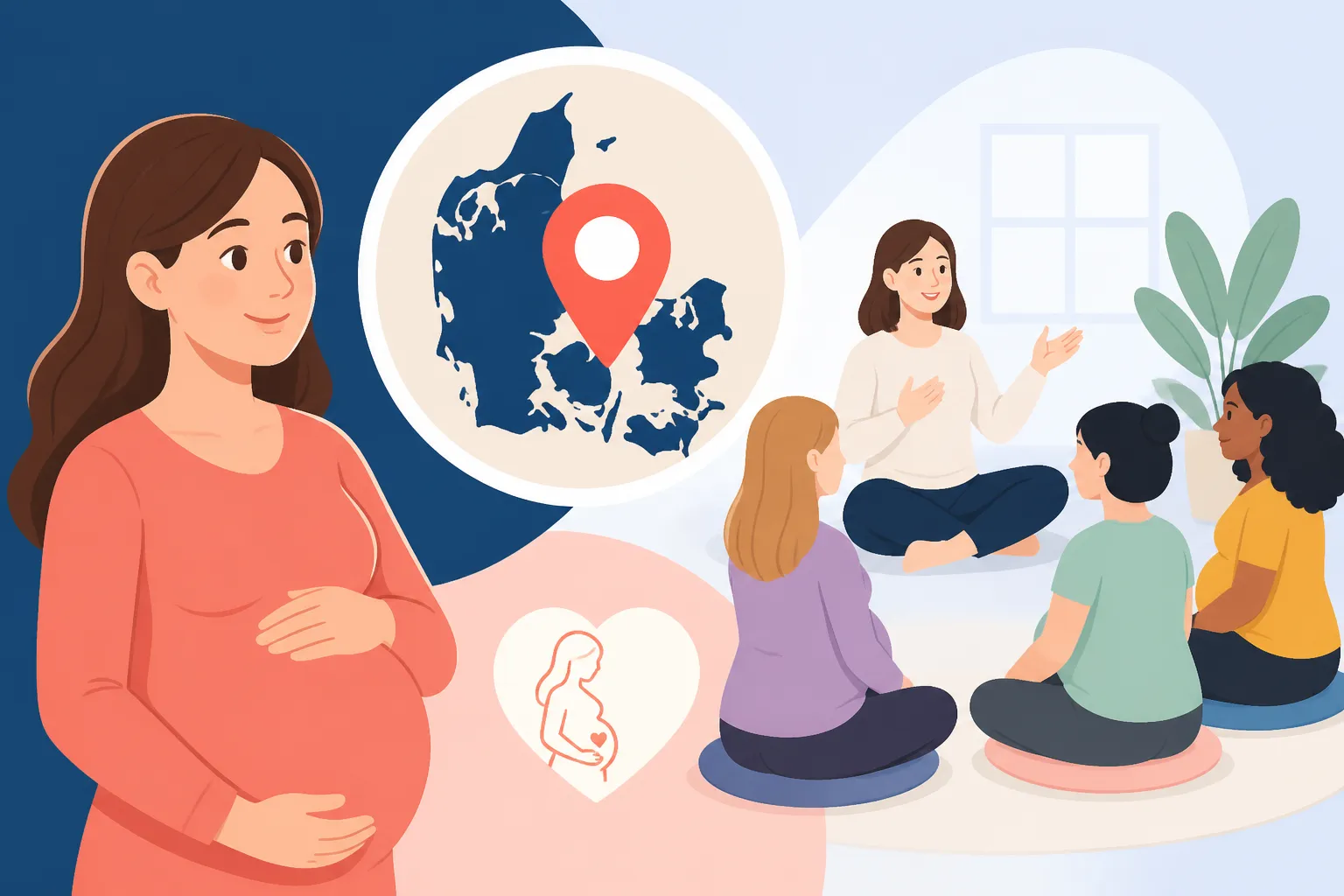
Copenhagen has the most robust selection of English-language birth preparation. Organizations like APA (Afspændingspædagogernes Aftenskole) offer dedicated "Birth Preparation in English" courses that span several weeks. These courses cover everything from the physiology of birth to practical exercises for the partner.
Another popular option is "The Birth Preparation," run by private midwives who specialize in the expat experience. They understand that you might not have your mother or sister nearby to help, and they tailor their advice accordingly. If you are still waiting for your residence permit or CPR number and are worried about costs, companies like SafetyWing can provide a safety net for unexpected medical needs during this transition period. Once you are settled, you might also consider how Private Health Insurance (Sygeforsikring "danmark"): Is It Worth It? can help with subsidies for certain private physiotherapy or birth-related treatments.
Aarhus and Central Jutland
In Aarhus, the international community is smaller but very active. "Aarhus Birth" is a well-known private provider offering English courses that focus on "Active Birth" techniques. These classes are excellent if you are looking for a more holistic approach. They often include sessions on Rezozo (a Mexican massage technique used in Danish midwifery) and natural pain relief. If you are looking for specific medical experts in the region, you may want to check our guide on Finding an English-Speaking Gynecologist in Aarhus or Odense.
Odense and Aalborg
In the smaller cities, you might find fewer "structured" group classes in English. Instead, the trend here is to hire a private doula or a private midwife for one-on-one sessions. This can be more expensive, but it offers a level of customization that group classes can't match. You can walk through your specific birth plan and learn the Danish terminology for pain relief and interventions in the comfort of your own home.
Essential Considerations: Insurance, Costs, and Logistics
While the actual birth in a public hospital is free for anyone with a The Yellow Health Card (Sundhedskort): Your Key to Danish Healthcare, private antenatal classes are an out-of-pocket expense. A typical course can range from 1,500 DKK to 3,500 DKK depending on the duration and whether it includes a "reunion" session with the babies after birth.
For those who prefer a more premium experience or want to ensure they have access to private hospital rooms (which are rare in the public system unless there are complications), looking into comprehensive expat insurance like Cigna Global is a smart move. Cigna Global often covers maternity modules that can include private consultations, which can be a relief if you find the public system's "wait and see" approach stressful.
| Feature | Public Hospital Classes | Private English Classes |
|---|---|---|
| Cost | Free (with CPR/Yellow Card) | 1,500 – 3,500 DKK |
| Language | Primarily Danish | English |
| Duration | 1-2 sessions (often lectures) | 4-7 weeks (interactive) |
| Social | Limited interaction | High (Meet other expat parents) |
| Partner Focus | Minimal | High (Includes partner roles) |
It is also important to keep track of your scans and appointments digitally. Before the classes even begin, you will likely have gone through your first trimester screenings. You can read more about what those entail in our guide on Maternity Care Timeline: Scans (Nakkefold and Misdannelse) Explained.
Understanding the Danish Birth Philosophy
One of the biggest reasons to take an English-language class is to understand the "Danish way" of birthing. Denmark is famous for its "low-intervention" approach. Midwives are the primary healthcare providers during a normal birth; you may not see a doctor (obstetrician) at all unless things become complicated.
English classes will often spend a significant amount of time explaining the "Lattergas" (gas and air) and the "Epidural" protocols in Denmark. Unlike some other countries where an epidural is offered the moment you walk through the door, Danish midwives often encourage movement, warm baths, and sterile water injections first. Knowing this ahead of time prevents the "culture shock" that many expat mothers feel when they are in the middle of active labor. For a deeper dive into what happens after the classes end, see Giving Birth in Denmark: Pain Relief Options and Postpartum Care.
Furthermore, these classes will introduce you to the concept of the "Sundhedsplejerske." This is a municipal health visitor who will come to your home after the birth to check on the baby’s development. Understanding how this system works is just as important as the birth itself. You can find more information in our article on What is the Danish Sundhedsplejerske (Health Visitor) System for Babies?.
Protecting Your Pregnancy Journey as an Expat
For many expats, the period between arriving in Denmark and receiving the CPR number is a "grey zone." If you are pregnant during this time, you are still entitled to emergency care, but the lack of a yellow card can make booking routine antenatal classes difficult. This is where SafetyWing is particularly useful, as it caters specifically to people in this transition.
If you are planning a more long-term stay and want the peace of mind that comes with private specialist access, Cigna Global remains a top recommendation for its maternity coverage levels. These brands offer a layer of security that allows you to focus on the joy of your pregnancy rather than the fear of a massive bill or a linguistic misunderstanding in the ER.
Finally, remember that the goal of these classes is not just medical knowledge. It is about confidence. When you understand how the system works—from the Expat Health Insurance: Coverage Before You Get Your CPR Number phase to the moment you bring your baby home—you can actually enjoy the experience. Denmark is one of the best places in the world to have a child, provided you know where to find the right support. For a broader view of the healthcare landscape you are entering, take a look at our Family Health in Denmark: Pregnancy, Maternity, and Pediatric Care guide.
Disclaimer
This article is for informational purposes only and does not constitute professional medical or legal advice. Healthcare regulations and visa requirements in Denmark are subject to change. Always consult with your General Practitioner (GP), a qualified midwife, or the Danish Patient Safety Authority for specific medical guidance. For insurance matters, verify coverage details directly with providers like SafetyWing or Cigna Global.