Rules on Barbecuing (Grill) on Apartment Balconies
One of the quintessential joys of summer, whether it’s a long, warm evening or a slightly grey but still pleasant afternoon, is firing up the grill. As an expat in Denmark, you might envision lovely moments of sizzling sausages or perfectly grilled vegetables on your apartment balcony. However, the reality of Danish apartment living, with its strict regulations and deep-seated respect for communal peace, often throws a wrench into these dreams. This guide is here to unravel the complex and often unspoken rules around barbecuing on apartment balconies in Denmark, helping you navigate the expectations, legalities, and neighborly etiquette so you can enjoy your grilling safely and without drama.
The Danish Reality: Why Balcony Grilling Isn't Always a Go
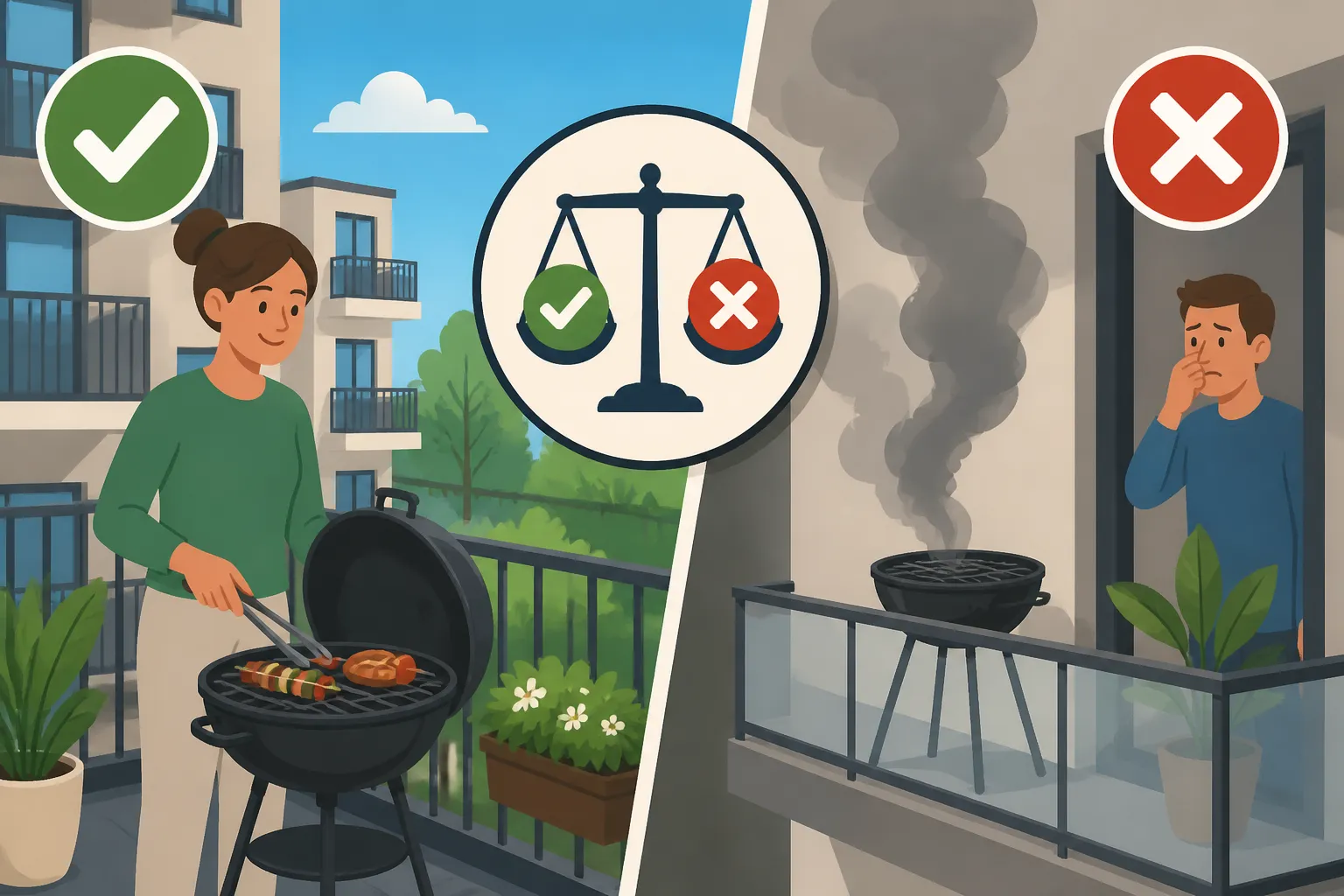
When you first move to Denmark, you quickly learn that communal living here operates on a different wavelength than many other countries. Danes value peace, order, and avoiding nuisance, often prioritizing the collective over individual liberties in shared spaces. This deeply ingrained cultural value extends strongly to anything that could potentially disturb neighbors, and balcony grilling, with its smoke, smells, and potential for noise, falls squarely into that category.
Expat Expectations vs. Danish Norms
I remember my first summer here, full of grand ideas for balcony dinners. Back home, it was common to have a small grill going on your patio or balcony. I assumed it would be the same here – a harmless bit of fun. But it wasn't long before a polite, yet firm, note appeared on the communal bulletin board, subtly reminding residents about the "common rules regarding outdoor cooking." It quickly became clear that my assumptions were very far from the Danish reality.
Many expats arrive with a mindset shaped by less restrictive environments. In some cultures, a barbecue is a standard part of summer life, and a bit of smoke wafting into a neighbor's window is considered a minor inconvenience, if at all. Here, it’s often seen as a direct infringement on their right to a peaceful home environment. It’s not just about fire safety – though that's a huge part of it – it’s also about the luktgener (smell nuisance) and røgudvikling (smoke development) that can permeate apartments, laundry, and general air quality. You might find a perfectly reasonable request for an electric grill only, or even an outright ban, in places you’d least expect it. It's a fundamental difference in how shared spaces are perceived.
The Silent Rules of Apartment Living
Beyond the written rules, there’s an unwritten code of conduct in Danish apartment buildings. You'll find that many Danes prefer to avoid direct confrontation. Instead, issues like noise or smoke will often be addressed indirectly, perhaps through a general notice from the housing association, or a passive-aggressive remark about airing out clothes from a neighbor. This indirectness can be frustrating for new expats, who might not even realize they're causing a problem until it escalates.
This is where the concept of hensyn (consideration) comes into play. You’re expected to be considerate of your neighbors, even if it means foregoing some activities you might enjoy. If you're on a balcony, your smoke and smells will inevitably travel. If your neighbors have their windows open, or their laundry drying, your barbecue can quickly become a significant annoyance. Therefore, even if a charcoal grill isn't explicitly forbidden, using one might be seen as highly inconsiderate and could quickly lead to strained neighborly relations – something most Danes go to great lengths to avoid. The ideal is to blend in and not cause a fuss, and balcony grilling is one of those areas where blending in often means not grilling.
Deciphering the Rules: Rental Contracts and Housing Associations
So, where exactly do these rules come from, and how do you find out what's allowed in your specific building? It’s rarely a simple, universal answer across all of Denmark. The devil, as always, is in the details of your specific living situation.
Your Lease Agreement: The First Stop
The very first place you should look is your rental contract, often known as the Typeformular A10: Understanding the Standard Danish Lease Agreement. This document is legally binding and will outline many of the specific rules and regulations pertaining to your tenancy. Buried within its many clauses, you might find sections on "house rules" (husorden) or specific prohibitions regarding grilling or open flames on balconies.
Even if it doesn't explicitly mention "grilling," look for phrases that might indirectly prohibit it, such as "open flames are not permitted on balconies" or "activities causing smoke or strong odors are forbidden." Sometimes, it might only permit specific types of grills, like electric ones, which are generally considered safer and produce less smoke. Pay close attention to these details. Some expats have got into trouble because they skimmed this section, only to be hit with a formal complaint or even a notice from their landlord. Remember, if it's in your contract, you're bound by it. Ignoring it could lead to significant issues, including potential fines or even, in extreme cases, termination of your lease, especially if you also fail to heed warnings. This is also where clauses about general maintenance and damage come into play; if your grilling causes any damage to the building or neighboring property, you'll be liable. This is why having proper Indboforsikring: Why Home Contents Insurance is Crucial for Renters is so important, as it could cover accidental fire damage to your apartment.
Boligforening and Grundejerforening: The Other Rule Makers
Beyond your direct landlord and rental contract, your building might be managed by a boligforening (housing association) or, if it’s a co-operative, a andelsboligforening, or even a grundejerforening (homeowner association) if you live in a larger complex with shared facilities. These associations often have their own comprehensive set of bylaws (vedtægter) or house rules (husorden) that supplement what's in your lease. These rules apply to everyone living in the building or complex, owners and renters alike.
These house rules are typically much more detailed than what's in your individual rental contract. They’ll cover everything from Quiet Hours and Apartment Rules: How to Avoid Neighbor Conflicts to bicycle parking, and yes, often rules about balcony use, including grilling. You'll usually find these rules posted in common areas like the entryway, in the laundry room, or perhaps on a communal digital portal. If you're unsure, don't hesitate to ask your landlord or the building administrator for a copy. It's much better to be proactive than to unknowingly break a rule and face the consequences. These rules are usually decided upon by a majority vote of the residents or board members, reflecting the community's collective preferences for shared living. They exist to ensure harmony, and Danes take them seriously.
Types of Grills: What's Typically Allowed (and What's Not)
Alright, so you've checked your contract and the husorden. Now, let's talk practicalities: what kind of grill might actually get a green light? Not all grills are created equal in the eyes of Danish apartment regulations.
Electric Grills: The Safest Bet
If any type of grilling is permitted on a balcony in Denmark, it will almost certainly be an electric grill. These are generally seen as the least problematic option for several reasons:
- No Open Flame: This significantly reduces the fire risk, which is a major concern for multi-story residential buildings.
- Minimal Smoke: While they can still produce some vapor and cooking smells, electric grills don't generate the dense, acrid smoke associated with charcoal or even gas. This dramatically reduces the luktgener (smell nuisance) for neighbors.
- Easier Temperature Control: They offer more precise heat regulation, which can help prevent flare-ups and burnt food, further minimizing smoke.
Many boligforeninger will explicitly state that only electric grills are allowed. If the rules are silent on grill types, but simply say "grilling is allowed on balconies," an electric grill is your safest bet to avoid complaints. Even then, remember the principle of hensyn. Position it carefully, don't grill fatty meats that will cause excessive smoke, and be mindful of wind direction and your neighbors' open windows. If you’re considering an electric grill, make sure it’s a good quality one that distributes heat evenly to make for a better cooking experience and reduce the chance of excessive smoke from burning food.
Gas Grills: A Grey Area
Gas grills fall into a bit of a grey area. They don't produce the dense, smoky residue of charcoal, and they light quickly, but they still involve a flame and a gas cylinder, which introduces a different set of safety concerns.
- Fire Risk: The main concern with gas grills is the gas canister itself. Storing propane or butane cylinders on balconies, especially in enclosed spaces, can be deemed a fire hazard by fire departments or housing associations. A leak could be extremely dangerous.
- Explosion Risk: While rare, a faulty gas line or cylinder could lead to an explosion, which is a terrifying prospect in a densely packed apartment building.
- Ventilation: Even with gas, certain foods can still produce a good amount of smoke and cooking odors. If your balcony is small or enclosed, this can still be a significant issue for neighbors.
Some housing associations might allow small gas grills, provided the gas canister is a certain size (often very small, like camping stove size) and stored safely away from heat or direct sunlight. However, many explicitly forbid them due to the gas canister risk. You'll need to check your specific rules very carefully. If it's not explicitly allowed, assume it's not. If you do get the green light, invest in a quality grill with good safety features and always check for leaks before use. Never store extra gas canisters on your balcony.
Charcoal Grills: Generally a Big No-No
Let's just be blunt: if you live in an apartment building in Denmark, especially with a wooden balcony, assume charcoal grilling is not allowed. This is almost universally prohibited for very good reasons:
- Extreme Fire Hazard: Hot coals, sparks, and ash are a direct fire risk, especially on wooden balconies or if sparks are carried by wind to neighboring balconies or awnings. The risk of a serious fire in a multi-story building is simply too high.
- Intense Smoke and Smell: Charcoal grilling produces a significant amount of thick, acrid smoke and strong food smells that can quickly fill multiple apartments. This is the ultimate luktgener and will almost guarantee neighbor complaints.
- Ash Disposal: Disposing of hot ash safely is another challenge. You can't just toss it in the bin; it needs to cool completely, often for days, and even then, it can reignite.
I’ve never encountered an apartment building or boligforening that permits charcoal grilling on balconies. If you try it, you're not only risking a hefty fine or eviction, but you're also putting yourself and your neighbors in serious danger, and very likely facing the wrath of the entire building. If you absolutely crave that charcoal flavor, you'll need to seek out designated public grilling areas in parks or communal gardens (if your housing complex has one and permits it). Otherwise, stick to other cooking methods or enjoy a grilled meal at a friend's house with a garden.
Beyond the Grill Type: Nuisance, Smoke, and Fire Safety
Even if you have the "right" type of grill (i.e., electric, and explicitly permitted), there's more to consider than just the equipment itself. Danish culture places a high value on discretion and avoiding disturbance, and this impacts even permitted activities.
Smoke and Smell: The Neighborly Concern
This is probably the most common reason for complaints, even with electric grills. Danish apartments, especially in cities like Copenhagen, are often built quite close together, and ventilation systems mean that smells can travel easily between units. What smells delicious to you – grilled steak, spicy chicken, fish – can be an invasive, lingering odor for your neighbor, especially if they have allergies, sensitive noses, or simply prefer their home to smell neutral.
Imagine your neighbor has just done a load of laundry and hung it out to dry on their balcony, or they have a baby sleeping with the window open for fresh air. Your grill smoke, no matter how "mild," will waft directly into their space. This isn't just an inconvenience; it can be deeply frustrating for someone trying to maintain a fresh home environment. Always be mindful of wind direction and strength. If the smoke is blowing straight into a neighbor's window, even with an electric grill, it's probably not the best time to fire it up. Think about what you're grilling too. Greasy foods tend to produce more smoke and stronger smells. Be extra vigilant about oil dripping and creating smoke. Sometimes, a quick chat with your neighbors beforehand can go a long way. A simple, "Hey, I'm thinking of grilling tonight, is that okay?" can avert a lot of future headaches.
Fire Hazard: A Serious Danish Consideration
While electric grills drastically reduce the risk compared to charcoal, any appliance that generates heat and involves cooking fats carries some fire risk. Danish authorities, landlords, and housing associations take fire safety extremely seriously. Apartment buildings often have strict fire safety regulations that prohibit anything that could be considered a fire hazard on balconies.
This includes not just the grill itself, but also how you use and store it. Never leave a grill unattended. Ensure it's placed on a stable, non-combustible surface, far away from any flammable materials like curtains, awnings, or plants. Make sure there’s nothing above the grill that could catch fire. After use, ensure it cools down completely before storing it away. A fire in an apartment building doesn’t just affect your unit; it can quickly spread and impact many others. The consequences for causing a fire due to negligence are severe, potentially involving criminal charges and massive financial liability that far exceeds what typical home insurance might cover, particularly if it's found that you violated specific house rules or safety protocols.
Noise and Social Etiquette
While not directly related to grilling, the act of having a barbecue often comes with increased social activity. People gather, chat, laugh, and listen to music. On a balcony, especially in a quiet Danish residential area, this can quickly become a noise nuisance. This goes back to the general Danish expectation of hensyn and the Quiet Hours and Apartment Rules: How to Avoid Neighbor Conflicts.
If you're hosting a small, quiet gathering, that's one thing. But if the volume escalates, or if you're grilling late into the evening, you could easily be violating the building's quiet hours or simply disturbing your neighbors. Most husordener will specify quiet hours, often from 10 PM or 11 PM until the morning. Even before then, loud conversations and music can carry surprisingly far. Be mindful of your voice levels, especially if you're having more than one or two people over. A casual balcony grill should not turn into a raucous party.
Hypothetical Scenarios and Actionable Advice
Let's put all this theory into some practical scenarios and actionable steps you can take to stay on the right side of the rules and your neighbors.
Before You Light That Flame: Your Checklist
Before you even think about buying a grill, or certainly before you light one up on your Danish apartment balcony, go through this checklist:
- Review Your Lease Agreement: Read every line, specifically looking for clauses about balconies, grilling, open flames, and nuisance. Pay extra attention to any mention of The "14-Day Defect Reporting" Rule After Moving Into a Rental, as you wouldn't want any grilling damage to be mistaken for pre-existing flaws.
- Check Housing Association Rules (Husorden/Vedtægter): Get a copy from your landlord or the building administrator. These often contain more detailed rules than your lease.
- Identify Allowed Grill Types: Is any grilling allowed? If so, what type? Electric is usually the only acceptable option.
- Consider Location and Wind: Where will the grill sit? Is it stable? What's the usual wind direction? Will smoke blow directly into a neighbor's window?
- Assess Fire Safety: Are there flammable items nearby? What's the balcony material? Do you have easy access to a fire extinguisher or a bucket of water in an emergency?
- Talk to Your Neighbors: If you’re unsure, or if you plan to grill regularly, a friendly conversation with your closest neighbors can pre-empt complaints. "Hej! I'm thinking of getting an electric grill for the balcony. Is that generally okay for you, or do you have any concerns about smoke?" This proactive approach can build goodwill.
- Insure Yourself: Ensure your Indboforsikring: Why Home Contents Insurance is Crucial for Renters is up to date and covers potential fire damage. While it won't cover negligence, it's a critical safety net.
Dealing with Neighbors and Complaints
Despite your best efforts, you might still encounter issues. Here's how to handle them:
- If a Neighbor Approaches You Directly: This is rare in Denmark, but if it happens, listen respectfully. Apologize sincerely if you've caused a disturbance, and stop grilling immediately. Danes value politeness and a willingness to rectify a mistake.
- If You See a General Notice: If a notice about grilling appears in common areas after you've been grilling, it's highly likely it's directed at you (or someone else doing the same thing). Take it seriously. Re-read the rules and adjust your behavior.
- If You Receive a Formal Complaint (via Landlord/Association): This is a more serious step. The complaint will usually be in writing, possibly sent through your digital post like E-Boks vs. Mit.dk: Receiving Official Financial Mail from the State. Respond promptly and courteously. Explain your understanding of the rules and outline the steps you'll take to comply. Don't be defensive.
- If You Believe the Rules Are Unfair or Misapplied: If you're confident you followed all rules and still receive an unfair complaint or warning, you might need to seek advice. Organizations like Joining LLO (Tenants' Union): How to Fight Unfair Rent Increases can offer legal guidance for renters in Denmark. They understand landlord-tenant dynamics and can help you interpret complex clauses in your Renting in Denmark: Complete Guide for Expats (2027).
What Happens If You Break the Rules
The consequences of ignoring grilling rules can range from minor to severe:
- Verbal or Written Warnings: Initially, you'll likely receive a polite request or a formal warning from your landlord or housing association to cease the activity.
- Fines: Some housing associations have clauses that allow them to issue fines for violations of house rules. These can add up quickly.
- Liability for Damages: If your grilling causes property damage (e.g., scorches the balcony floor, damages a neighbor's property, or God forbid, causes a fire), you will be held financially responsible for all repairs, which can be astronomically expensive.
- Lease Termination: Repeated or severe breaches of contract or house rules, especially those related to safety or serious nuisance, can lead to your landlord terminating your rental agreement. This means you could be evicted.
- Legal Action: In cases of severe negligence leading to fire or injury, you could face criminal charges.
It's clear that the Danish approach to balcony grilling is less about personal freedom and more about collective harmony and safety. While it might feel restrictive, understanding and respecting these rules will make your life as an expat in Denmark much smoother and more pleasant. So, consider that electric grill, be mindful of your neighbors, and enjoy the Danish summer responsibly!
Grill Type Comparison Table for Danish Apartment Balconies
To help visualize, here’s a quick overview of grill types and their typical acceptance in Danish apartment buildings:
| Grill Type | Fire Hazard Level | Smoke/Odor Nuisance | Typical Acceptance (Danish Apartments) | Key Considerations |
|---|---|---|---|---|
| Electric Grill | Low | Low | Generally permitted (if any grill) | Still requires hensyn for smoke/smell |
| Gas Grill | Medium | Medium | Often prohibited (due to gas cylinder) | Check specific rules; small canisters sometimes okay |
| Charcoal Grill | High | High | Almost universally prohibited | Significant fire/smoke risk; avoid at all costs |
Disclaimer
Please remember that this guide provides general information based on common Danish rental laws and cultural norms. Specific rules regarding barbecuing on apartment balconies can vary significantly depending on your individual rental contract, the bylaws of your housing association (boligforening or grundejerforening), and local municipal regulations. Always consult your specific lease agreement and house rules for the most accurate and up-to-date information pertaining to your residence in Denmark. This content is for informational purposes only and does not constitute legal advice.