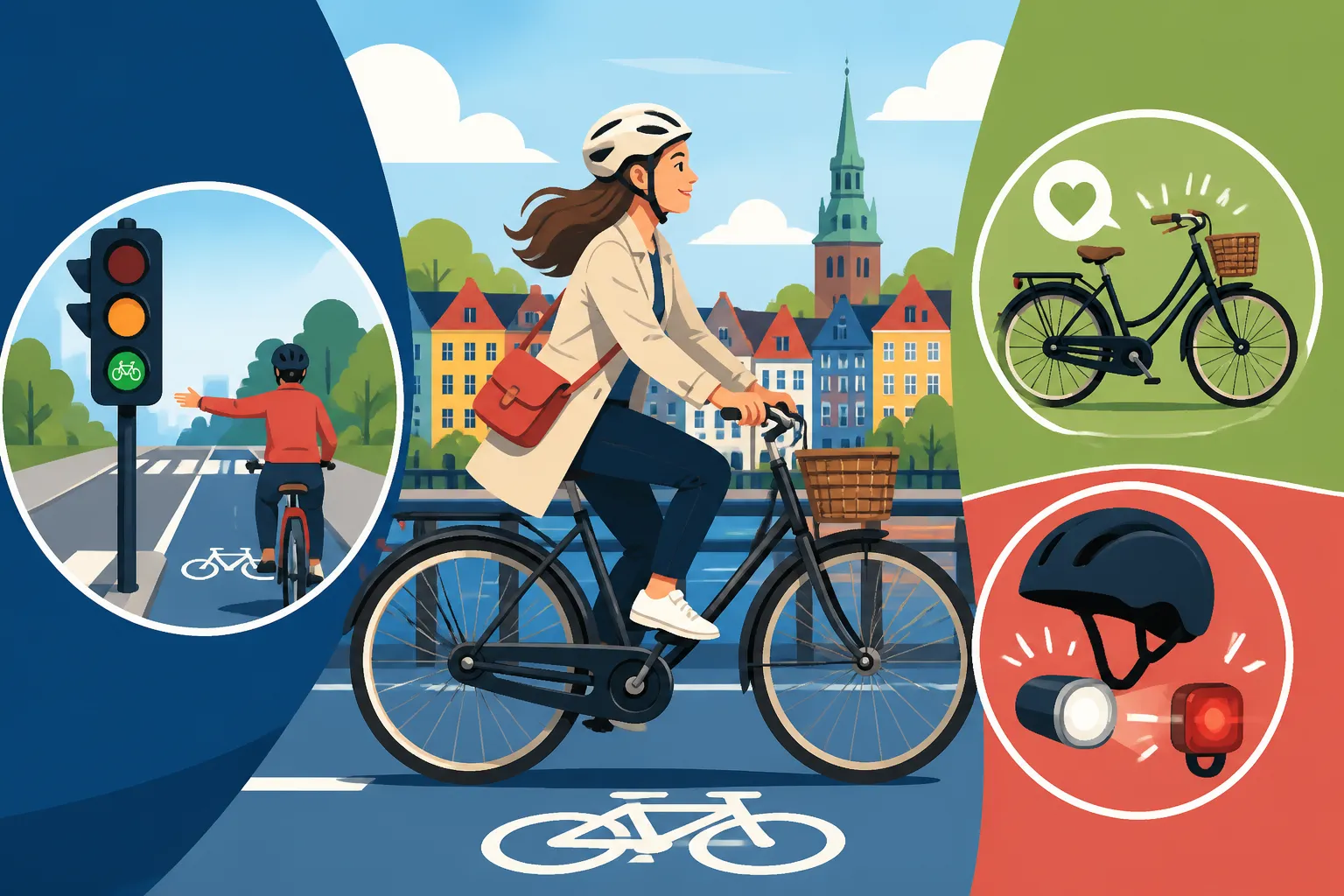
Danish Cycling Culture: Rules, Buying a Bike, and Safety
The first time you stand at a busy intersection in Copenhagen during rush hour, it feels less like a city street and more like a high-speed velodrome. For many expats, the sheer volume and speed of Danish cyclists are intimidating, leading to a "bike-culture shock" that can make you want to stick to the bus. This guide breaks down the unspoken rules, the legal requirements, and the practicalities of buying and maintaining a bike so you can navigate the Danish bike lanes with total confidence.
The Philosophy of the Danish Bike Lane
When you move here, you quickly realize that for Danes, a bicycle is not "leisure equipment" or a "fitness tool"—it is a utilitarian vehicle, no different from a car or a bus. This perspective shift is crucial. If you treat your bike like a toy, you will likely frustrate the commuters behind you who are trying to get to a 9:00 AM meeting. The infrastructure is designed to support this efficiency, with dedicated lanes that are often physically separated from car traffic by a curb.
The culture of cycling is also deeply tied to the Cost of Living in Denmark 2026: Budgets for Singles and Families. Because the Buying and Registering a Car: The 150% Vehicle Registration Tax makes vehicle ownership prohibitively expensive for many, the bicycle becomes the primary mode of transport for everyone from university students to high-ranking CEOs. It is a great equalizer. You will see parents in expensive suits pedaling heavy cargo bikes filled with toddlers and groceries, and you will see elderly residents effortlessly gliding along on e-bikes.
Understanding this flat hierarchy is part of absorbing the Danish Work Culture: Flat Hierarchies, Hygge, and Direct Communication. In Denmark, the CEO and the intern often arrive at the office on the same type of bike, park in the same rack, and hang their rain gear in the same hallway. This lack of "status symbols" through transport is a core part of the Danish identity. If you want to integrate, you need to embrace the bike, even when the wind is blowing 30 knots in your face.
Buying Your First Bike: New vs. Second-Hand
The search for a bike usually begins within your first week of arrival. If you have just landed and are staying in temporary accommodation found via Spotahome, you might be tempted to run to the nearest high-end shop and drop 8,000 DKK on a shiny new city bike. While new bikes are beautiful, they are also magnets for thieves. Most veteran expats recommend starting with something a bit more "broken-in" until you understand your own commuting needs and the layout of your neighborhood.
The Second-Hand Market: DBA and Facebook
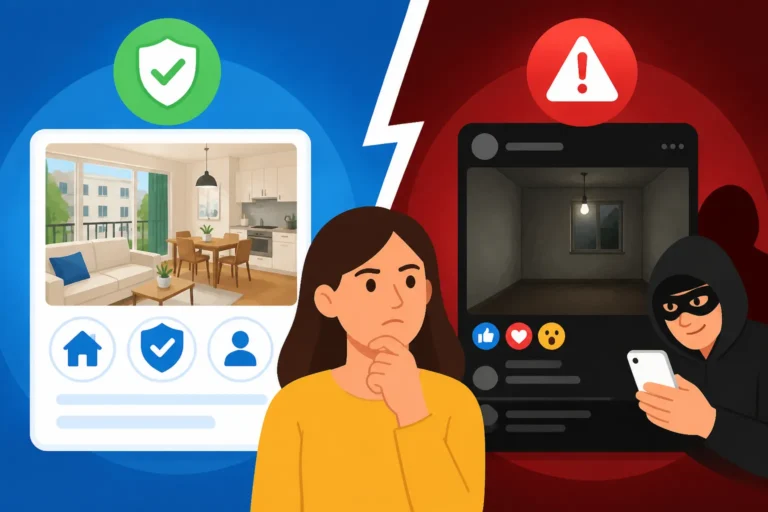
The most popular way to find a bike is through Den Blå Avis (DBA), which is the Danish version of eBay or Craigslist. You can also find localized "Cycles for Sale" groups on Facebook. This is where you can find a solid, reliable "mormorcykel" (grandma bike) for anywhere between 800 and 1,500 DKK. When buying second-hand, always ask for the original receipt or a "cykelbevis." This document proves the bike isn't stolen and lists the "stelnummer" (frame number), which you will need for your insurance.
Local Bike Shops (Cykelhandlere)
If you prefer a bit more security, visit a local "cykelhandler." These shops often have a row of refurbished used bikes out front. While you will pay a bit more (perhaps 2,000 to 3,000 DKK), these bikes usually come with a basic 3nd or 6-month warranty. The mechanic will have checked the brakes, oiled the chain, and ensured the tires are in good shape. It is a safer bet for a newcomer who doesn't know how to spot a cracked frame or a failing internal gear hub.
Subscription and Rental Services
For those who aren't ready to commit to ownership, services like Swapfiets offer a monthly subscription. For a fixed fee, you get a bike with its iconic blue front tire, and if it breaks, they come to you and fix it or swap it within 24 hours. This is an excellent "entry-level" option while you are still figuring out your Neighborhood Guide: Nørrebro vs. Vesterbro vs. Østerbro. If you are using a service like Airalo to keep your data active while you house hunt, you can easily use their apps to locate drop-off points or service hubs.
The Rules of the Road: Danish Traffic Law for Cyclists
Denmark has very strict rules for cyclists, and the police do conduct "blitz" checks, especially in the larger cities like Copenhagen and Aarhus. Getting caught without lights or biking across a pedestrian crossing can result in a fine of 700 to 1,000 DKK per offense. These fines can quickly add up, so it is worth memorizing the legal requirements before you hit the road.
| Requirement | Rule Detail | Fine Amount (Approx.) |
|---|---|---|
| Lights | Must have one white/yellow light in front and one red in back. Visible from 300m. | 700 DKK |
| Brakes | Must have functioning brakes on both wheels (hand or coaster brakes). | 700 DKK |
| Bells | A clear-sounding bell is mandatory. No horns allowed. | 700 DKK |
| Reflectors | White in front, red in back, yellow on pedals and spokes. | 700 DKK |
| Phone Use | Handheld phone use while cycling is strictly prohibited. | 1,000 DKK |
| Red Lights | Running a red light is a major offense. | 1,000 DKK |
One of the most confusing rules for newcomers is the "Danish Left Turn." You are not allowed to turn left from the center of the lane like a car. Instead, you must perform a "two-stage" turn: cross the intersection to the far right corner, stop, turn your bike 90 degrees to face the new direction, and wait for the light to turn green for that flow of traffic. It feels slow at first, but it keeps you out of the path of turning cars and is significantly safer.
Another critical rule is that you must never cycle on the sidewalk or across a pedestrian zebra crossing. If you need to cross a sidewalk to get to a shop, you must dismount and walk your bike. This is a point of major contention with locals; nothing earns you a "Danish scolding" faster than clipping a pedestrian because you were too lazy to hop off your saddle.
Mastering Hand Signals and Social Etiquette
The Danish bike lane is a silent ecosystem. Because everyone is moving at different speeds, communication is vital. You don't shout; you signal. If you suddenly stop without warning, the person behind you—who might be carrying two children in a cargo bike—will likely crash into you. This is why learning the "stop" signal is the single most important thing you can do on day one.
The "stop" signal involves raising your right hand, palm open, as if you are giving a high-five to the air. You should do this a few seconds before you actually start braking. This tells the person behind you that they need to either slow down or overtake you on the left. Similarly, signaling your turns is mandatory. To turn right, extend your right arm straight out; to turn left, extend your left arm. It sounds simple, but in the chaos of rush hour, these small gestures prevent major accidents.
Overtaking is another area where etiquette is king. You should always stay to the right of the bike lane to allow faster cyclists to pass you on the left. If you need to pass someone, a quick "ding-ding" of your bell is acceptable if the lane is narrow, but generally, you just wait for a gap and move around them. If you are involved in a collision, even a minor one, stay calm. If there are injuries, you may need to navigate Emergency Medical Care in Denmark: Calling 112, Lægevagten, and ERs, but for small bumps, an apology and a quick check of the bikes is the standard response.
Safety, Weather, and Winter Survival
Cycling in Denmark is a year-round activity. You will see people biking in blizzards, torrential rain, and heatwaves. To survive this, you need the right gear. While helmets are not legally required for adults, they are highly recommended. The Danish "look" often involves a stylish airbag helmet (Hövding) that sits around the neck, but a traditional hardshell is increasingly common among safety-conscious expats and locals alike.
Rain gear is non-negotiable. Invest in a high-quality pair of "regnbukser" (rain pants) and a breathable waterproof jacket. If you show up to a social event soaking wet, nobody will judge you—they probably have their own wet gear hanging in the hallway. However, the wind is the real enemy. Denmark is flat, which means there is nothing to stop the North Sea winds. You will often find that your commute home takes twice as long as your commute to work simply because of "modvind" (headwind).
When Winter in Denmark: Hygge, Heating Strategies, and Surviving the Dark sets in, the roads are salted to prevent ice. This salt is incredibly corrosive to bike chains and gears. During the winter months, you should rinse your bike with fresh water at least once a week and keep the chain well-greased. If you find yourself feeling sluggish or unwell due to the lack of sunlight, remember that even a 15-minute bike ride can help combat the winter blues. If things get serious, knowing How to Find a GP Accepting New Patients in Copenhagen or your local city will ensure you get the right support for seasonal affective disorder.
Theft Prevention and Insurance
Bike theft is unfortunately a "national sport" in Denmark. It is estimated that a bike is stolen every few minutes in the major cities. The key is not to make your bike impossible to steal, but to make it more difficult to steal than the one parked next to it. This starts with a "ringlås"—the lock that is permanently attached to the frame and blocks the back wheel. While convenient, a professional thief can simply lift the bike into a van and deal with the lock later.
You should always use a second lock—a heavy-duty chain or a U-lock—to secure the frame of the bike to a permanent fixture like a bike rack or a fence. When parking at stations, try to find the designated "locked" parking areas if they are available. If your bike is stolen, you will need to file a police report online via Borger.dk. This is where your "stelnummer" becomes vital; without it, your insurance company will not pay out a krone.
This is a good time to review your Indboforsikring: Why Home Contents Insurance is Crucial for Renters. Most standard home insurance policies in Denmark cover bike theft, provided the bike was locked with a "forsikringsgodkendt" (insurance-approved) lock. These locks come with a specific certificate. Keep that certificate and your receipt in a safe place. If your bike is particularly expensive (like a cargo bike or a high-end e-bike), you might need to add a specific "cykelforsikring" rider to your policy to cover the full value.
Integrating Biking with Public Transport
One of the best things about the Danish system is how well the bike lanes integrate with Public Transport in Denmark: Rejsekort, Trains, and Commuting. If you live in a suburb like Roskilde or Køge but work in central Copenhagen, you can take your bike on the S-tog (suburban train) for free. There are designated carriages at the front and back of the train with floor-to-shelf racks specifically for bicycles.
However, be aware that you cannot take bikes on the Metro during rush hour (7:00-9:00 and 15:30-17:30) without paying an extra fee, and you must stay in the designated areas. On regional trains (DSB), you usually need to buy a separate "cykelbillet" (bike ticket) via the DSB app or a ticket machine. This flexibility allows you to bike the "last mile" from the station to your office or home, which is often faster than waiting for a connecting bus.
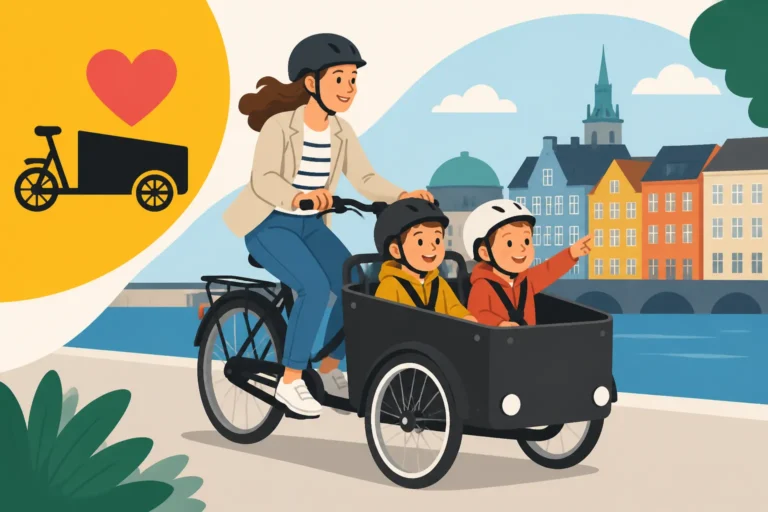
If you are commuting with a cargo bike, please note that they are generally not allowed on trains due to their size. For those with young children, the cargo bike (or "ladcykel") is the ultimate suburban transport. It replaces the second car. You can fit two kids, a dog, and the weekly shopping in the front box. While they are heavy and take some time to master, they are a hallmark of the Danish lifestyle and a great way to meet other parents in your local community.
Maintenance and Long-Term Care
If you treat your bike well, it will last you for a decade. Beyond the winter salt-rinsing mentioned earlier, you should check your tire pressure every few weeks. Soft tires make you work twice as hard and increase the risk of "pinch flats" when you hit a curb. Most bike shops have a "fribeluft" (free air) station outside their door that you can use even when the shop is closed.
If you aren't mechanically inclined, find a local "cykelmekaniker" you trust. A basic tune-up (service) usually costs around 300-500 DKK and includes gear adjustment, brake tightening, and chain lubrication. It is worth doing this once a year, preferably in the spring after the winter salt has done its worst. Learning how to fix a flat tire yourself is a useful skill, as mobile repair services can be pricey.
Finally, remember that your bike is your ticket to exploring the country. Beyond the city limits, Denmark is crisscrossed with national cycle routes that take you through forests, along coastlines, and past historic castles. It is the most "Danish" way to spend a weekend. Pack a picnic, check your lights, and join the flow. You might start as a nervous expat, but within a few months, you'll be the one "ding-dinging" the tourists who are standing in the middle of the bike lane.
Disclaimer
This guide is intended for informational purposes only and does not constitute legal or professional advice. Traffic laws and municipal regulations in Denmark are subject to change. Always consult official sources such as the Danish Police (Politi) or the Danish Road Safety Council (Rådet for Sikker Trafik) for the most current rules and safety guidelines. The author and publisher are not responsible for any fines, accidents, or legal issues arising from the use of this information.