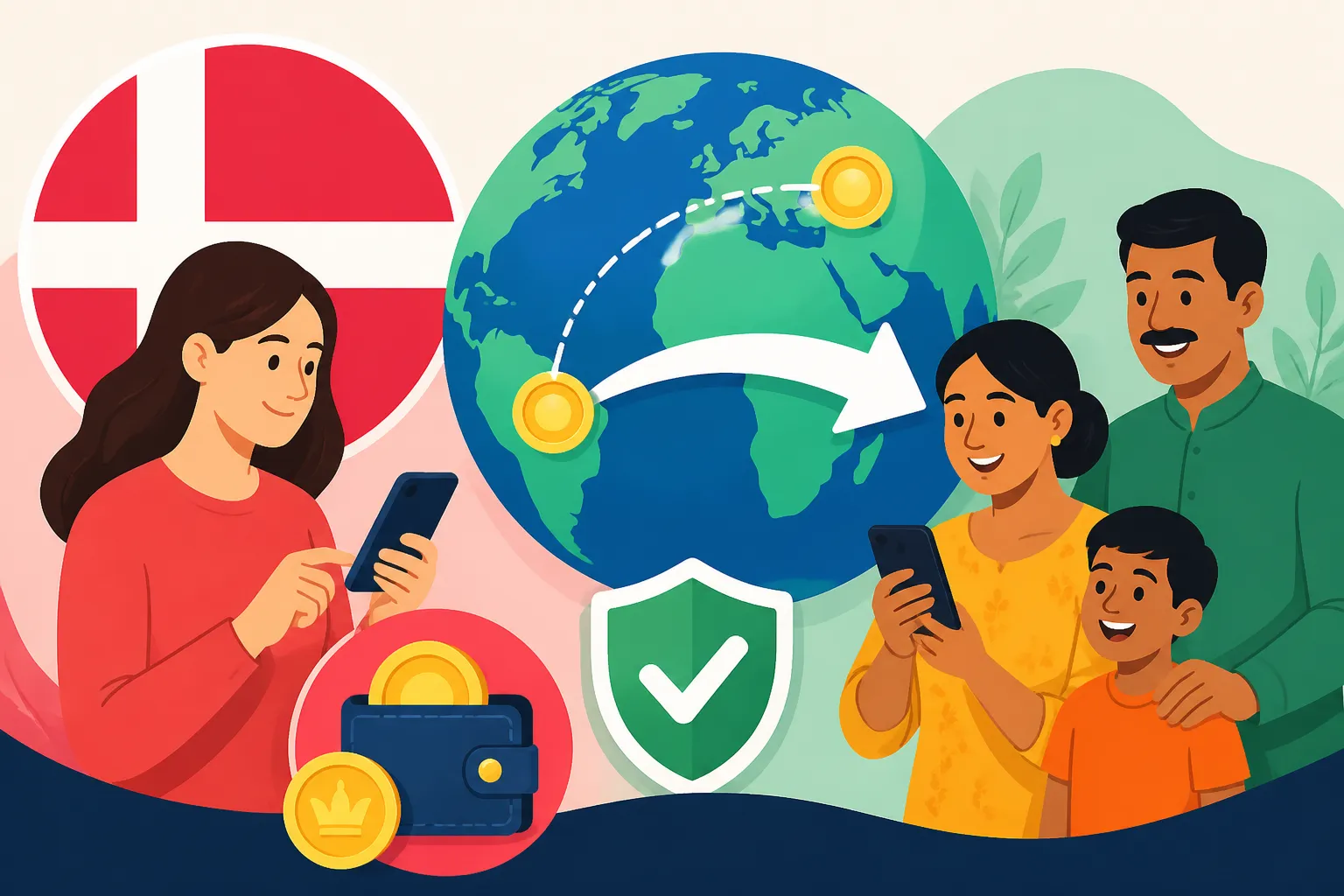
Sending Money Home: Cheapest International Transfers from DKK
Sending money across borders is one of those administrative headaches that every expat in Denmark eventually faces. Whether you are sending a few thousand kroner to cover a student loan back home or transferring a massive deposit for a property, the hidden fees in the Danish banking system can quietly eat away at your hard-earned savings. This guide breaks down exactly how to move your money from DKK to your home currency without getting fleeced by traditional banks or opaque exchange rates.
Why Your Danish Bank is Probably Overcharging You
It is a classic expat mistake: you open a beautiful new account at Danske Bank, Nordea, or Jyske Bank, and you assume that because the local service is efficient, the international service will be too. While Opening a Bank Account in Denmark: Document Checklist and Delays is a vital first step for your life here, using that same account for international transfers is rarely the most cost-effective move. Danish banks often operate on a "fixed fee plus markup" model that feels outdated in our digital-first world.
The Hidden Exchange Rate Markup
Most traditional banks in Denmark will tell you they charge a "flat fee" for an international transfer—usually somewhere between 50 DKK and 200 DKK. This sounds reasonable until you look at the exchange rate they are offering. Banks rarely use the "mid-market rate," which is the real-time rate you see on Google or XE. Instead, they add a spread of 1% to 3% on top of that rate. If you are sending 100,000 DKK home to help with a mortgage, a 3% markup means you are effectively paying 3,000 DKK in "invisible" fees. This is why understanding How to View Your Medical Records and Lab Results on Sundhed.dk is easier than deciphering a bank's currency spread.
SWIFT Fees and Correspondent Bank Costs
When you send money via a traditional Danish bank, the money travels through the SWIFT network. This network often involves "correspondent banks"—middlemen that pass the money along like a relay race. Each of these middlemen may take a small bite out of your transfer, often ranging from $15 to $50. By the time your money reaches its destination, the final amount is often significantly lower than what you sent, and your Danish bank will claim they have no control over what the other banks charged. This lack of transparency is a major frustration for many of us who are used to the precision of the Preliminary Tax Assessment (Forskudsopgørelse): Avoiding Tax Debt system.
The Complexity of DKK as a Minor Currency
The Danish Krone is pegged to the Euro, but it is still considered a "minor" currency in the global market. Because of this, many international banks do not hold large reserves of DKK, leading to wider spreads and higher conversion costs. When I first moved here, I tried to send money back to the US directly from my local branch, only to find out that the recipient bank charged an extra conversion fee because they didn't know what to do with "Danish Crowns." This is a headache you can avoid by using a specialist service like Wise, which handles the currency conversion internally using local accounts.
The Rise of Fintech: Why Wise is a Game Changer for Expats
In the last decade, the landscape of international finance has shifted. For most of us living the expat life in Copenhagen or Aarhus, the goal is to get as close to the mid-market rate as possible. This is where fintech companies have stepped in to solve a problem that traditional banks ignored for years. If you are already comfortable with Using MitID for Banking: Security, Device Registration, and App Setup, then moving to a digital transfer service will feel like a natural progression.
Real Mid-Market Rates vs. Bank Rates
The primary reason many expats prefer Wise is their commitment to the mid-market exchange rate. They don't hide their profit in the exchange rate; instead, they charge a transparent, upfront fee. When you are calculating your Cost of Living in Denmark 2026: Budgets for Singles and Families, knowing exactly how much your transfer will cost—down to the last øre—is incredibly helpful for budgeting. You can see the fee before you commit, which prevents those nasty surprises when the money finally hits your home account.
Setting Up a Transfer from a Danish Account
Using a service like Wise with a Danish bank account is relatively straightforward, but it requires a bit of setup. You will typically initiate a "domestic" bank transfer in DKK from your Danish bank to the service's Danish account. Since this is a domestic transfer, your Danish bank usually won't charge you a fee for it. Once they receive your kroner, they convert it and send it out from their local account in your home country. This effectively bypasses the expensive SWIFT network entirely. It’s almost as satisfying as finally figuring out How to Register Your Daily Commute Distance on Your Forskudsopgørelse.
When to Use Wise for Major Life Milestones
People often ask if these digital services are safe for large amounts, such as Buying Property in Denmark: Mortgage Options and 20% Down Payments. The answer is generally yes, provided the service is regulated. Wise is regulated by the Danish Financial Supervisory Authority (Finanstilsynet) for its operations within the EEA. For very large transfers (over 500,000 DKK), you might even find that their percentage-based fee becomes negotiable or that they offer specialized "high-value" support to ensure the transfer isn't flagged by anti-money laundering systems.
Managing Taxes and Reporting Requirements with SKAT
One of the biggest anxieties for foreigners in Denmark is the fear of "doing something wrong" with the tax authorities. Denmark is a highly transparent society, and SKAT (the tax agency) has a very long reach. When you start moving large sums of money out of the country, you need to be aware of how this looks to the authorities and what your reporting obligations are.
Sending Money to Non-EU Countries: Hidden Bank Fees and Reporting
When you are Sending Money to Non-EU Countries: Hidden Bank Fees, you aren't just dealing with the cost; you are dealing with potential reporting triggers. Any transfer over 100,000 DKK is automatically reported to the Danish central bank (Nationalbanken) for statistical purposes and to monitor for money laundering. While this isn't a tax on the transfer itself, it does mean that if the money you are sending hasn't been properly taxed as income, SKAT might come knocking with questions later. This is particularly relevant for those on the Expat Tax Scheme (Forskerskatteordningen): The 27% Flat Tax Guide.
Does SKAT Automatically Track My Foreign Bank Accounts?
A common question I hear at Friday bars is, "Does SKAT Automatically Track My Foreign Bank Accounts?" The short answer is: mostly, yes. Through the Common Reporting Standard (CRS), Denmark exchanges financial information with over 100 other countries. If you are sending money to a bank account in your name back home, SKAT will eventually see the balance of that account. If you aren't reporting the interest earned on that money, you could face penalties. Using a specialized service like Taxes for Expats can help you navigate these dual-reporting requirements, especially if you are a US citizen dealing with the complexities of FATCA and FBAR.
Professional Help: Using Taxes for Expats
For those of us with complex financial lives—perhaps you have rental income in your home country or you are Transferring a UK Pension (QROPS) to the Danish System—the intersection of Danish and international tax law is a minefield. Taxes for Expats specializes in helping Americans and other internationals stay compliant while living abroad. They can help you understand if the money you are "sending home" needs to be declared as part of your global wealth or if it’s simply a post-tax transfer of savings. It’s an investment in peace of mind that is often worth more than the few hundred kroner you'd save by DIY-ing your tax returns.
Comparing International Transfer Options (Table)
To help you visualize the best path for your specific needs, I’ve put together a comparison of the most common methods used by the expat community in Denmark.
| Method | Typical Fee (DKK) | Exchange Rate | Speed | Best For |
|---|---|---|---|---|
| Danish Retail Banks | 50 – 200 + SWIFT | 1% – 3% Markup | 2-5 Days | When you have no other choice |
| Wise | 0.4% – 0.7% | Mid-Market Rate | Instant to 2 Days | Monthly bills and mid-sized transfers |
| Revolut | Variable (Free to a limit) | Interbank Rate | Instant to 1 Day | Small, frequent spending |
| Western Union | High / Variable | Poor Markup | Minutes | Emergency cash pickups |
| PayPal | "Free" to friends | 3% – 4% Markup | Instant | Small personal gifts (if you don't mind the loss) |
Practical Steps for a Seamless Transfer from DKK
If you're ready to make your first transfer, don't just jump in. There’s a bit of "Danish logic" you need to apply to ensure the money moves smoothly. Remember, the system here is built on your CPR number and your Setting Up Your NemKonto: How to Link It to Receive Salary and SU status.
Linking Your Danish Bank to a Transfer Service
Most services like Wise will allow you to pay via "Easy Transfer" or a manual bank transfer. In Denmark, the fastest way is often using your Dankort or a Visa/Mastercard issued by a Danish bank. However, be careful—some banks treat "transferring to a fintech" as a cash advance and might hit you with a separate fee. The safest and cheapest way is almost always a standard "Straksbetaling" (instant payment) via your online banking app. If you are still figuring out the local apps, check out my guide on the Booking a Doctor's Appointment in Denmark: MinLæge App Guide—the logic of Danish apps is remarkably consistent across sectors.
The Role of MitID in International Transfers
Every time you initiate a transfer, you will likely be asked to verify it via your MitID. This is the gold standard of security in Denmark. If you are abroad and your MitID app isn't working, you are essentially locked out of your money. It is wise to have a backup MitID (like a code bleeper or a second phone) before you start moving large sums of money. It’s one of those things you don’t think about until you’re sitting in an airport trying to pay a bill and your app won't load.
Timing Your Transfers
The currency markets are volatile. While the DKK is pegged to the Euro, its value against the USD, GBP, or INR can swing wildly in a single afternoon. If you are sending a large amount, it pays to watch the rates for a few days. Many fintech services allow you to set "rate alerts." For those of us used to The Danish Holiday Act (Ferielov): Earning and Spending Vacation Days schedule, we know that timing is everything. Don't wait until the last day of the month when you're stressed; set your transfer up when the markets are calm.
Specialized Scenarios: Pensions, Property, and Non-EU Corridors
Not all transfers are created equal. Depending on where you are from and why you are sending the money, you might run into specific roadblocks that require a more nuanced approach.
Transferring Large Sums for Property
If you are moving money to buy a house, your recipient's bank will almost certainly ask for "Proof of Funds." This is where things get sticky. If you use a fintech service, the money might arrive in the recipient's account from a "local" Wise account rather than an account in your name. This can trigger red flags for mortgage lenders. In these cases, you might need to use a specialized currency broker or be prepared to provide months of statements from your Danish bank to prove the money's origin. It’s a bit like the paperwork required for Mental Health in Denmark: Accessing Psychologists and Therapy for Expats—it's a lot of documentation, but it's necessary to get the result you want.
Navigating the US-Denmark Tax Corridor
For my American friends, the "Sending Money Home" struggle is real. Between the IRS and SKAT, you are under constant scrutiny. This is where a firm like Taxes for Expats becomes an essential part of your "Team Denmark." They can help you navigate the Foreign Earned Income Exclusion (FEIE) and ensure that your transfers back to a US brokerage account don't accidentally trigger a tax event. If you are Investing in Denmark: Aktiesparekonto, Taxes, and Broker Options, you need to know how those investments are viewed by the US government before you liquidate them and send the DKK home.
Non-EU Corridors (India, Brazil, Philippines)
If you are sending money to countries with strict capital controls or less "common" currencies, your options might be more limited. While Wise covers many of these, sometimes local players are better. However, always check the "landed" amount. Some services promise a great rate but have huge "collection fees" at the destination. It’s a bit like the surprise of Dental Care in Denmark: Costs, Subsidies, and Private Insurance Options—the initial quote looks fine, but the "extras" are what get you.
Final Thoughts on Moving Your Money
Living in Denmark is a fantastic experience, but the financial "plumbing" can be frustratingly opaque when you're trying to interact with the rest of the world. By stepping away from the traditional banks and embracing the fintech tools available to us, you can save thousands of kroner every year. Just remember to keep your paperwork in order for SKAT, use MitID religiously, and always, always double-check the exchange rate markup.
Disclaimer
This guide is for informational purposes only and does not constitute financial, legal, or tax advice. Exchange rates and fees are subject to change, and you should always conduct your own research before committing to a financial service. For specific tax concerns, especially those involving cross-border reporting, we strongly recommend consulting a qualified professional such as Taxes for Expats or a Danish state-authorized accountant.