Filing Taxes as a Digital Nomad Spending Less Than 6 Months
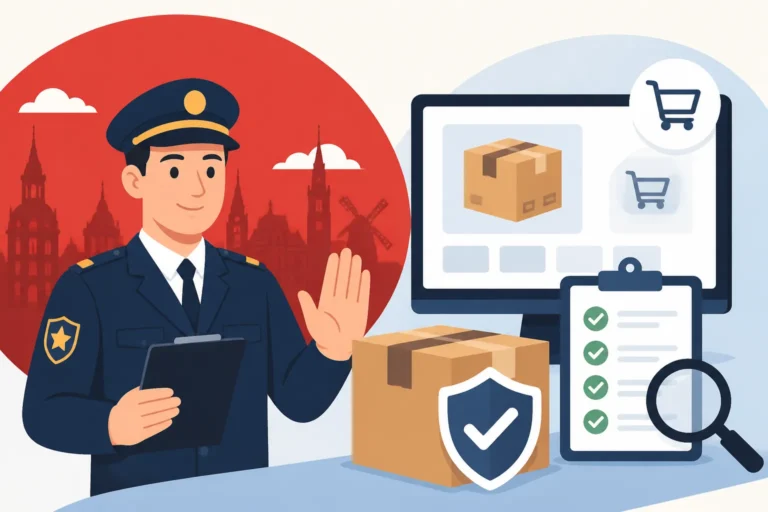
Many digital nomads land in Copenhagen or Aarhus dreaming of minimalist architecture and world-class coffee, but they often hit a wall when it comes to the Danish tax authority, SKAT. If you are working remotely in Denmark for less than six months, you might assume you are invisible to the taxman. This guide clarifies the complexities of limited tax liability and double taxation to keep your stay stress-free.
The 183-Day Rule and Limited Tax Liability
The first thing every digital nomad needs to understand when crossing the Danish border is the "183-day rule." In the world of international tax, this is the magic number that usually determines whether a country considers you a resident for tax purposes. In Denmark, if you stay for more than six consecutive months—or a total of 183 days within any 12-month period—you are generally considered to have "full tax liability." This means Denmark wants to tax your global income, regardless of where your clients or employers are located.
However, since you are planning to spend less than six months here, you fall into a different category known as "limited tax liability." This is where things get a bit nuanced. Limited tax liability means you are only taxed on income that is considered to have a "source" in Denmark. For most digital nomads working for companies in the US, UK, or elsewhere, your remote salary usually isn't Danish-sourced. But the mere act of physically sitting in a Vesterbro cafe while typing on your laptop can sometimes blur these lines if you aren't careful about how your presence is documented.
It is also vital to distinguish between a "stay" and "residency." Even if you are here for only three months, if you establish what SKAT calls a "center of vital interests"—perhaps by bringing your spouse and children or signing a long-term lease—they could argue you have full tax liability from day one. Most nomads avoid this by using short-term rentals and keeping their primary home elsewhere, but it is a factor to keep in mind if you start feeling a bit too at home in your Nørrebro apartment. To better understand how the system views your status, you should look into Understanding CPR Registration and Your Healthcare Entitlement to see how residency and administrative registration intersect.
Understanding the 6-Month Threshold
The six-month threshold is not just a suggestion; it is a hard line that SKAT monitors through various digital footprints. When you enter Denmark as a tourist or on a Digital Nomad and Short-Term Stays: Schengen Visas and Limitations, your clock starts ticking. If you spend 182 days here, leave for a weekend to Malmö, and come back for another 10 days, those days are often aggregated. SKAT looks at "stays," and brief interruptions do not necessarily reset the clock.
For a veteran expat, the advice is always the same: keep a log. Save your boarding passes, keep your Airbnb receipts, and track your days in a spreadsheet. If you are ever audited, showing that you were physically outside of Denmark for a specific number of days is your best defense against being pulled into the full Danish tax net. This is particularly important because Denmark has some of the highest tax rates in the world, and accidentally becoming a full tax resident can be a very expensive mistake.
Furthermore, the 183-day rule is often part of bilateral tax treaties. These treaties are designed to ensure you don't pay tax on the same income twice. If you are from a country that has a treaty with Denmark, the rules might be slightly more flexible, but the 183-day mark remains the standard benchmark for shifting your tax home. You can read more about how these treaties function in our guide on How to Avoid Paying Double Tax: US Citizens in Denmark.
What is Limited Tax Liability?
Limited tax liability is the "safe zone" for most short-term digital nomads. Under this status, Denmark generally does not tax the salary you receive from a foreign employer for work performed remotely, provided that the employer does not have a "permanent establishment" in Denmark. If you are a freelancer with clients in New York or London, and you are just passing through Copenhagen for the summer, your income is typically not taxable in Denmark.
However, limited tax liability does apply to certain types of Danish income. For example, if you decide to pick up a side gig at a local Danish startup while you are here, or if you own property in Denmark that you are renting out, that specific income is taxable from the first krone. In these cases, you would need to navigate the Preliminary Tax Assessment (Forskudsopgørelse): Avoiding Tax Debt system to ensure you are paying the correct amount throughout your short stay.
The complexity arises when your work is deemed to be "hired out" to a Danish company. If a Danish firm pays your foreign employer for your services while you are physically in Denmark, SKAT might view this as "hiring out of labor," which triggers a flat tax rate (usually around 30% plus the labor market contribution). For most independent nomads, this isn't an issue, but if you are a consultant sent here by a foreign firm to work with a local client, you should definitely consult a professional.
The Importance of the Center of Vital Interests
Even if you are under the 183-day limit, the "center of vital interests" clause can be a trap for the unwary. This is a subjective measure used by tax authorities to determine where a person "truly" lives. If you sell your house in your home country, move all your belongings to an apartment in Aarhus, and enroll your kids in a local school, Denmark will likely claim you as a full tax resident even if you only stay for five months.
To maintain your status as a visitor with limited tax liability, you should maintain a "dwelling" in your home country. This provides proof that your stay in Denmark is temporary and that your life is still anchored elsewhere. If you have any doubt about how your living situation might be interpreted, it is worth checking The CPR Registration Rule: Why Your Address Matters to see how the municipal registry interacts with your tax status.
| Tax Status | Stay Duration | Taxable Income | Typical Documentation |
|---|---|---|---|
| Limited Tax Liability | < 183 days | Only Danish-sourced income | Passport, foreign home address, travel logs |
| Full Tax Liability | > 183 days | Global income | CPR number, Danish address, employment contract |
| Vital Interest Rule | Any duration | Global income | School records, long-term lease, family ties |
Taxable Income for Short-Term Digital Nomads
One of the most common questions nomads ask is: "If I'm not using Danish infrastructure like a car or a doctor, why would I owe anything?" The reality is that the Danish social model is built on the idea that if you are physically present and benefiting from the safety and stability of the country, you might owe a contribution. However, for those under the 6-month mark, the burden is significantly lower, focusing mainly on preventing "tax leakage" from the Danish economy.
If you find yourself in a position where you do earn Danish income, you will need to learn the lingo. You will likely hear about the "A-tax" and the "AM-bidrag." The AM-bidrag is a mandatory 8% labor market contribution that applies to all earned income in Denmark. Even as a short-term worker, this is usually non-negotiable. To see how this looks on a practical level, you can review our breakdown of Understanding Your Danish Payslip (Lønseddel): Deductions Decoded.
Working for a Foreign Employer
For the vast majority of digital nomads, your income comes from an entity outside of Denmark. As long as you are here for less than six months and your employer has no physical office or legal presence in Denmark, you generally do not need to report this income to SKAT. You are essentially a tourist who happens to be productive. This is the "sweet spot" of the digital nomad lifestyle in Scandinavia.
The trouble begins if your foreign employer starts to like the idea of you being in Denmark a bit too much. If they start targeting the Danish market or if you become a de facto "representative" for them in the region, SKAT could argue that the company has created a "permanent establishment" through you. This would not only affect your taxes but could also create a massive tax liability for your employer. This is why many large corporations have strict "work from anywhere" policies that limit stays to 90 days.
If you are a freelancer using a platform like Wise to receive payments, you are in a relatively simple position. Since your banking is international and your residency is temporary, you aren't usually integrated into the Danish financial reporting system. However, if you are curious about how to manage these funds while here, you might find our comparison of Wise vs. Revolut in Denmark: Why They Cannot Replace a Danish Bank quite useful.
Reporting Income and the Role of SKAT
If you do cross the line into taxable territory—perhaps you did some freelance consulting for a Danish brand—you have a legal obligation to report it. SKAT is surprisingly efficient and increasingly digital. Most of your interactions will happen through their online portal. To log in, you normally need a MitID, which is the national digital identity. However, getting a MitID usually requires a CPR number, which many short-term nomads don't have.
In this scenario, you have to do things the "old fashioned" way by contacting SKAT's international department directly. They can issue a "tax person number" (often a dummy CPR) that allows you to pay what you owe without being fully registered in the system. It’s a bit of a bureaucratic hurdle, but much better than getting a fine later. For more on the reporting cycle, check The Annual Tax Assessment Notice (Årsopgørelse): Claiming Deductions.
It’s worth noting that Denmark is increasingly aggressive about tracking digital payments. While they aren't necessarily looking at your foreign bank account every day, they do share information with other EU countries and tax treaty partners. If you are using a Danish bank account for any reason, you should assume SKAT can see those transactions. If you are struggling with the digital setup, our guide on Sundhed.dk and MitID: Navigating Denmark’s Digital Health Portals explains the broader digital ecosystem you are stepping into.
Avoiding Double Taxation with Tax Treaties
Denmark has one of the most extensive networks of double taxation treaties in the world. These agreements are your best friend as a digital nomad. They essentially say: "We agree that this person should only be taxed in one place for this specific income." Usually, the treaty will stipulate that if you are in Denmark for less than 183 days, your "home" country gets the exclusive right to tax your employment income.
To invoke these treaties, you sometimes need a "Certificate of Residency" from your home country's tax office. This document proves that you are a tax resident elsewhere (e.g., in the US, UK, or Germany) and that you are paying taxes there. If SKAT ever questions your presence, showing them this certificate along with your travel logs usually ends the conversation immediately.
If you are a US citizen, the situation is even more complex due to citizenship-based taxation. You will always owe a tax return to the IRS, but you can use the Foreign Earned Income Exclusion or Foreign Tax Credits to avoid paying twice. For specialized help with this, many nomads use services like Taxes for Expats to ensure they are compliant in both jurisdictions. You can also read more on this in How to Avoid Paying Double Tax: US Citizens in Denmark.
Practical Financial Setup for Your Stay
Living in Denmark for five months requires a bit of financial planning, especially since the country is virtually cashless. You can go months without seeing a physical krone note. From the "pølsevogn" (hot dog stand) to the high-end boutiques on Strøget, everyone expects a card or a mobile payment. As a digital nomad, setting up your finances to avoid high conversion fees is essential for staying on budget.
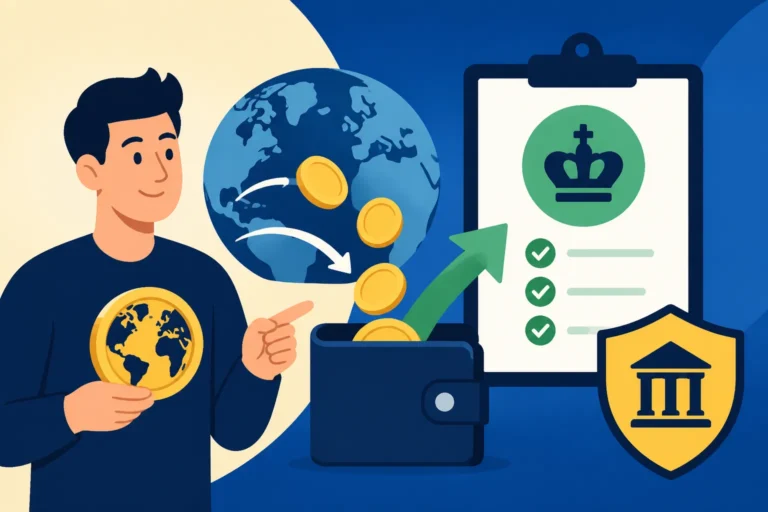
One of the biggest hurdles is the lack of a Danish bank account. Most traditional banks will not talk to you unless you have a CPR number and a long-term residence permit. This means you will be relying on your foreign cards for everything. This is where Wise becomes an absolute lifesaver. By holding a balance in DKK (Danish Kroner), you can avoid the 3-5% "foreign transaction fees" that most traditional banks sneak into every coffee purchase.
Managing Payments and Transfers with Wise
For a digital nomad, Wise is often the primary tool for survival in Denmark. You can set up a DKK "jar" or sub-account and transfer money from your home currency at the mid-market rate. When you use your Wise card at a Netto or Rema 1000, it pulls directly from your DKK balance, meaning you know exactly what you are spending without the guesswork of fluctuating exchange rates.
Additionally, if you need to pay rent to a local landlord, they will often ask for a bank transfer to their Danish account. Doing this through a traditional bank can result in high wire fees and poor exchange rates. Using a specialized service ensures the landlord receives the exact amount of kroner agreed upon in your lease. If you’re wondering about other options, you can check our analysis of Traditional Banks vs. Digital Banks (Lunar): Which is Best for Expats?.
Why You Might (or Might Not) Need a Danish Bank Account
The reality is that for a stay of less than six months, you probably do not need a Danish bank account, and the effort to get one is rarely worth the reward. Without a CPR number, the process is incredibly tedious and involves physical appointments and piles of paperwork. Most nomads find that a combination of a high-quality travel card and an international borderless account is more than sufficient.
The only time you truly must have a Danish setup is if you are receiving a Danish salary. Employers are required to pay into a "NemKonto," which is a designated bank account linked to your social security number. But if you aren't getting a local paycheck, you can skip this headache entirely. To see what the process looks like if you change your mind and stay longer, read Can I Open a Danish Bank Account Before Getting My CPR Number?.
Using Taxes for Expats for Cross-Border Filing
If your financial situation is a bit more "pro" (for example, if you have rental income at home, stock options, and a remote salary), the six months you spend in Denmark can create a complicated tax trail. Using a service like Taxes for Expats can be a wise investment. They specialize in the unique needs of people living outside their home country and can help you navigate the specific disclosures required by the IRS or other tax bodies regarding your time in Scandinavia.
They can also help you determine if you've accidentally triggered any "exit taxes" or "reporting requirements" for foreign bank accounts (like FBAR in the US). Even if you don't owe Denmark a cent, your own government still wants to know where you were and what you were doing. Being proactive about this prevents "the tax scaries" from ruining your memories of those long, sun-drenched Danish summer nights.
Essential Deductions and Filing Procedures
Even as someone with limited tax liability, if you do end up paying tax in Denmark, you are entitled to certain deductions. The Danish tax system is surprisingly fair in this regard. If you earn income here, the system recognizes that it cost you money to earn that income. However, the rules for nomads are specific and require careful documentation to survive a SKAT review.
One of the most famous deductions is the "Kørselsfradrag" or commuting deduction. If you travel more than 24 kilometers a day to get to a workplace in Denmark, you can deduct a set amount per kilometer. While most nomads work from home, if you are commuting to a co-working space or a client's office, this can add up. For a full list of what you can claim, check Tax Deductions in Denmark: Commuting (Kørselsfradrag) and A-Kasse.
Claiming Deductions for Short-Term Residents
For those here on a short-term basis, you can sometimes claim deductions for "double household" expenses. If you can prove that you are maintaining a home in your home country while also paying for a place in Denmark for work reasons, you may be able to deduct part of your rent or a daily "subsistence" allowance. This is a complex area of tax law, and it usually only applies if the work in Denmark was a requirement, rather than a lifestyle choice.
If you are a freelancer, remember that you can't deduct "lifestyle" expenses. That fancy latte at the Royal Library might feel like a business expense, but SKAT disagrees. Stick to clear-cut items: equipment, professional software, and specific travel for meetings. If you find yourself needing to file, our guide on The Annual Tax Assessment Notice (Årsopgørelse): Claiming Deductions will walk you through the portal step-by-step.
The Preliminary vs. Annual Assessment
In Denmark, the tax year follows the calendar year. You will encounter two main documents: the Forskudsopgørelse (Preliminary Assessment) and the Årsopgørelse (Annual Assessment). The first is your "best guess" at what you will earn, and the second is the "final truth" calculated by SKAT in March of the following year.
As a short-term nomad, you might only interact with these if you have a Danish income source. If you do, it is crucial to update your preliminary assessment as soon as your income changes. If you under-report, you will be hit with "restskat" (back tax) plus interest. If you over-report, you get a lovely "overydende skat" (tax refund) deposited into your account in the spring. To avoid any surprises, read our deep dive on Preliminary Tax Assessment (Forskudsopgørelse): Avoiding Tax Debt.
| Document Type | Purpose | When to Use It |
|---|---|---|
| Forskudsopgørelse | Estimate of income/deductions | Before or during your stay |
| Årsopgørelse | Final tax calculation | March of the following year |
| Certificate of Residency | Proof of foreign tax home | If audited by SKAT |
Disclaimer
The information provided in this guide is for educational and informational purposes only and does not constitute professional tax, legal, or financial advice. Tax laws in Denmark and international tax treaties are subject to change and can vary significantly based on individual circumstances. Always consult with a qualified tax professional or the Danish tax authority (SKAT) before making decisions regarding your tax liability.